
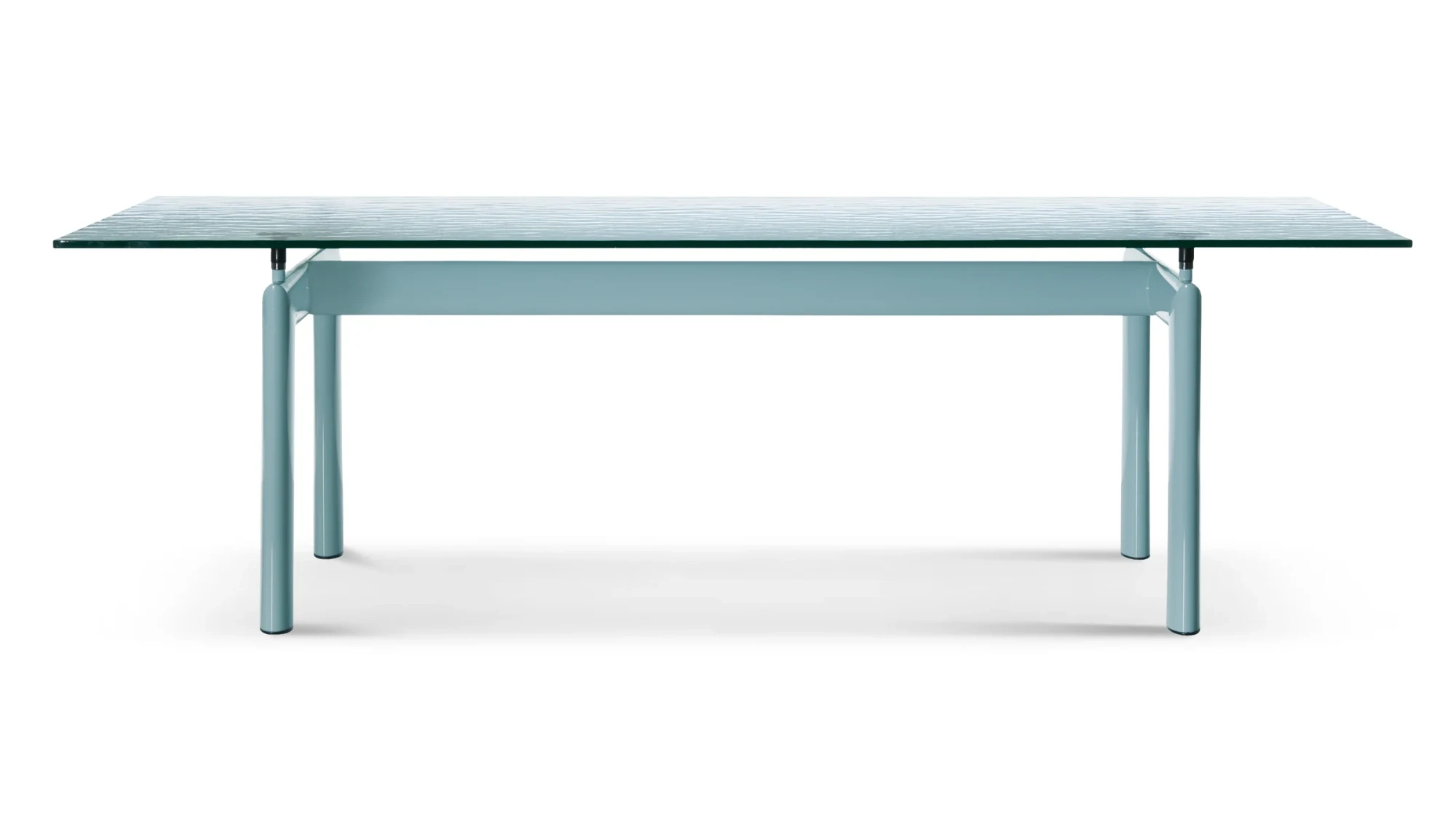
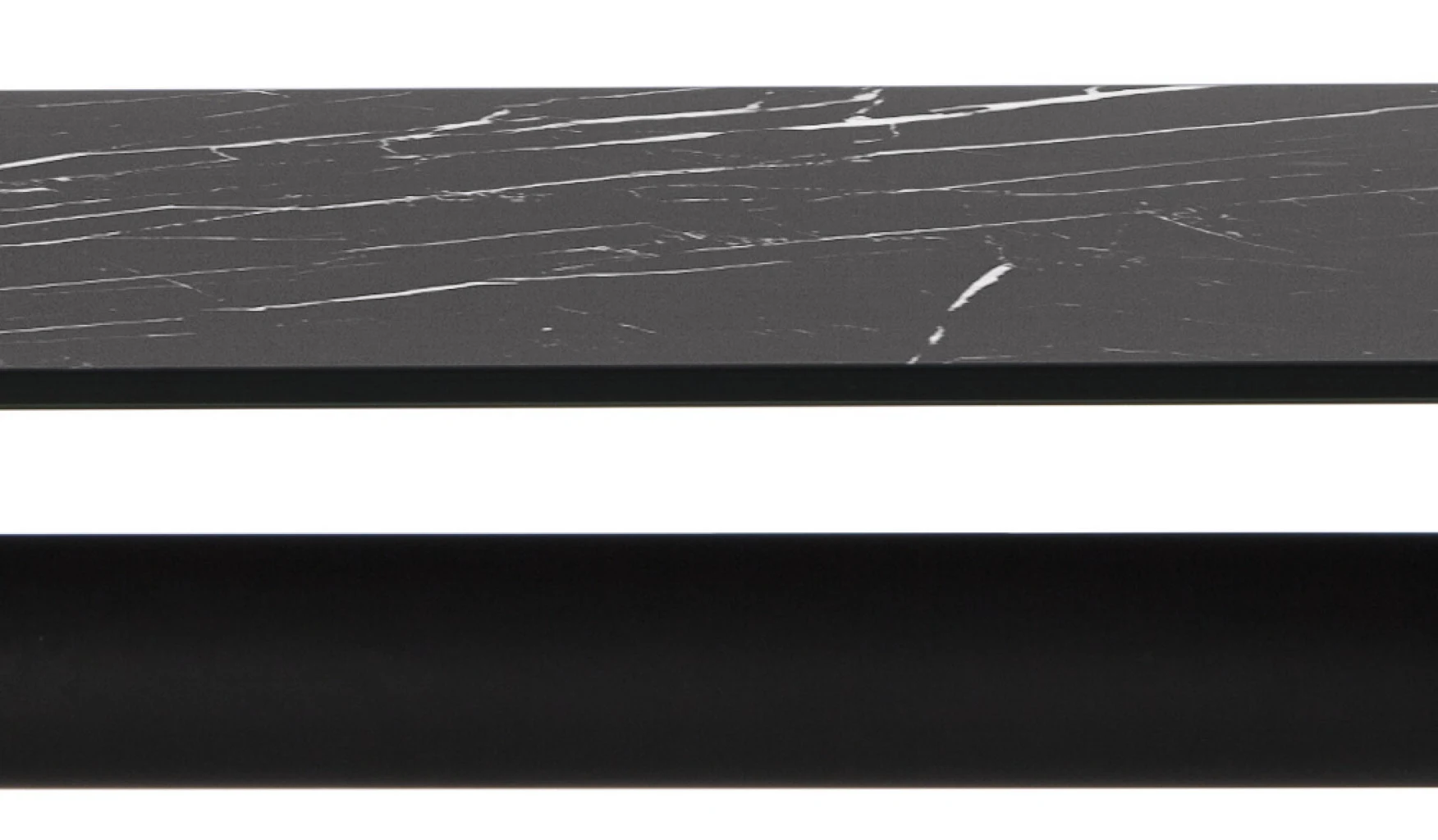
LC6 Table
Painted steel base and glass or marble top, kept visibly apart by four height-adjusting supports.


2250 × 740 × 850 mm
Source: spec sheet PDF — Glass top 006 _2C/2V (225 x 85 cm) — published as W 225 × D 85 × H 74 cm
1929
Description
Overview
The 6 Table tube d'avion (LC6) is a table whose core concept is the distinction between the base and the top. Cassina's sheet gives 1929 beside Designed by and Cassina, 1974 beside Produced; the sheet text adds that the base was designed in 1928 and that the table was introduced the following year.
Construction
- Base: steel painted in the Le Corbusier palette, with four supports on threaded steel rods that adjust the height by up to 50 mm
- Top: clear glass, textured glass, coloured glass, or Carrara or Marquinia marble
- Feet: black plastic with felt pads
Specifications
- Glass top 006 _2C/2V…: W 225 x D 85 x H 74 cm, top 2 cm thick
- Marble top 006 _X/_Y/_Z: W 170 x D 75 x H 74 cm, top 3 cm
Story
Support and supported
Per Cassina, the core concept lies in the distinction between the support piece and the piece being supported, between base and top. Four intermediate supports highlight the separation: they work as level adjusters and as spacers between the mass of the support and the slender lines of the top.
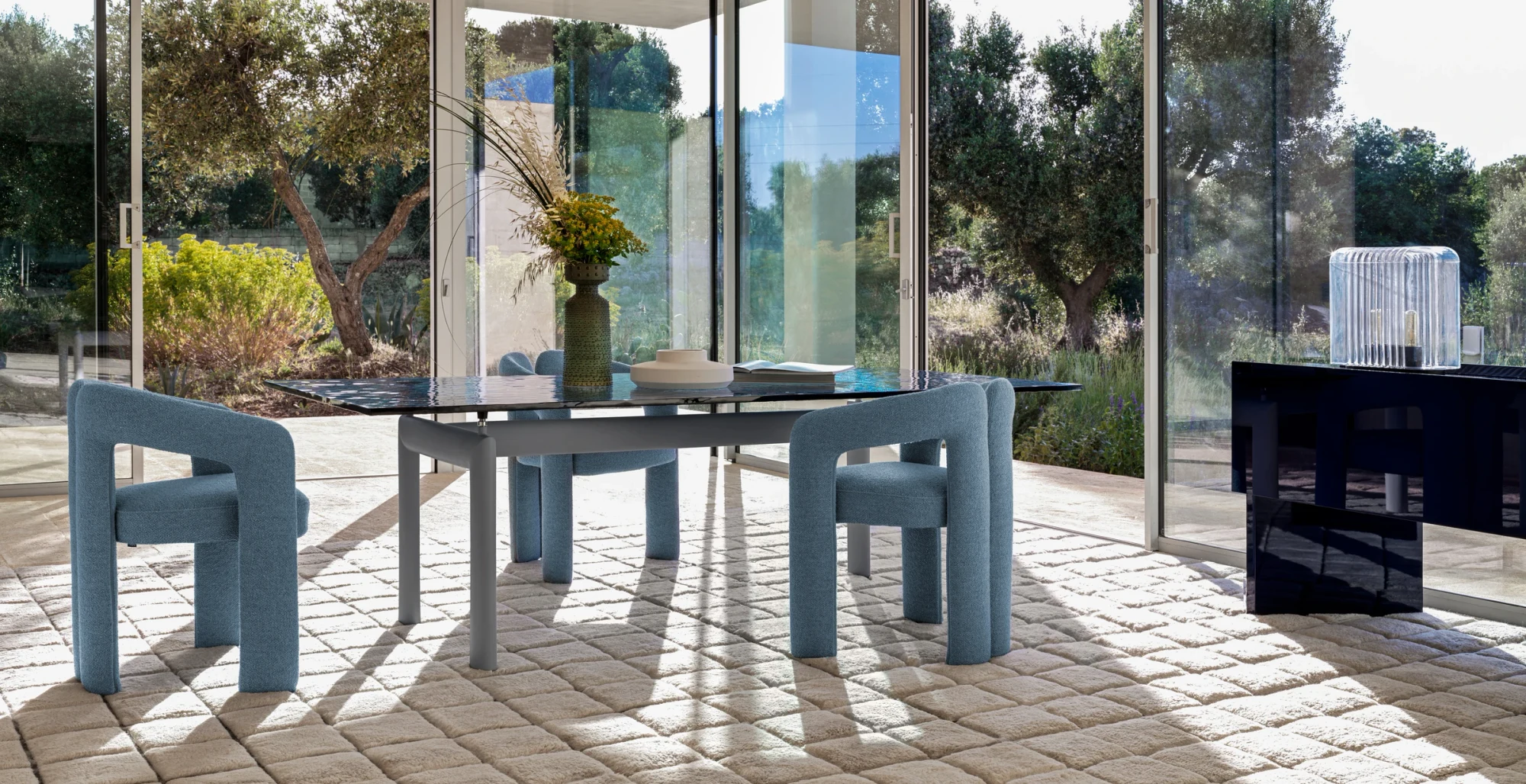
A base from the aeronautical sector
According to the sheet, the base dates from 1928 and was drawn from oval profiles used in aviation to keep biplane wings apart. The page calls the table one of the first studio models of the three designers, shown in Paris in 1929, and the expression of Cassina's lengthy research on the masterpieces of the great masters.
More by Le Corbusier
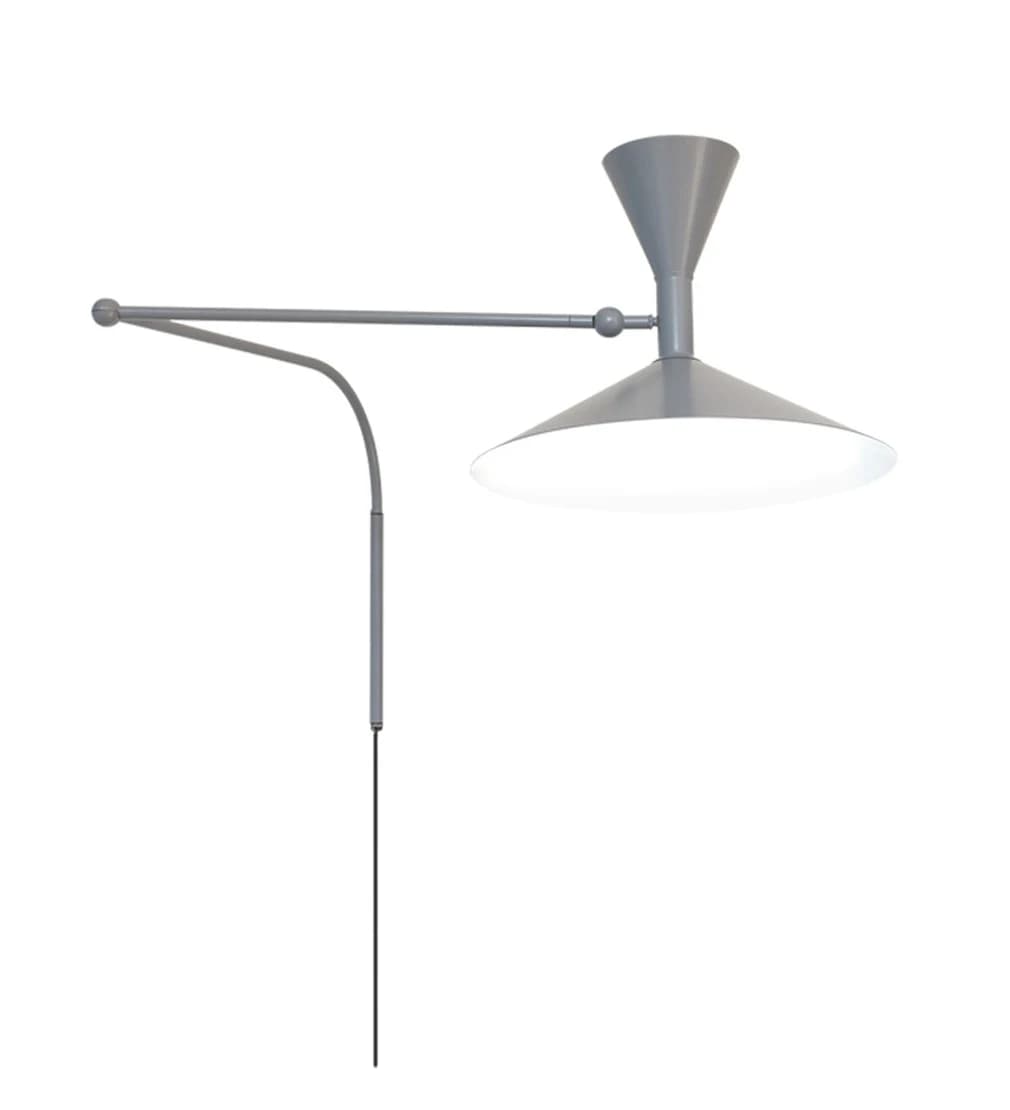
Lampe de Marseille
Le Corbusier's Lampe de Marseille for Nemo: wall lamp with direct and indirect light
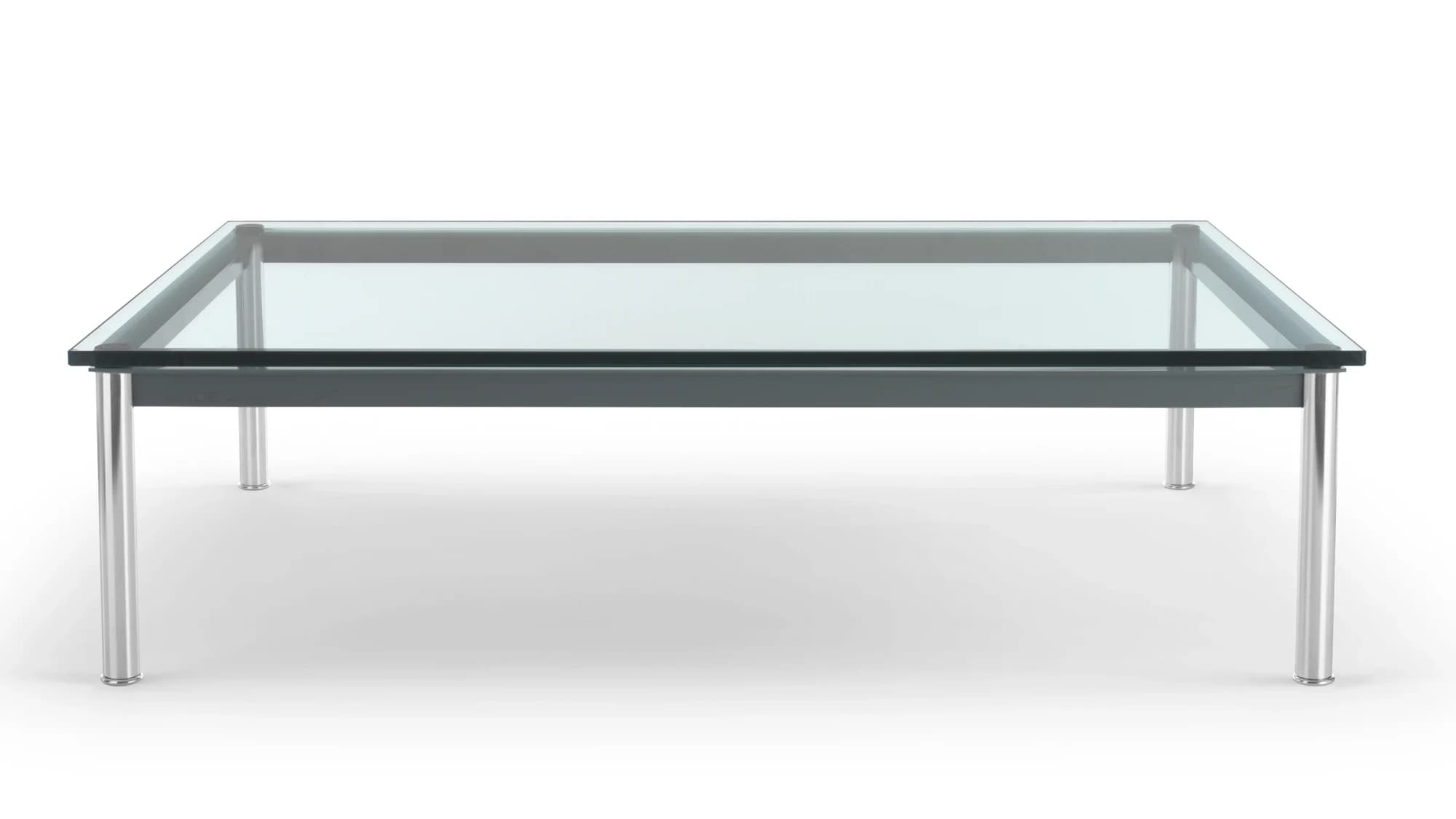
LC10-P Low Table en tube
Low glass-topped table on chromed tubular steel legs, in three sizes, relaunched by Cassina in 1985.
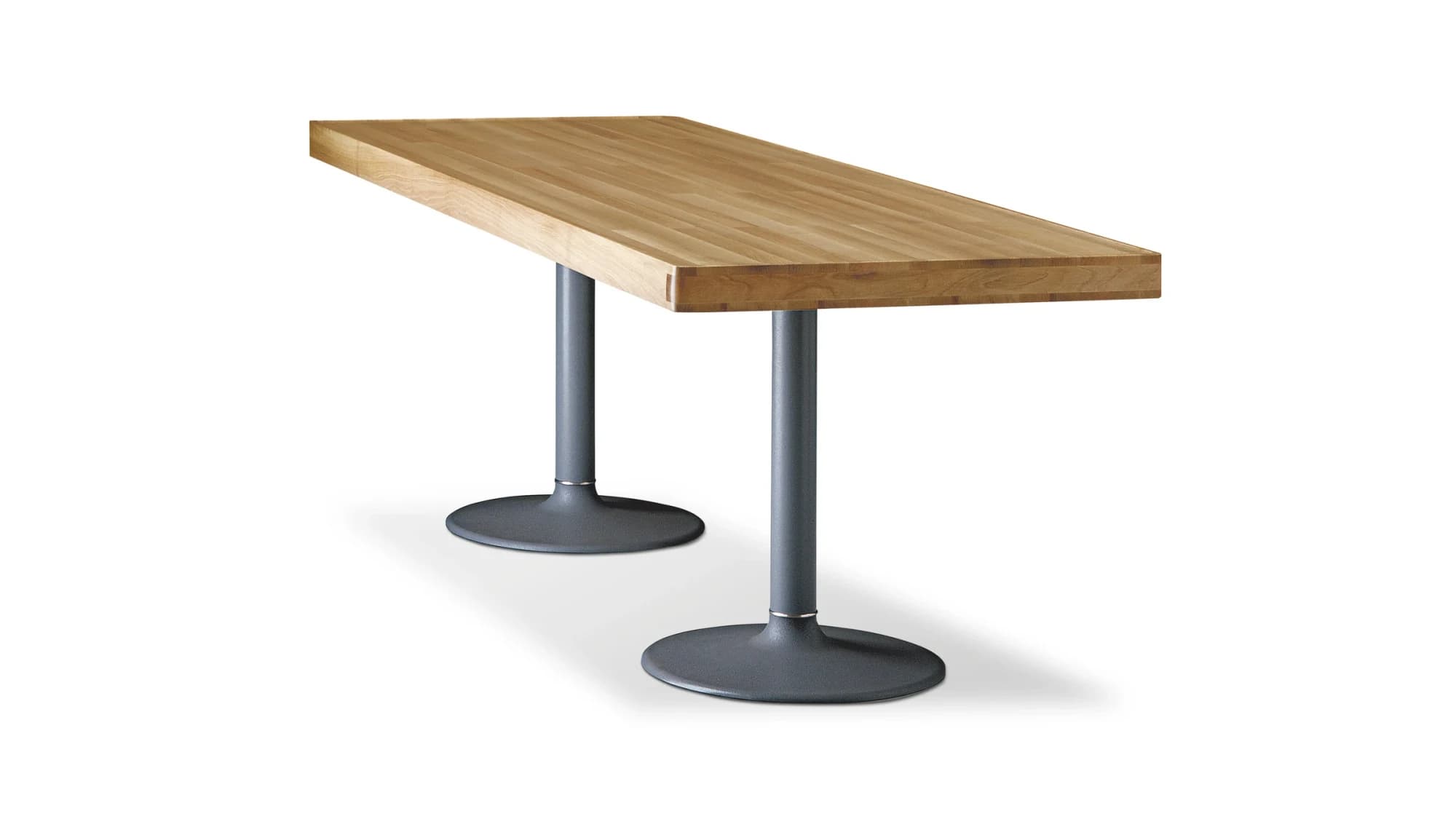
LC11-P Table pieds corolle
Walnut-topped table on grey cast iron pedestal bases, put into production by Cassina in 1985.
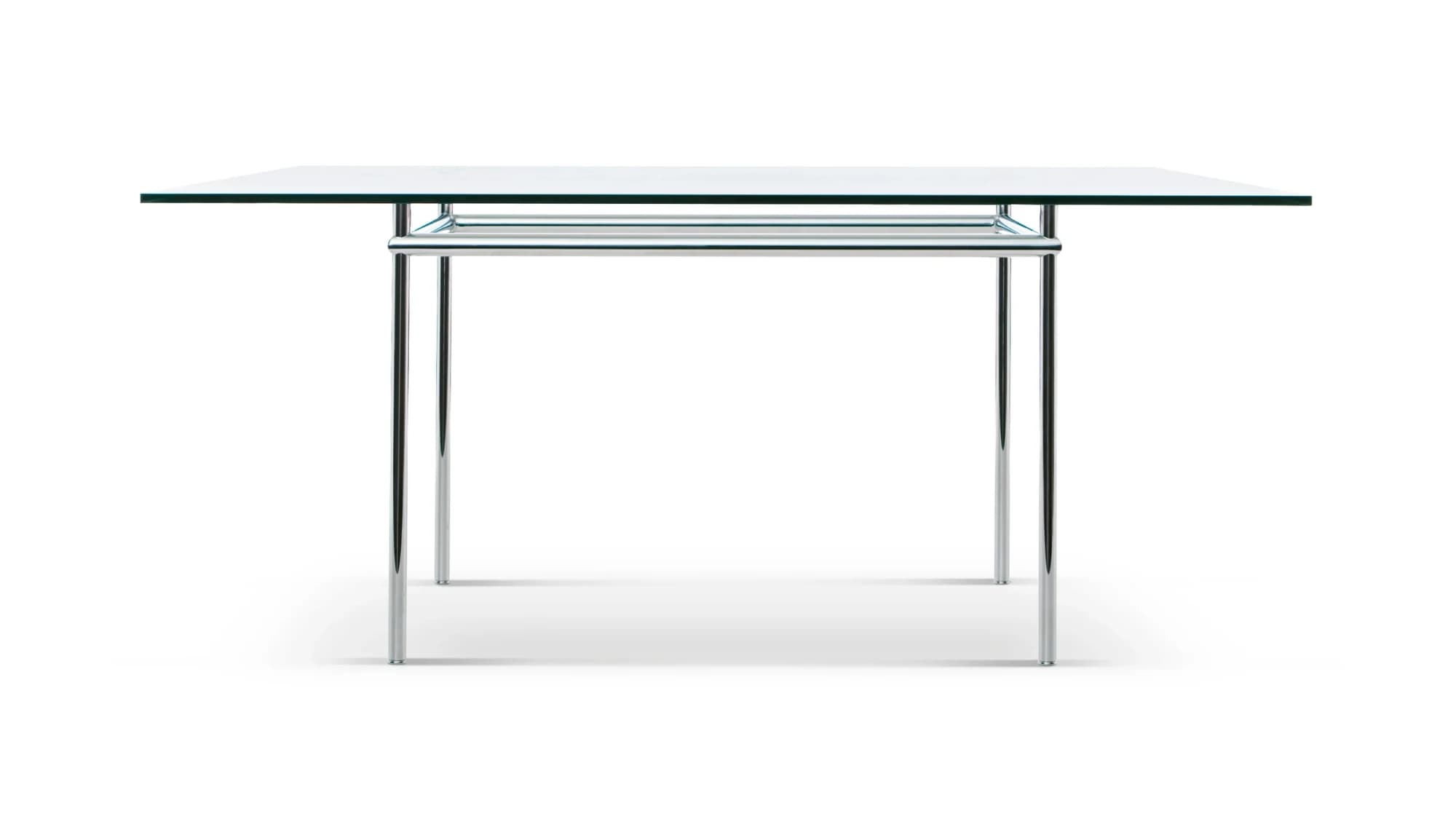
LC12 Table La Roche
Table designed in 1925 for the Maison La Roche, with a glass or wood top on a tubular steel frame.