Designer
Alvar Aalto
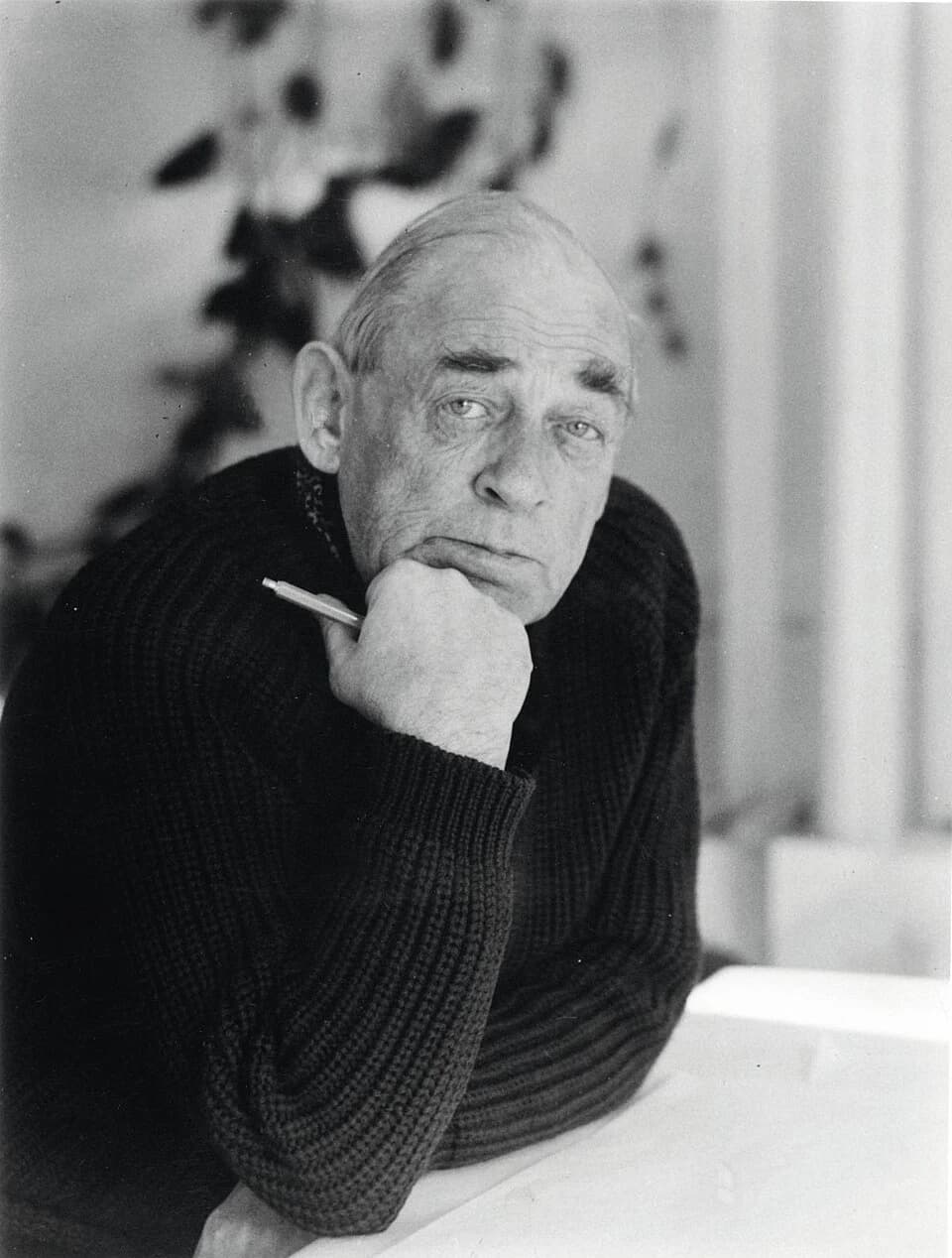
Hugo Alvar Henrik Aalto (3 February 1898 – 11 May 1976) was a Finnish architect and designer, born in Kuortane and raised in Jyväskylä. He studied architecture at the Helsinki University of Technology, graduating in 1921, and opened his…
Biography
Background
Hugo Alvar Henrik Aalto (3 February 1898 – 11 May 1976) was a Finnish architect and designer, born in Kuortane and raised in Jyväskylä. He studied architecture at the Helsinki University of Technology, graduating in 1921, and opened his first office in Jyväskylä in 1923. He married the architect Aino Marsio, his close collaborator, after she joined his office in 1924: Artek says six months later, Wikipedia gives 6 October 1924 in his article and 1925 in hers. The office moved to Turku in 1927 and to Helsinki in 1933. In 1935 the Aaltos co-founded Artek with Maire Gullichsen and Nils-Gustav Hahl.
Signature Style
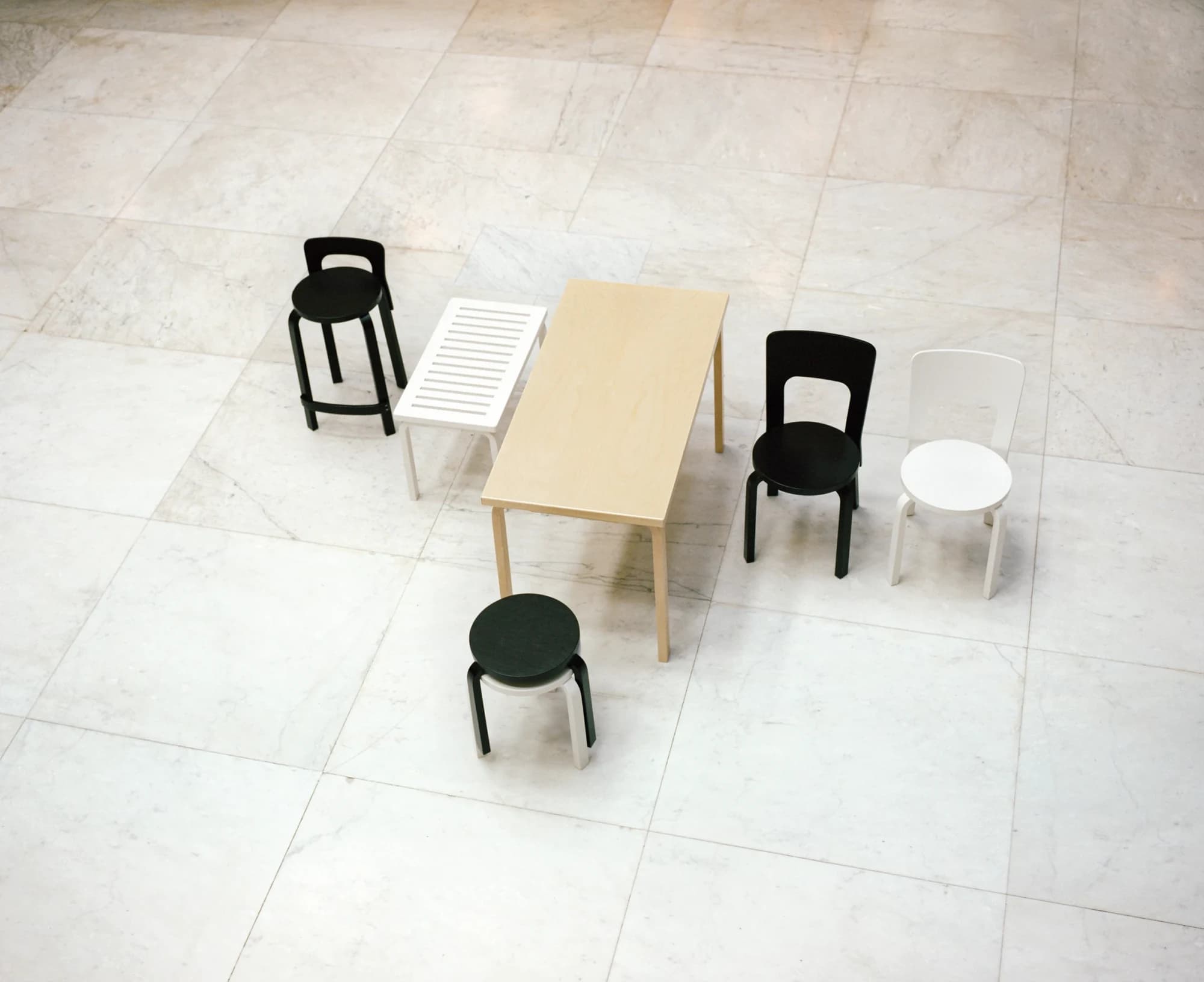
Aalto's career moved from Nordic Classicism to a rational International Style modernism in the 1930s and a more organic modernism from the 1940s. He treated a building as a Gesamtkunstwerk, designing interiors, furniture, lamps and glassware with Aino. His furniture is considered Scandinavian Modern — elegantly simplified, rooted in wood, and driven by technical innovation: he received patents for processes such as bent wood, and his bent plywood furniture influenced Charles and Ray Eames and George Nelson.
Notable Works
Buildings include the Paimio Sanatorium (1929–32), the Viipuri Library (1927–35), Villa Mairea, Säynätsalo Town Hall, Baker House at MIT and Finlandia Hall (1962–71). Designs include the Paimio Chair, Stool 60 (1933) and the Savoy Vase.
Legacy
In 1938 MoMA gave Aalto a retrospective — only the second solo architecture show there after Le Corbusier — and Frank Lloyd Wright called his 1939 New York World's Fair pavilion a "work of genius". Artek still produces his furniture and lighting, and the Alvar Aalto Museum in Jyväskylä, which he designed, preserves his work.