Image source: Knoll — Womb Chair
© Knoll and the respective rights holders. Quoted to accompany INTEBEE's independent design commentary and research.
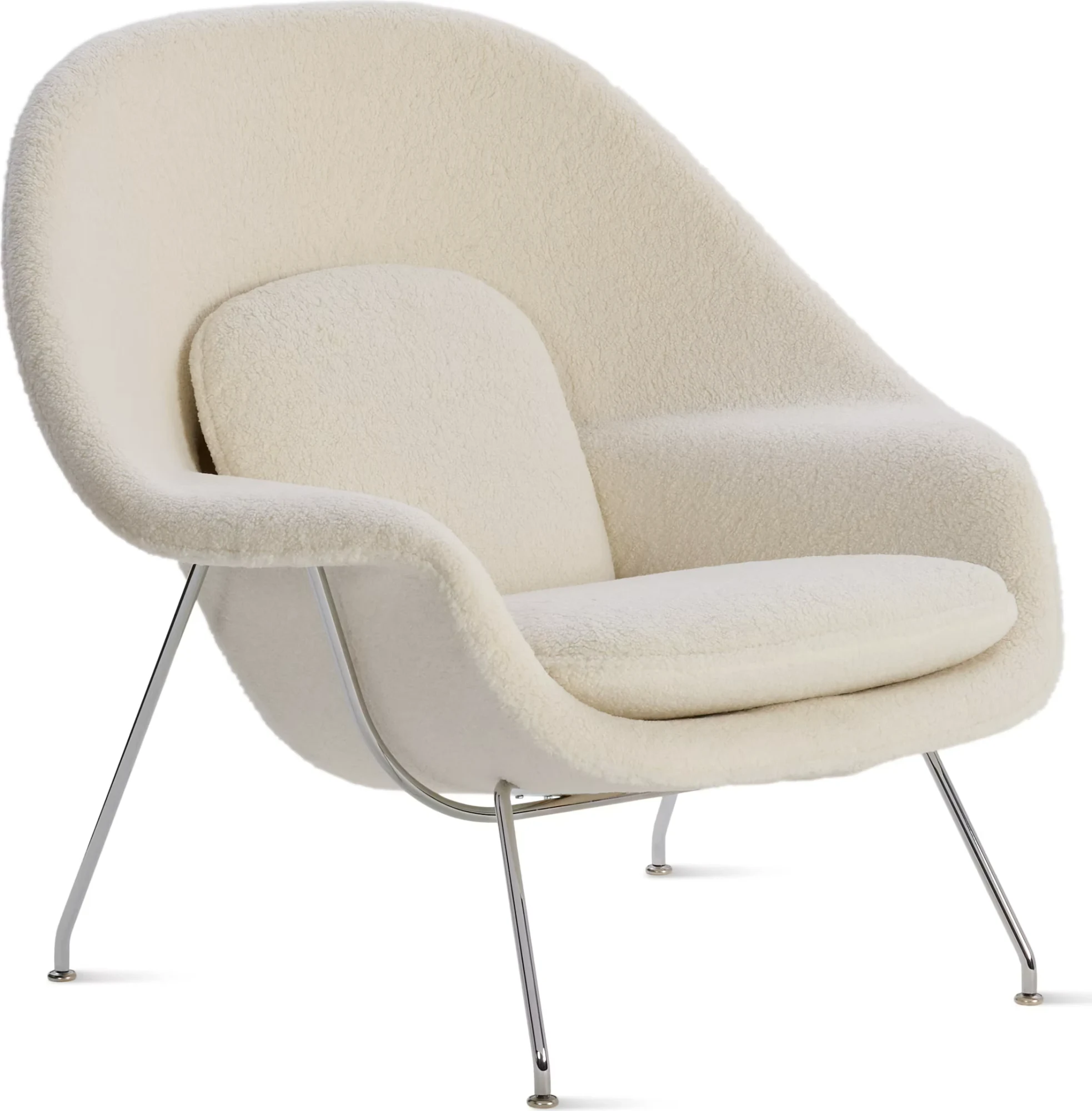
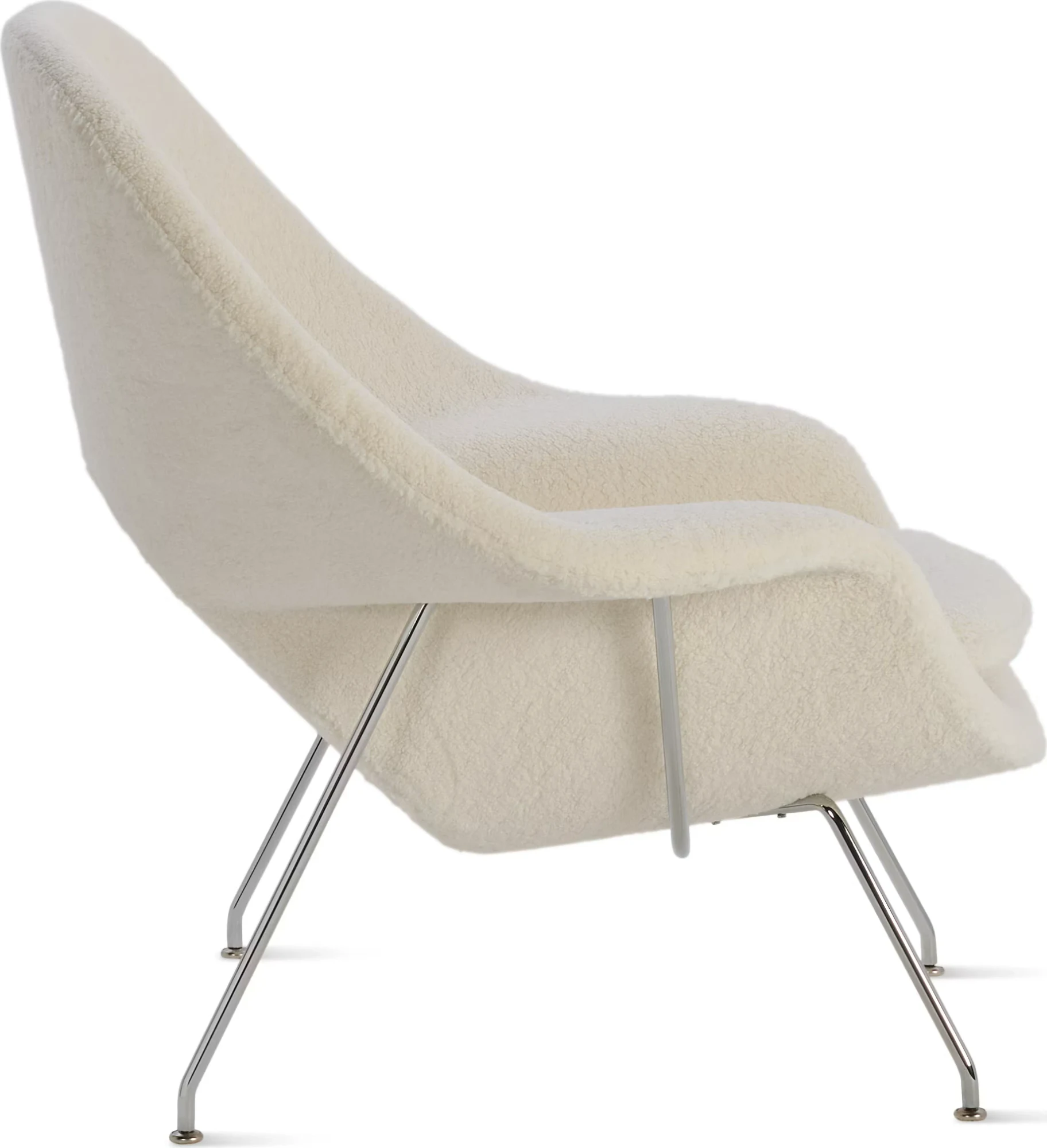
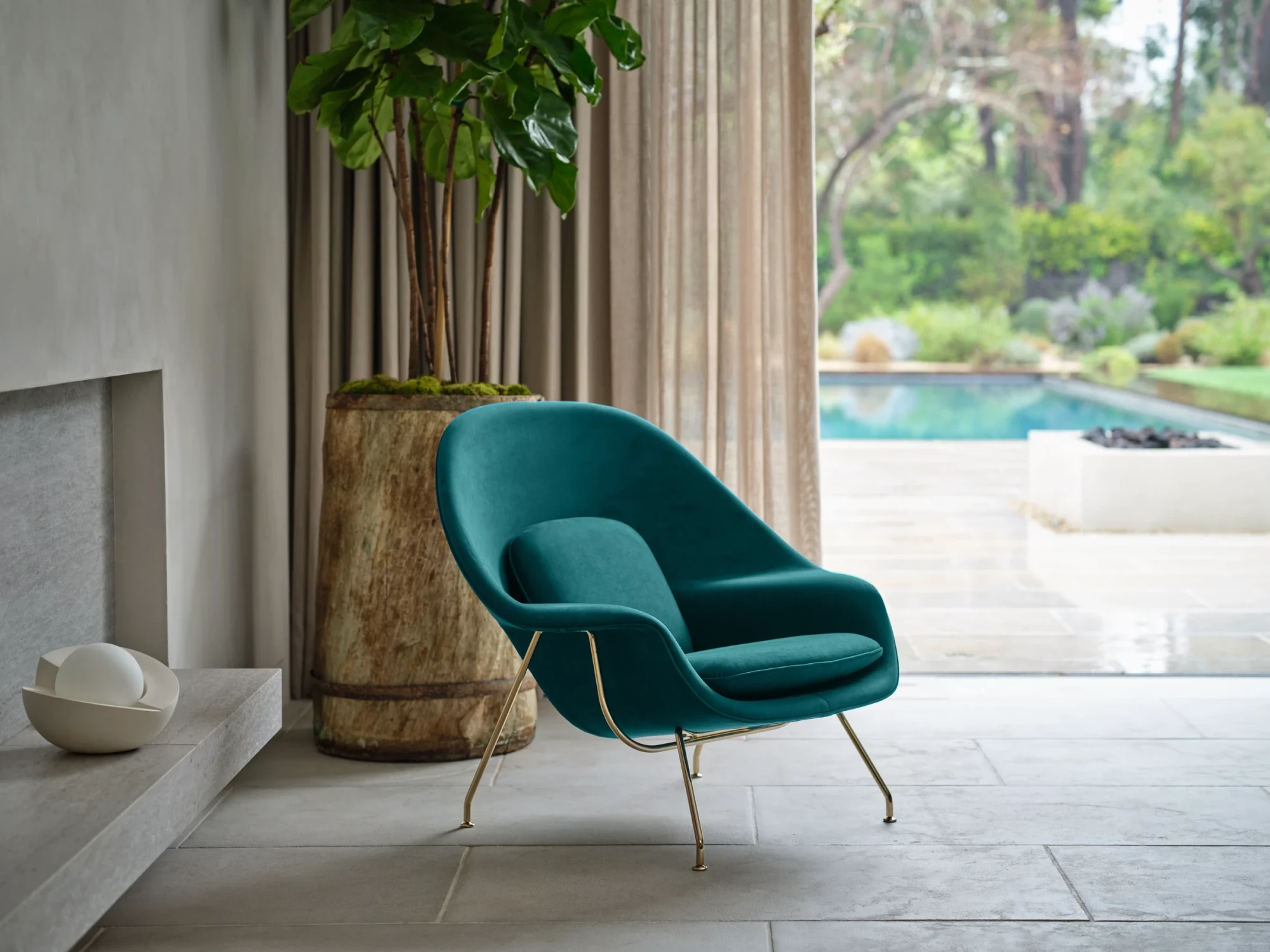
Womb Chair
Saarinen's 1948 Womb Chair, made for Florence Knoll to curl up in


889 × 794 × 787 mm
1948
Approx. $6,500 (reference price; varies by region and retailer)
Official product information
INTEBEE AI PUBLIC LIBRARY is an independent furniture design research and discovery platform. Product specifications, finishes, availability and other details may change. For current and definitive information, please refer to the manufacturer's official website.
Go to the official product pageSpecifying Womb Chair for your design project?
INTEBEE is the FF&E specification platform for interior designers: spec sheets, finishes, floor plans and client-ready PDFs in one place.
Description
Overview
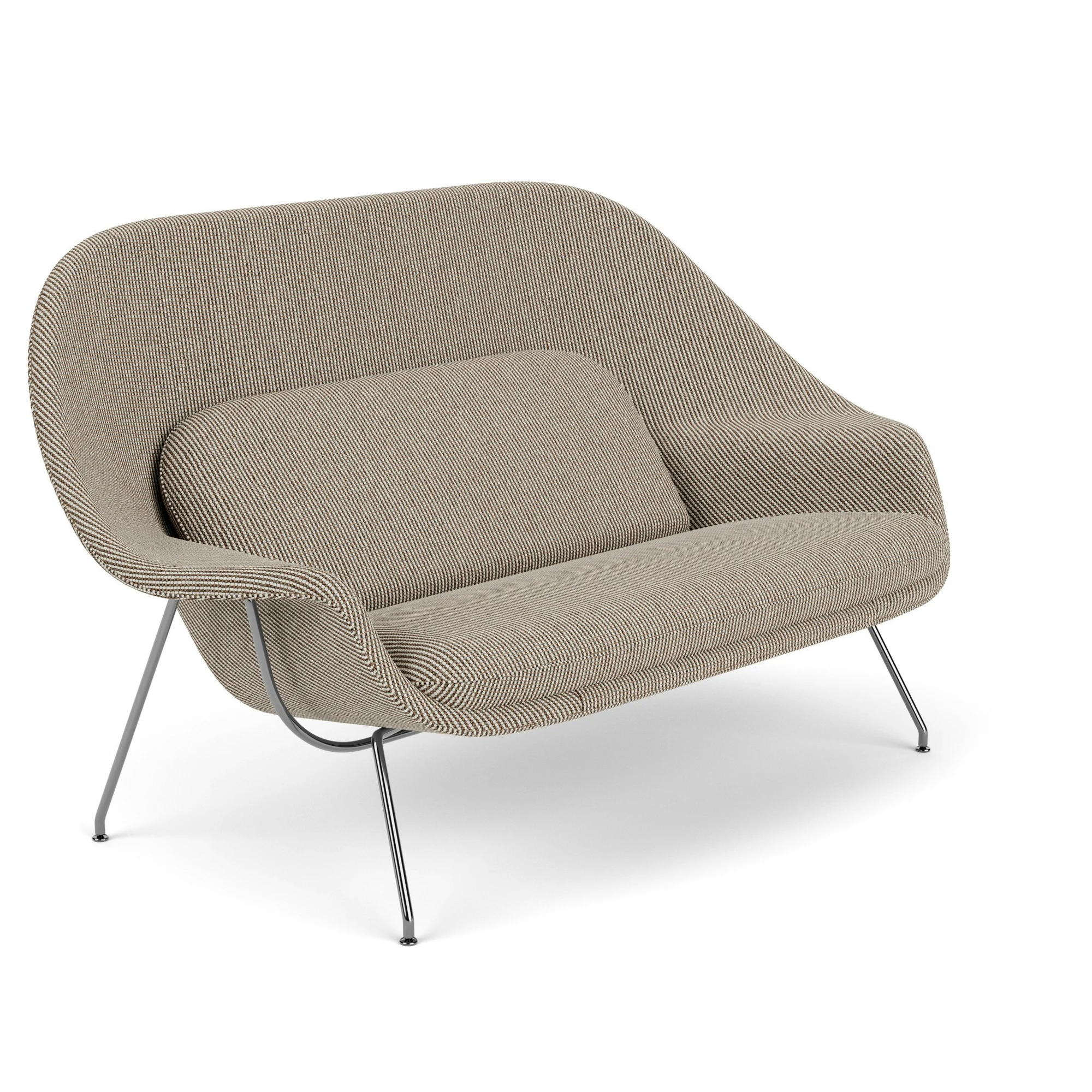
The Womb™ Chair is a fiberglass lounge chair that Knoll dates to 1948, when it was released as Model 70. Eero Saarinen designed it at Florence Knoll's request for a chair like a basket full of pillows. It comes in a Standard and a Medium size, each with a matching ottoman.
Construction
- Seat shell of foam-covered molded fiberglass, handmade from molding to hand-sewn upholstery
- Legs of seamless tubular steel in polished chrome, polished 18k gold plating or black paint
- KnollTextiles fabrics or Spinneybeck leathers
- Knoll's shop FAQ adds a plywood platform under the shell and polyester padding around a foam core
Specifications
- Medium: W 35" × D 31" × H 31¼" (889 × 787 × 794 mm), seat height 15", seat depth 18", arm height 18", weight 31 lb
- Standard: W 40" × D 34" × H 35½", seat height 16", seat width 27", seat depth 24⅞", arm height 20½", weight 36 lb, capacity 275 lb
Story
A chair that could be curled up in
Knoll's design-plan page tells it this way. Saarinen had been exploring a chair whose comfort came from the shape of its shell, not from thick cushioning, after he and Charles Eames won the Museum of Modern Art's Organic Design Competition for bent-plywood experiments. He had started on smaller fiberglass task chairs when Florence Knoll challenged him to do "the big one first": a chair like a basket full of pillows that she could curl up in. Knoll says that is not exactly where he ended up, but it set the idea in motion.
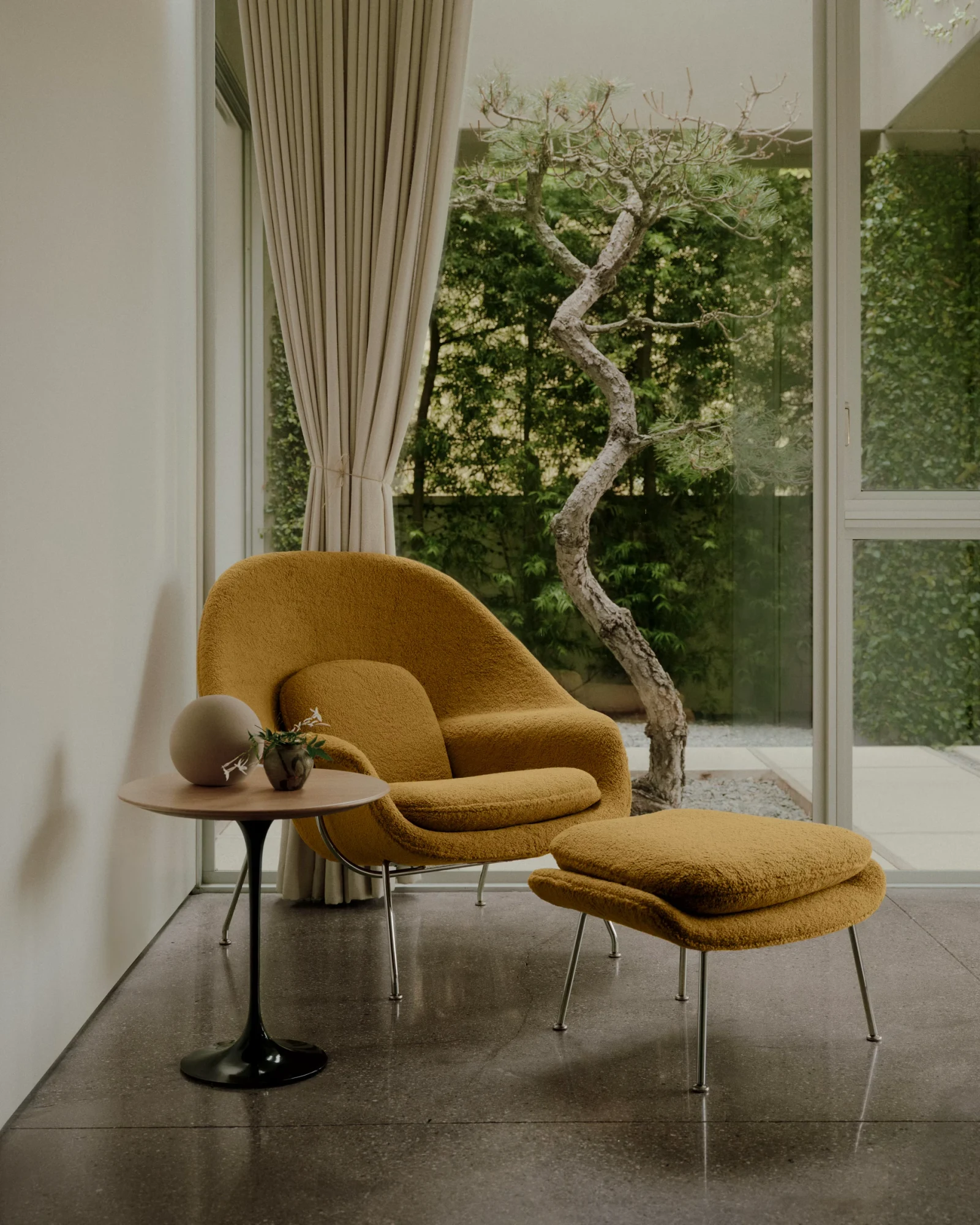 Image source: Knoll — Womb Chair · © Knoll and the respective rights holders. Quoted to accompany INTEBEE's independent design commentary and research. · View official product page ↗ · Image use & copyright policy
A boat builder and a patent
Fiberglass and resin were then new materials, so Saarinen and Florence Knoll turned to a boat builder in New Jersey who was experimenting with them. In Florence Knoll's recollection he was very skeptical, and there were many failures before a workable chair appeared. The chair debuted in 1948 as Model 70, and Knoll's shop page says Saarinen filed a patent for his "shaped chair".
More by Eero Saarinen
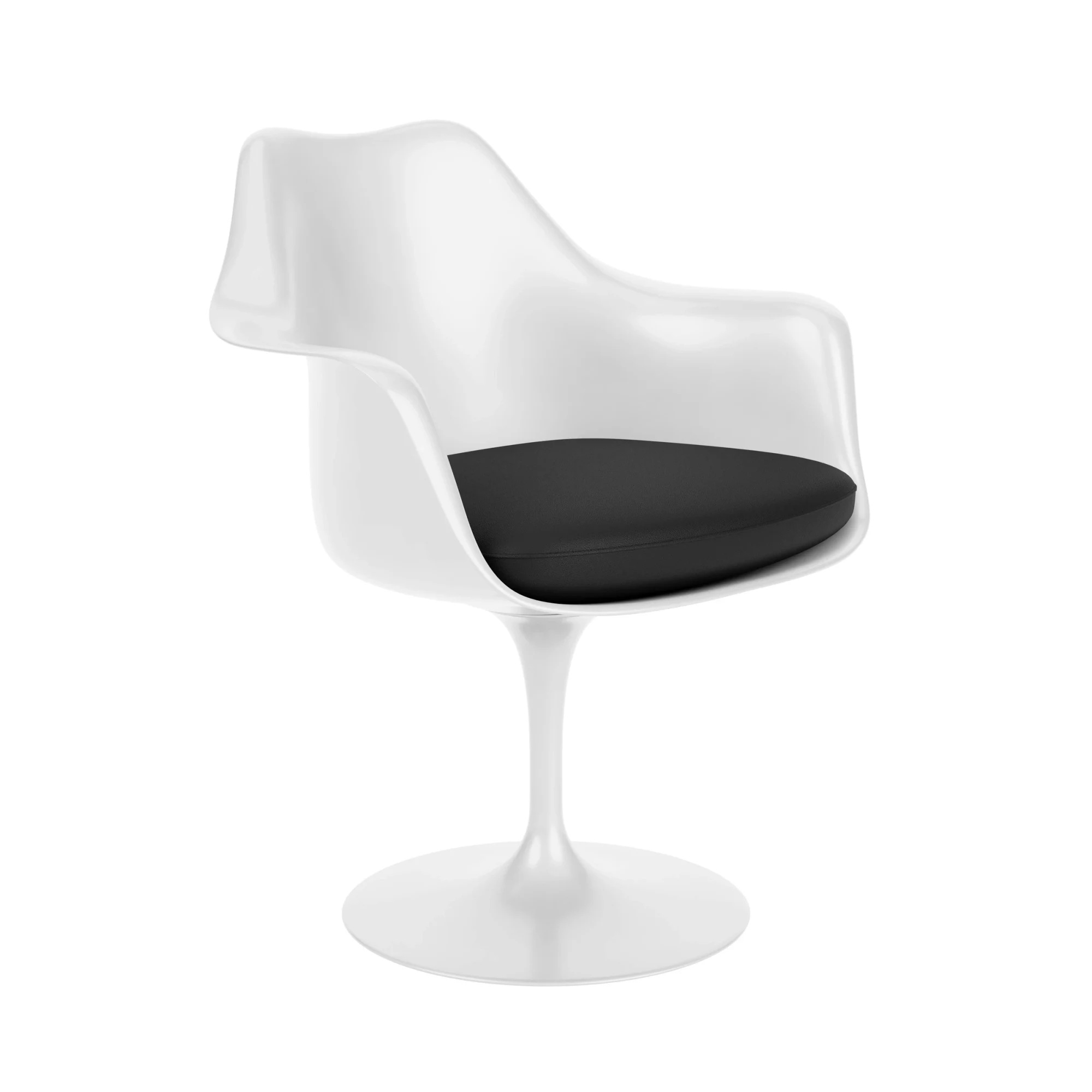
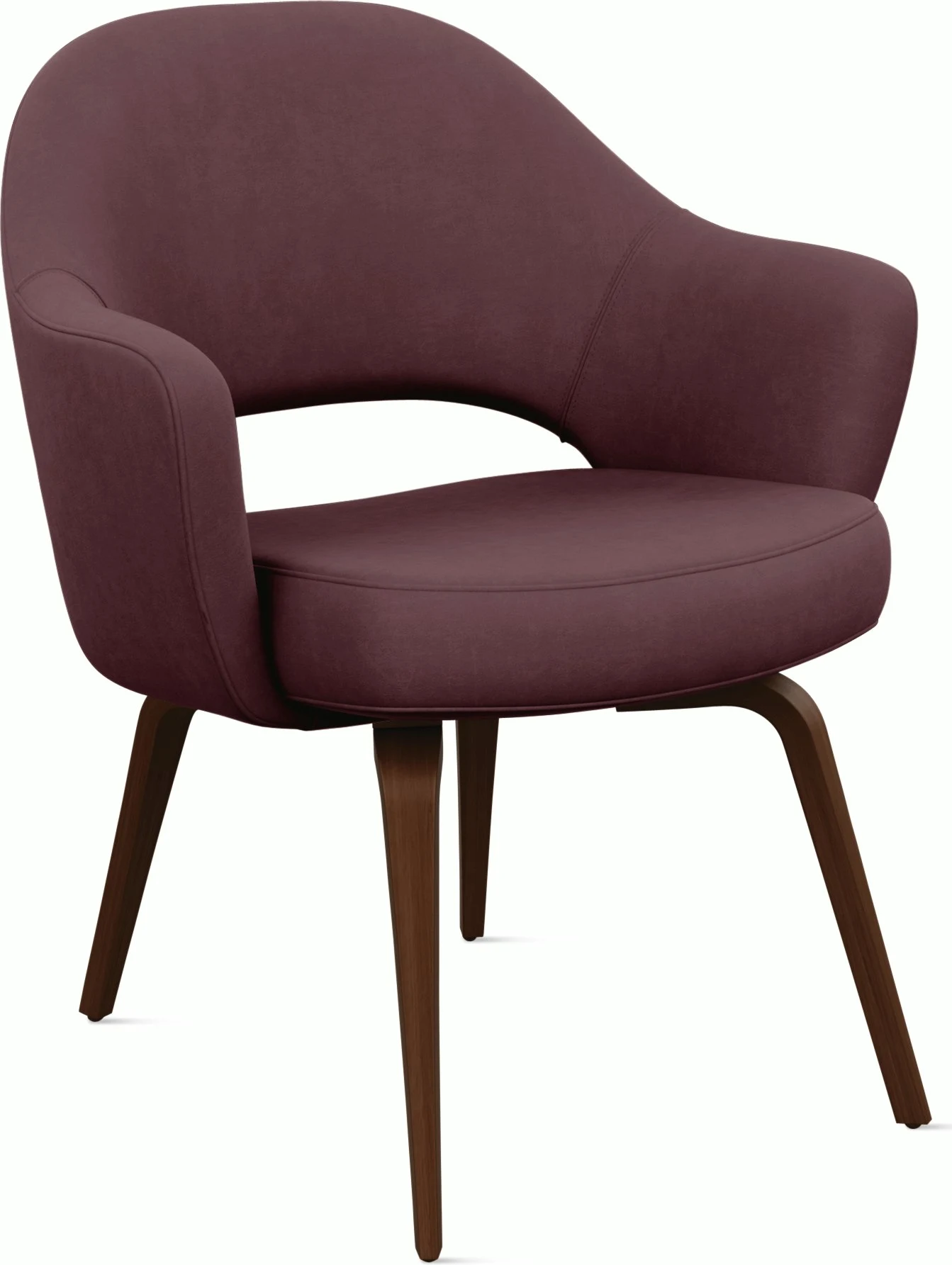
Saarinen Tulip Armchair
Eero Saarinen's 1955-56 pedestal armchair, with a swivel or fixed seat
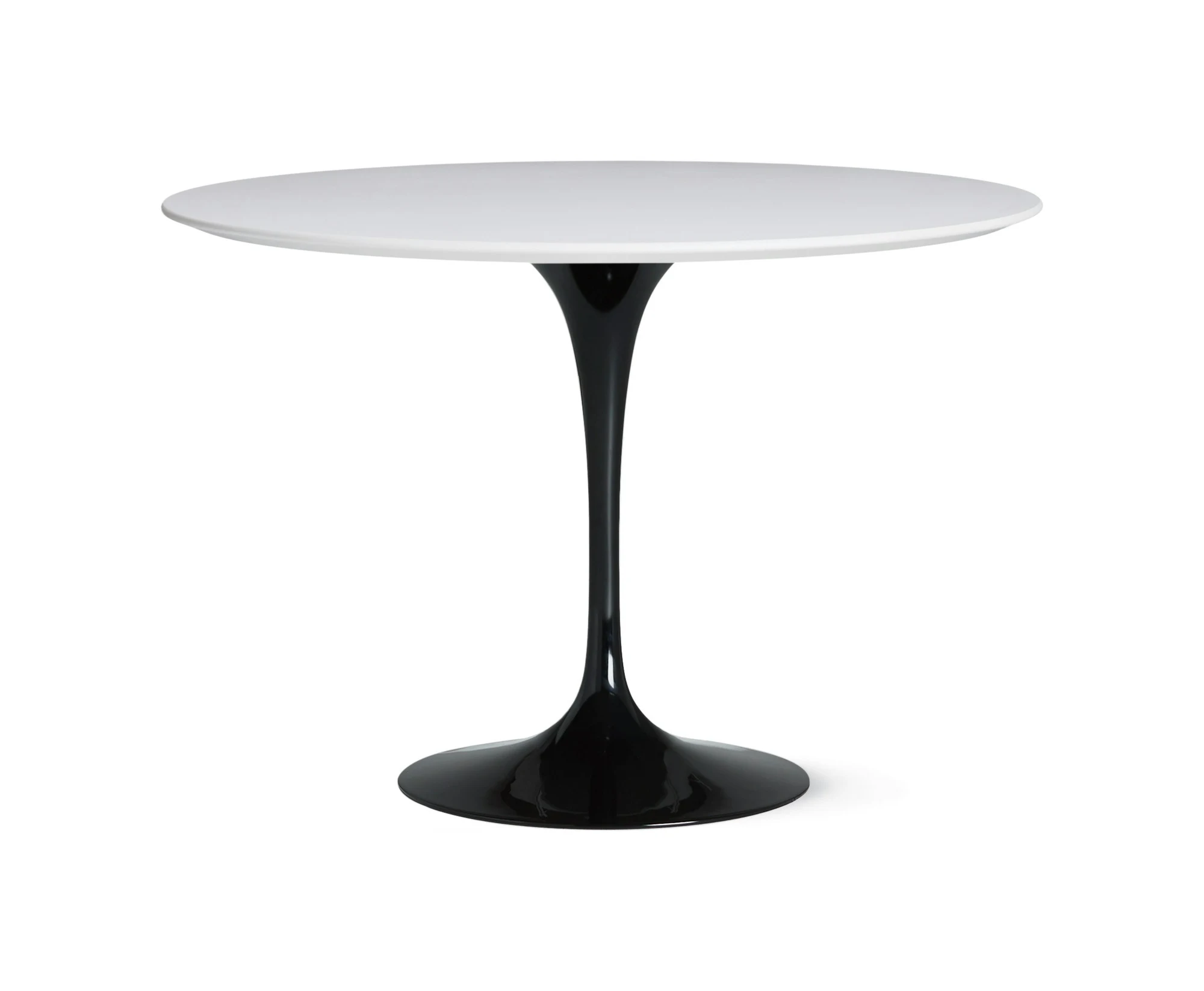
Saarinen Dining Table, Round 137 cm
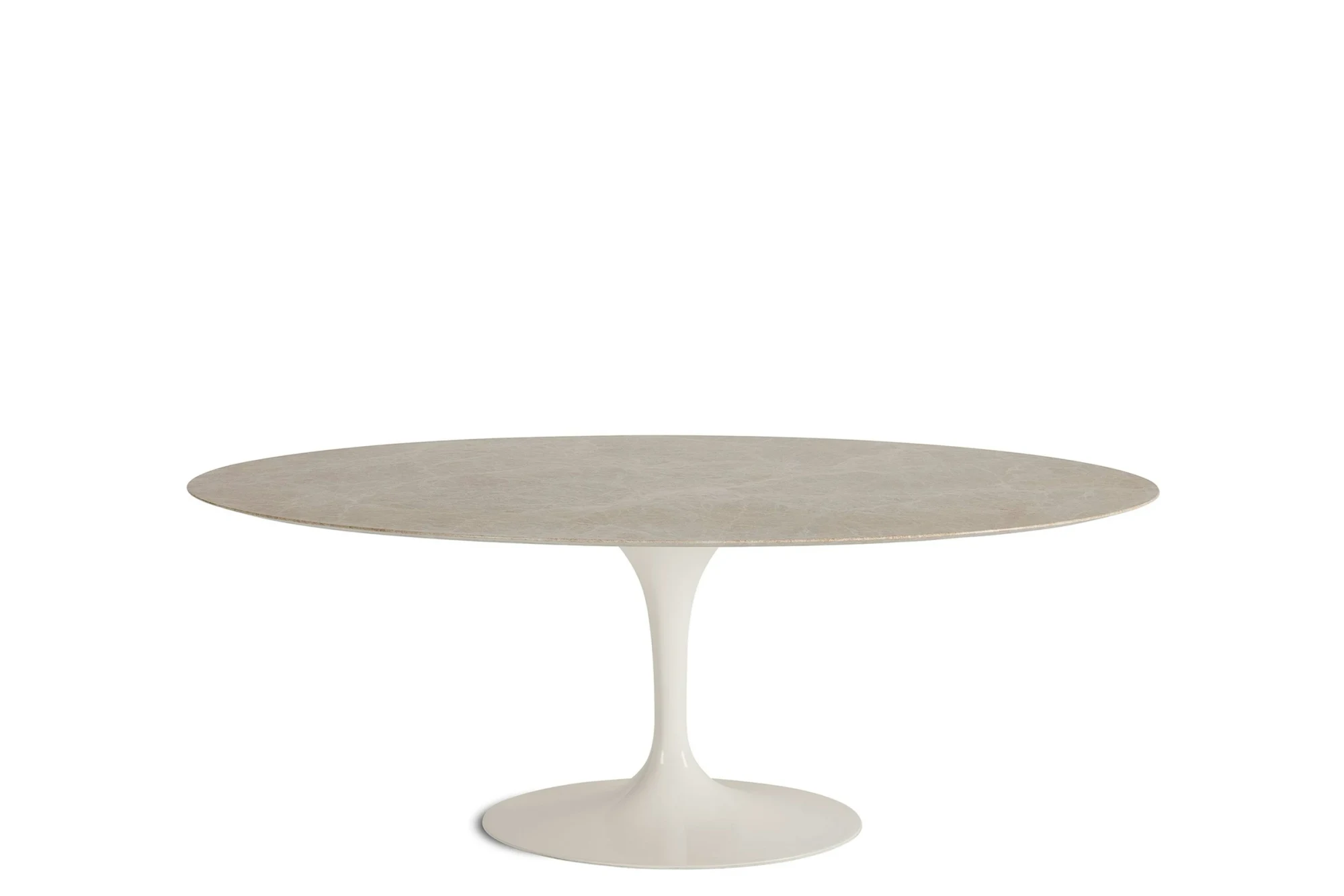
Saarinen's 1957 one-legged pedestal table, round 54 in (137 cm) with a stone top
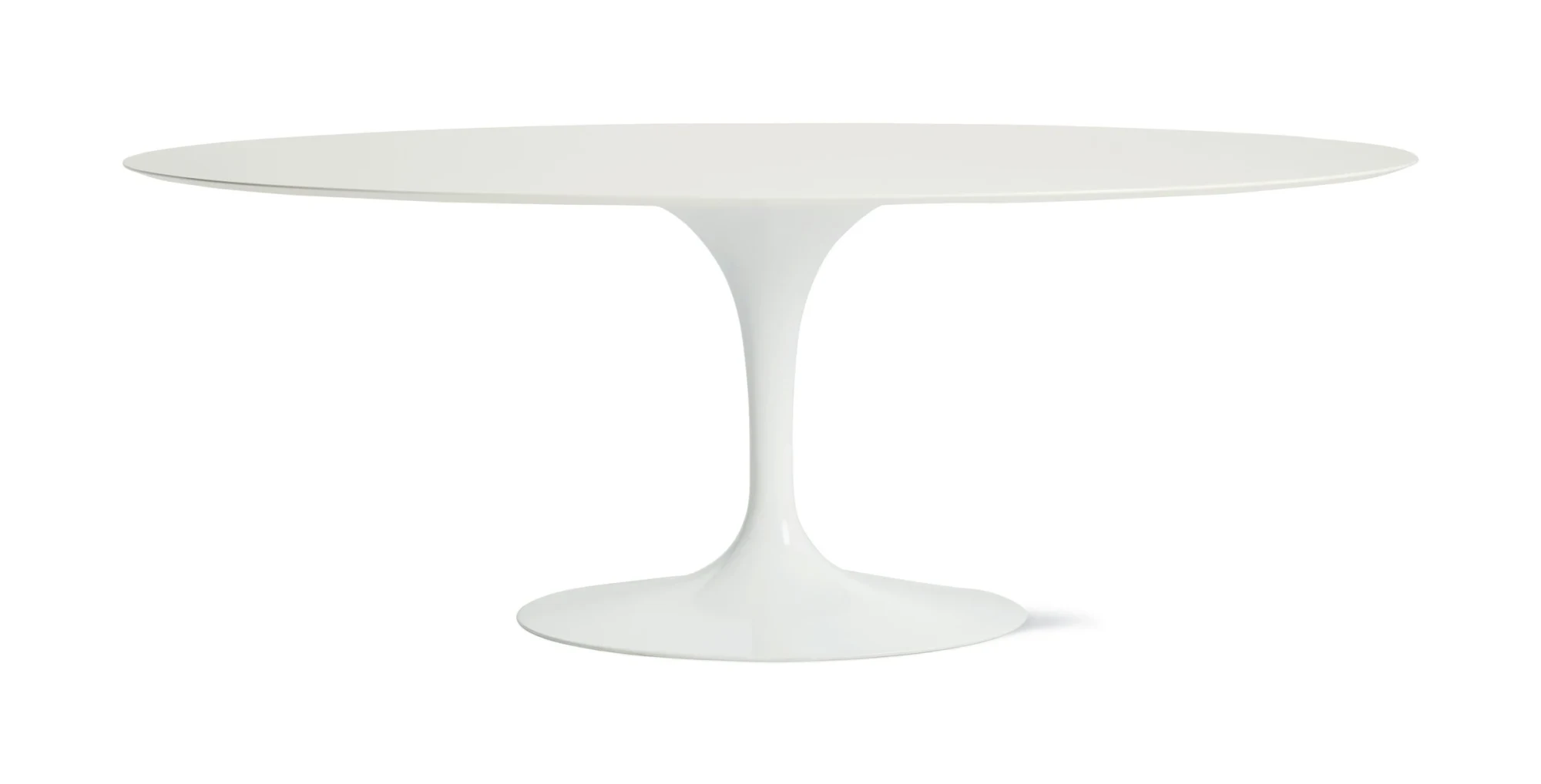
Saarinen Outdoor Dining Tables
Eero Saarinen's 1957 pedestal dining table in weatherproof Vetro Bianco quartz
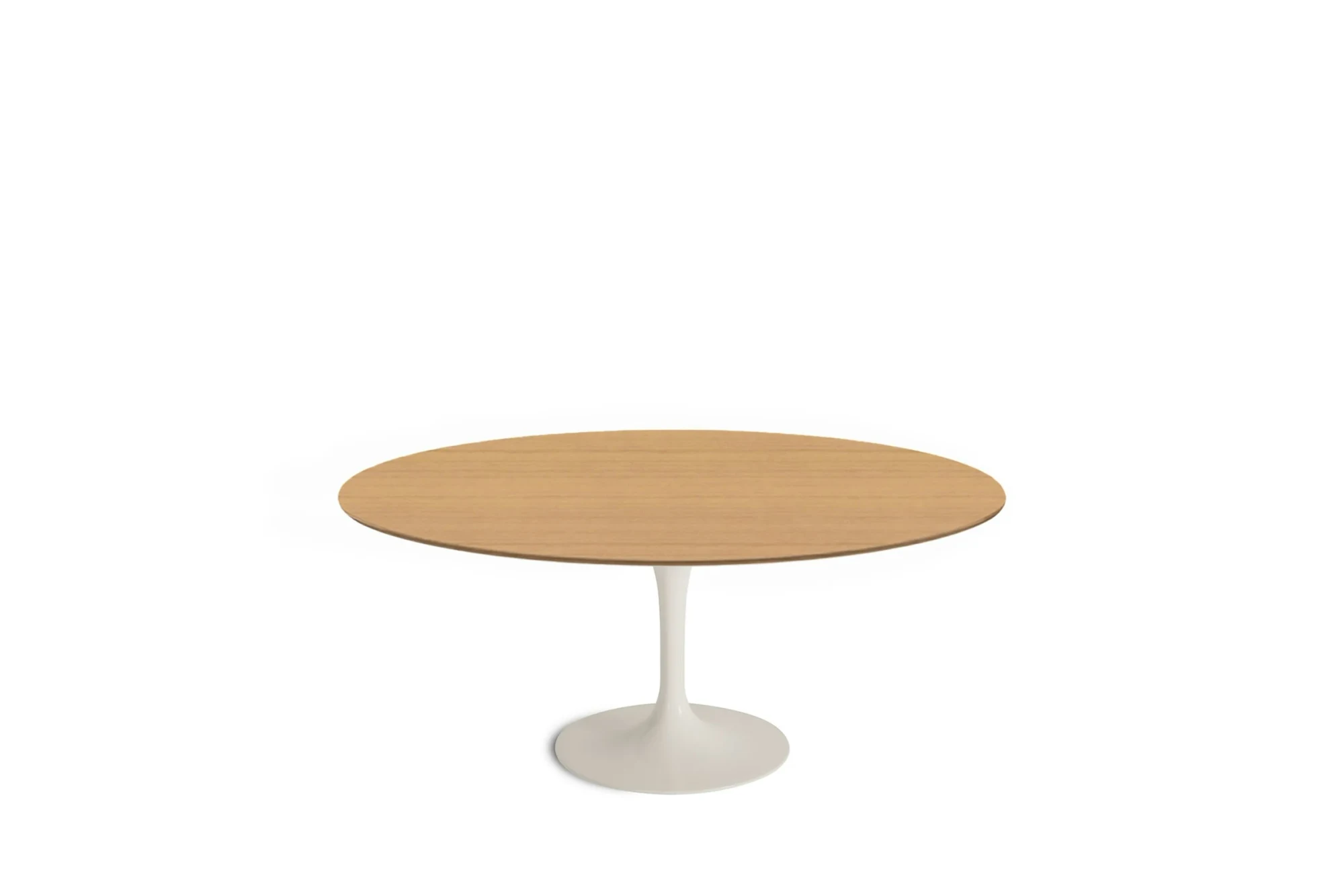
Saarinen Coffee Tables
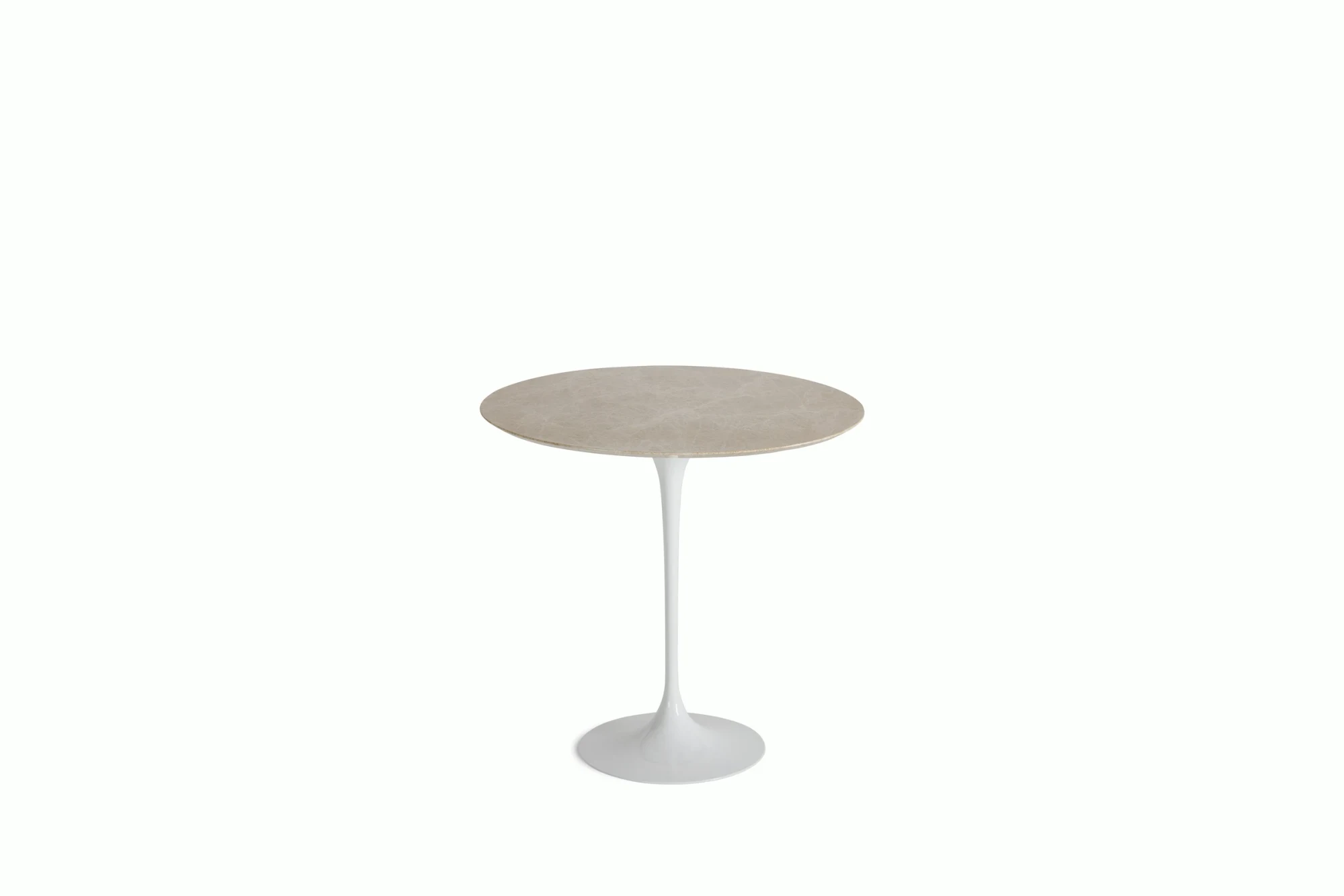
Eero Saarinen's 1957 pedestal coffee tables in round and oval, with a choice of tops and bases
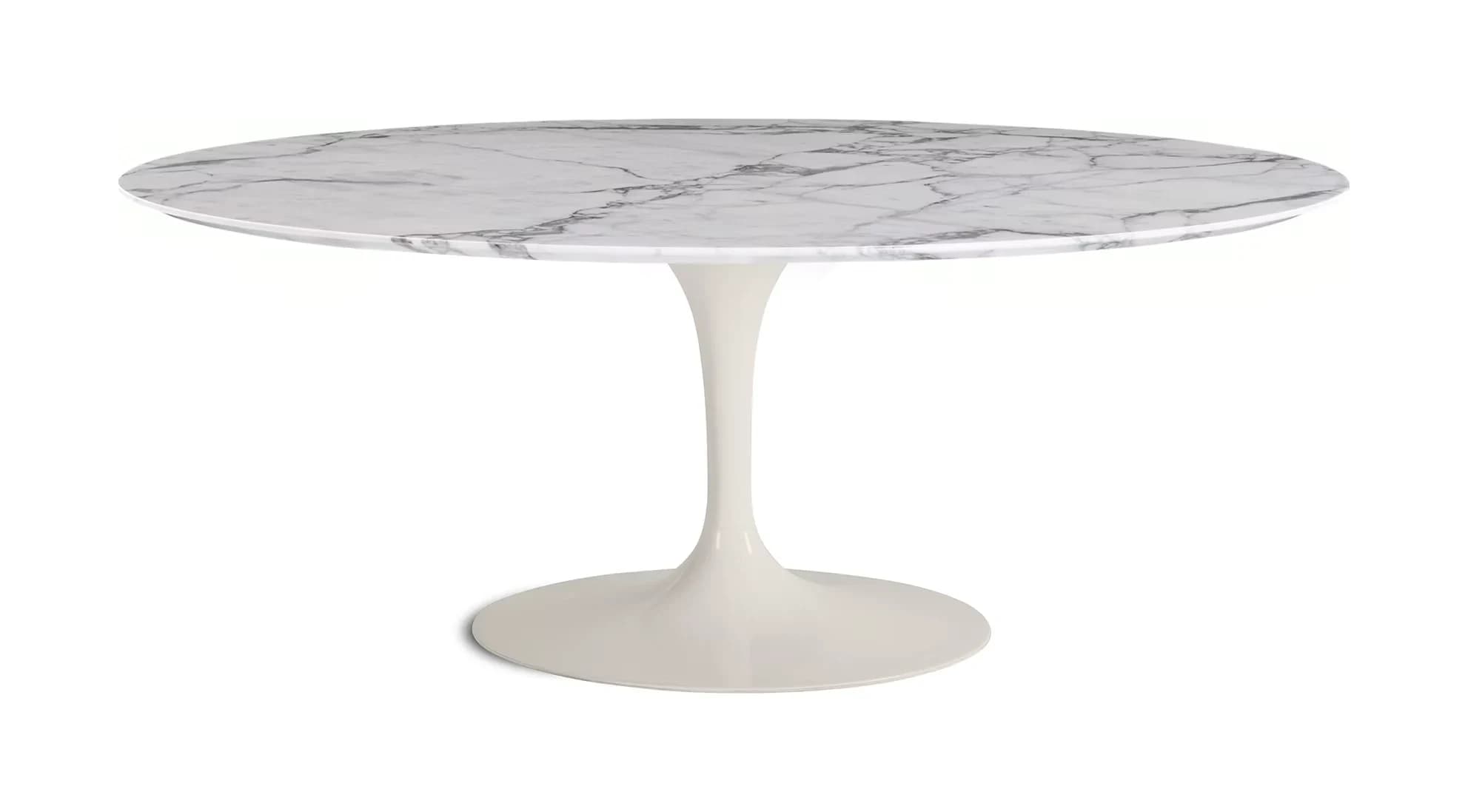
Collection
Saarinen Collection
Knoll's Saarinen Collection: Eero Saarinen's Pedestal tables and Tulip chairs of 1957, the Womb Chair and the Executive Chair, from Cranbrook to Knoll.