
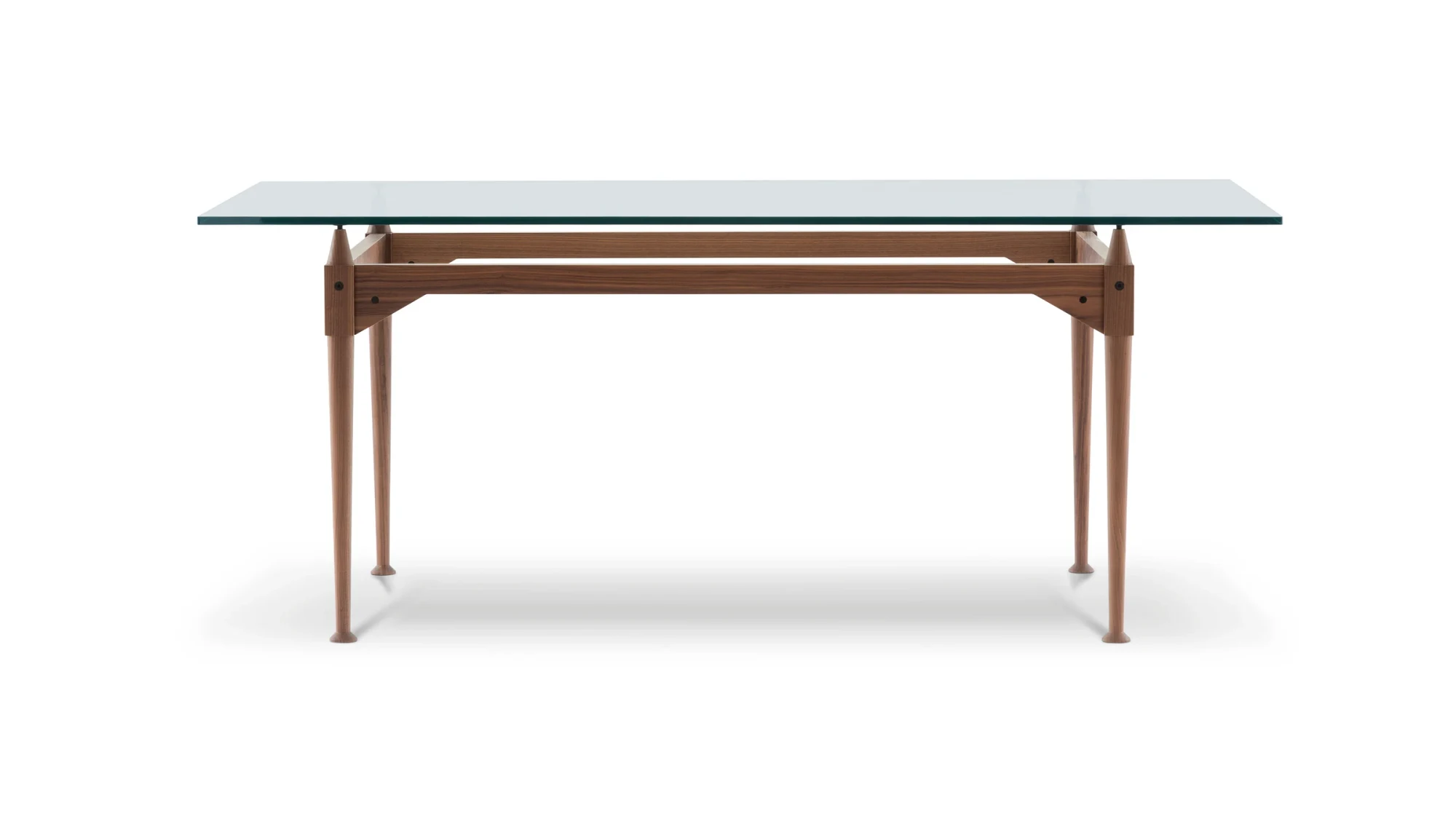
TL3 Table
Take-apart glass-top table by Franco Albini, 1953, on turned solid ash or walnut legs.


1800 × 750 × 850 mm
Source: spec sheet PDF — 839 12/13/14 rectangular table — published as W 180 × D 85 × H 75 cm
1953
Description
Overview
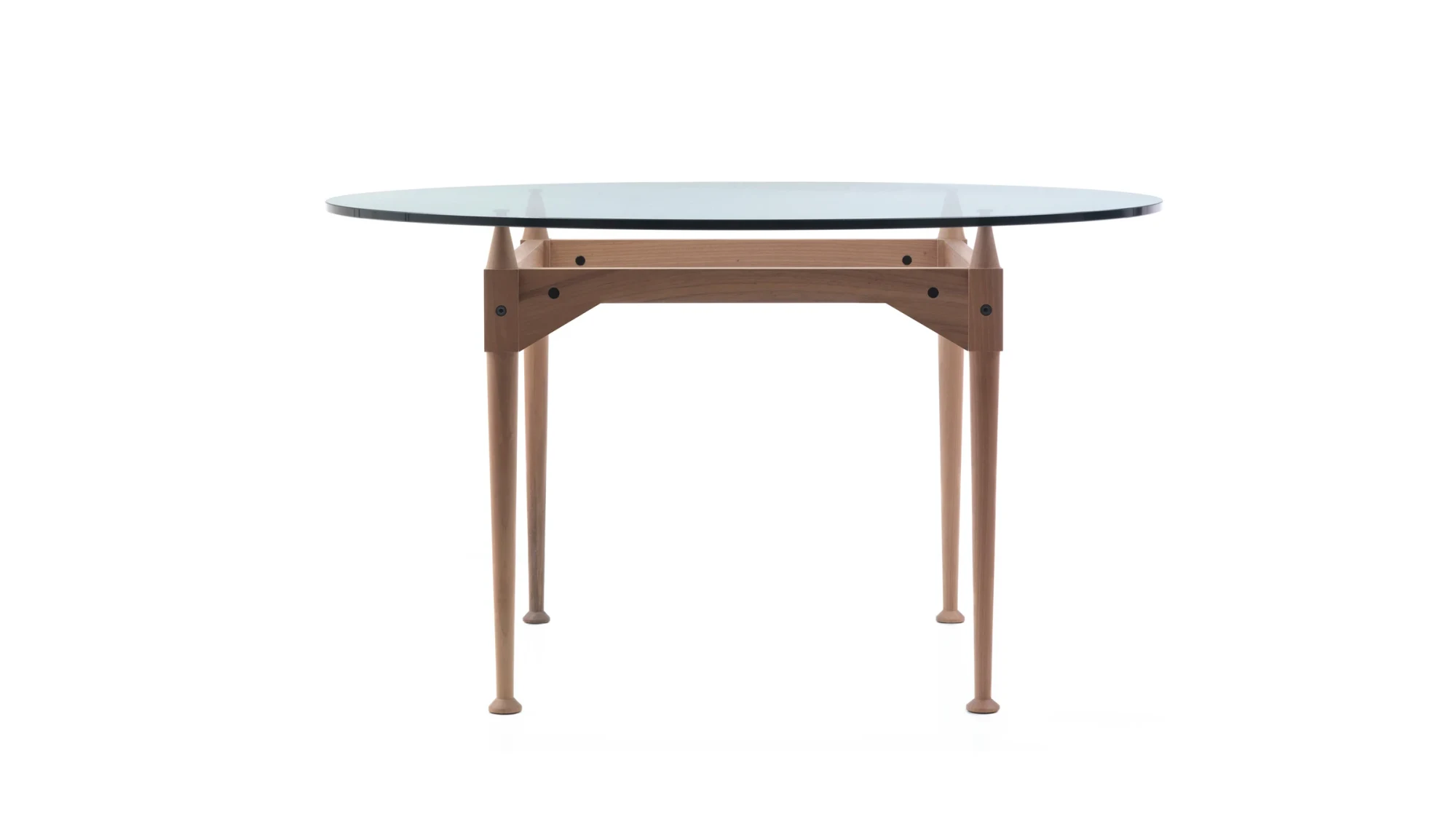
TL3 is a table by Franco Albini with a glass top, a rectangular 180 x 85 cm version and a round one 130 cm across. The sheet dates the design to 1953 and the Cassina production to 2013; the page headline gives 2013.
Construction
The base is solid ash or American walnut. The legs are turned along their whole surface except for a square section that carries the horizontal cross-beam, and an upturned wooden cone on each leg separates the frame from the top.
Specifications
- Rectangular (839 12/13/14): 180 cm long, 85 cm deep, 75 cm high
- Round (839 42/43/44): 130 cm across, 75 cm high
- Base: 130 x 76 cm on the rectangular table; 76 cm on the round one
- Top: glass, 1.5 cm thick
Story
The strut as a recurring element
The page says Albini designed the table with the strut element he had already used in the Veliero and Infinito bookcases. It describes the strut as a recurring theme in his concept.
Disassembly shown in the screws
According to the page, visible screws at the joints between legs and cross-pieces are a reminder that the table can be taken apart. Cassina revisited the table with the Fondazione Albini, working from archive drawings, and chose a glass top so that the carpentry details can be seen more clearly.
More by Franco Albini
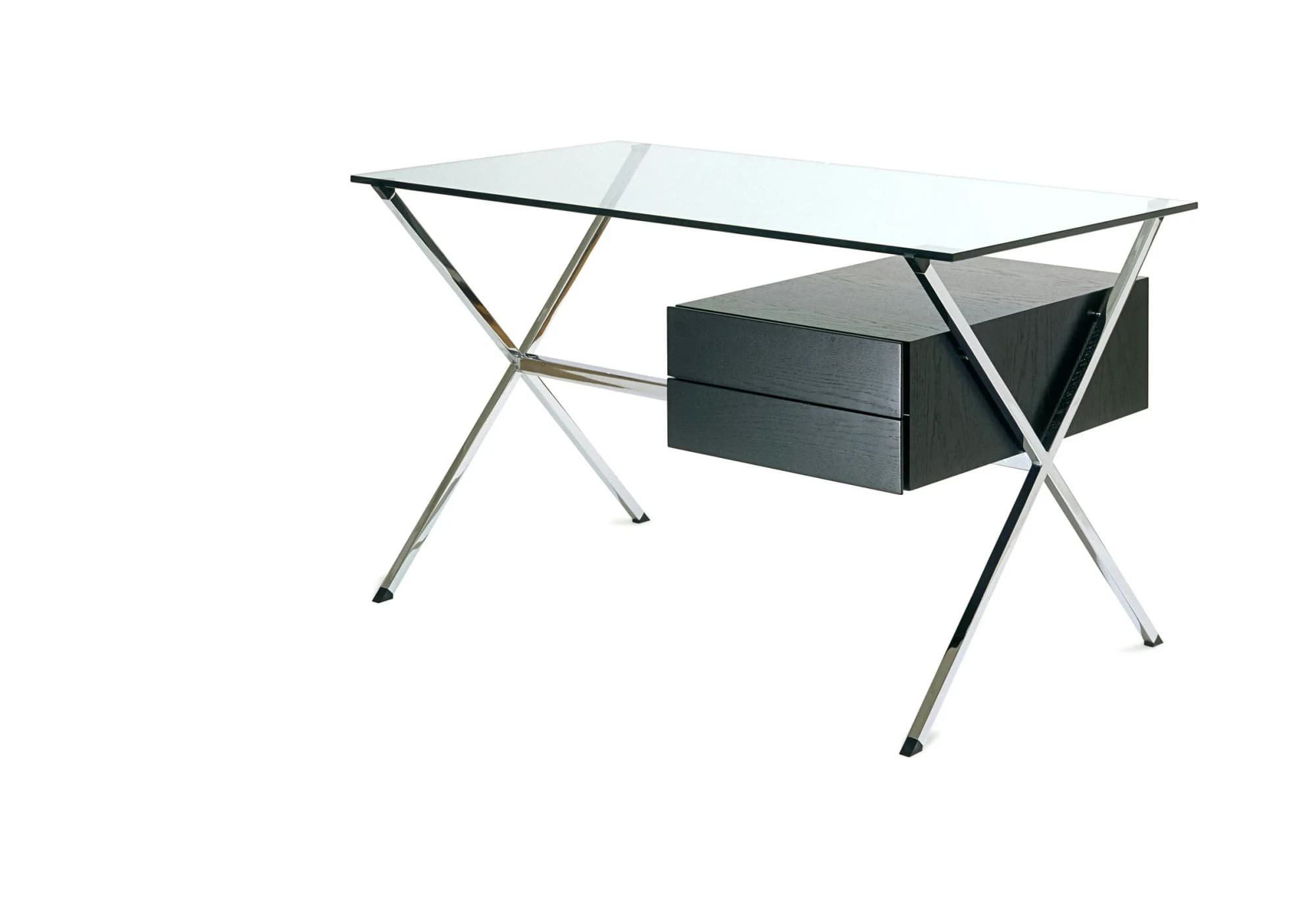
Albini Desk
Franco Albini's glass-topped pedestal desk on a chrome steel X-frame with a floating drawer pedestal

Cavalletto Table
Franco Albini's 1950 trestle table: ash or walnut frame braced by two burnished brass rods.
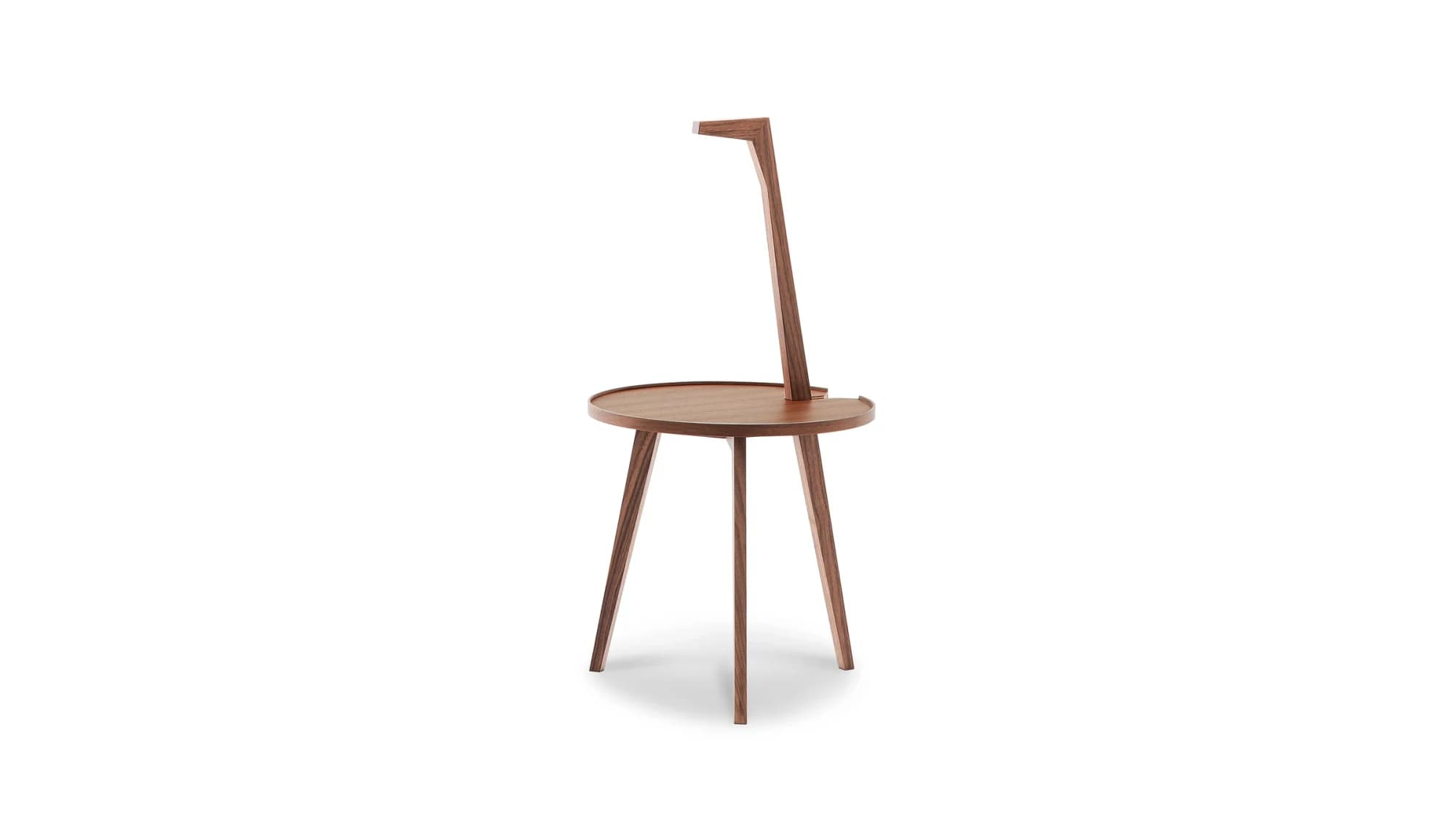
Cicognino Table
Franco Albini's three-legged "little stork" table, 1953, with one leg rising into a handle.
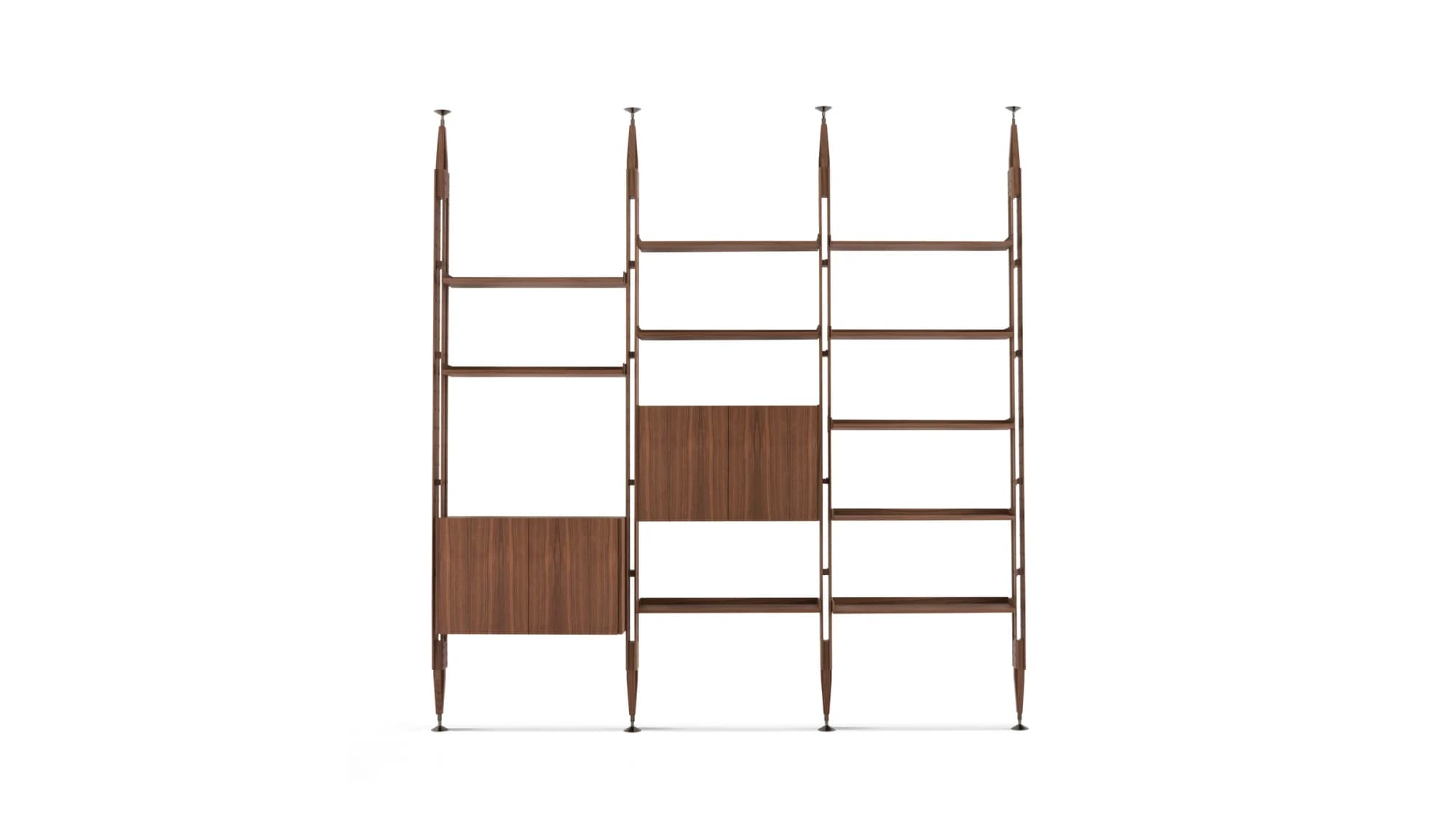
Infinito Bookcase
Free-standing double-sided bookcase by Franco Albini, 1956-57, on floor-to-ceiling uprights.