
Stadera Table
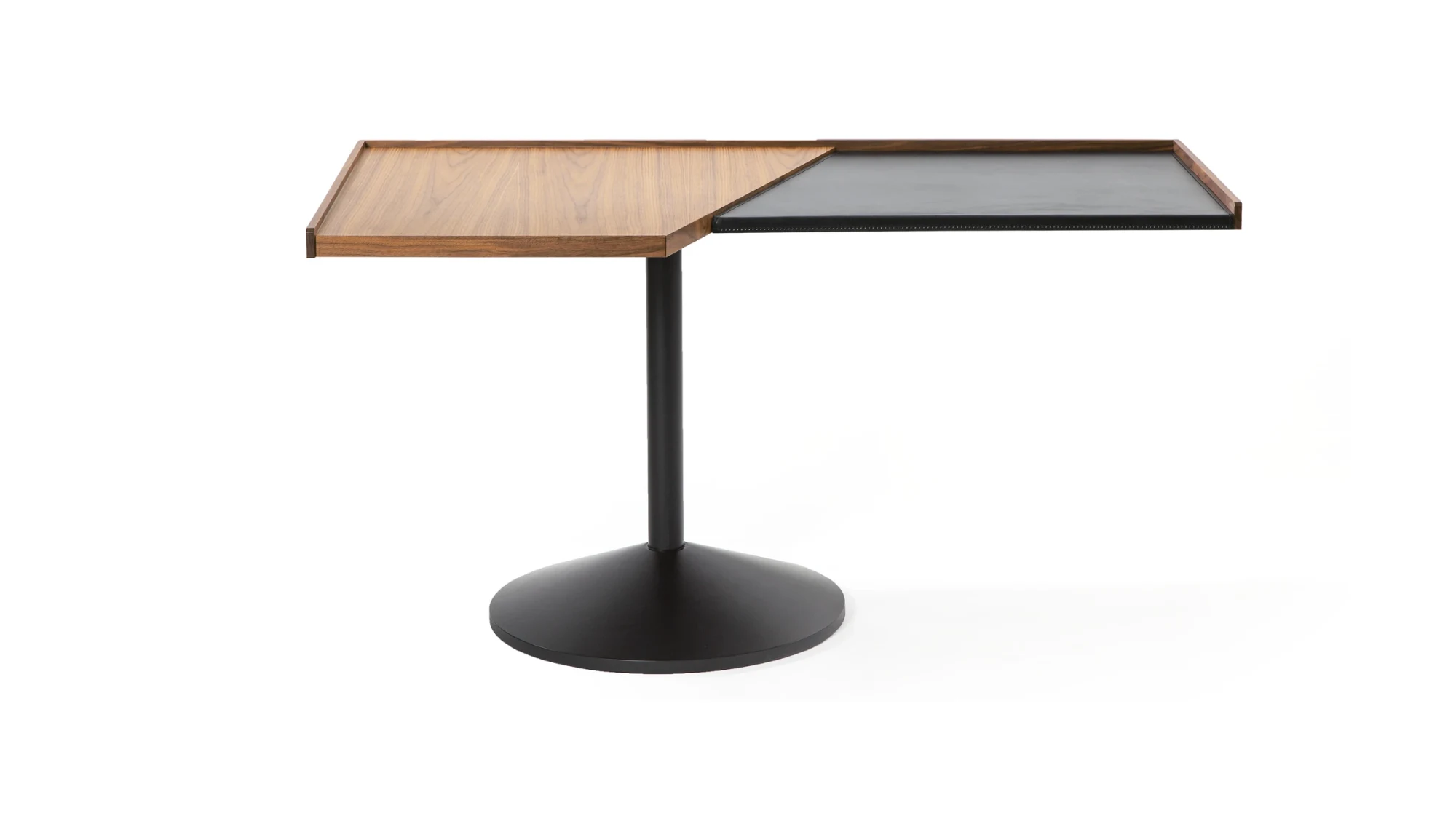
Desk-table by Franco Albini, 1954: two trapezoidal tops on a single black steel leg and round base.


1430 × 760 × 830 mm
Source: technical drawing image — 840 01 walnut desk-table — published as W 143 × D 83 × H 76 cm
1954
EUR 6,190, Stadera, Canaletto walnut frame with Briar top, cassina.com worldwide shop, 2026-10-13
Description
Overview
Stadera is a desk-table by Franco Albini made of two side-by-side trapezoidal tops, one smaller than the other, carried by a single steel support. The sheet's "Designed by" line reads "Franco Albini, 1954" and its "Produced" line "Cassina, 2015".
Construction
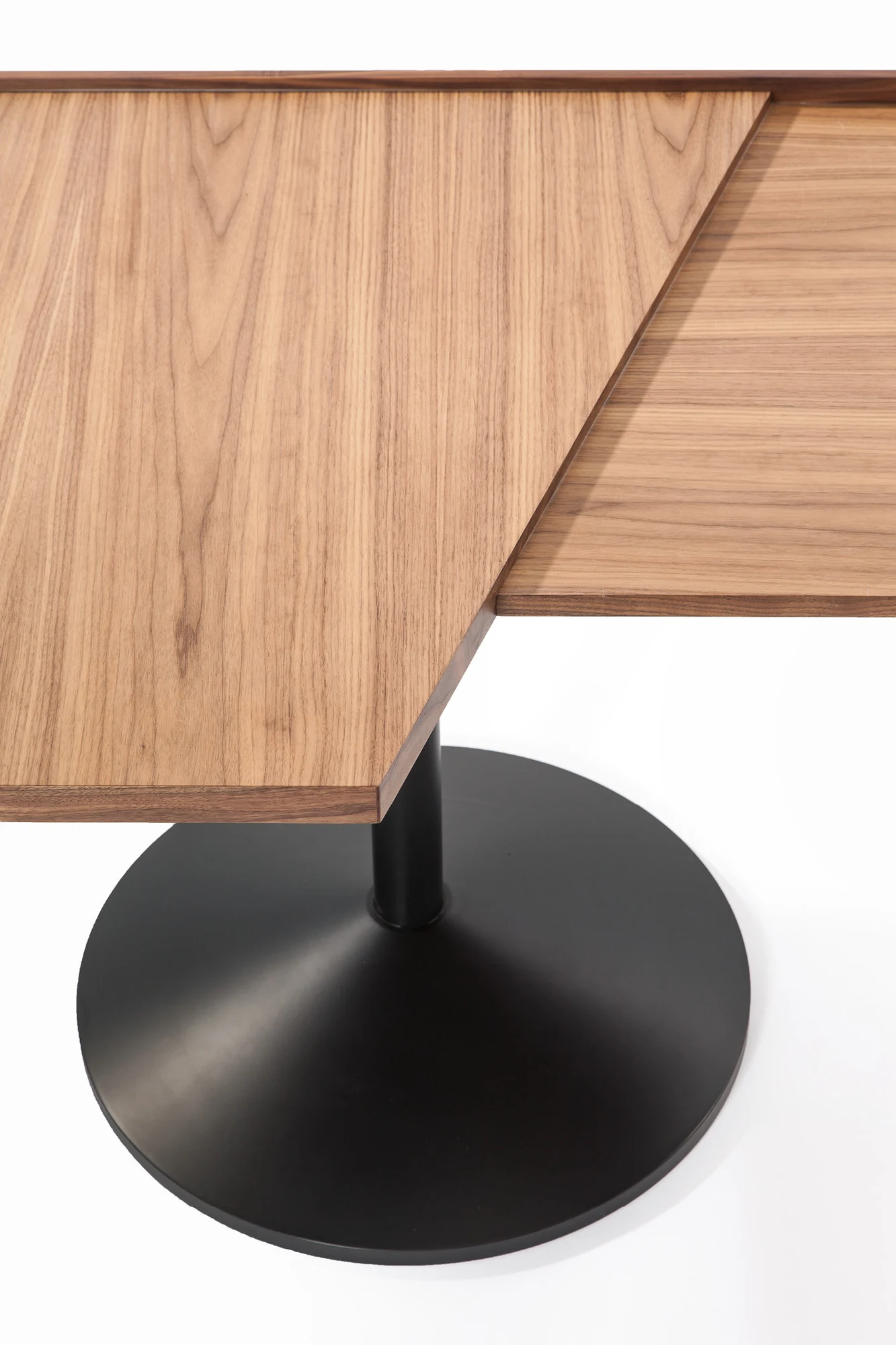
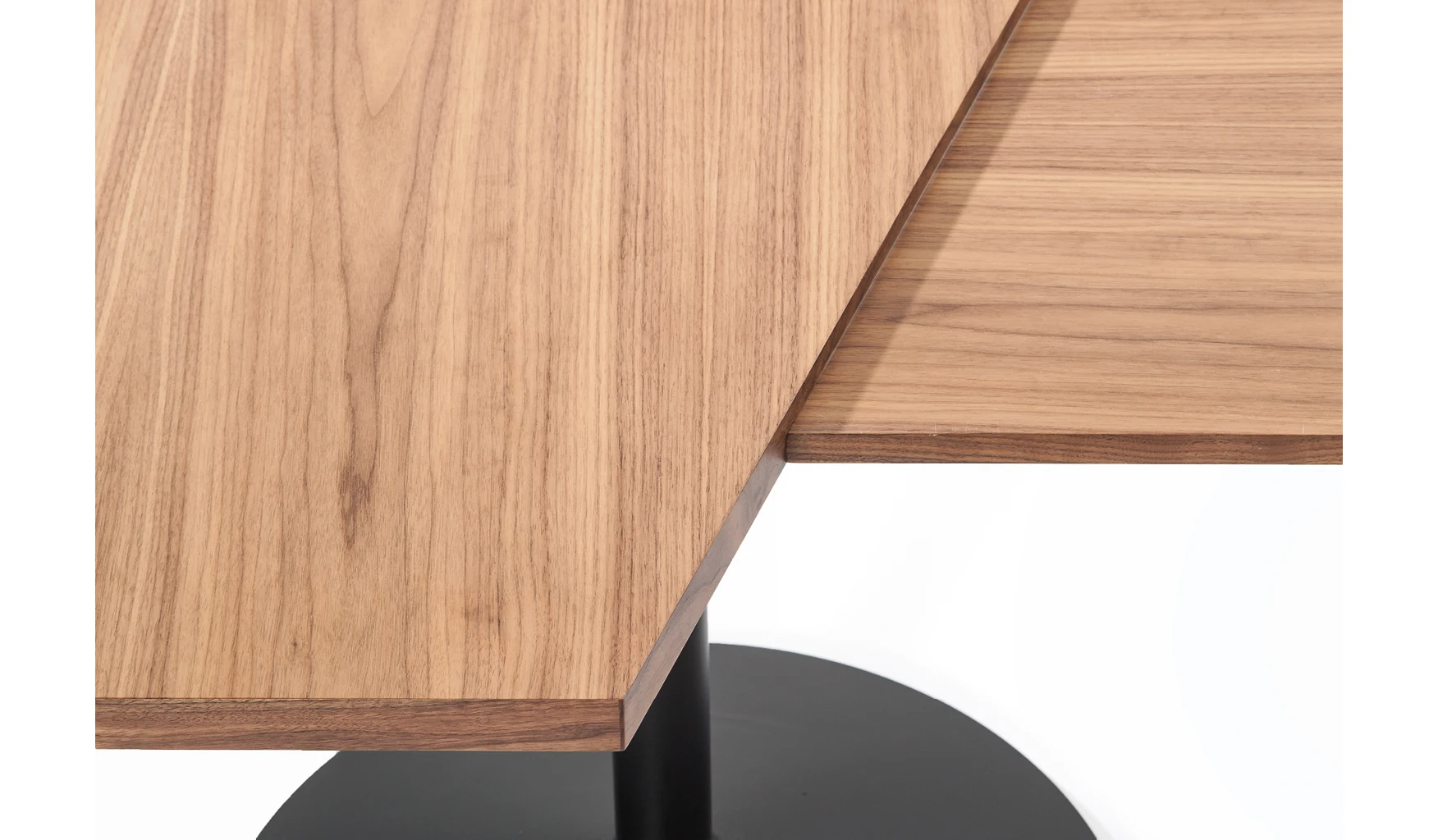
The sheet lists a top in wood particle panel (chipboard) with solid-wood perimeter parts and veneered surfaces, finished in natural American walnut. Under the top sits a cross frame in steel plate, with a steel leg on a round base in steel plate covered by turned steel sheet, all in black matt finish, and black plastic feet.
Specifications
- Code 840 01: 143 cm wide, 83 cm deep, 76 cm high
- Top: two trapezoidal tops, the higher of the two available with a leather top
- Cover: saddle hide cover for the main top
Story
Balance at play
Cassina's page titles the piece "Balance at play" and describes a desk-table whose two side-by-side trapezoidal tops rest on one steel base. The name refers to the Roman balance, called stadera in Italian, a weighing scale with a beam of two arms of different lengths and a counterweight that slides along the graduated, longer arm.
A single leg and a frame
The page and sheet say the single-leg support might suggest a lack of balance, and that equilibrium is established on the principle of the Roman balance. A frame delineates the shape of the planes, and one plane is thicker than the other. The sheet adds that the table can be supplied with a leather cover placed on the main top to emphasise its tactile and visual qualities.
More by Franco Albini
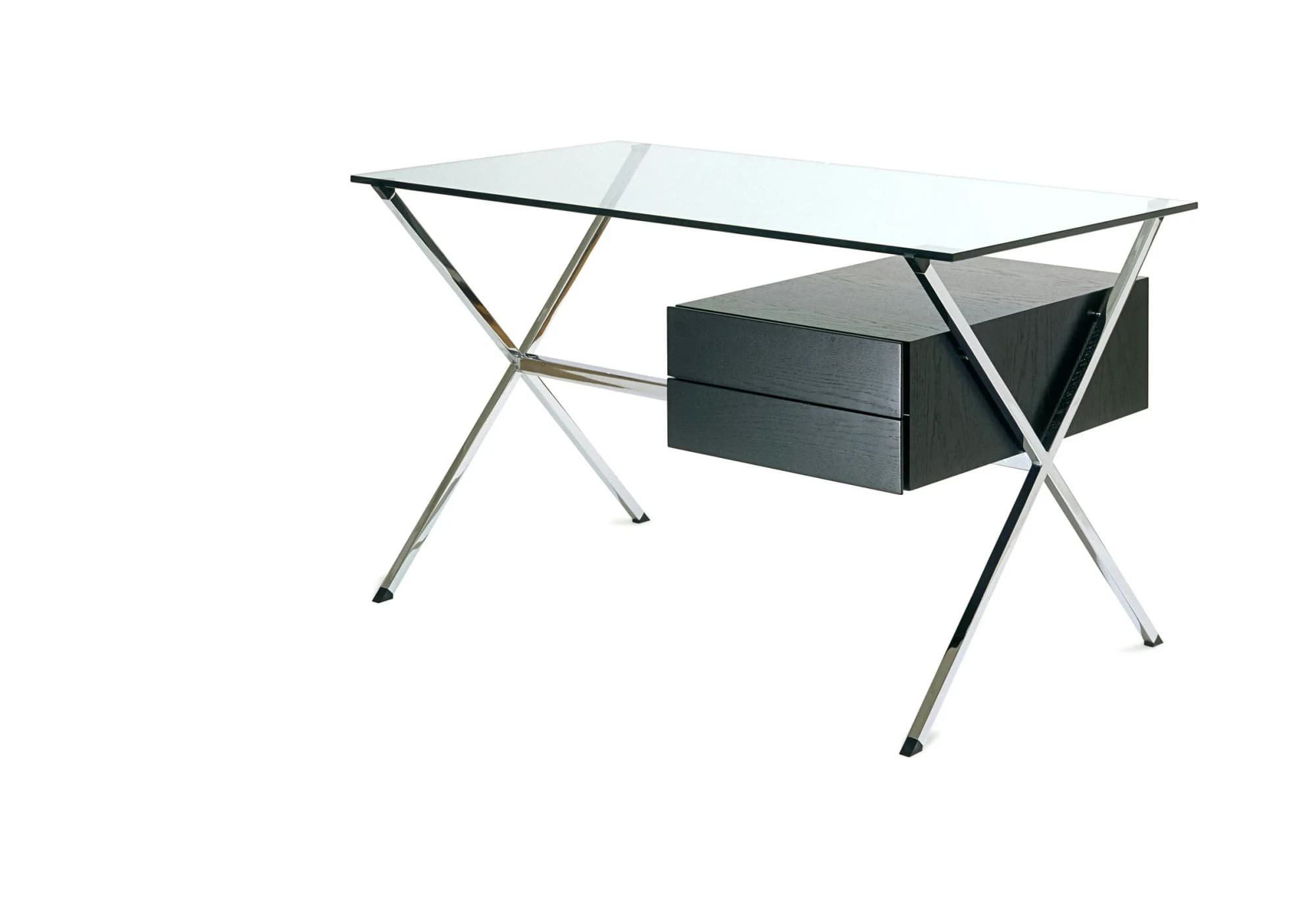
Albini Desk
Franco Albini's glass-topped pedestal desk on a chrome steel X-frame with a floating drawer pedestal

Cavalletto Table
Franco Albini's 1950 trestle table: ash or walnut frame braced by two burnished brass rods.
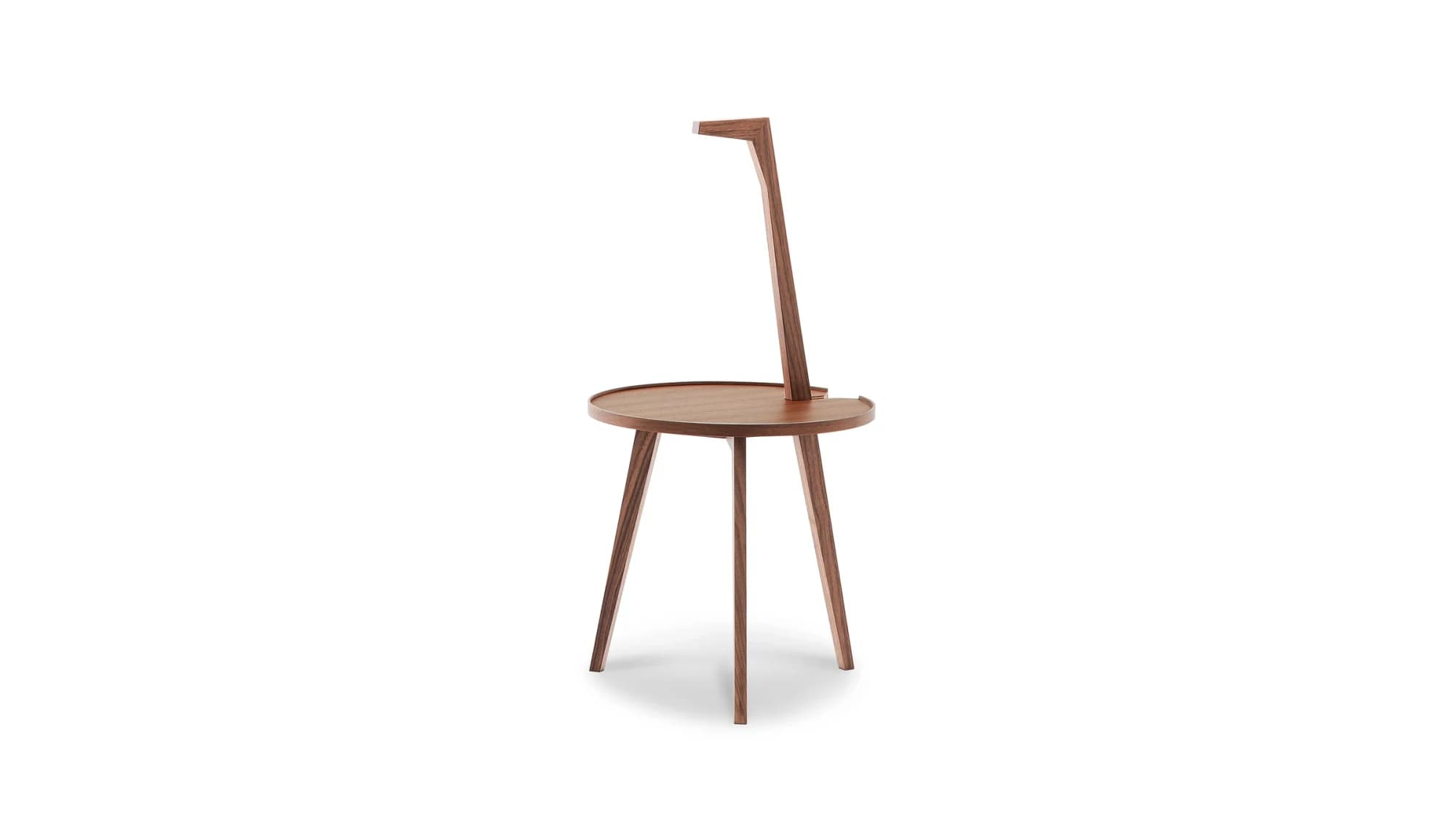
Cicognino Table
Franco Albini's three-legged "little stork" table, 1953, with one leg rising into a handle.
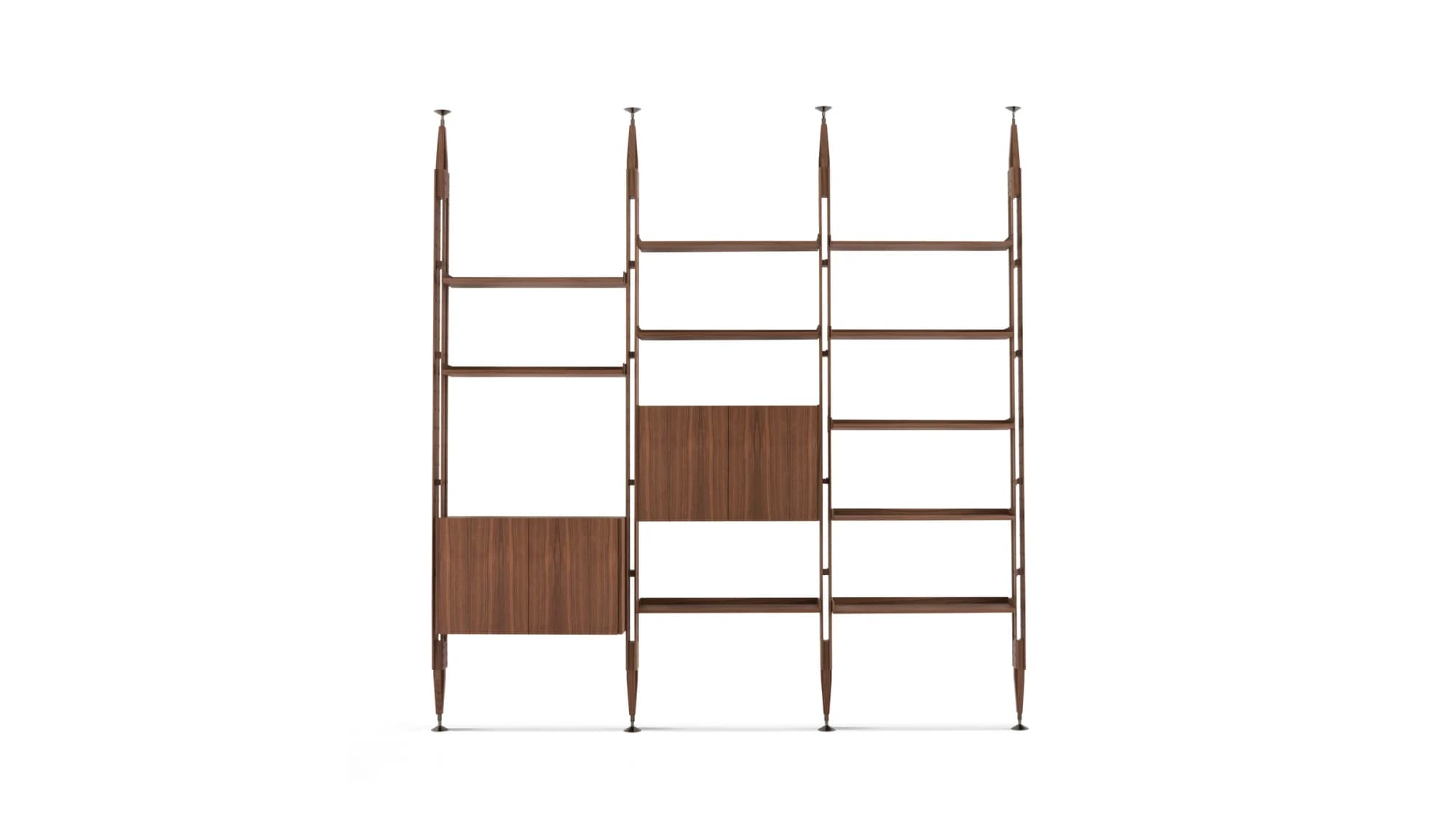
Infinito Bookcase
Free-standing double-sided bookcase by Franco Albini, 1956-57, on floor-to-ceiling uprights.