
D.859.1
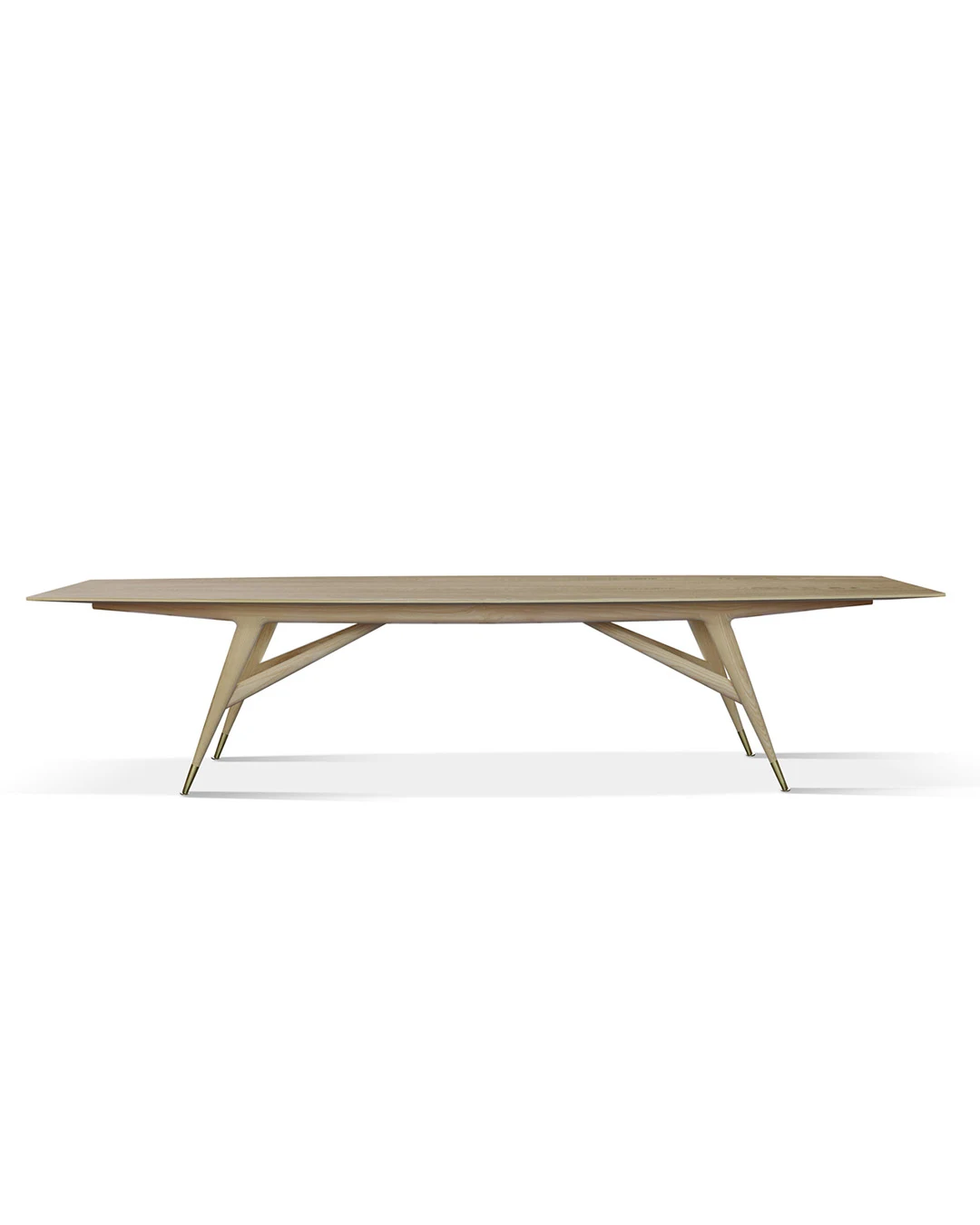
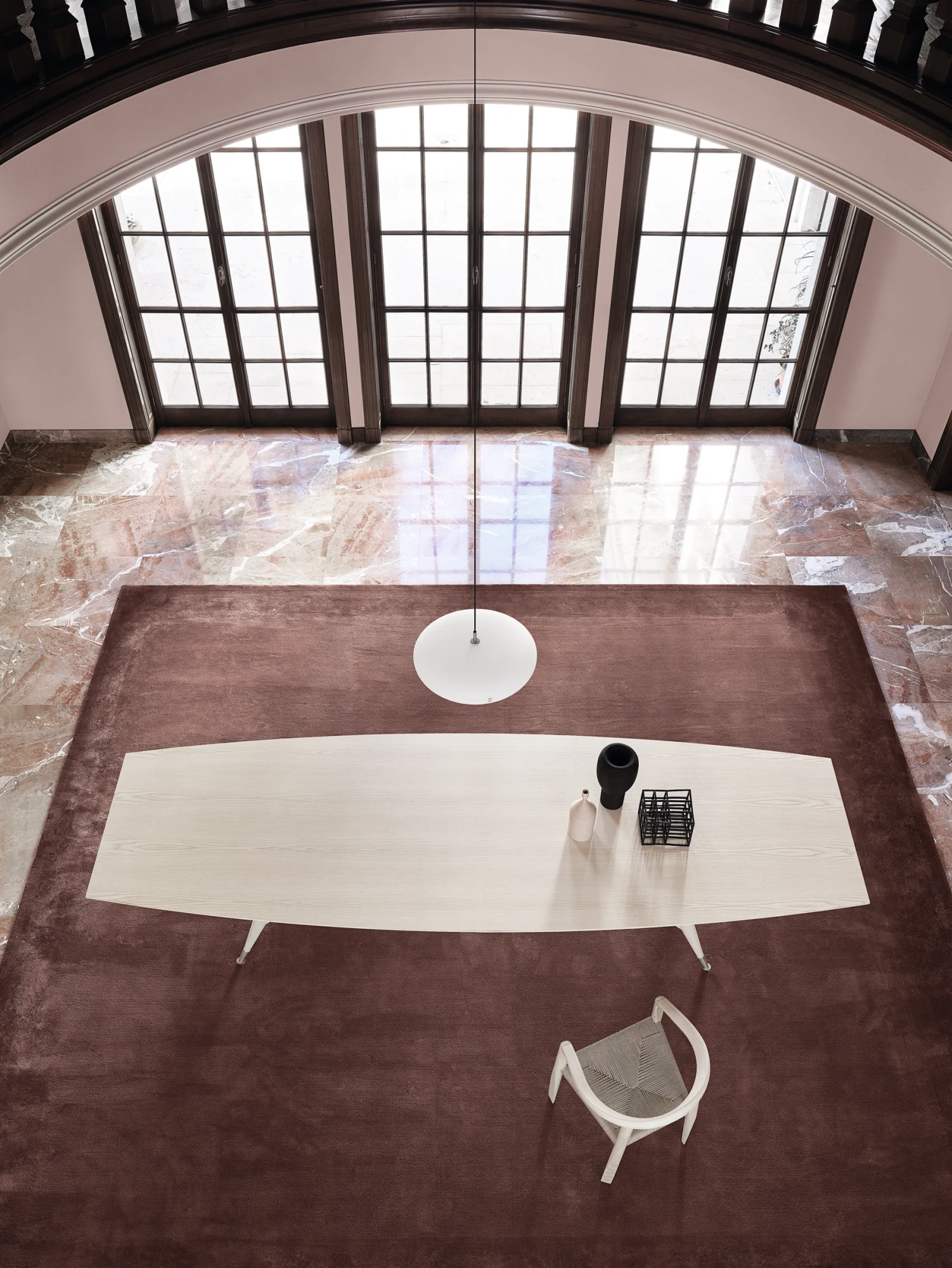
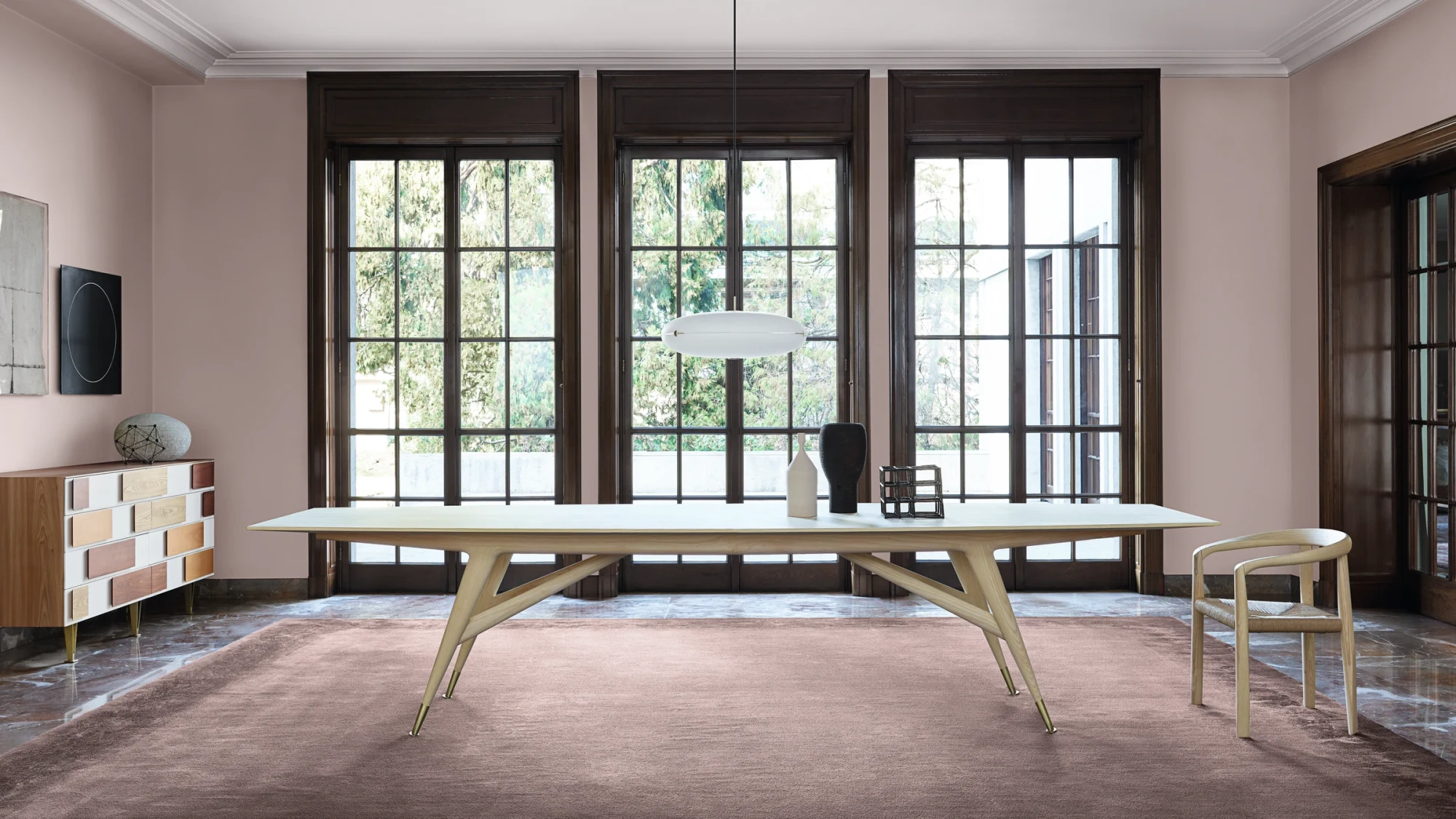
Ponti's 1959 meeting table for the Time&Life auditorium, with a tapered ash top on trapezoidal legs.


3600 × 750 × 1120 mm
Source: spec sheet PDF — D.859.1C table, 360 cm
1959
Description
Overview
D.859.1 is a table by Gio Ponti, designed in 1959 for the auditorium of the Time&Life Building in New York and reissued by Molteni&C in 2018. The datasheet says it was designed primarily as a meeting table for up to ten people, over 3.60 m long, with legs that make a trapezoidal single-span bridge under a large tapered top.
Construction
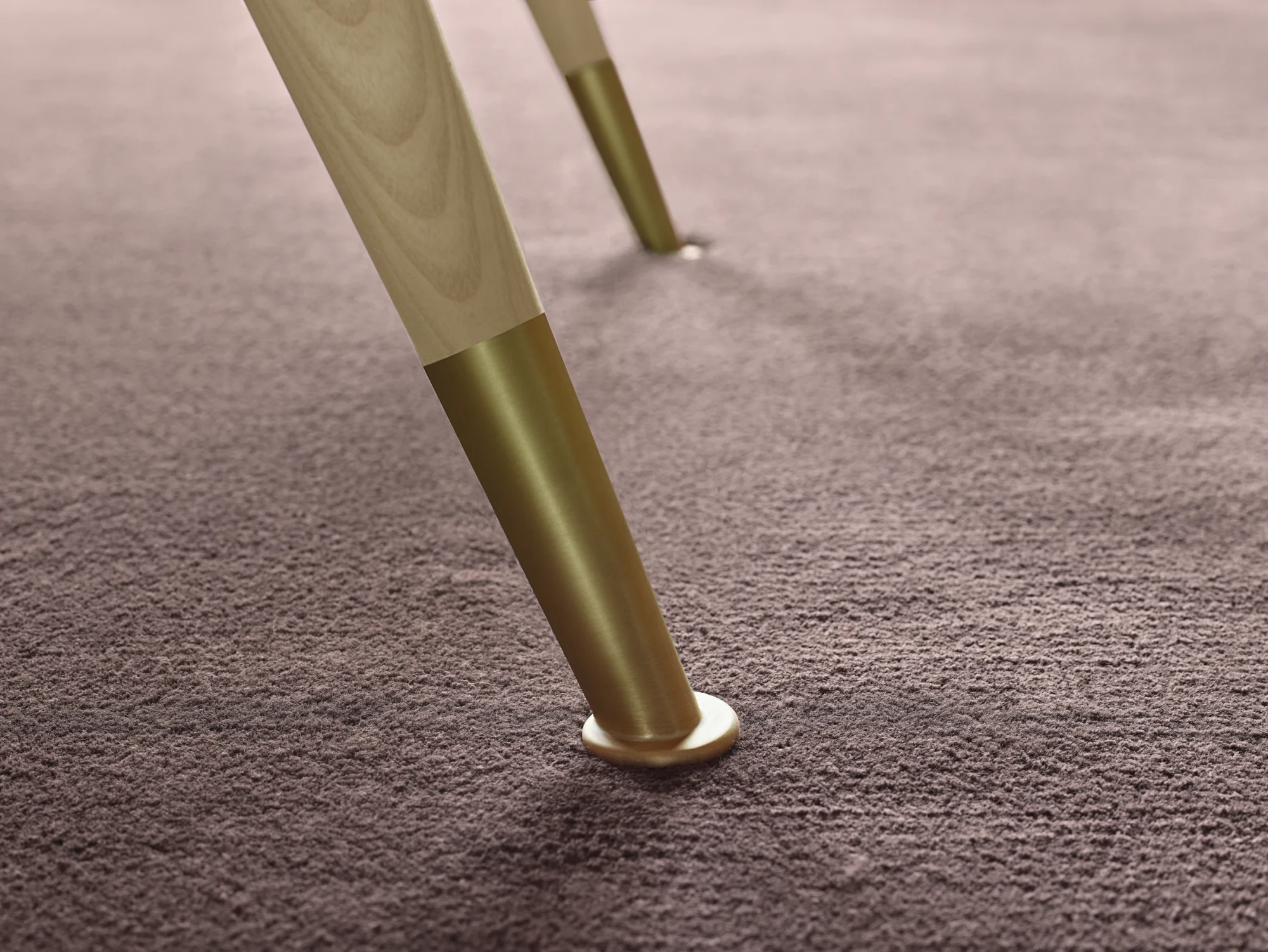
Under the top, the legs and frame are solid ash. Inside the top is a core of spruce slats (Picea abies) with outer parts in high-density fibre panel, covered with sliced ash veneer. Each leg ends in a satin-finish brass foot.
Specifications
- D.859.1C, table: 360 cm long, up to 112 cm deep, 75 cm on the vertical dimension line (not labelled on the drawing), with a second vertical line of 71 cm labelled as the undertop height
Story
The Time&Life auditorium
The datasheet says Ponti was enlisted in 1958 to design the auditorium of the Time&Life Building at 1271 Avenue of the Americas in New York, headquarters of Time Inc., and calls it his most prestigious project in the city. The table stands out among the auditorium furnishings for its size and for its simple, refined design.
Legs, top and ferrules
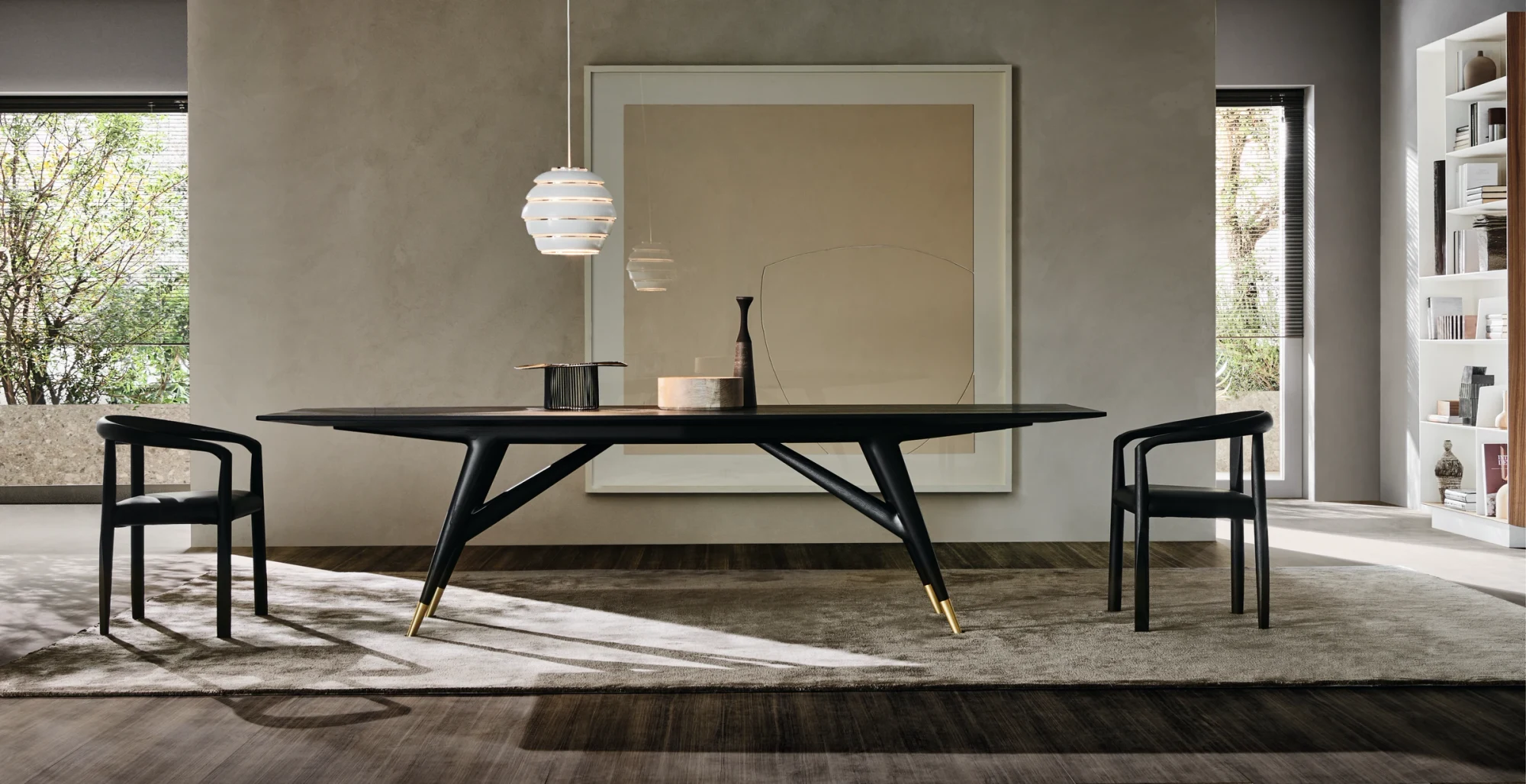
The sheet describes fine-membered legs forming a trapezoidal single-span bridge for a large tapered top that conveys aerodynamics; the page uses the words slender-legged trapezoidal base and aerodynamic form. It says the original was solid ash with brass ferrules (the page says bronze), now also offered in black stained ash, and that two smaller versions reproduce the proportions of the original.
More by Gio Ponti
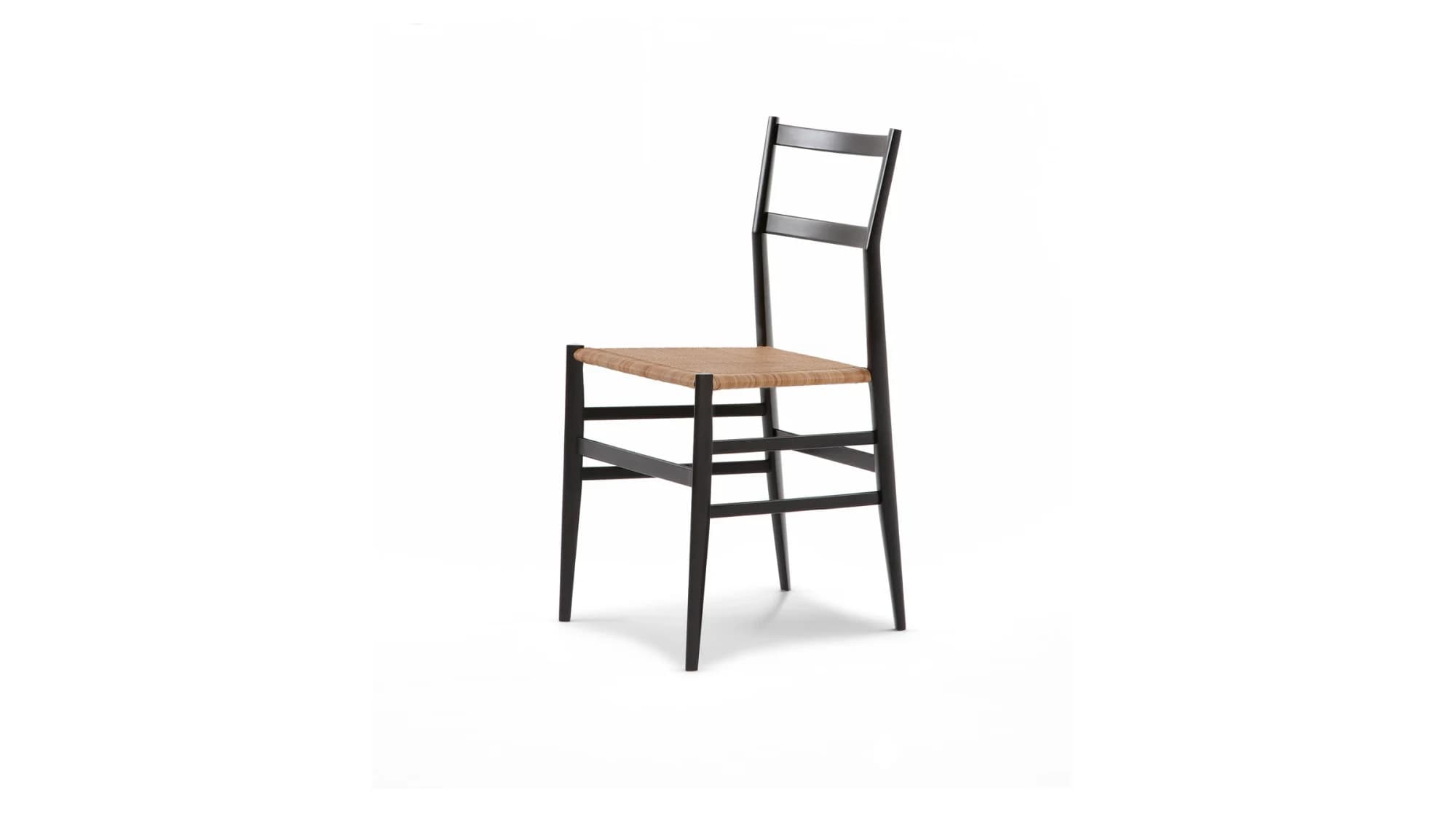
699 Superleggera
Gio Ponti's 1957 ash chair with 18 mm triangular legs and a hand-woven or upholstered seat.
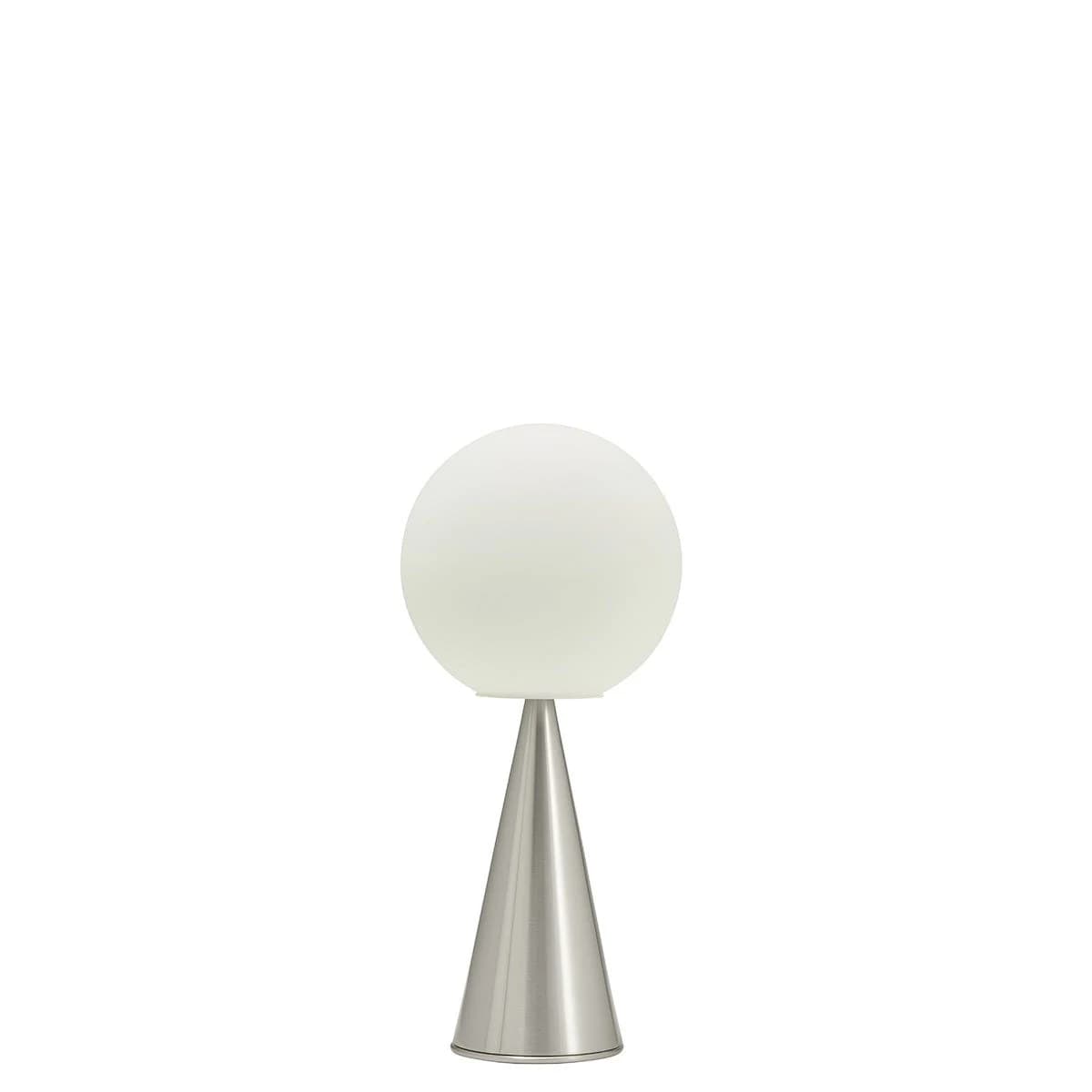
Bilia
Gio Ponti's 1932 table lamp: a frosted glass sphere balanced on a metal cone.
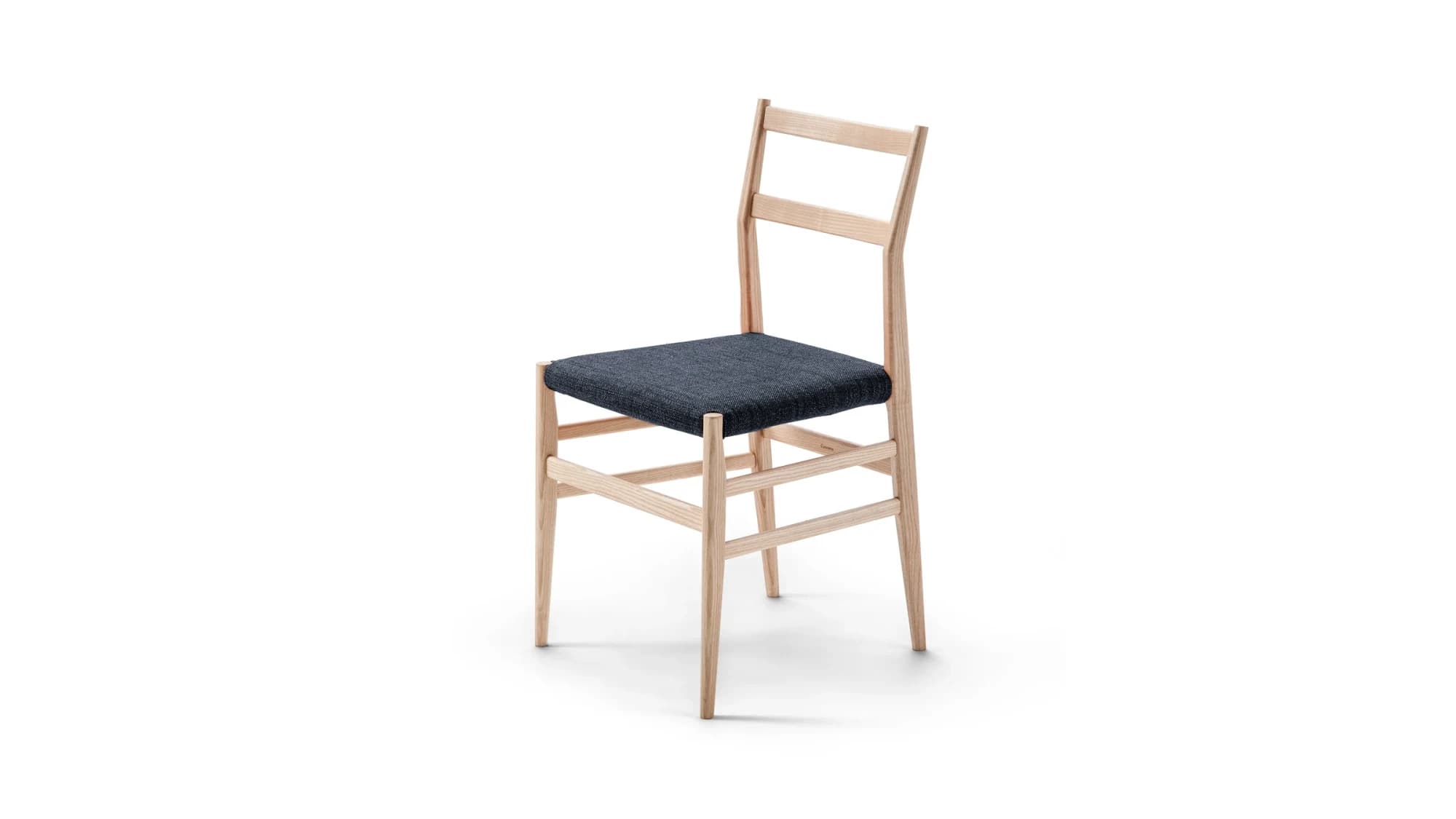
Leggera Chair
Wood chair and armchair by Gio Ponti, 1952, with an upholstered seat; made by Cassina.
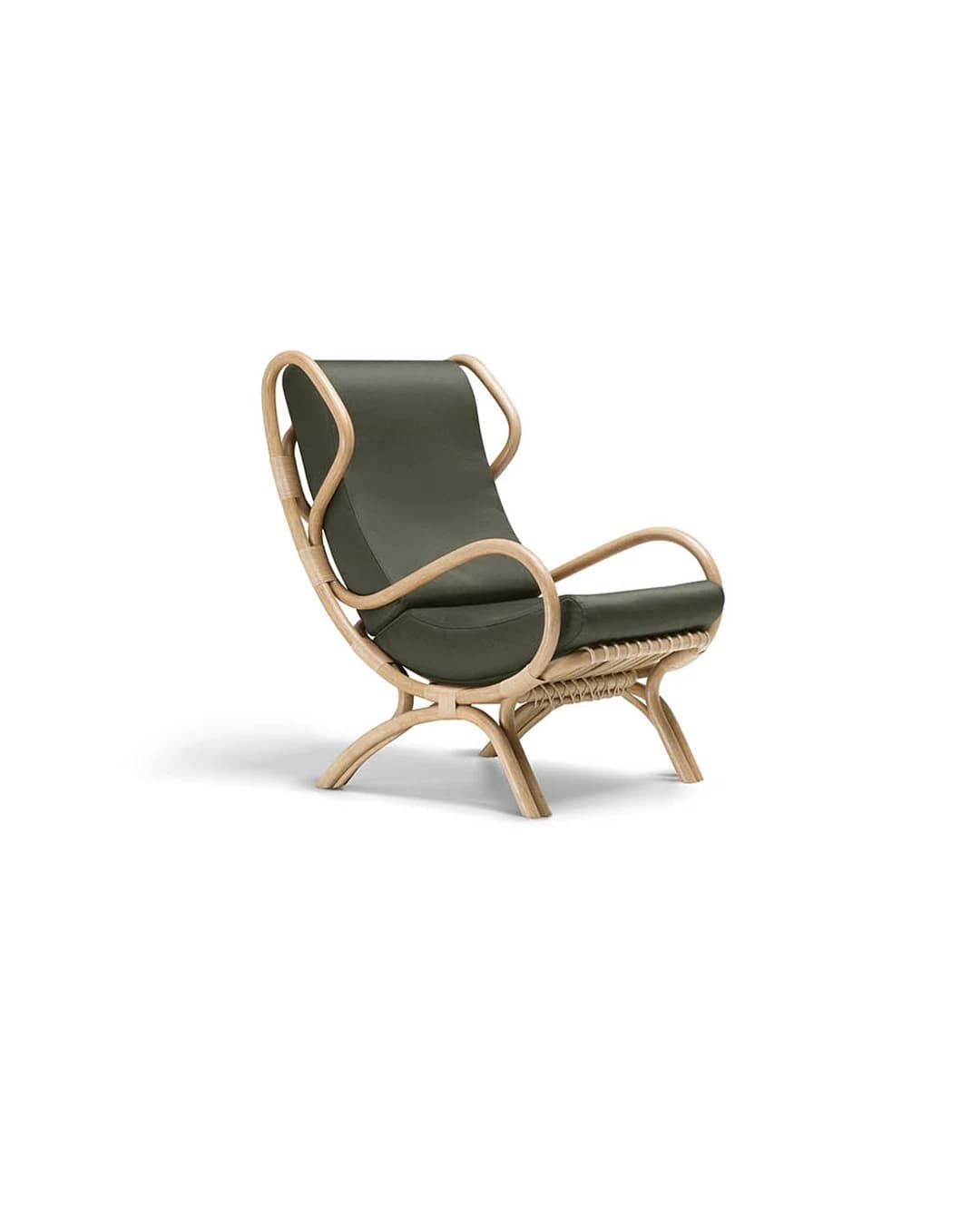
Continuum D.163.7
Gio Ponti's 1963 rattan armchair, hand-curved and made in Italy with Bonacina 1889.