
Designer
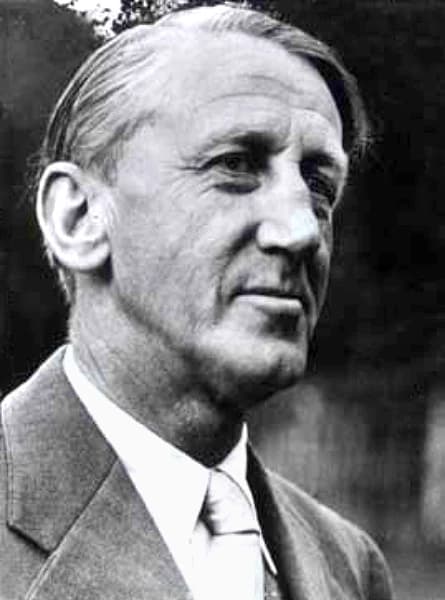
Kaare Klint
Kaare Klint (1888-1954) was a Danish architect and furniture designer, born in Copenhagen. Carl Hansen & Søn calls him the founder of modern Danish design. He was the son of the architect Peder Vilhelm Jensen-Klint, who designed the…
Biography
Background
Kaare Klint (1888-1954) was a Danish architect and furniture designer, born in Copenhagen. Carl Hansen & Søn calls him the founder of modern Danish design. He was the son of the architect Peder Vilhelm Jensen-Klint, who designed the Grundtvig Church in Copenhagen; Wikipedia adds that Klint completed the church after his father's death in 1930. According to Wikipedia he apprenticed as a furniture maker in Kalundborg and Copenhagen from 1893.
Signature Style
Klint worked from human proportions and a strong focus on function, measuring and simplifying earlier furniture and adapting it to the body. With his students at the Royal Danish Academy of Fine Arts he carried out a study of everyday objects in which everything was measured in detail and compared with the requirements of use. Carl Hansen & Søn describes his design as a balance of form and materials, with simple, timeless lines and uncompromising craftsmanship.
Notable Works
- Faaborg Chair (KK96620), designed in 1914 for the Faaborg Museum
- Large Red Chair (KK37580, 1927) and Small Red Chair (KK39490, 1928) of the Red Chair Series
- Mix Chair (KK43960), unveiled in 1930
- Sofa with high sides (KK41180), a two-seater version of a 1930 design for the Prime Minister's office
- Safari Chair (KK47000), final design shown in 1933
- Easy Chair (KK53130), designed in 1935 for a guild anniversary
- Spherical Bed (KK55761, presented 1938) and English Chair (KK44880, presented 1931), both made to order by Carl Hansen & Søn
Legacy
Klint co-founded the School of Furniture Design at the Royal Danish Academy in 1924 and later became a professor there. Hans J. Wegner, Mogens Koch, Arne Jacobsen and Poul Kjærholm are among the designers he inspired. His honours include the Eckersberg Medal (1928), the title of Royal Designer for Industry in London (1949) and the C. F. Hansen Medal (1954).