Image source: Vitra — Jean Prouvé Collection
© Vitra and the respective rights holders. Quoted to accompany INTEBEE's independent design commentary and research.


Collection Story
Origin
Vitra's page for the collection says that a chair by Jean Prouvé marked the beginning of the company's relationship with his work, and that the collaboration with his heirs is still active after more than twenty years. Vitra's brochure traces it to a visit to Paris in the early 1980s, when Rolf Fehlbaum, now Chairman Emeritus, bought a vintage Antony chair of 1954. The Vitra Design Museum has since built what the brochure calls the most extensive museum collection of Prouvé furniture and objects. In October 1999, talks between the Prouvé family and Vitra led to an agreement giving Vitra the right to produce the furniture, and the work began in 2000 in close consultation with Catherine Prouvé, the designer's youngest daughter.
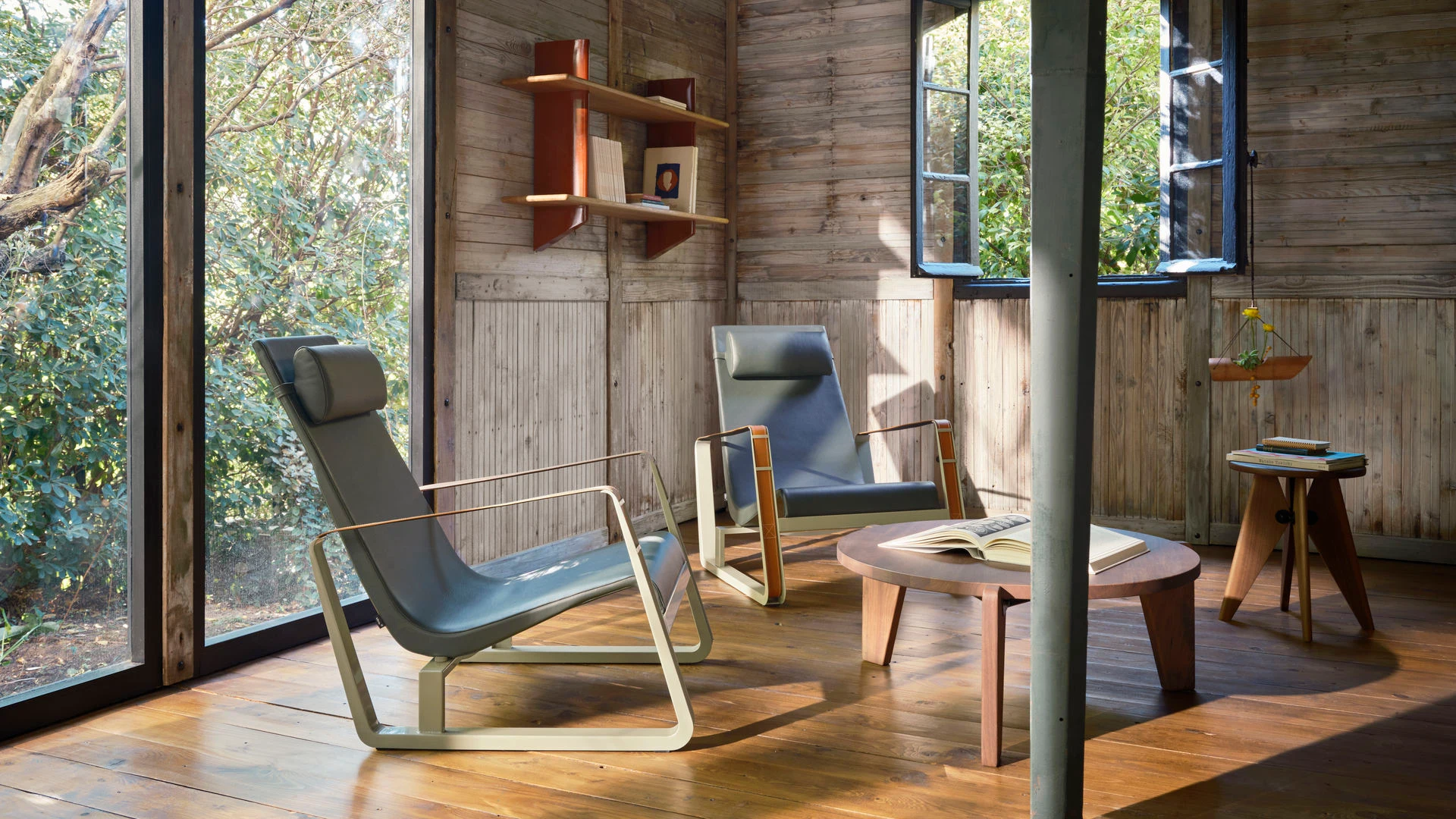 Image source: Vitra — Jean Prouvé Collection · © Vitra and the respective rights holders. Quoted to accompany INTEBEE's independent design commentary and research. · View official website ↗ · Image use & copyright policy
Design Language
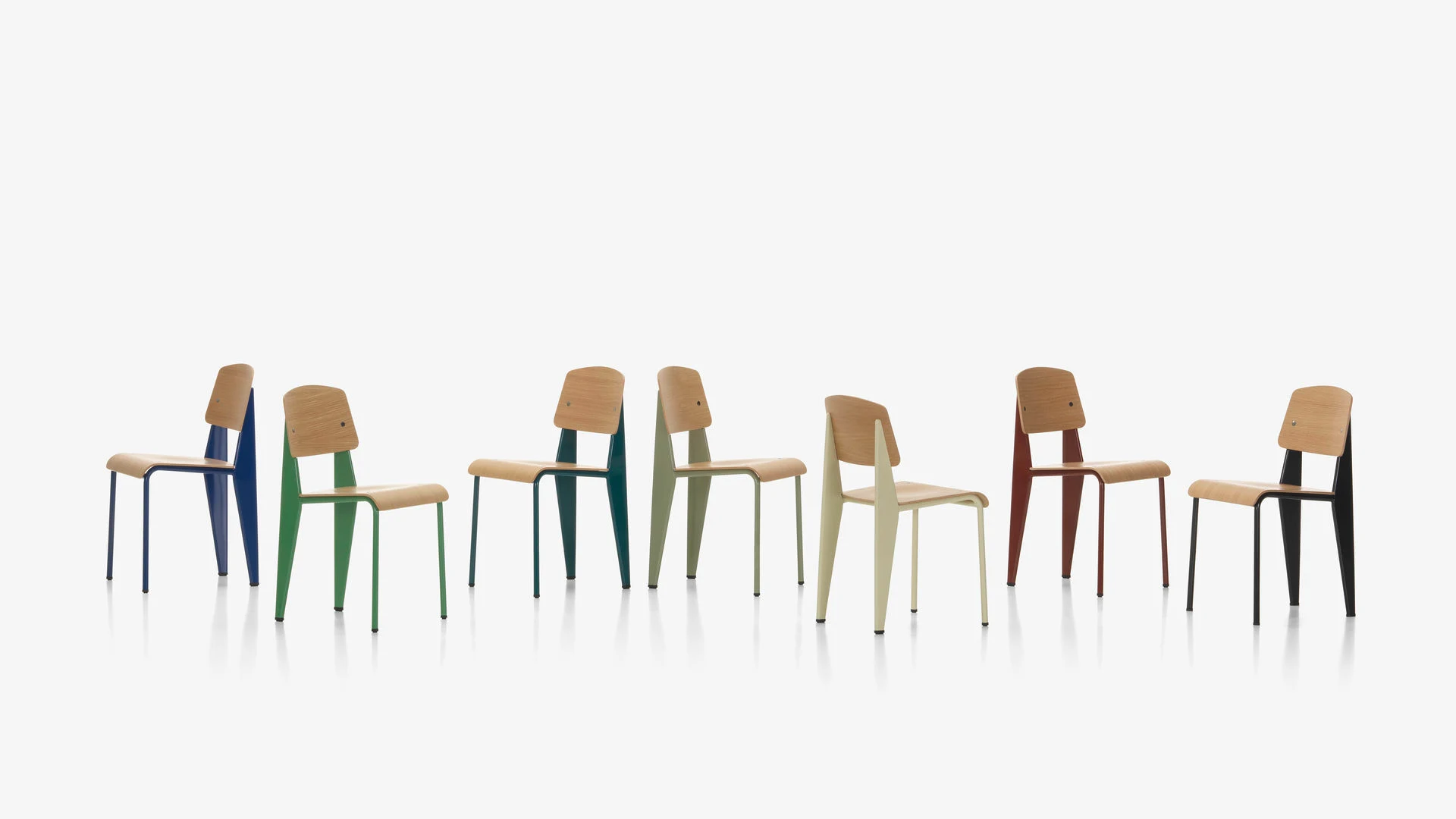
Vitra reports that Prouvé believed in the "nature of a material": only parts at risk of corroding should be painted, so wood and aluminium stayed untreated wherever possible. Beyond protection from rust, Vitra adds, Prouvé knew that colour could give his furniture a certain aura. Vitra has widened it to include original Prouvé colours, so that deep black, Japanese red and Blanc Colombe are joined by Gris Vermeer, Bleu Dynastie, Blé Vert and Bleu Marcoule, together with a Métal Brut variant in unpainted steel under a clear protective finish. Vitra's magazine says each colour was named after a source of inspiration, such as young wheat for Blé Vert, dove feathers for Blanc Colombe and the cobalt oxide of Ming porcelain for Bleu Dynastie; Bleu Marcoule, it adds, was the colour of an important client of the Ateliers Jean Prouvé rather than part of his own palette.
Key Pieces
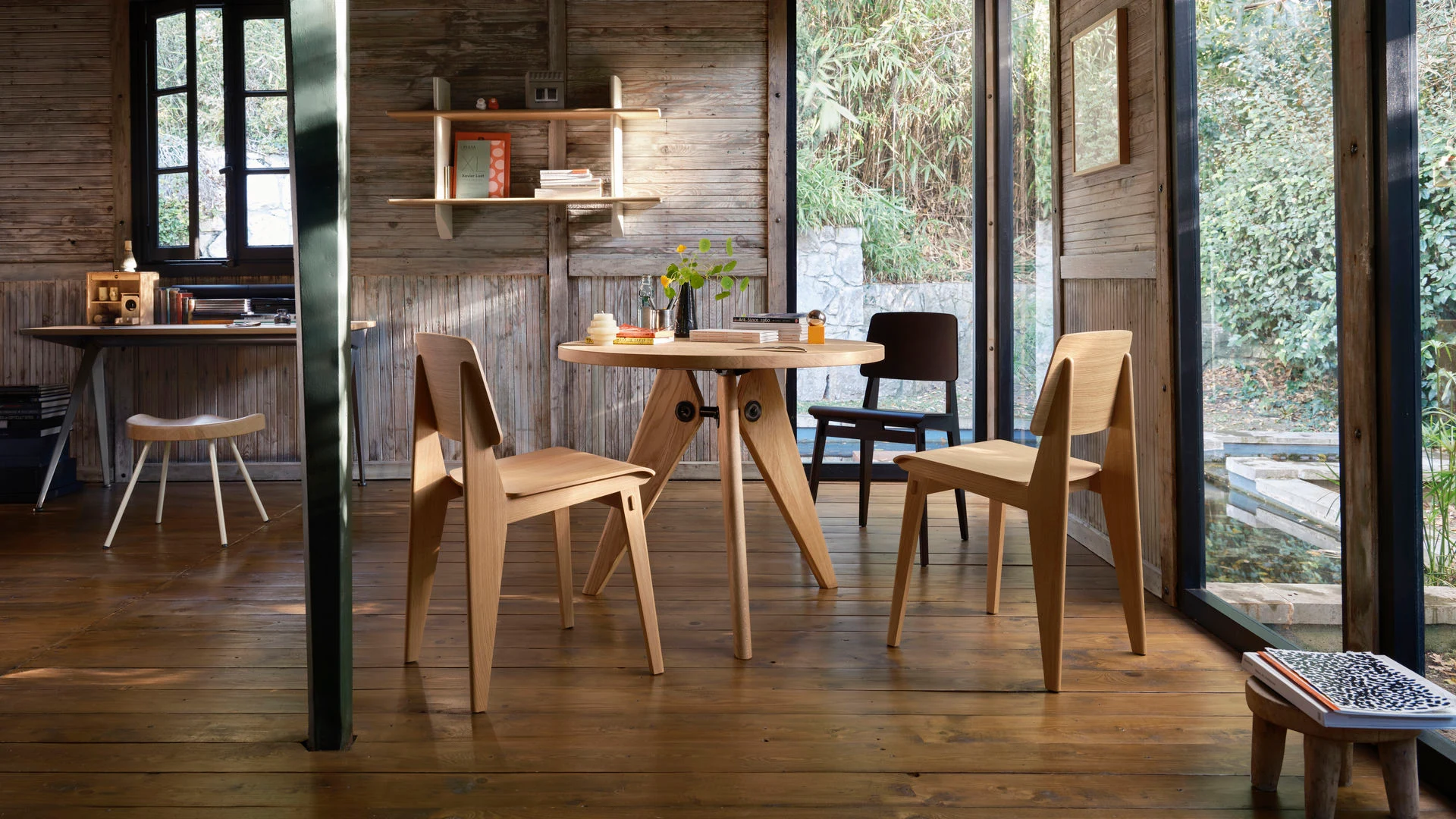
The page's product overview names 24 items: the Standard family with Standard SP and Chaise Tout Bois, the Fauteuil Direction in a fixed and a swivel version, the Cité and the Fauteuil de Salon, several stools, the Guéridon tables, the Table S.A.M. Bois, EM Table, Trapèze and Compas Direction, the Rayonnage Mural wall shelves, lamps and wall fittings, and two miniatures. The brochure's earliest date is 1930, for the Cité and the Lampe de Bureau; it gives 1953 for the Compas Direction and 1950/1954 for the Trapèze. Vitra says it is introducing a number of lesser-known designs; the Tabouret Métallique, which the brochure says was never produced in Prouvé's time, is manufactured by Vitra for the first time.
Pieces in this collection
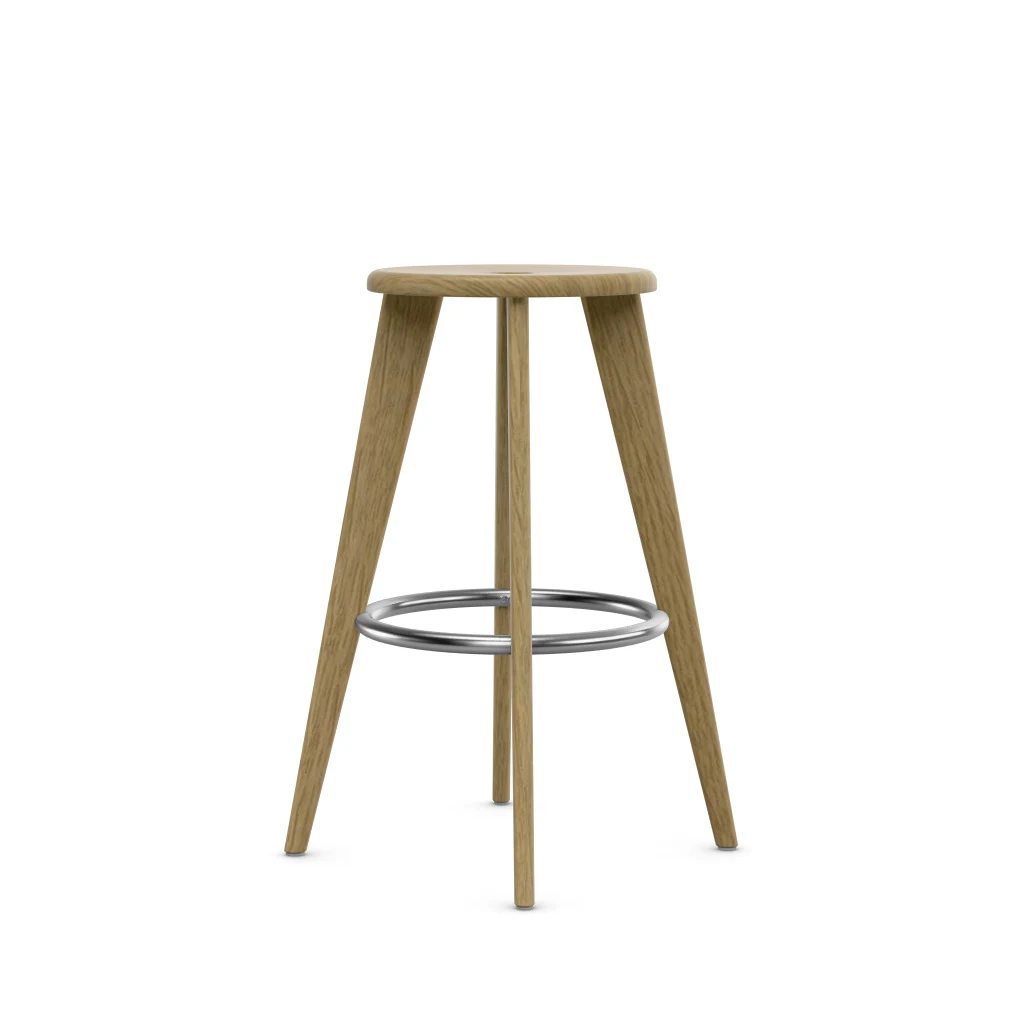
Tabouret Haut
Jean Prouvé's 1942 bar stool in solid oak, with a chromed steel ring that serves as footrest
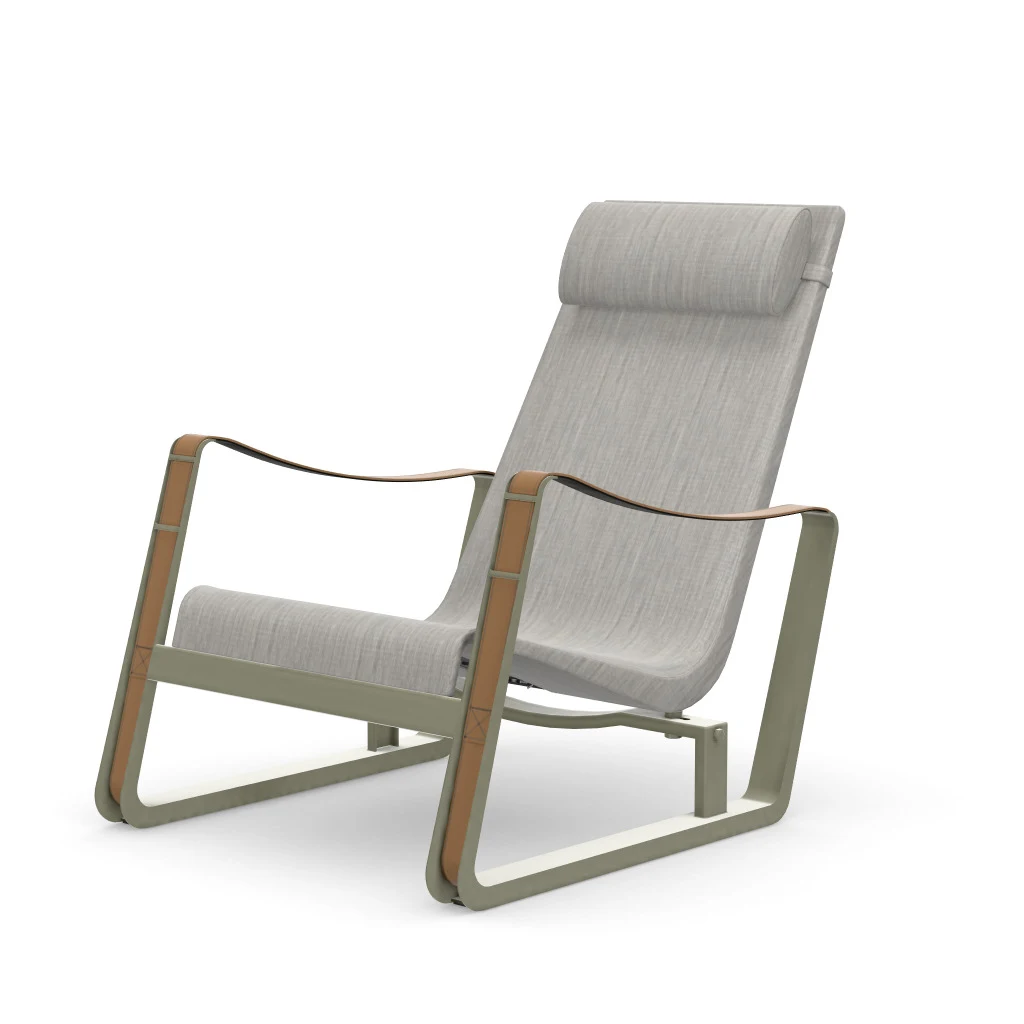
Cité
Prouvé's 1930 Cité armchair for Nancy's student halls, with steel runners and leather belt armrests
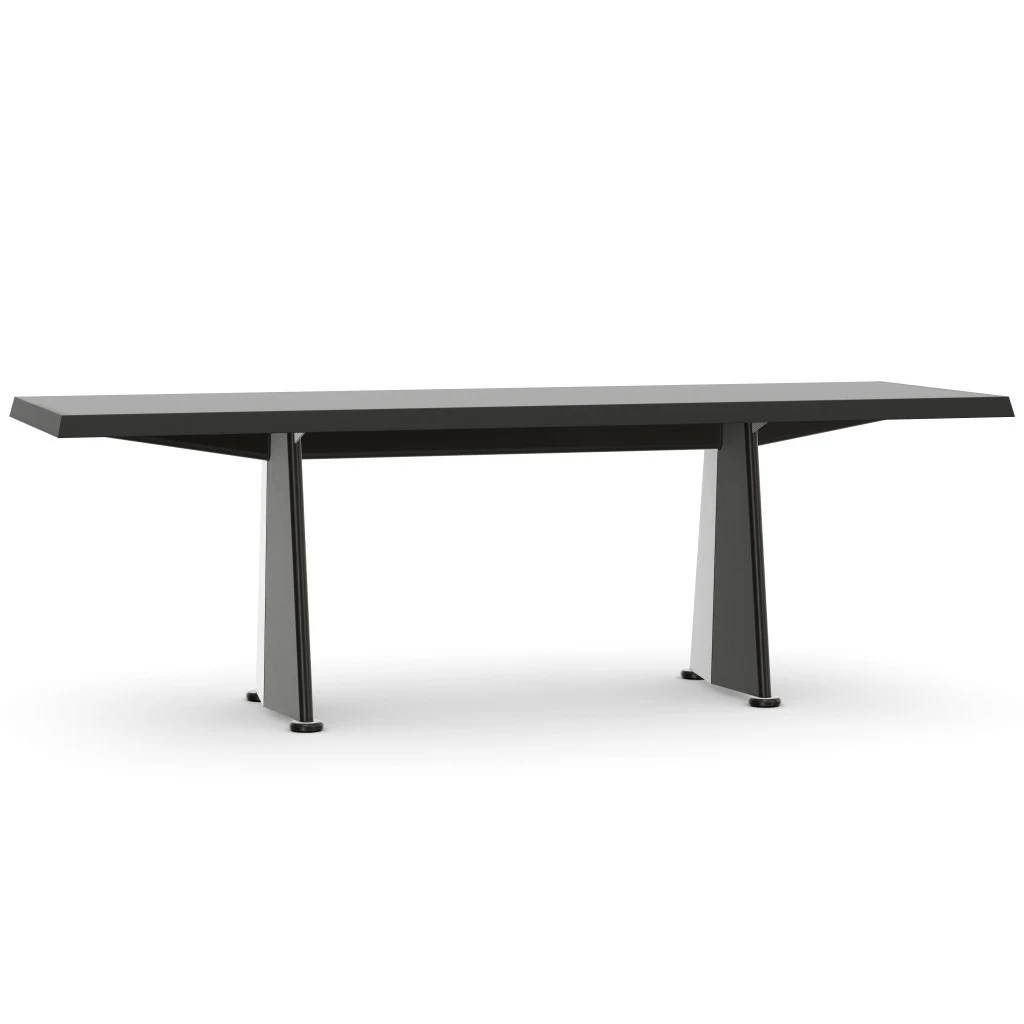
Trapèze
Jean Prouvé's Trapèze table of 1950/1954, from Antony: trapezoidal steel legs and a black top
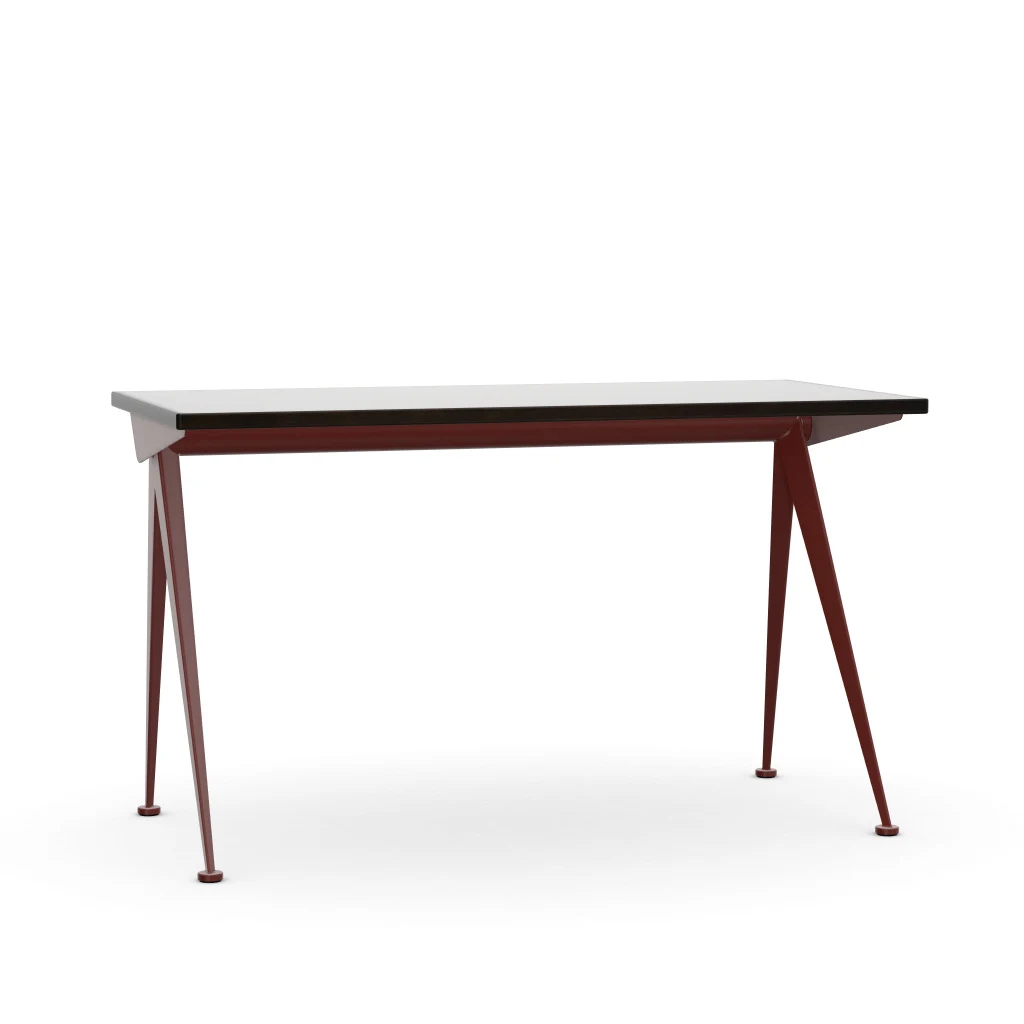
Compas Direction
Jean Prouvé's 1953 Compas Direction: a compact desk with splayed steel legs and a solid wood top
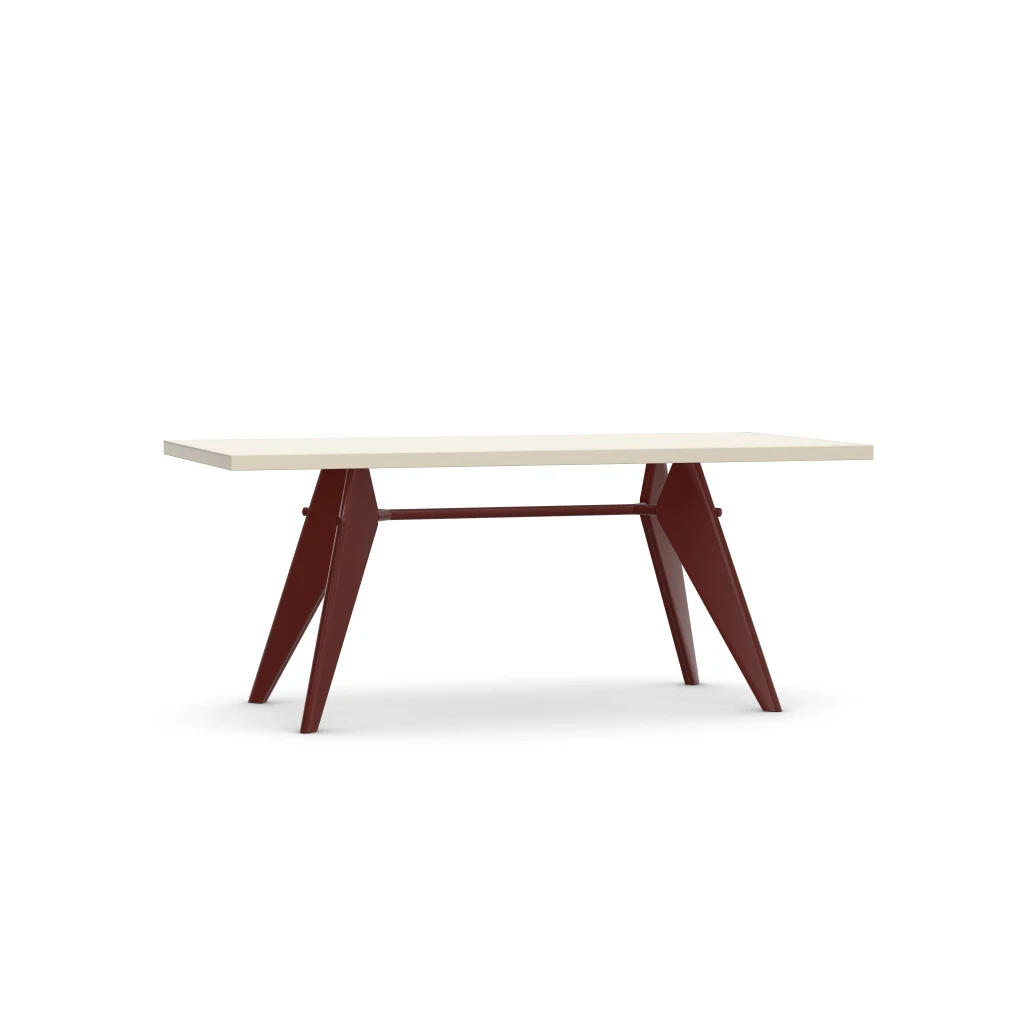
EM Table
Jean Prouvé's 1950 EM Table: canted steel legs and a crossbar, five lengths, three top materials
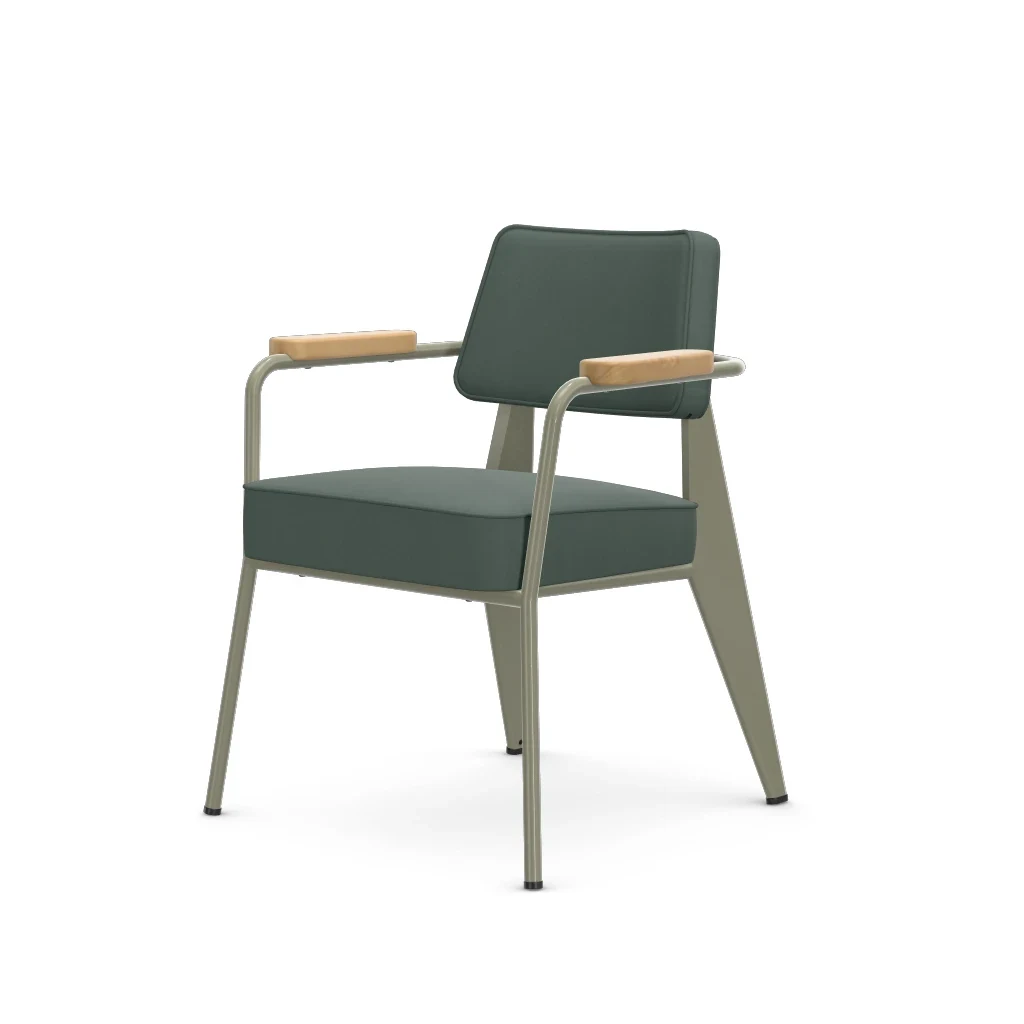
Fauteuil Direction
Jean Prouvé's 1951 Fauteuil Direction: an upholstered armchair with wooden armrests on a steel frame
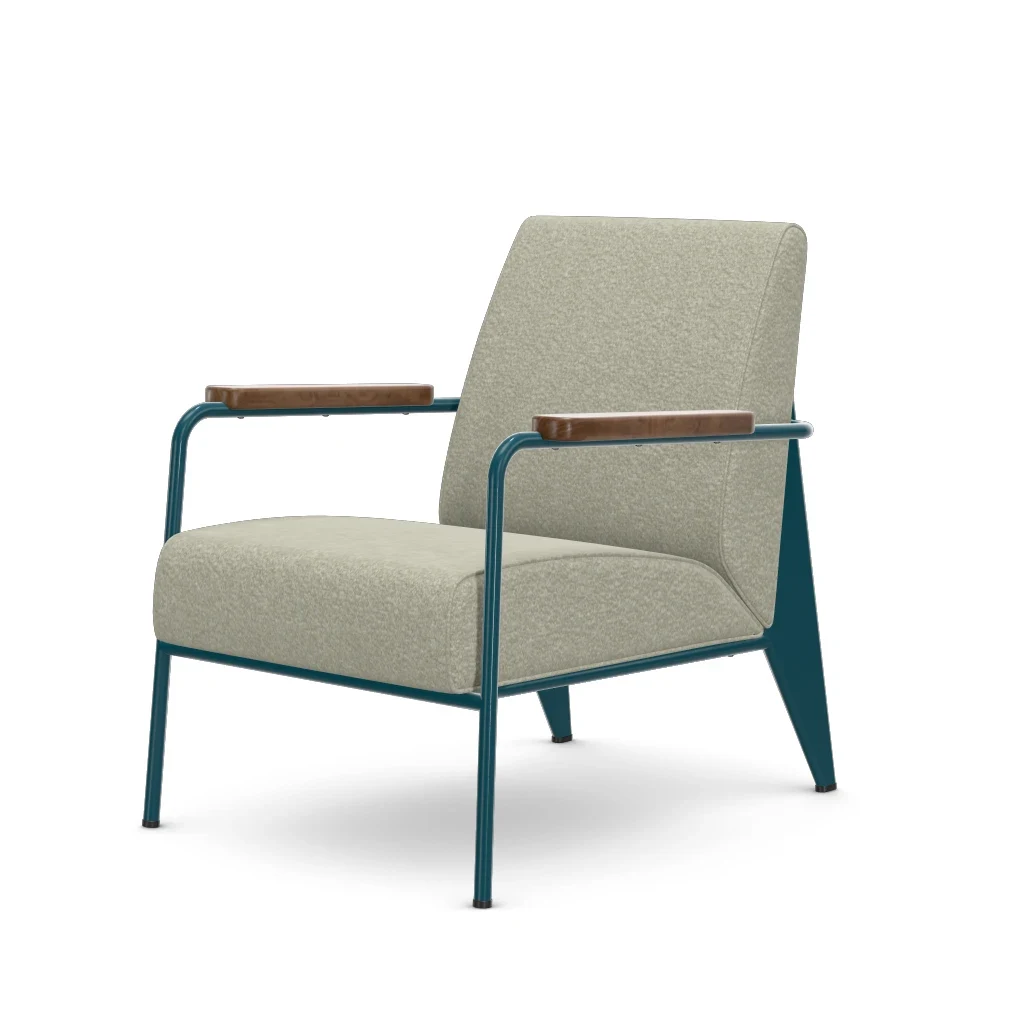
Fauteuil de Salon
Jean Prouvé's 1939 Fauteuil de Salon: generously padded, with solid wood armrests on a steel frame
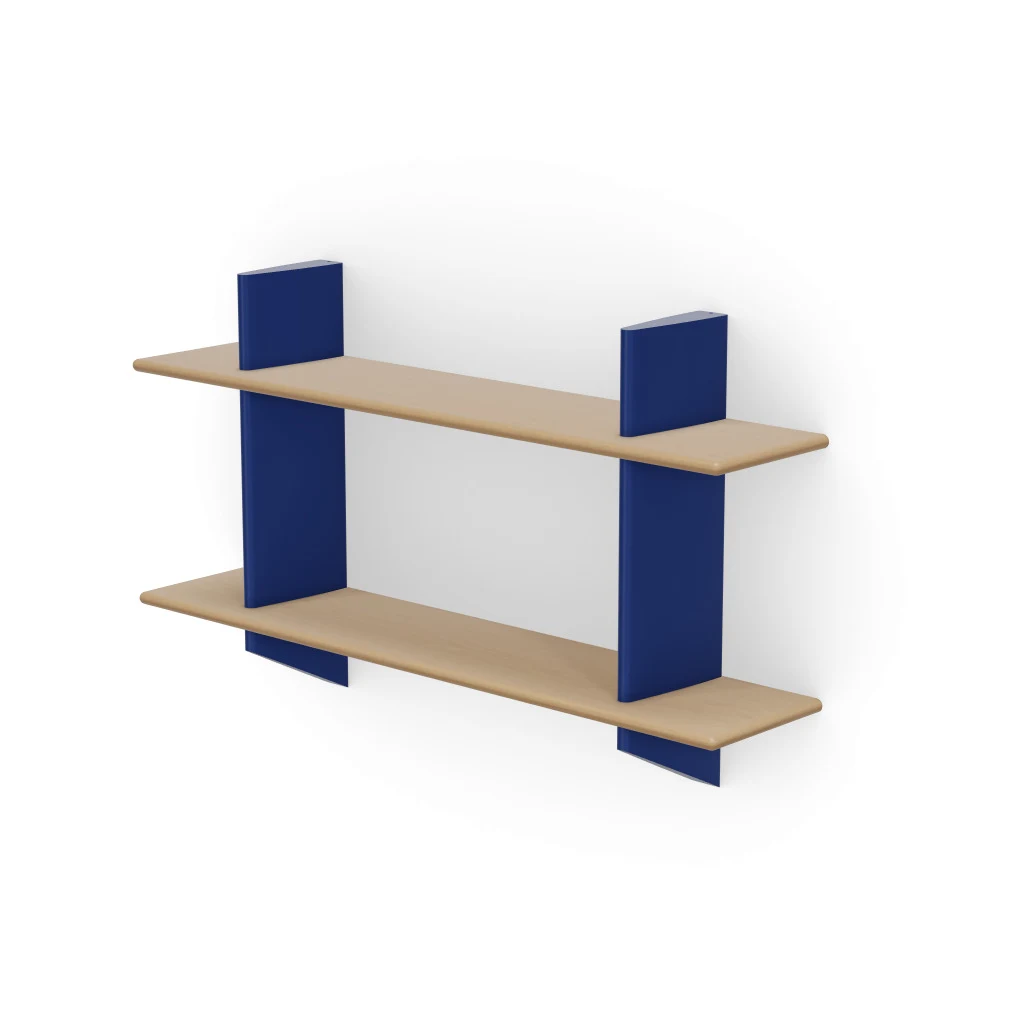
Rayonnage Mural
Jean Prouvé's 1936 wall-mounted bookcase: two bent steel brackets holding solid oak shelves
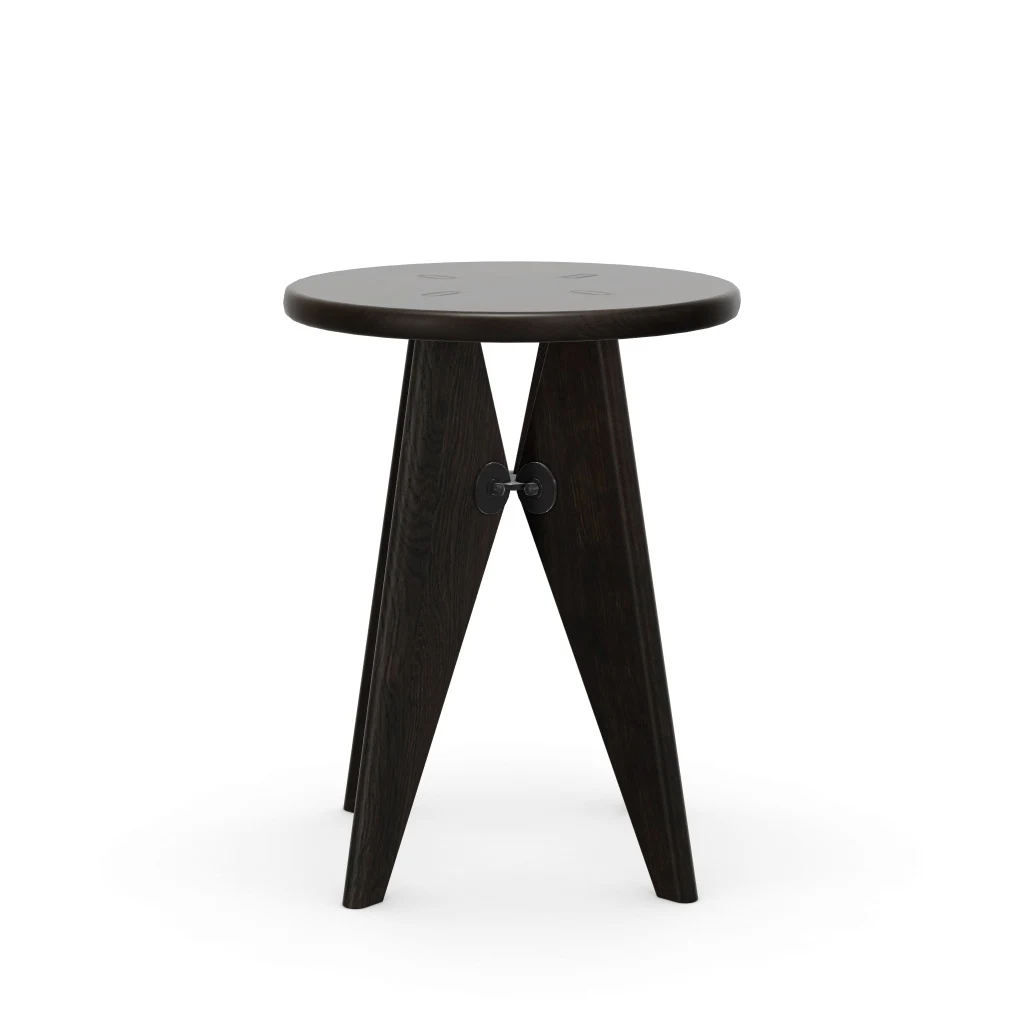
Tabouret Bois
Jean Prouvé's sturdy 1941 solid wood stool, which also serves as a small side table
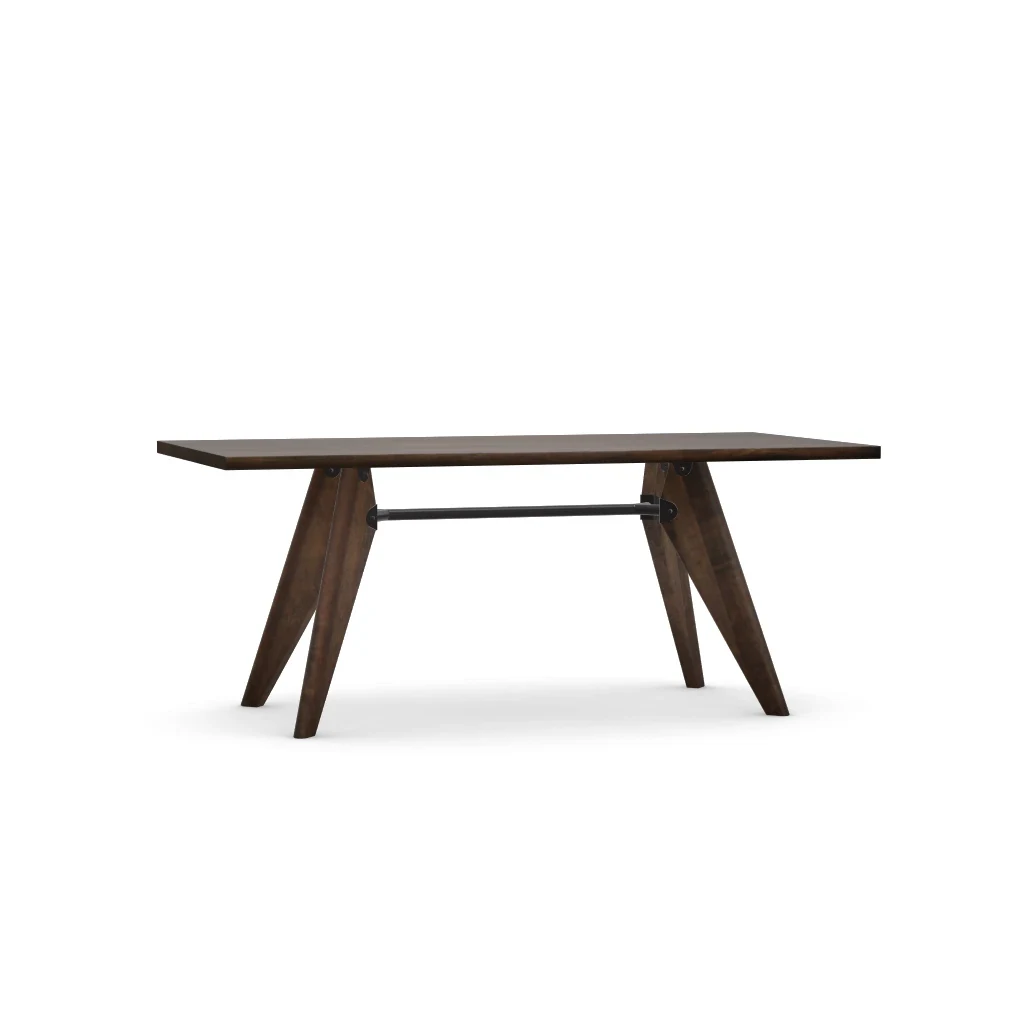
Table S.A.M. Bois
Jean Prouvé's 1941 wooden dining table, with a tubular steel crossbar between solid-wood legs
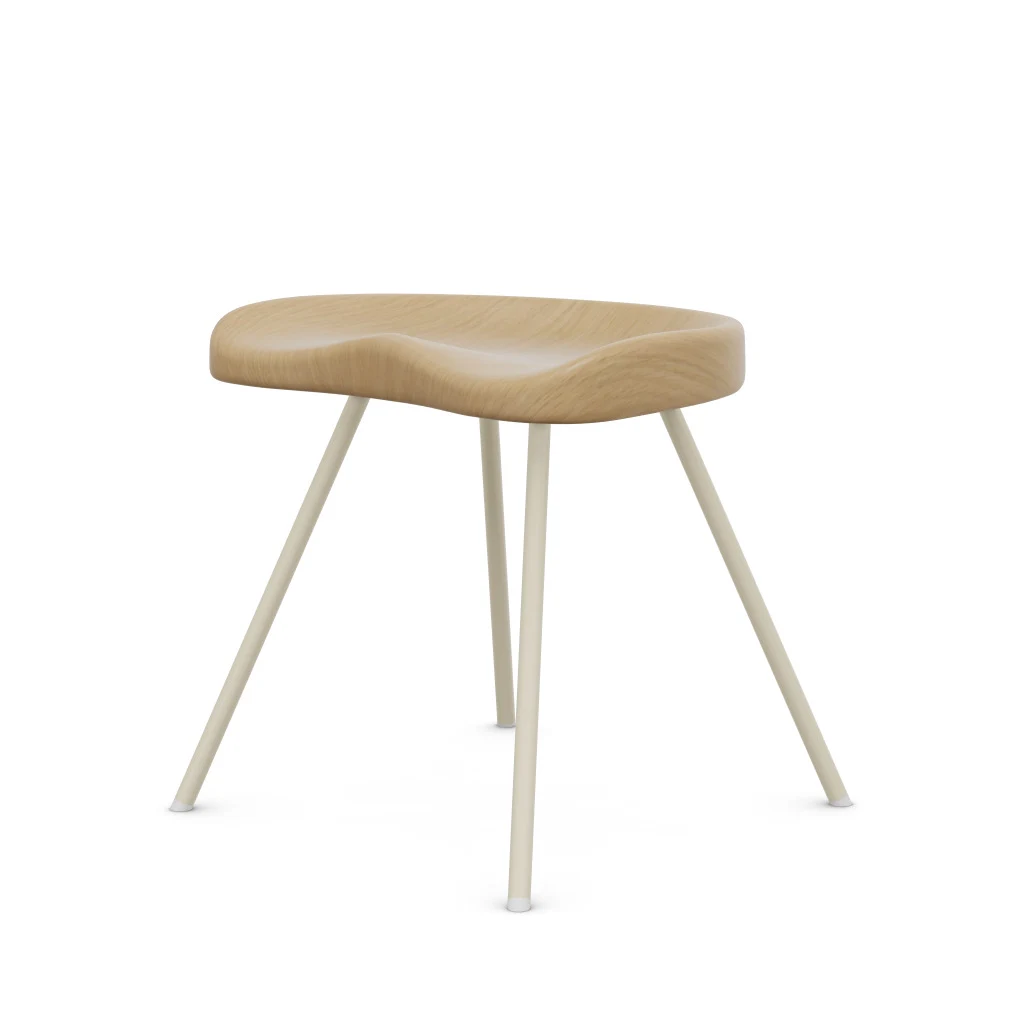
Tabouret N° 307
Jean Prouvé's 1951 stool with a saddle-shaped solid oak seat on tubular steel legs
Specifying pieces from Jean Prouvé Collection for your design project?
INTEBEE is the FF&E specification platform for interior designers: spec sheets, finishes, floor plans and client-ready PDFs in one place.