
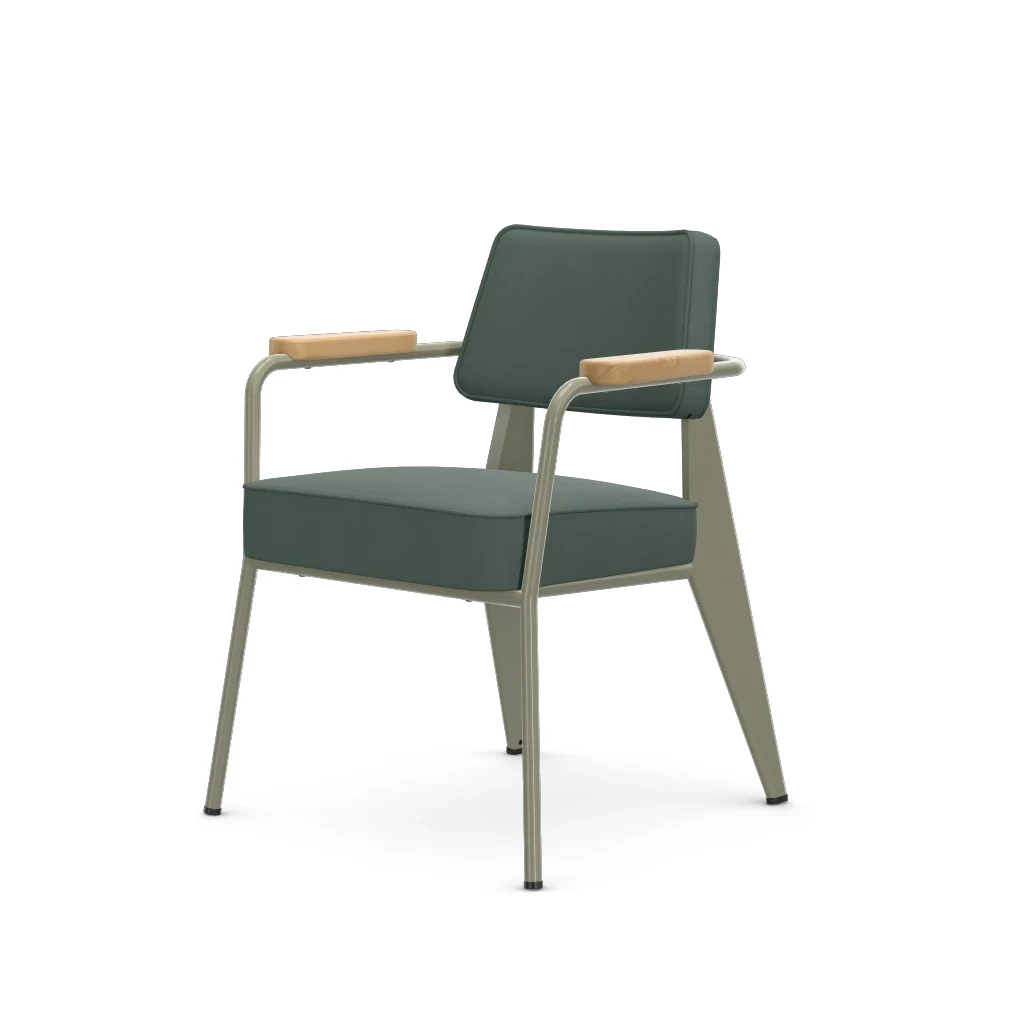
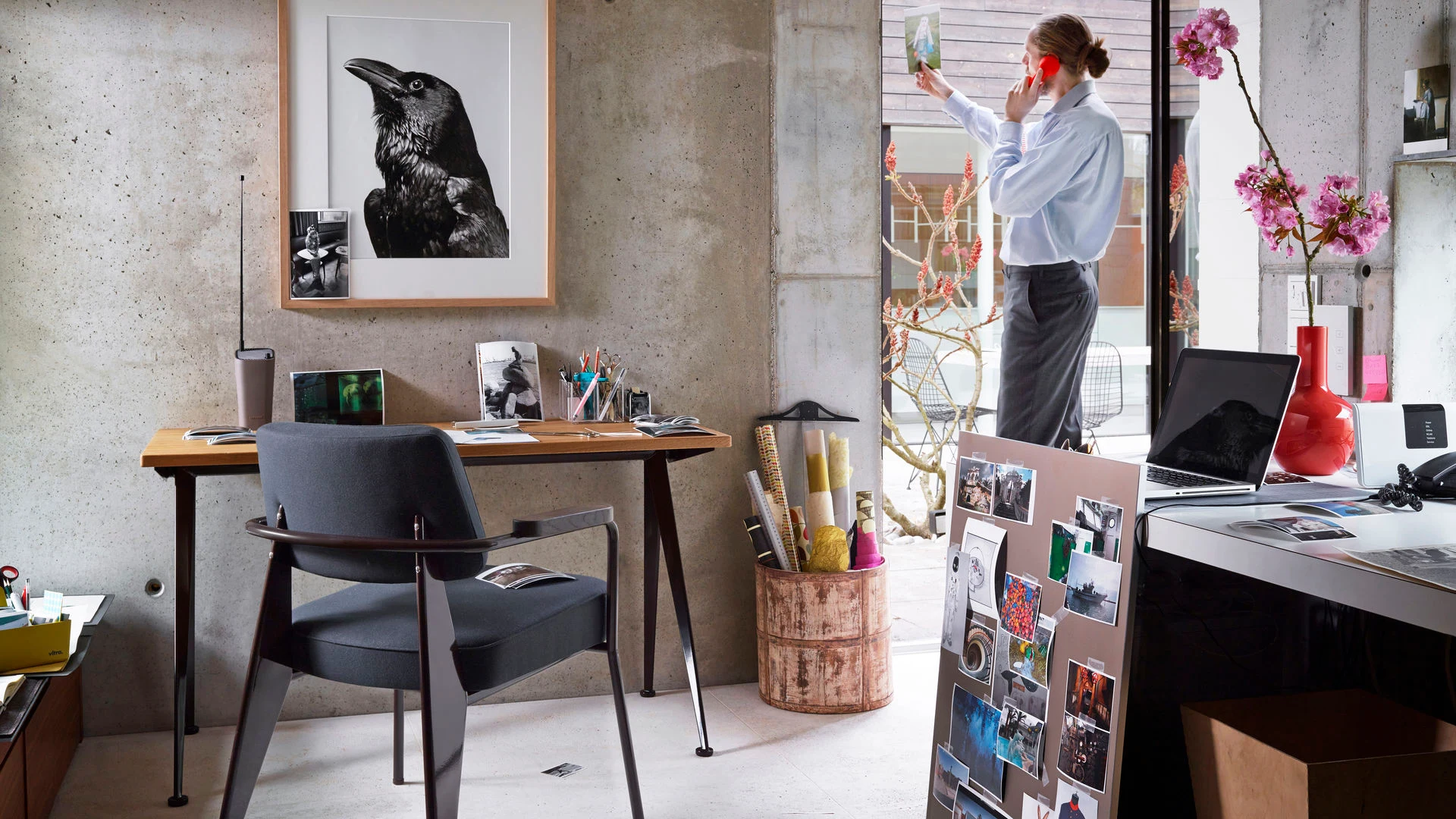
Fauteuil Direction
Jean Prouvé's 1951 Fauteuil Direction: an upholstered armchair with wooden armrests on a steel frame


650 × 815 × 625 mm
Source: spec sheet PDF — Fauteuil Direction
1951
USD 3,990, Fauteuil Direction, Volo green-grey cover, Prouvé Gris Vermeer base, solid oak armrests, felt glides, Vitra US online shop, 2026-10-15
Description
Overview
The Fauteuil Direction is credited to Jean Prouvé, 1951. Vitra calls it a comfortably upholstered armchair with fabric or leather covers; its design follows structural requirements.
Construction
- Seat and backrest in recyclable polyurethane foam (V-Foam) with a fabric or leather cover
- Solid wood armrests in oak or American walnut
- Steel frame of bent sheet and tube, smooth powder-coat surface
- Hard or felt glides, depending on the floor
Specifications
- Fact sheet drawing: 650 mm wide, 625 mm deep, 815 mm high
- Seat height 505 mm (445 mm under load, EN 1335-1)
Story
A structural vocabulary
Vitra's page says the design of the Fauteuil Direction reflects Prouvé's characteristic aesthetic vocabulary, which is based on structural requirements.
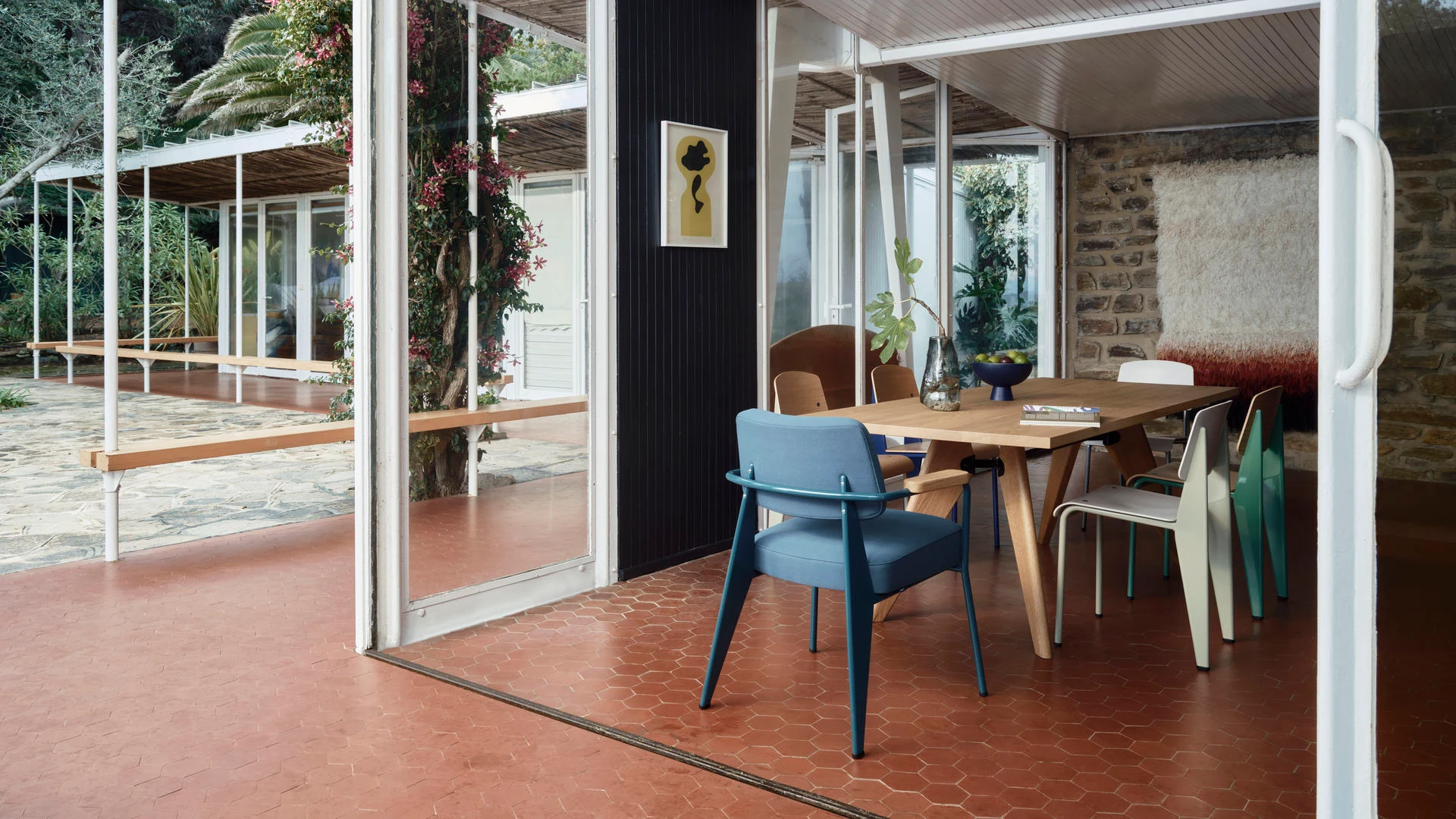
Table seating
The fact sheet describes it as a compact, comfortable armchair especially suited for table seating, and says it also cuts a fine figure in lobbies, restaurants and waiting areas.
More by Jean Prouvé
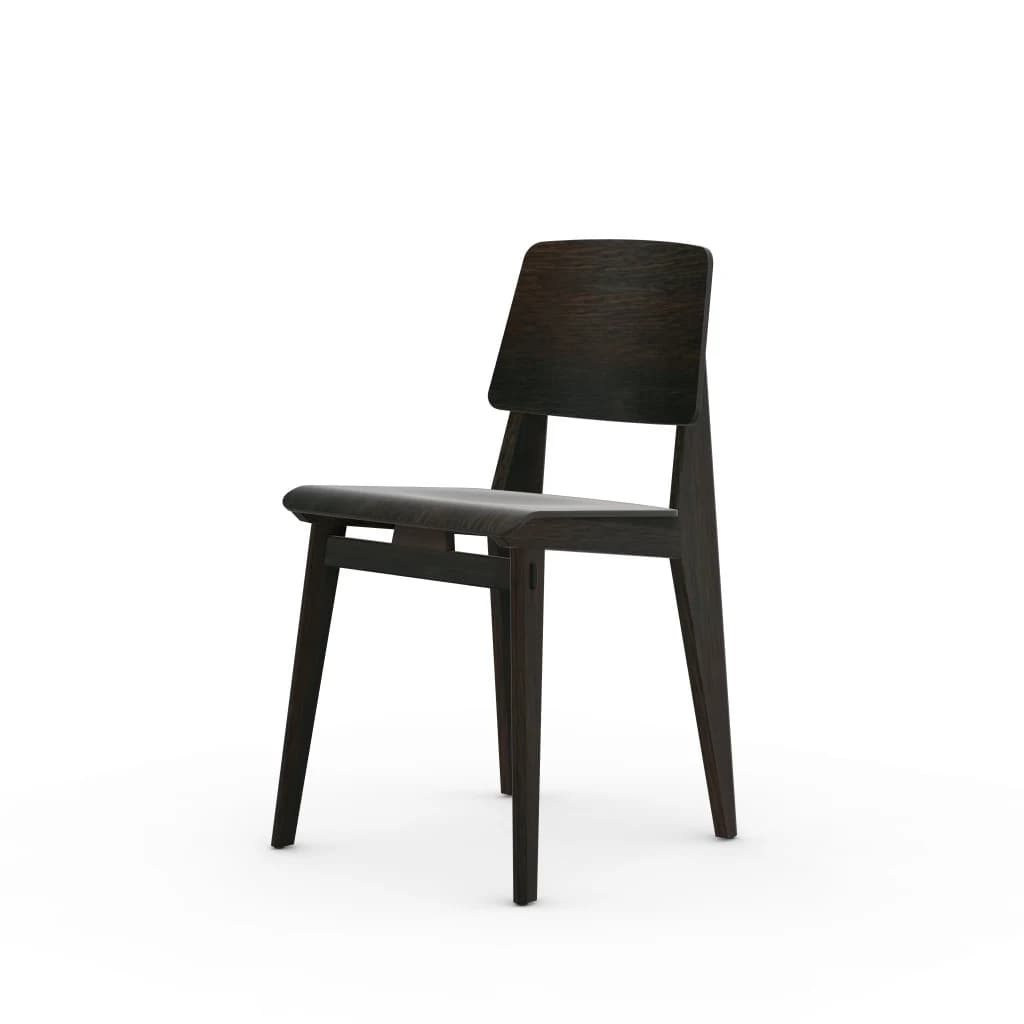
Chaise Tout Bois
Jean Prouvé's wartime Chaise Tout Bois of 1941, made entirely of oak without a single screw
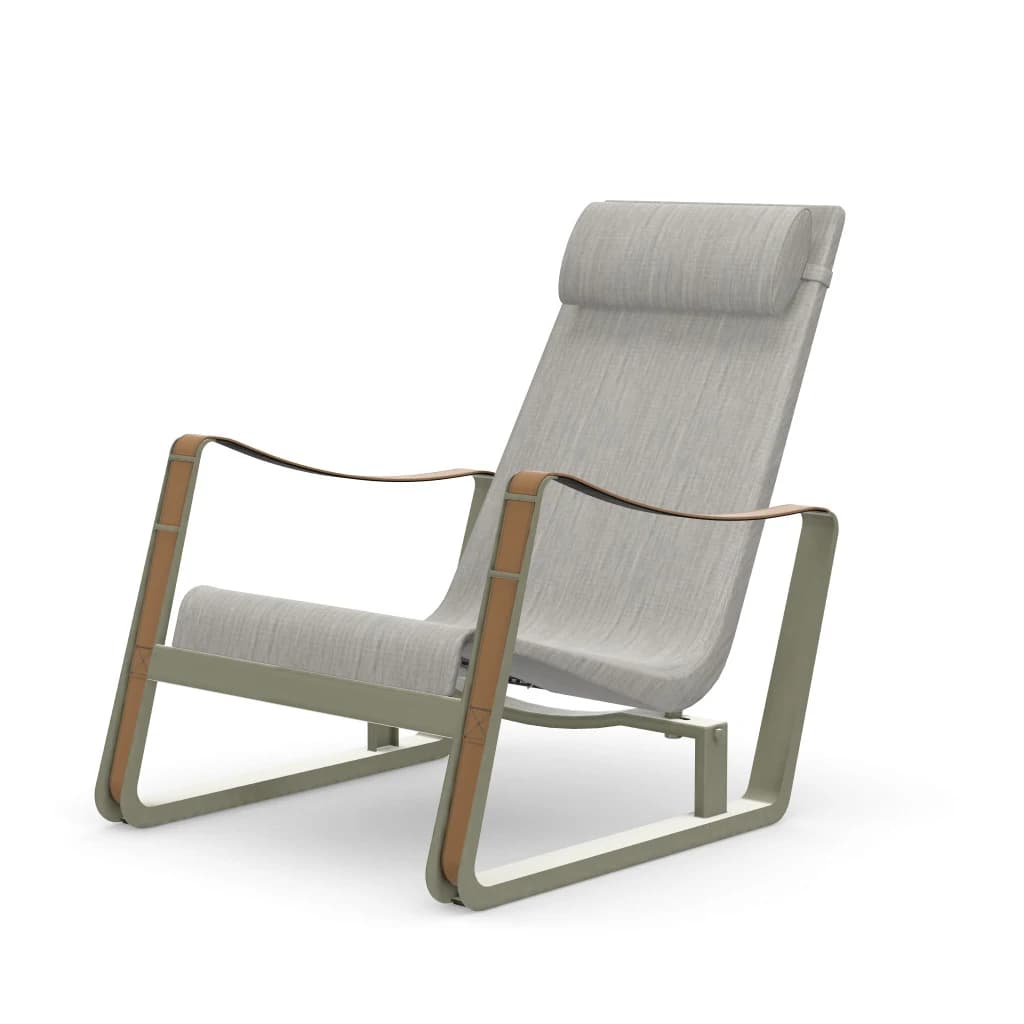
Cité
Prouvé's 1930 Cité armchair for Nancy's student halls, with steel runners and leather belt armrests
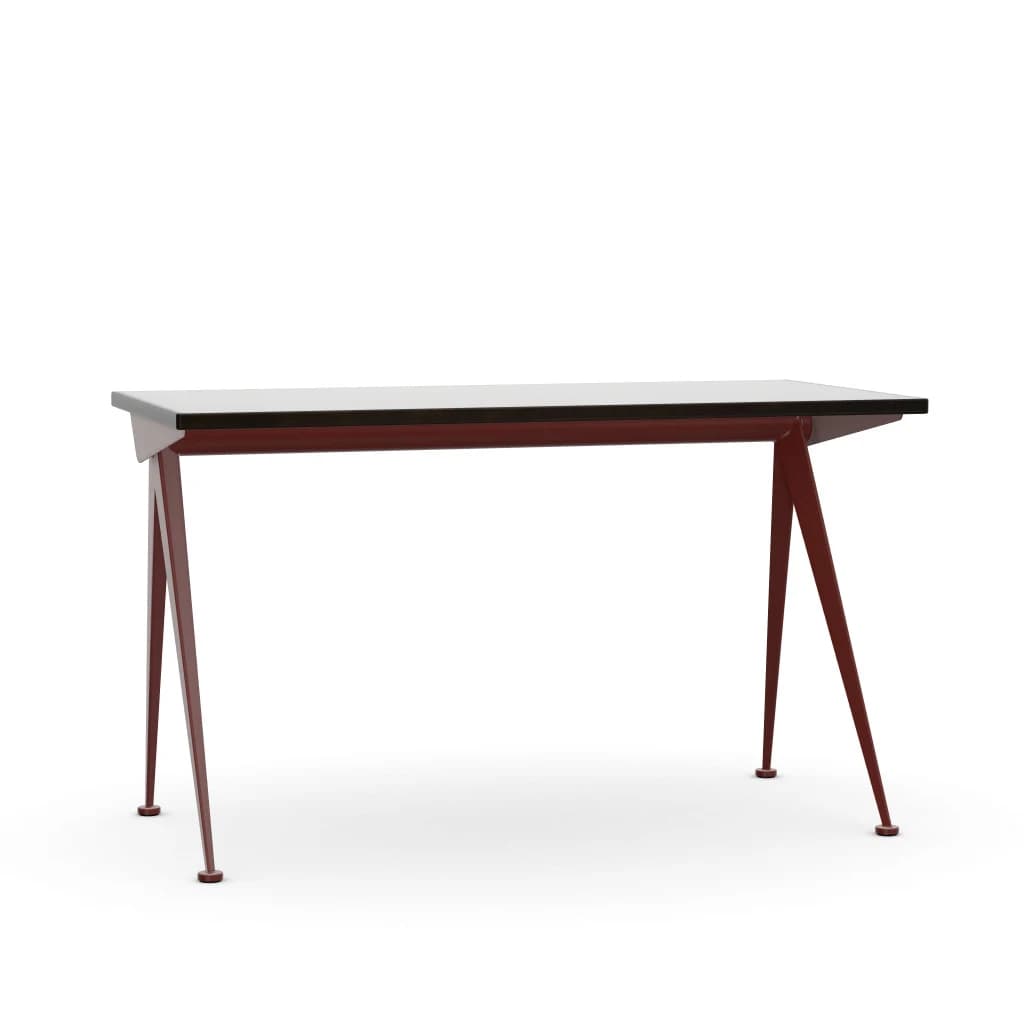
Compas Direction
Jean Prouvé's 1953 Compas Direction: a compact desk with splayed steel legs and a solid wood top
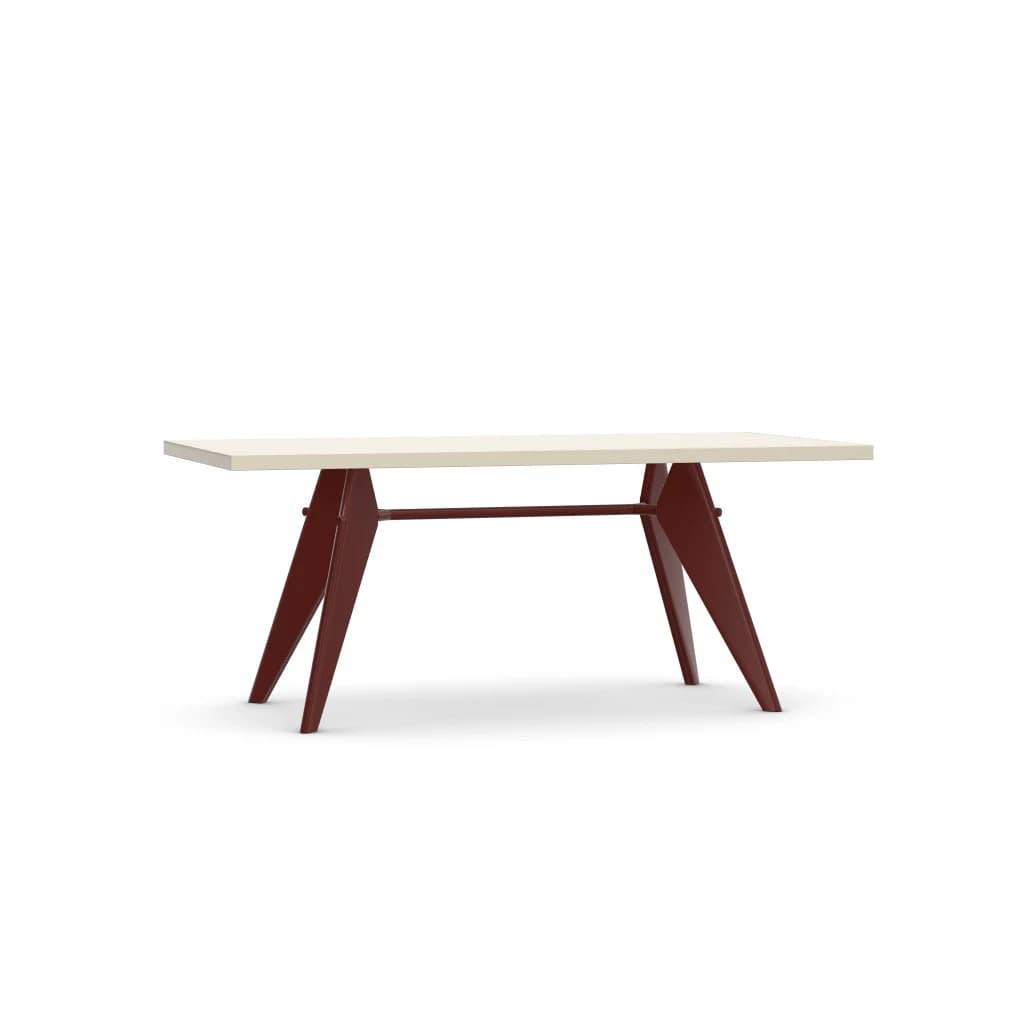
EM Table
Jean Prouvé's 1950 EM Table: canted steel legs and a crossbar, five lengths, three top materials