
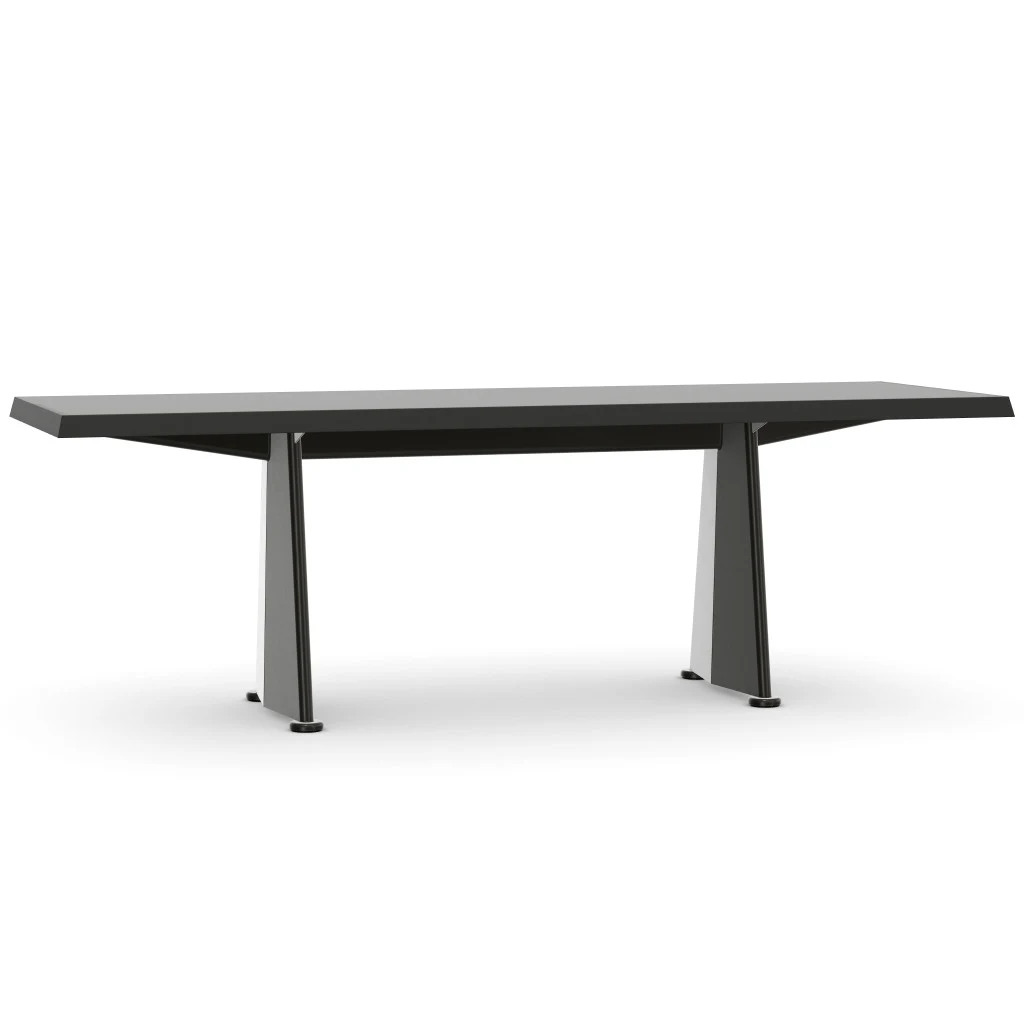
Trapèze
Jean Prouvé's Trapèze table of 1950/1954, from Antony: trapezoidal steel legs and a black top


2230 × 720 × 725 mm
Source: spec sheet PDF — Trapèze
1950
USD 10,500, Trapèze (one configuration), Vitra US online shop, 2026-10-15
Description
Overview
The Trapèze is credited to Jean Prouvé, 1950/1954. It was first developed for the Cité Universitaire in Antony near Paris; its name refers to the trapezoidal shape of its legs.
Construction
- Top of black melamine, anti-fingerprint (smooth)
- Paired legs and a central crossbar of bent sheet steel, powder-coated black
- Thick, obliquely canted top edges
Specifications
- 2230 mm long, 725 mm deep, 720 mm high
Story
Made for the Cité Universitaire in Antony
Vitra says Prouvé originally designed the Trapèze table for the Cité Universitaire in Antony near Paris. According to the fact sheet, like the Antony chair it numbers among the last furniture pieces he created.
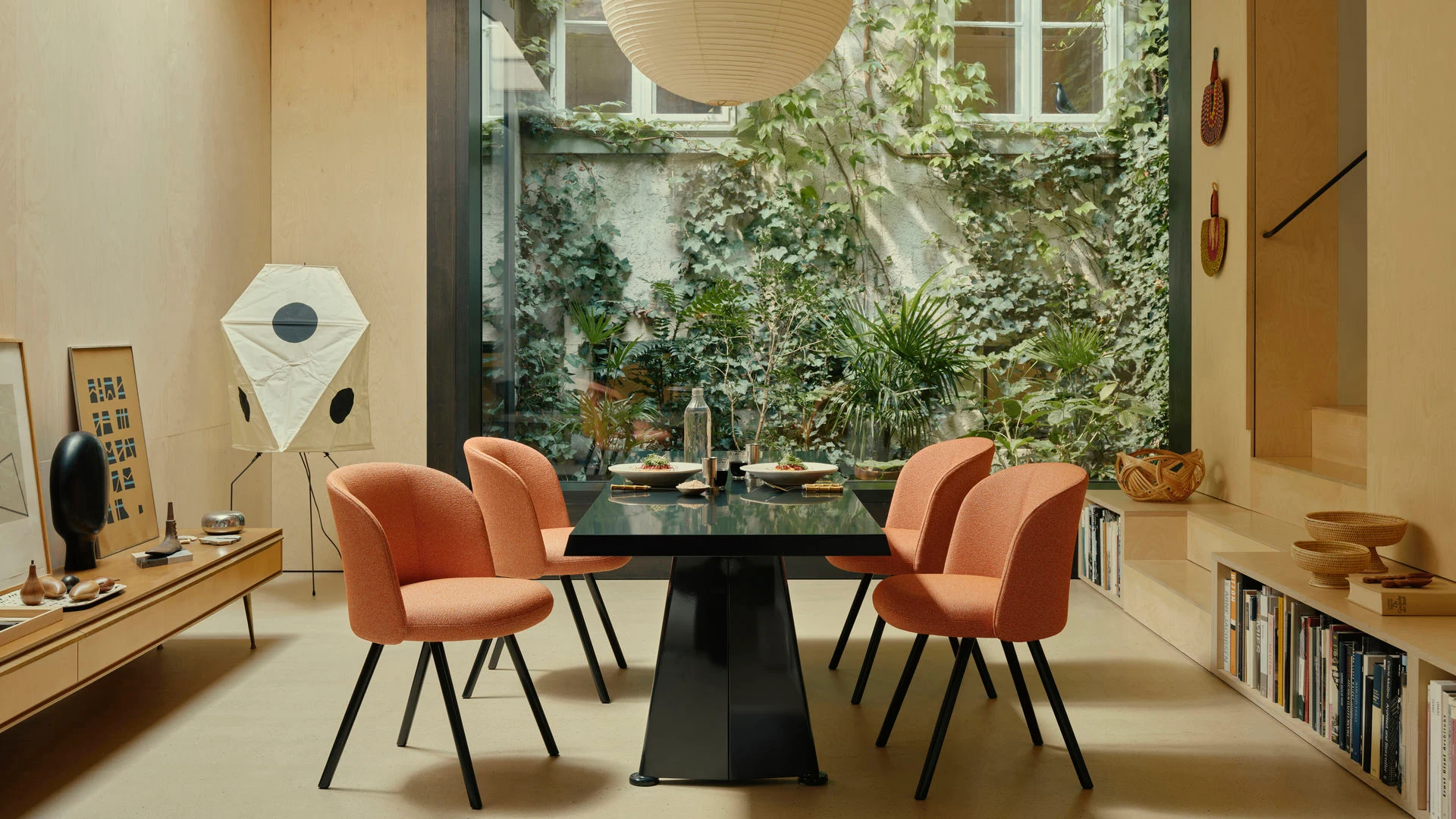
Legs of bent sheet steel
The name refers to the distinctive shape of the paired legs, which are formed from bent sheet steel and give the table its character.
More by Jean Prouvé
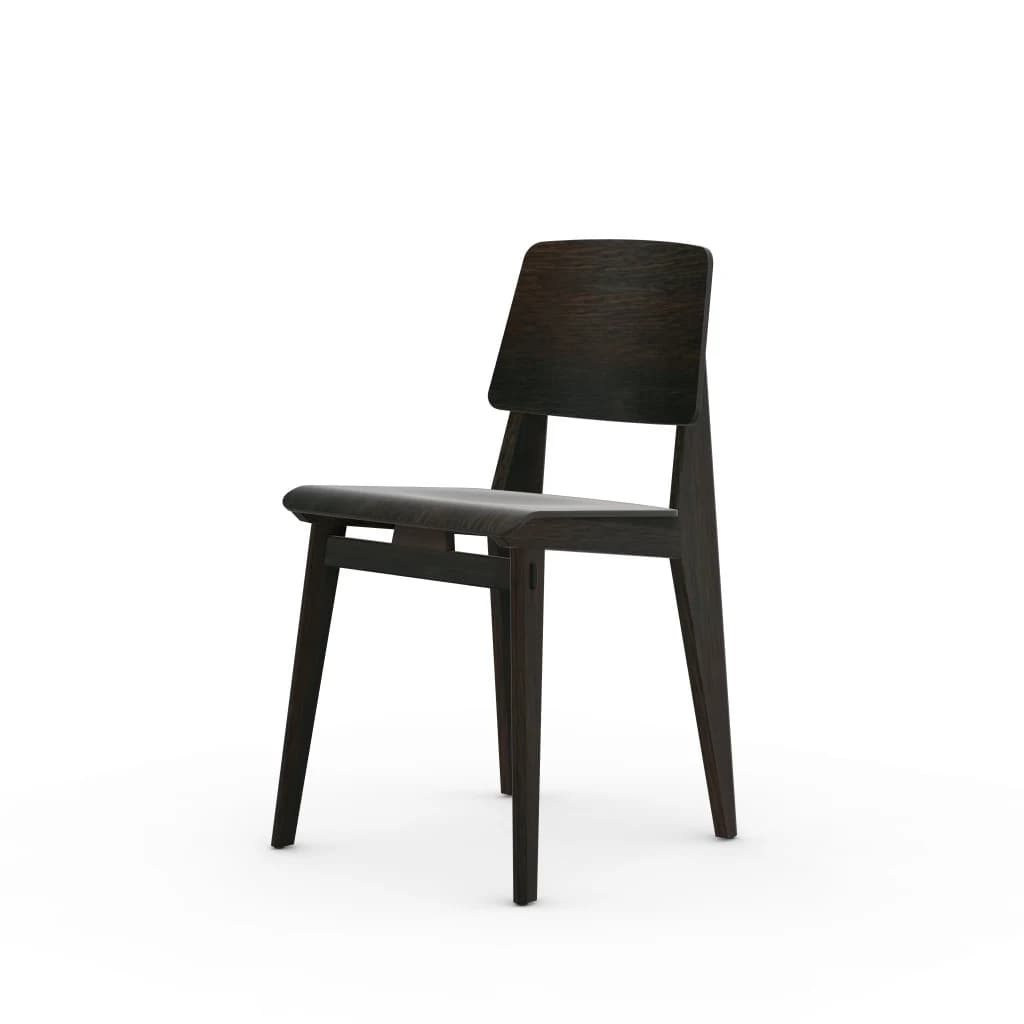
Chaise Tout Bois
Jean Prouvé's wartime Chaise Tout Bois of 1941, made entirely of oak without a single screw
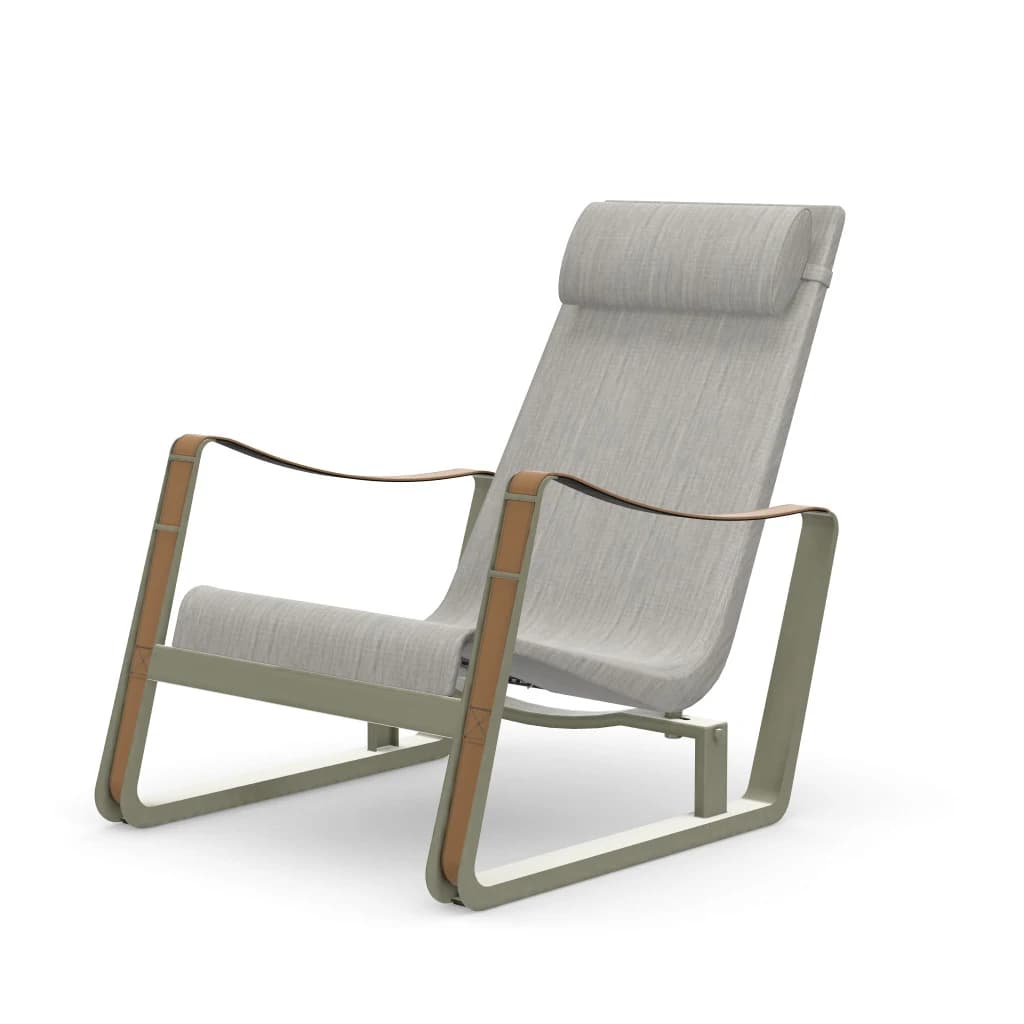
Cité
Prouvé's 1930 Cité armchair for Nancy's student halls, with steel runners and leather belt armrests
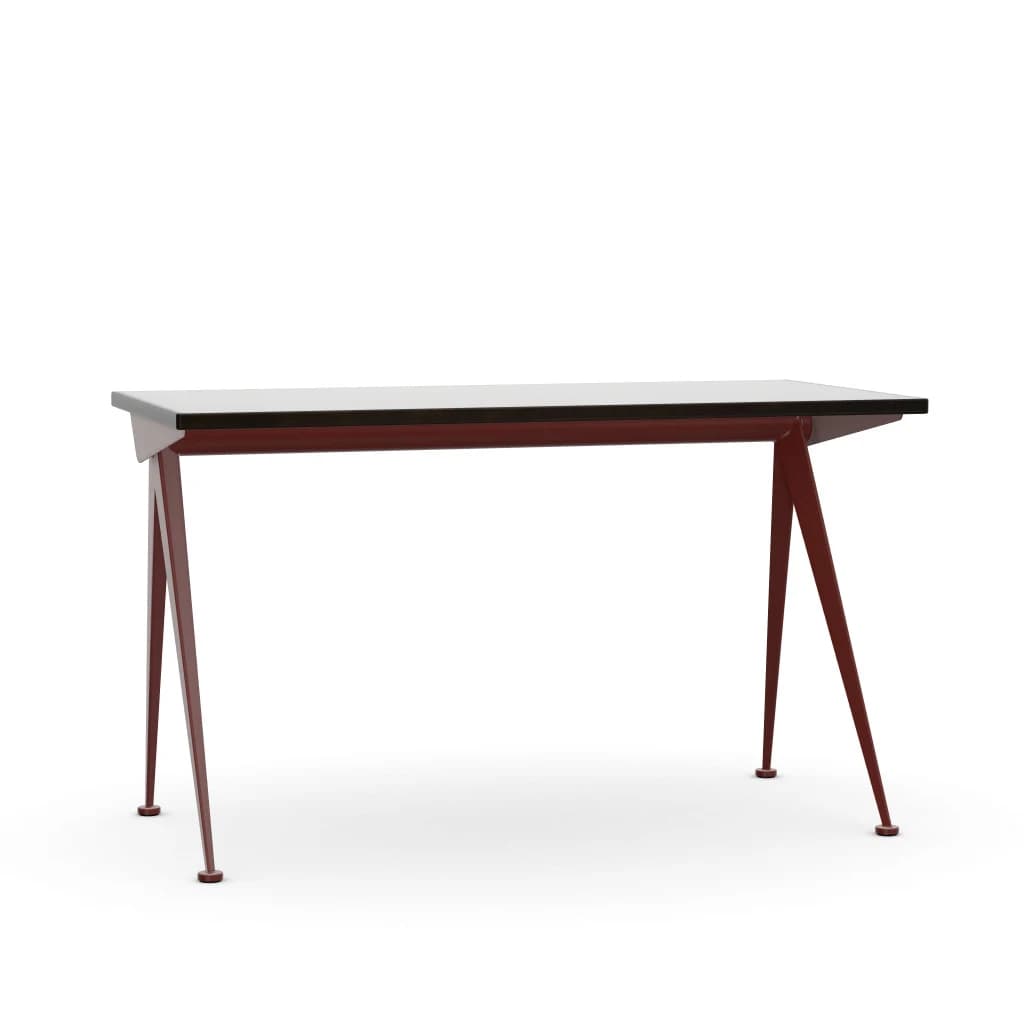
Compas Direction
Jean Prouvé's 1953 Compas Direction: a compact desk with splayed steel legs and a solid wood top
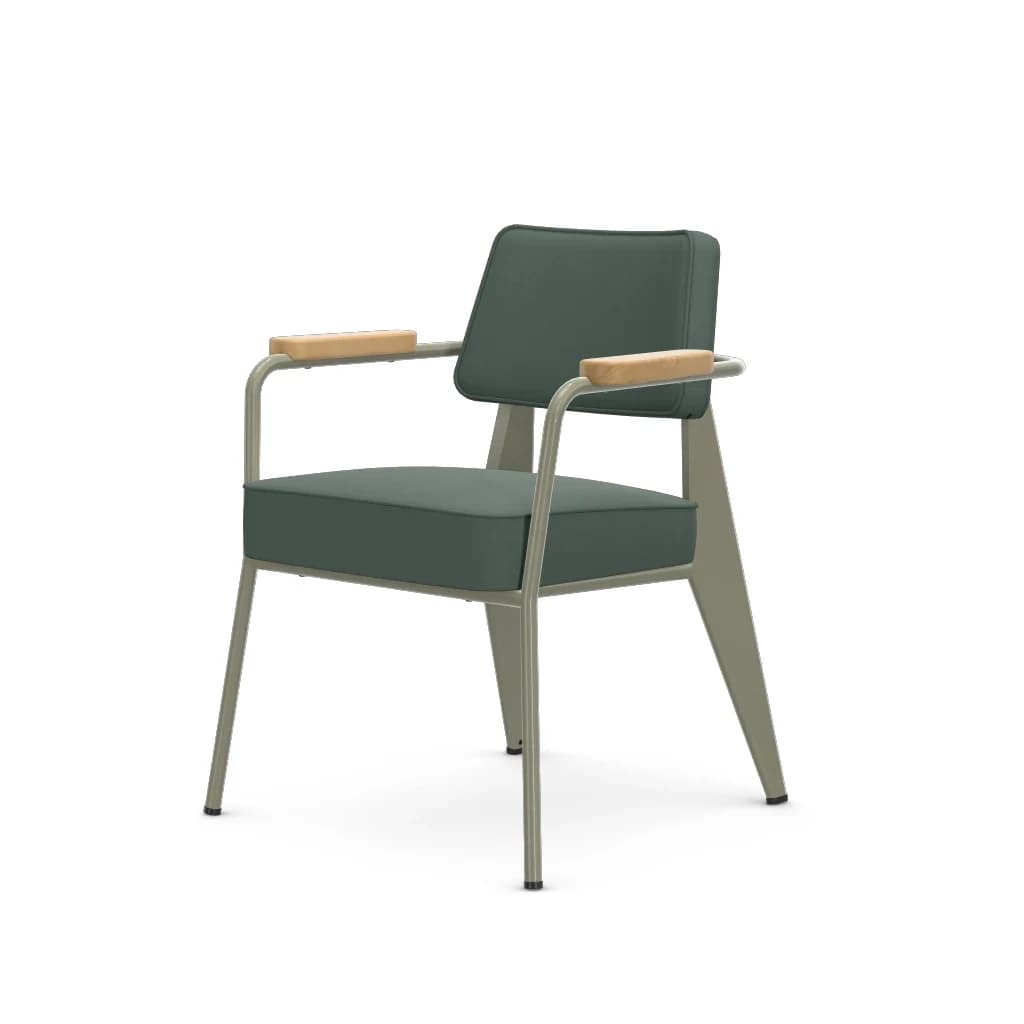
Fauteuil Direction
Jean Prouvé's 1951 Fauteuil Direction: an upholstered armchair with wooden armrests on a steel frame