
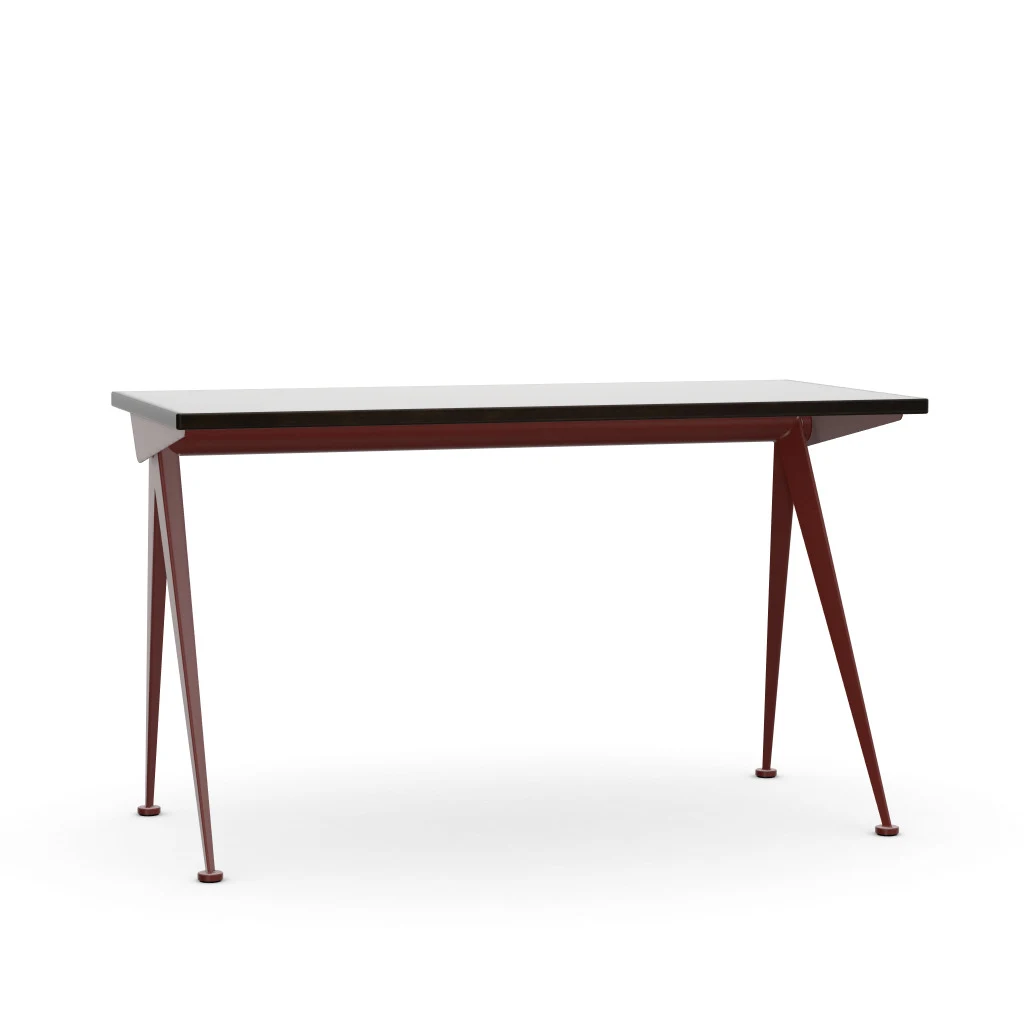
Compas Direction
Jean Prouvé's 1953 Compas Direction: a compact desk with splayed steel legs and a solid wood top


1250 × 730 × 600 mm
Source: spec sheet PDF — Compas Direction 1250 x 600
1953
USD 4,560, Compas Direction 125 x 60, oak top, deep black base, Vitra US online shop, 2026-10-15
Description
Overview
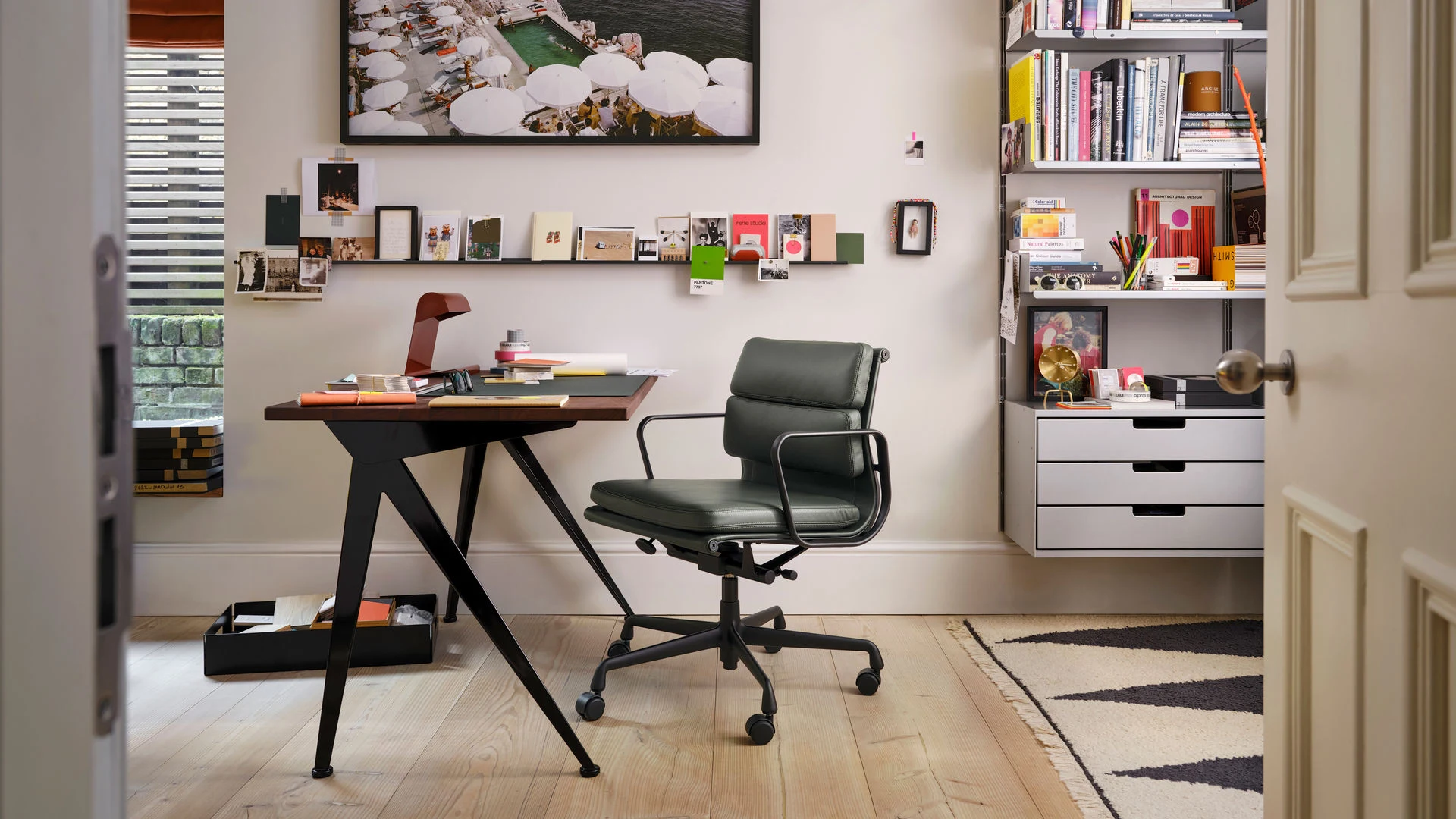
The Compas Direction is credited to Jean Prouvé, 1953. Its splayed legs recall the hinged arms of a compass. Vitra calls the desk compact and places it in the contemporary home office, with a solid wood top that gives it an individual touch.
Construction
- Top of solid oak or American walnut, oiled
- Legs of bent sheet steel, powder-coated (smooth)
- Two sizes, 1250 x 600 and 1250 x 700 mm, both 730 mm high
Specifications
- Size 125 x 60: 1250 mm wide, 600 mm deep, 730 mm high
Story
A compass in French
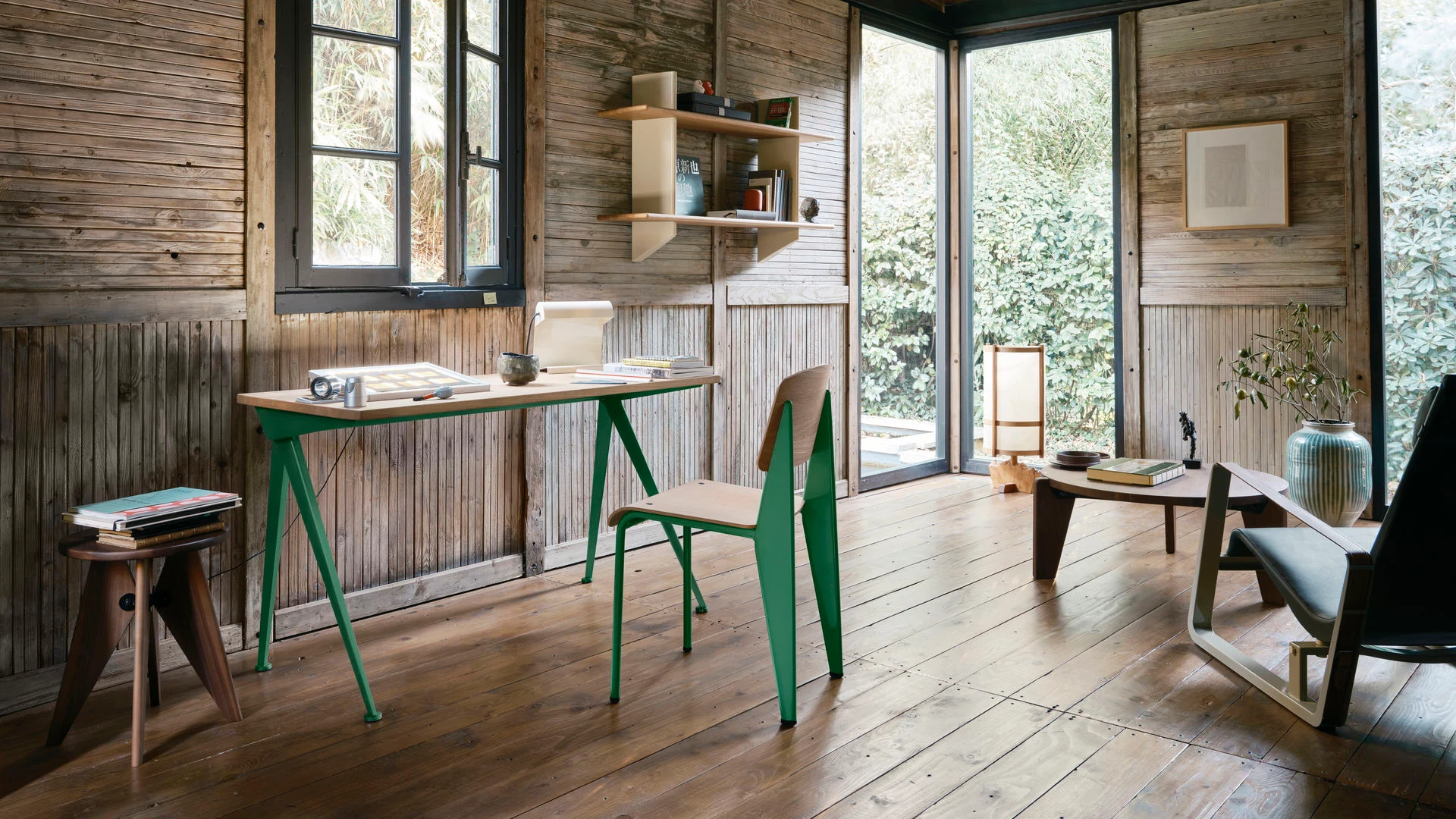
Vitra's page says the slender, elegantly splayed legs of the Compas Direction call to mind the hinged arms of a compass, "le compas" in French.
Several versions around 1950
According to the fact sheet, Prouvé developed several versions of the Compas table around 1950 on the structural principles he is known for; all share the slender, splayed legs.
More by Jean Prouvé
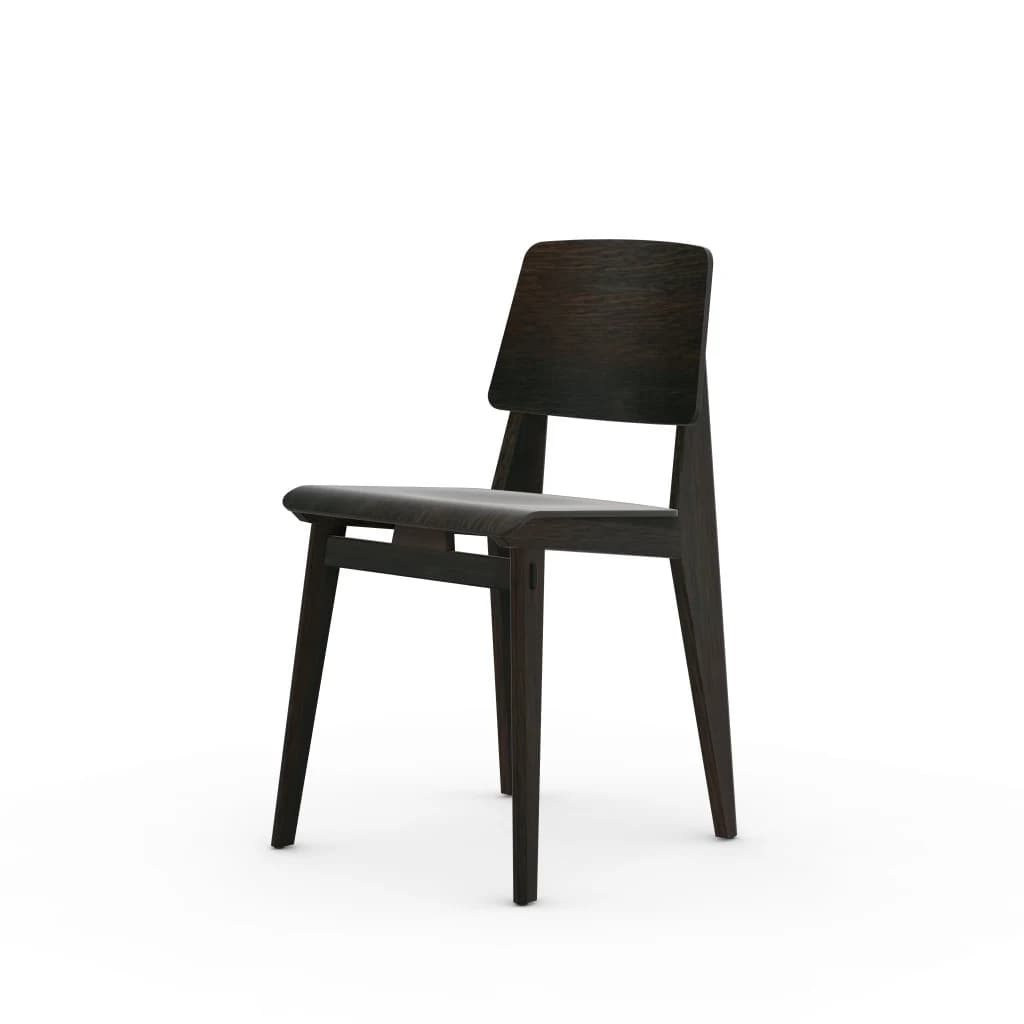
Chaise Tout Bois
Jean Prouvé's wartime Chaise Tout Bois of 1941, made entirely of oak without a single screw
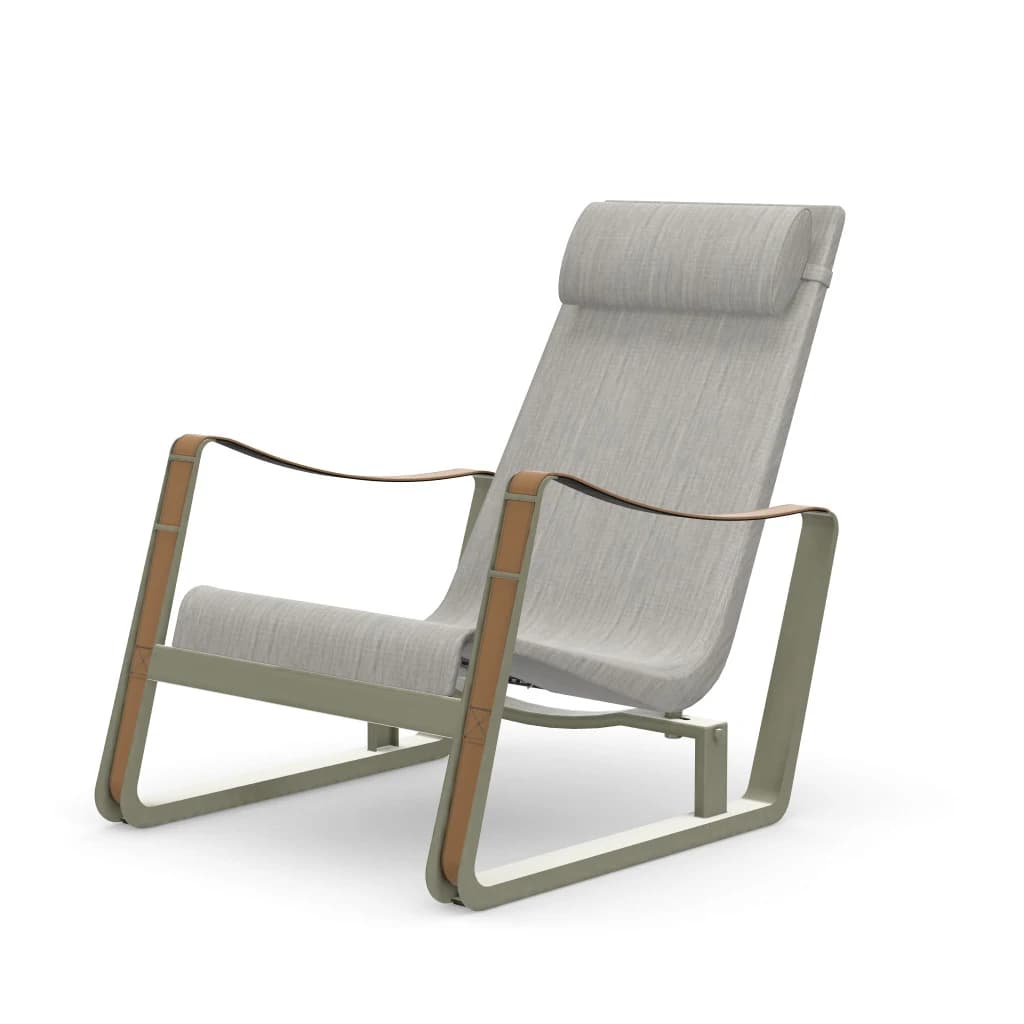
Cité
Prouvé's 1930 Cité armchair for Nancy's student halls, with steel runners and leather belt armrests
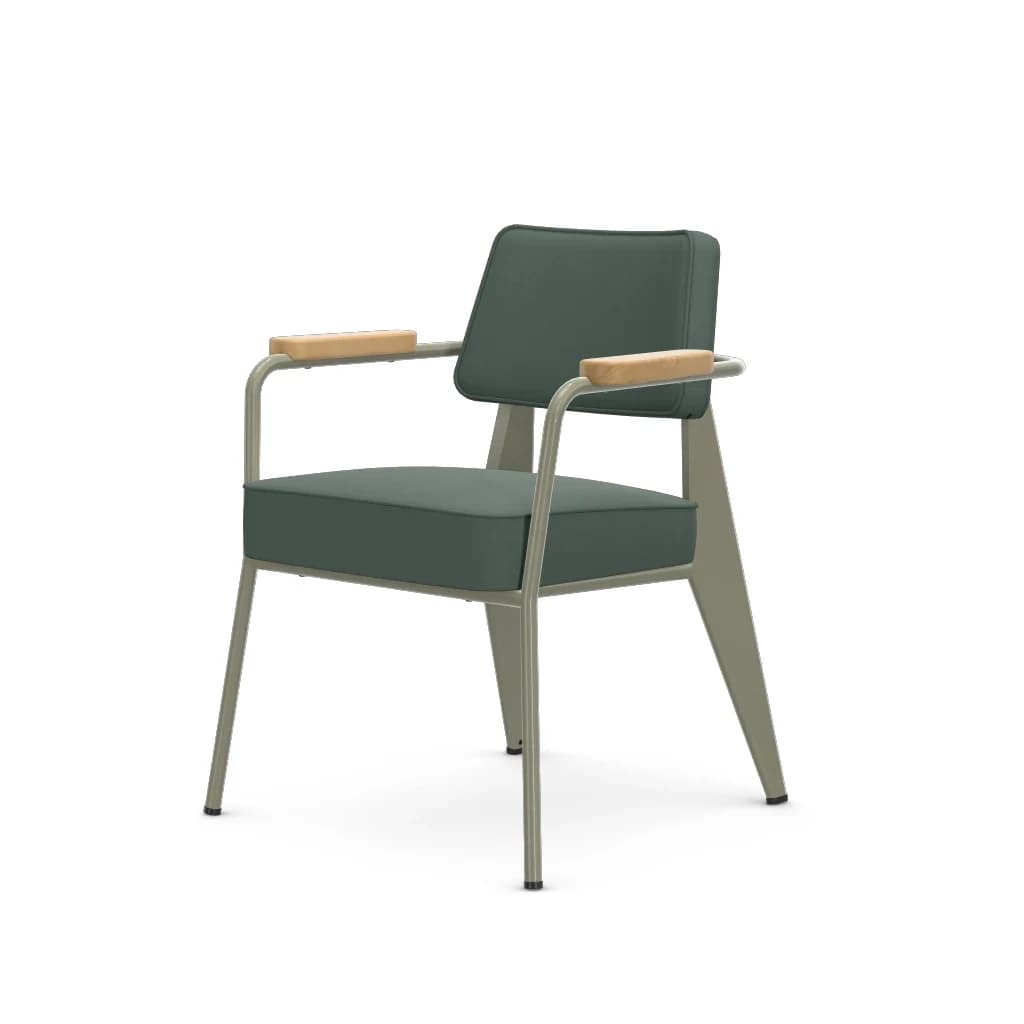
Fauteuil Direction
Jean Prouvé's 1951 Fauteuil Direction: an upholstered armchair with wooden armrests on a steel frame
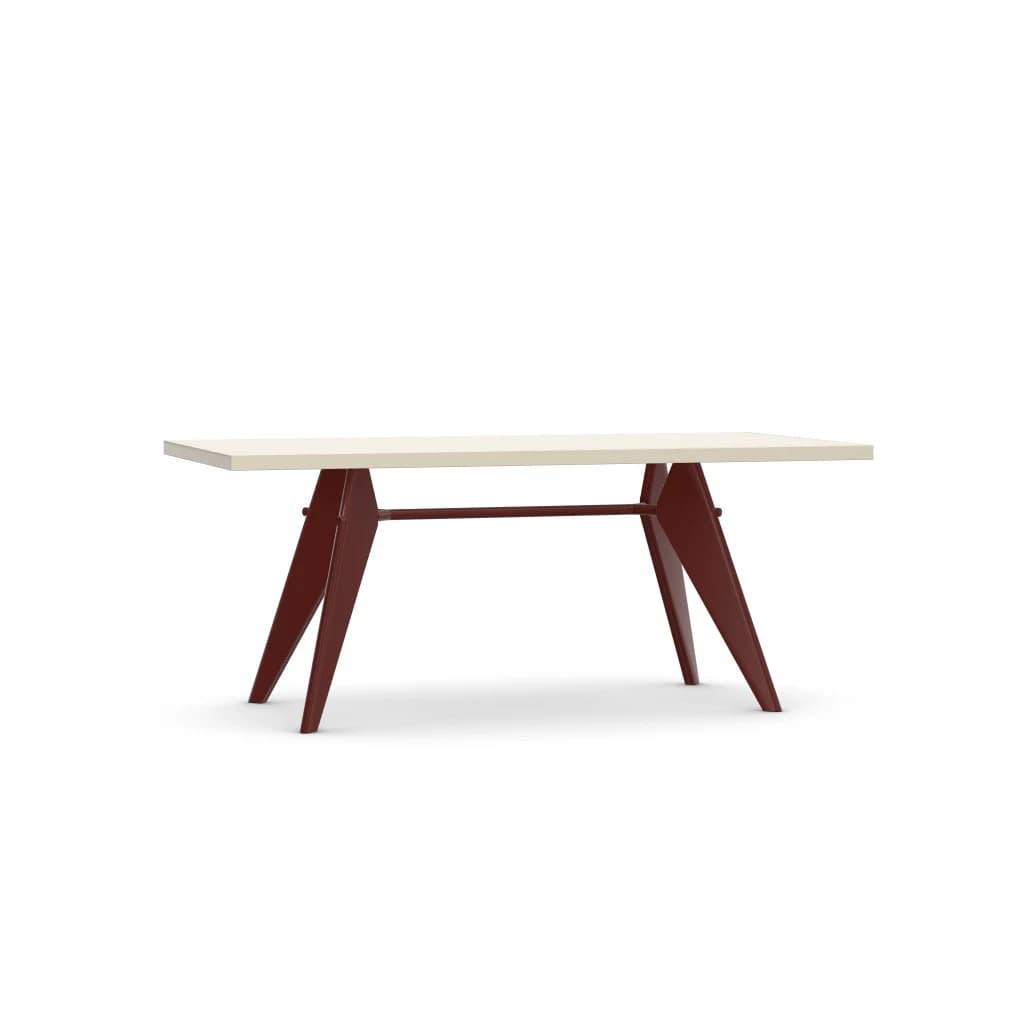
EM Table
Jean Prouvé's 1950 EM Table: canted steel legs and a crossbar, five lengths, three top materials