
Image source: Knoll — Tugendhat Chair
© Knoll and the respective rights holders. Quoted to accompany INTEBEE's independent design commentary and research.
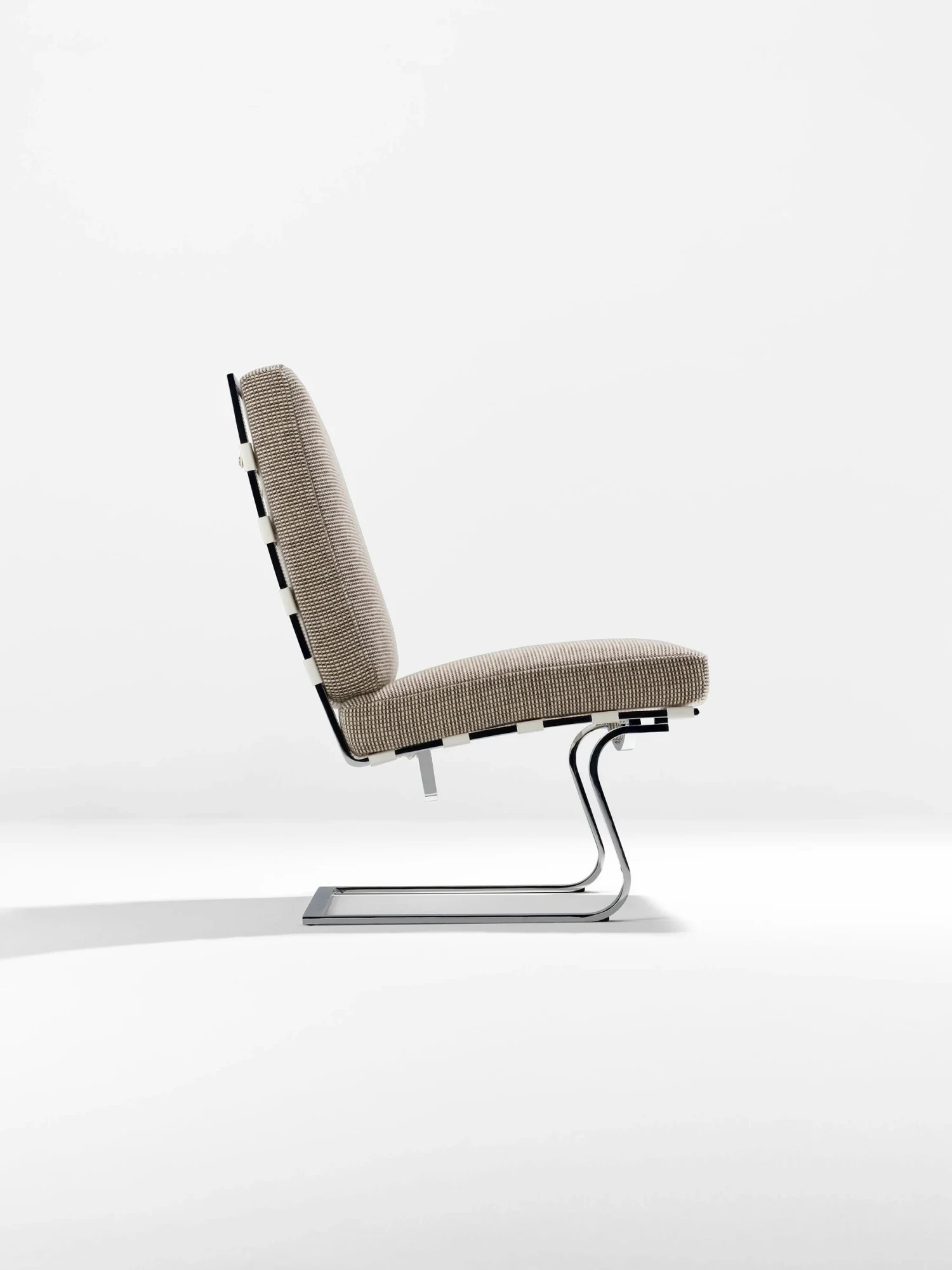
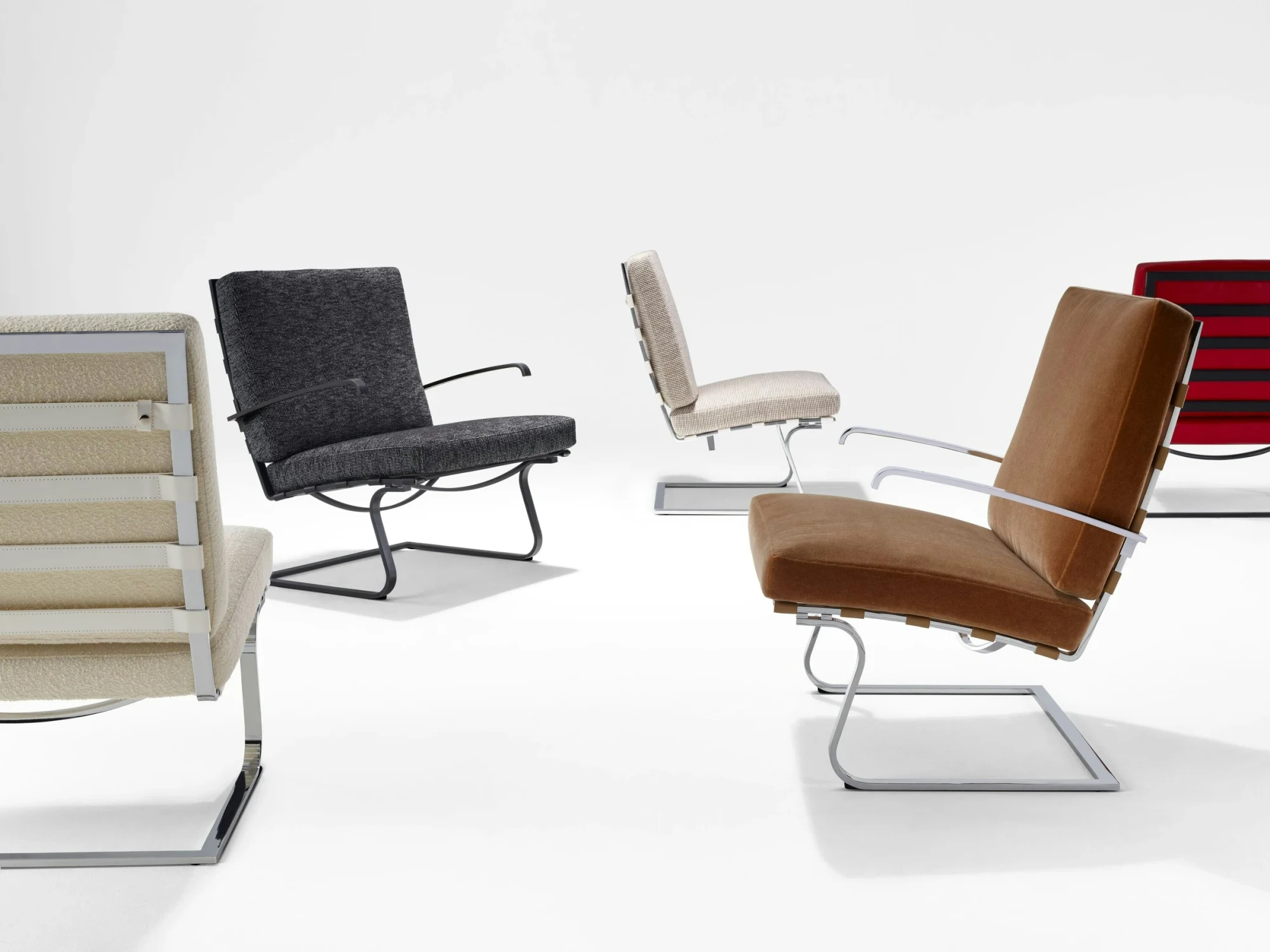
Tugendhat Chair
Mies van der Rohe's 1929 cantilevered lounge chair for Villa Tugendhat, reissued by Knoll in 2024


699 × 813 × 706 mm
1929
Approx. $9,000 (reference price; varies by region and retailer)
Official product information
INTEBEE AI PUBLIC LIBRARY is an independent furniture design research and discovery platform. Product specifications, finishes, availability and other details may change. For current and definitive information, please refer to the manufacturer's official website.
Go to the official product pageSpecifying Tugendhat Chair for your design project?
INTEBEE is the FF&E specification platform for interior designers: spec sheets, finishes, floor plans and client-ready PDFs in one place.
Description
Overview
The Tugendhat™ Chair is a cantilevered lounge chair that Knoll dates to 1929, made armless and with arms. It was designed for the Villa Tugendhat in Brno, and Knoll brought it back into production in 2024 as an archival reissue. A thick cushion sits above a leather strap back on a stainless steel frame.
Construction
- Cushions of highly resilient urethane foam with a down-like Dacron polyester fibre fill, upholstered in Spinneybeck® leathers and Knoll Textiles
- Stainless steel frame in polished chrome, hand ground and hand buffed to a mirror finish, or powder-coated in ultra-matte onyx
- Spinneybeck® leather straps attached to the frame with aluminum rivets
- The cantilevered frame gently bounces with the sitter
Specifications
- Armless, W 27½" × D 27.8" × H 32" (699 × 706 × 813 mm); seat height 15.7" (399 mm)
- With arms: W 30" (762 mm), D 27.8", H 32", seat height 15.7"
- Weight 52 lb armless and 58½ lb with arms; weight capacity 250 lb
Story
A chair for Brno
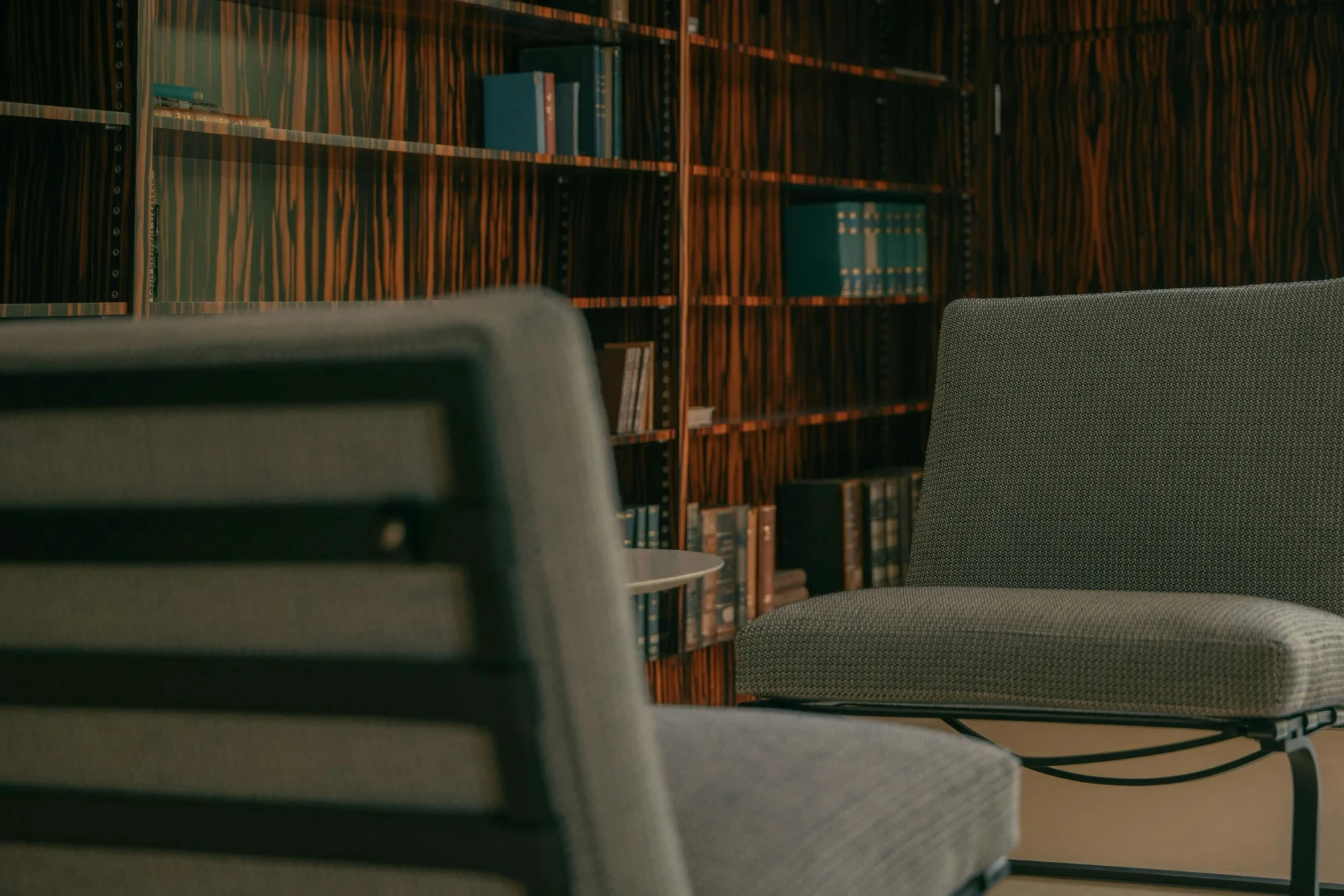
Knoll's design-plan page says Mies van der Rohe and Lilly Reich designed a home for the Tugendhat family in 1929, in Brno in the Czech Republic, and describes the villa as a celebrated example of functionalist architecture with austere concrete construction, exterior walls of glass and open interiors filled with natural light. Mies also specified the interior, from light switches to furnishings.
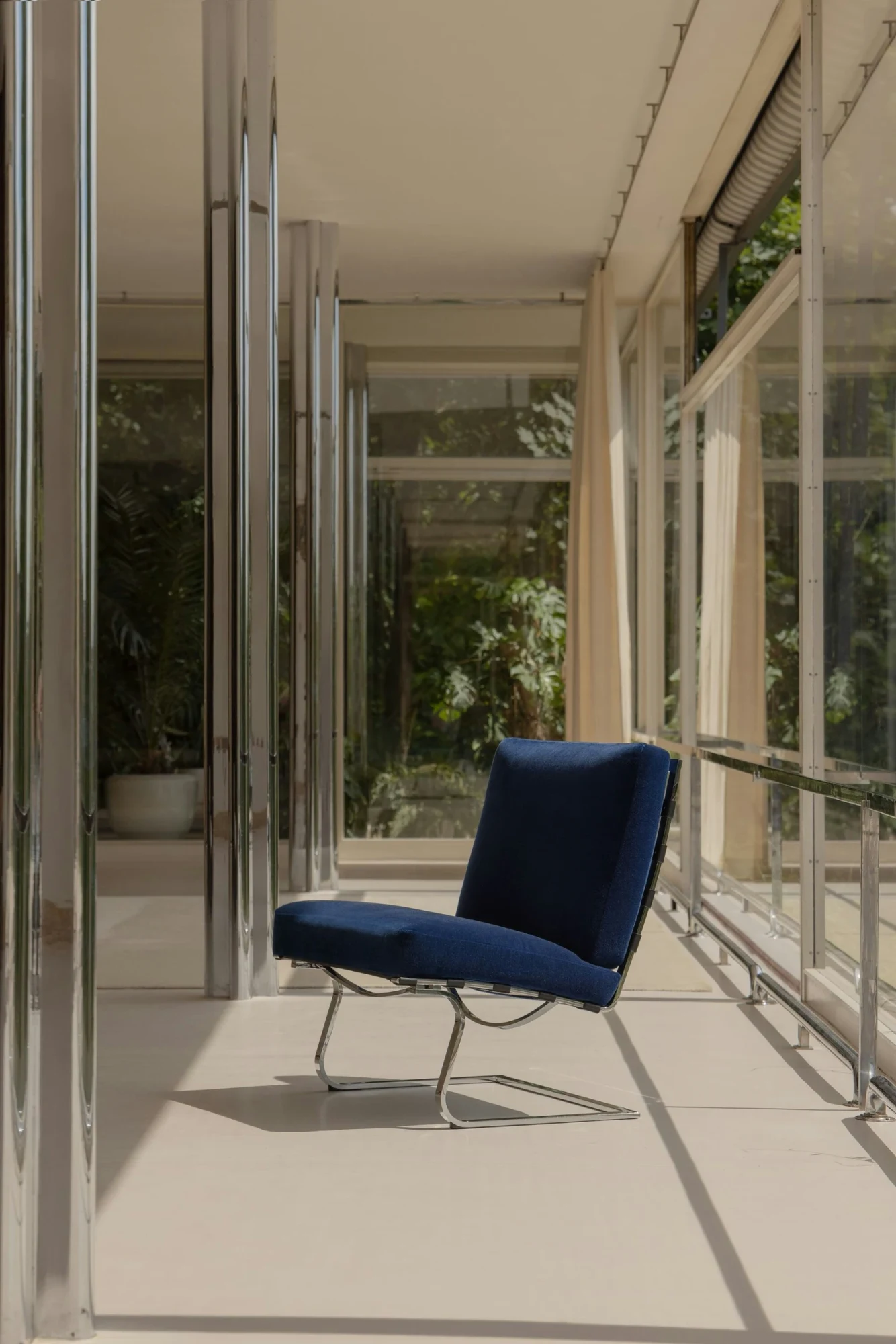 Image source: Knoll — Tugendhat Chair · © Knoll and the respective rights holders. Quoted to accompany INTEBEE's independent design commentary and research. · View official product page ↗ · Image use & copyright policy
The Feder-Sessel
One of the pieces he designed for several rooms of the house was the Feder-Sessel, German for "spring chair". It became known as the Tugendhat Chair when photographs of the villa appeared in the press.
Back in production
A Knoll story on the chair calls it a 1929 masterpiece, brought back into production in 2024 as an archival reissue, and describes a return to the house with the photographer Franck Bohbot to mark the occasion.
More by Ludwig Mies van der Rohe
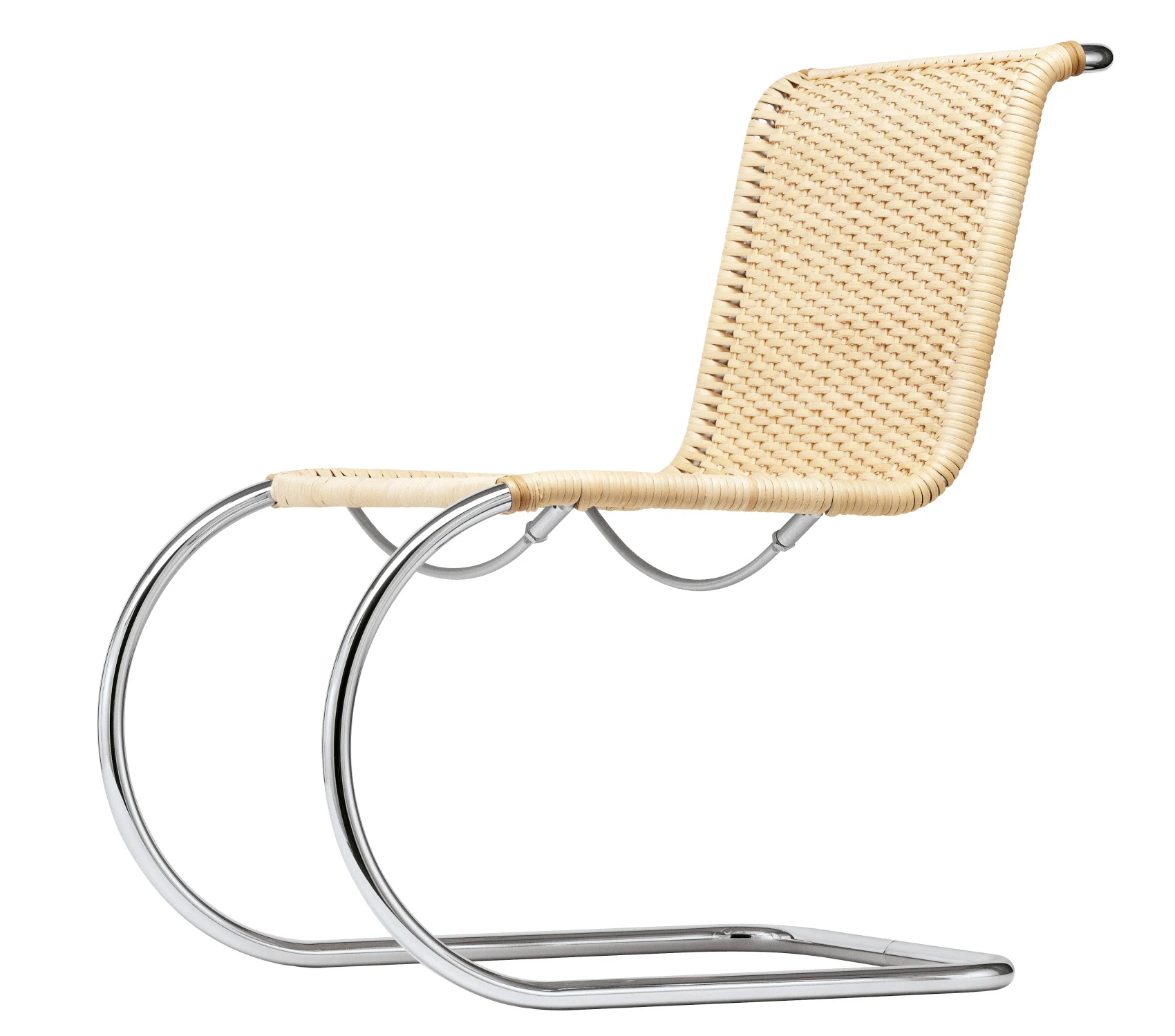
S 533 Cantilever Chair
Mies van der Rohe's curved cantilever chair of 1927 in a single circle of chrome-plated steel.
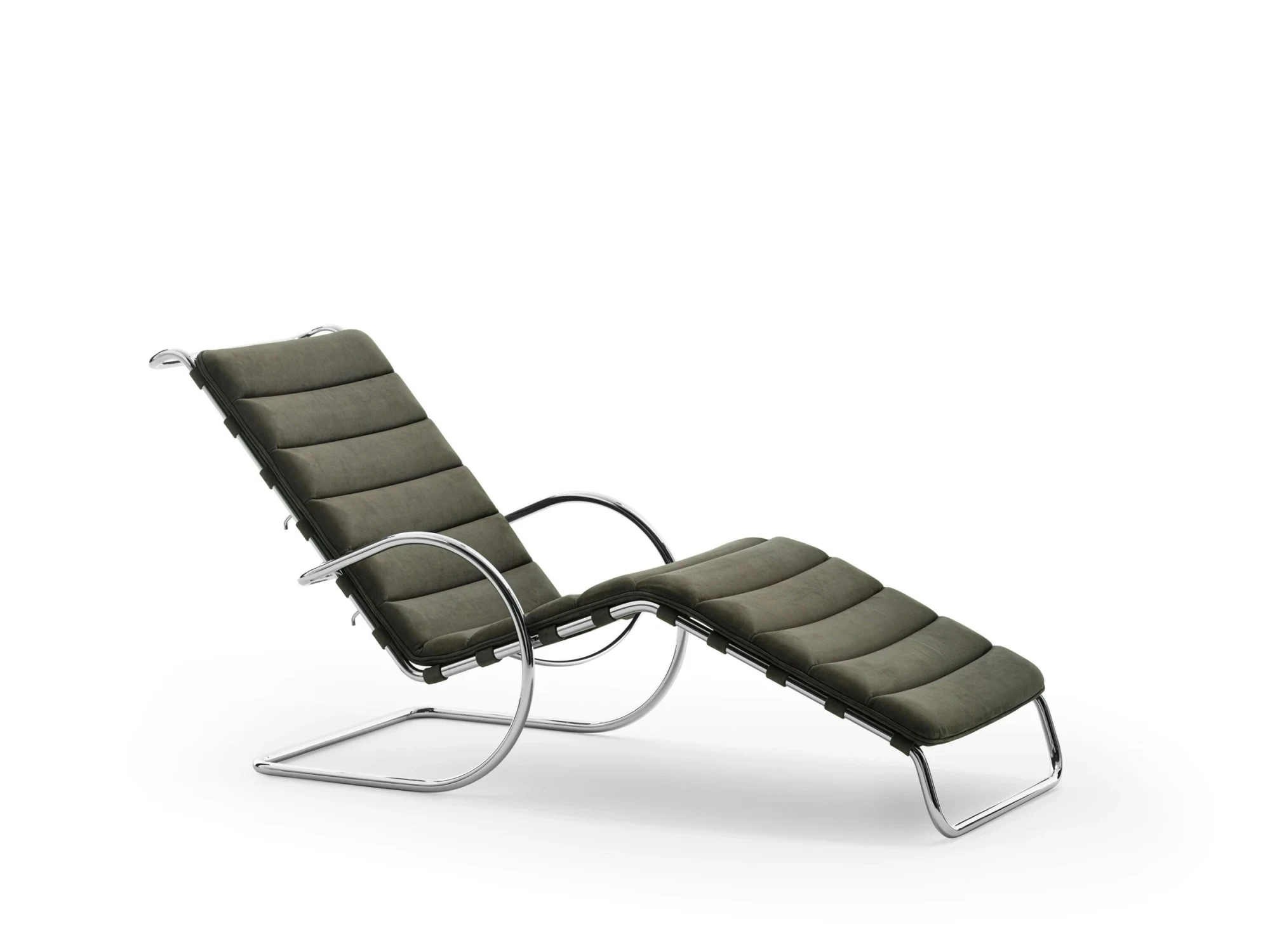
MR Adjustable Chaise Lounge
Mies van der Rohe's 1927 chaise on a two-piece chrome frame that adjusts in height and angle
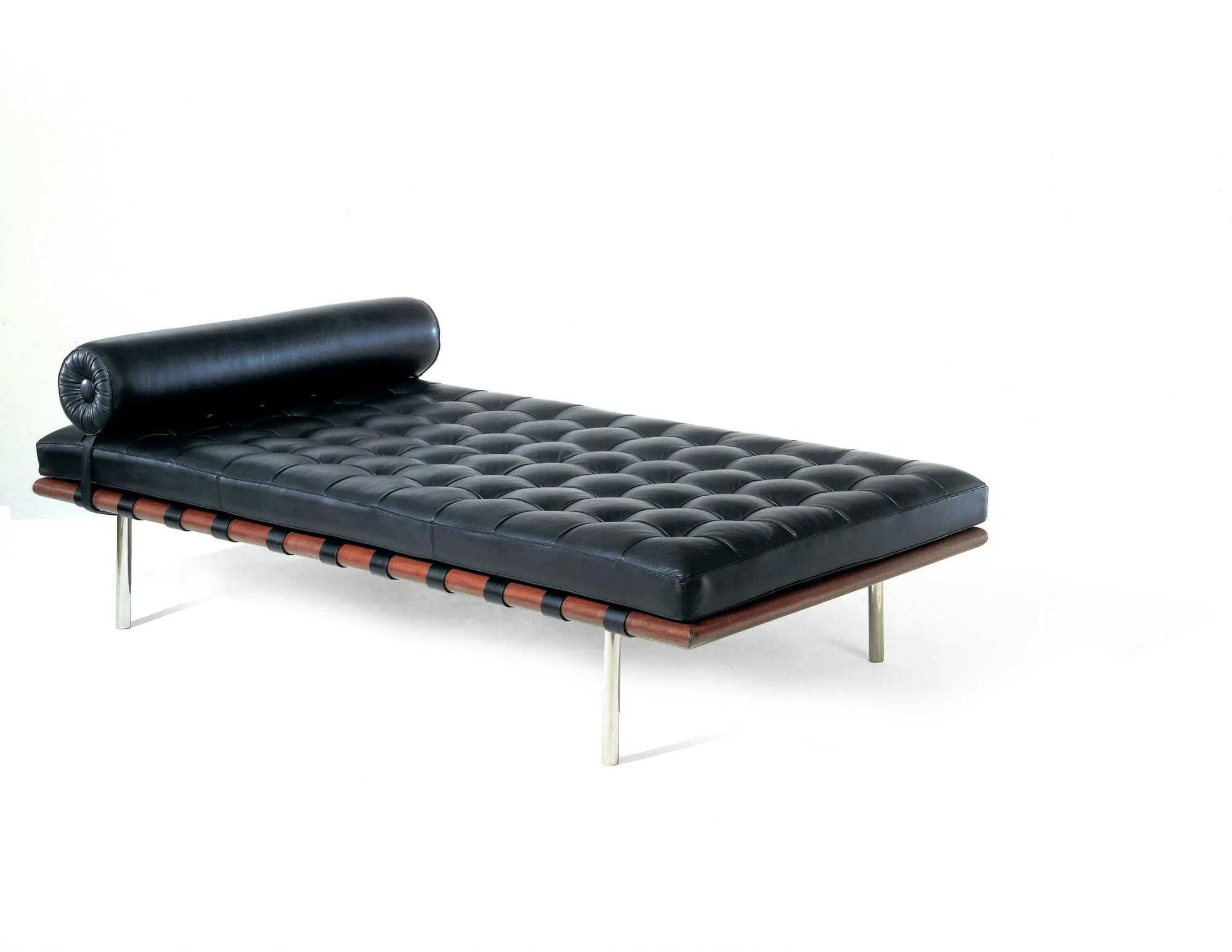
Barcelona Couch
Mies van der Rohe's 1930 couch: tufted cushion on a mahogany platform and steel legs
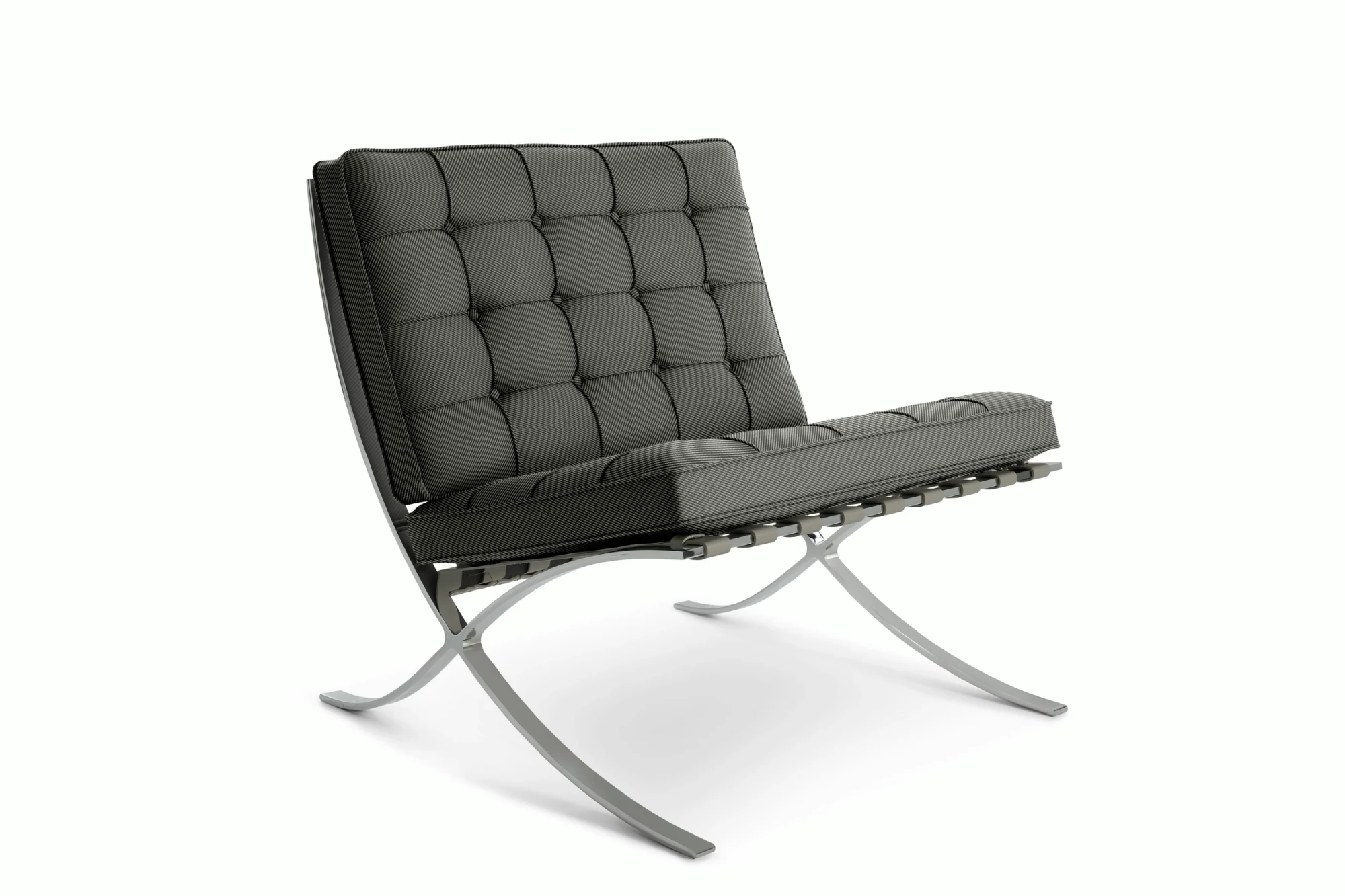
Barcelona Chair
Mies van der Rohe's 1929 lounge chair: steel frame and cushions of 40 hand-welted squares