
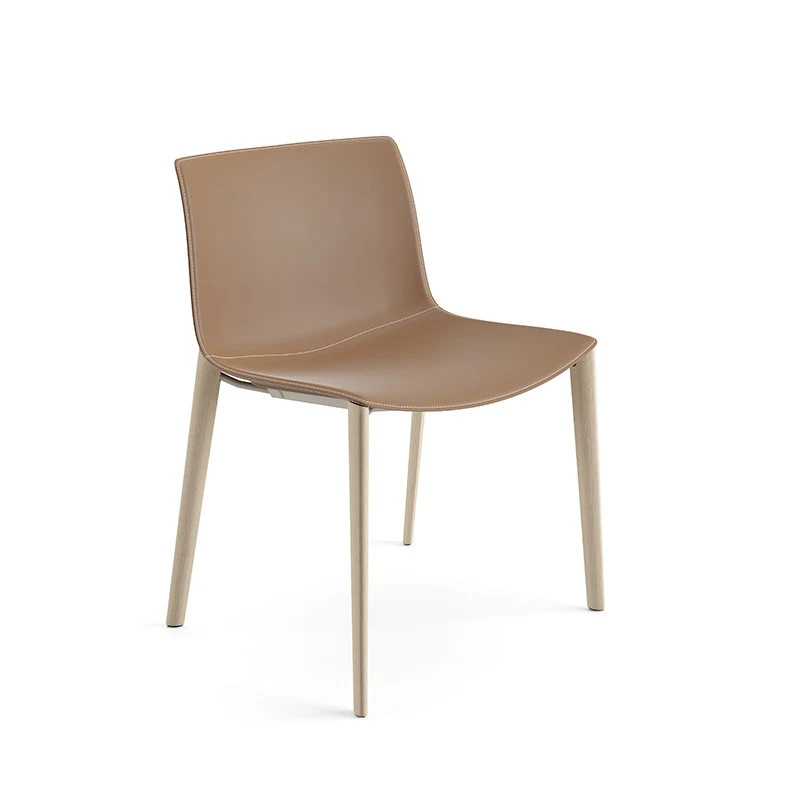
Catifa (RE) 53
The original Catifa shell, now in recycled polypropylene and hard leather on solid oak legs.


565 × 780 × 485 mm
Source: technical drawing image — Catifa (RE) 53 #3138 four-leg chair, solid oak legs, hard-leather-covered shell — published as W 56.5 × D 48.5 × H 78 cm
2001
Description
Overview
Catifa (RE) 53 (article #3138, frame option Wood Legs) is the four-leg version of Arper's first Catifa chair. Lievore Altherr Molina designed it in 2001, and Arper updated it in 2025 with recycled materials while keeping the curved seat and streamlined profile.
Construction
The chair sits on a four-legged frame in solid oak. The polypropylene shell is made with post-consumer recycled material mixed with post-industrial material and is covered in hard leather without padding. Glides suitable for different types of floor surfaces are supplied as standard. Across the collection the 53 cm shell can also be specified with a removable, non-washable cover in fabric, leather, coated fabric or customer's own material, in three stitching options: striped, star-shaped or no stitching.
Specifications
- Dimensions (Arper drawing for #3138): W 56.5 × D 48.5 × H 78 cm
- Shell: recycled polypropylene, hard-leather covering; base: solid oak
- GREENGUARD Gold certified
- Other bases in the collection: swivel trestle, trestle on castors and five-star swivel base on castors
Story
Where Catifa began
Catifa 53 of 2001 was the first chair of the family, drawn by Lievore Altherr Molina. Arper keeps describing its curved seat and slender profile as a balance of purity and function that has stayed useful as living habits changed.
The 2025 update
In 2025 Arper renamed the chair Catifa (RE) 53 to mark a new focus on materials and careful use of resources. The shell is made from recycled plastic, a blend of post-consumer and post-industrial waste; covers can be taken off for care and replacement; and the look becomes softer and more relaxed while the lines stay as before.
More by Lievore Altherr Molina
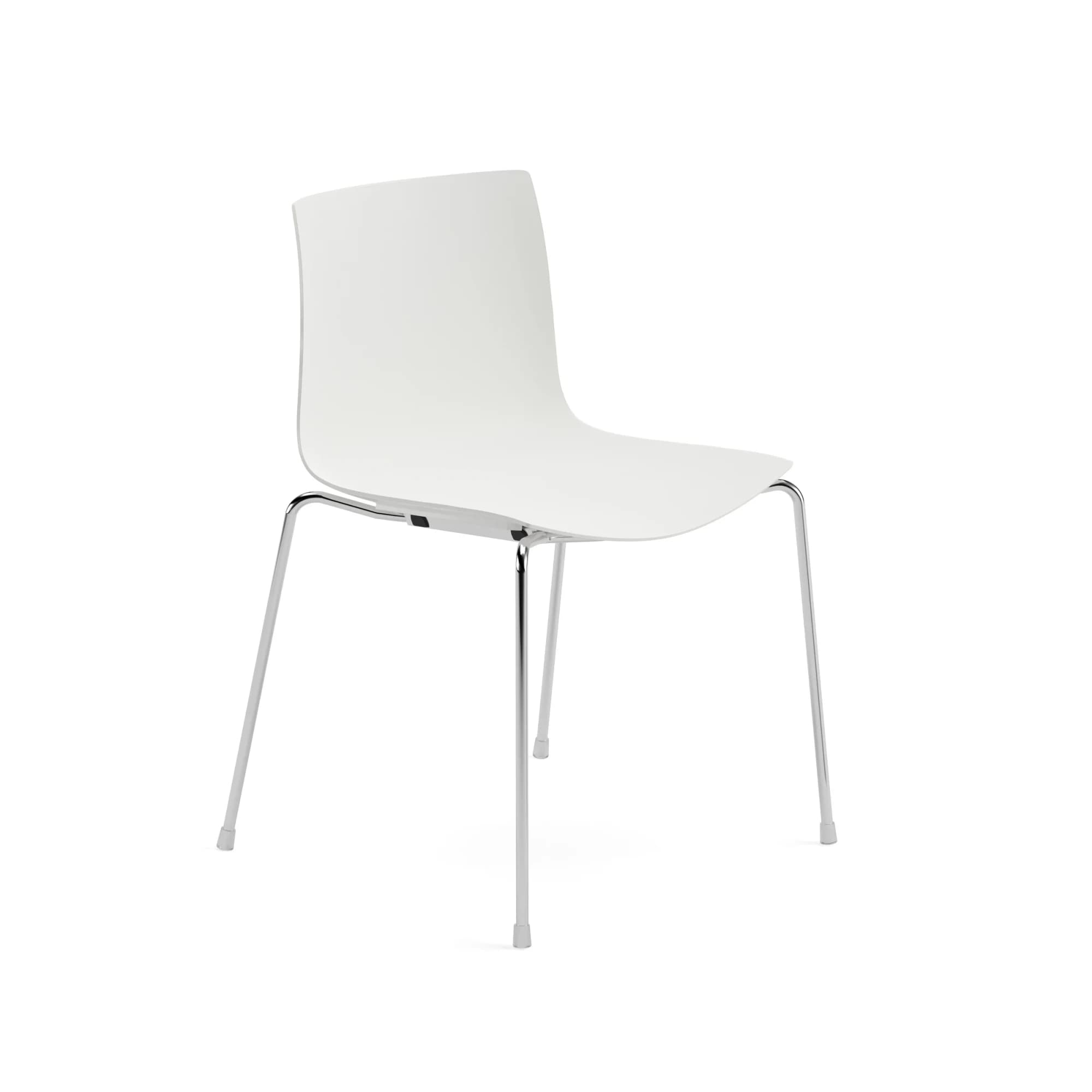
Catifa 46
Compact sister of Catifa 53: a slim polypropylene shell on a four-leg steel frame.
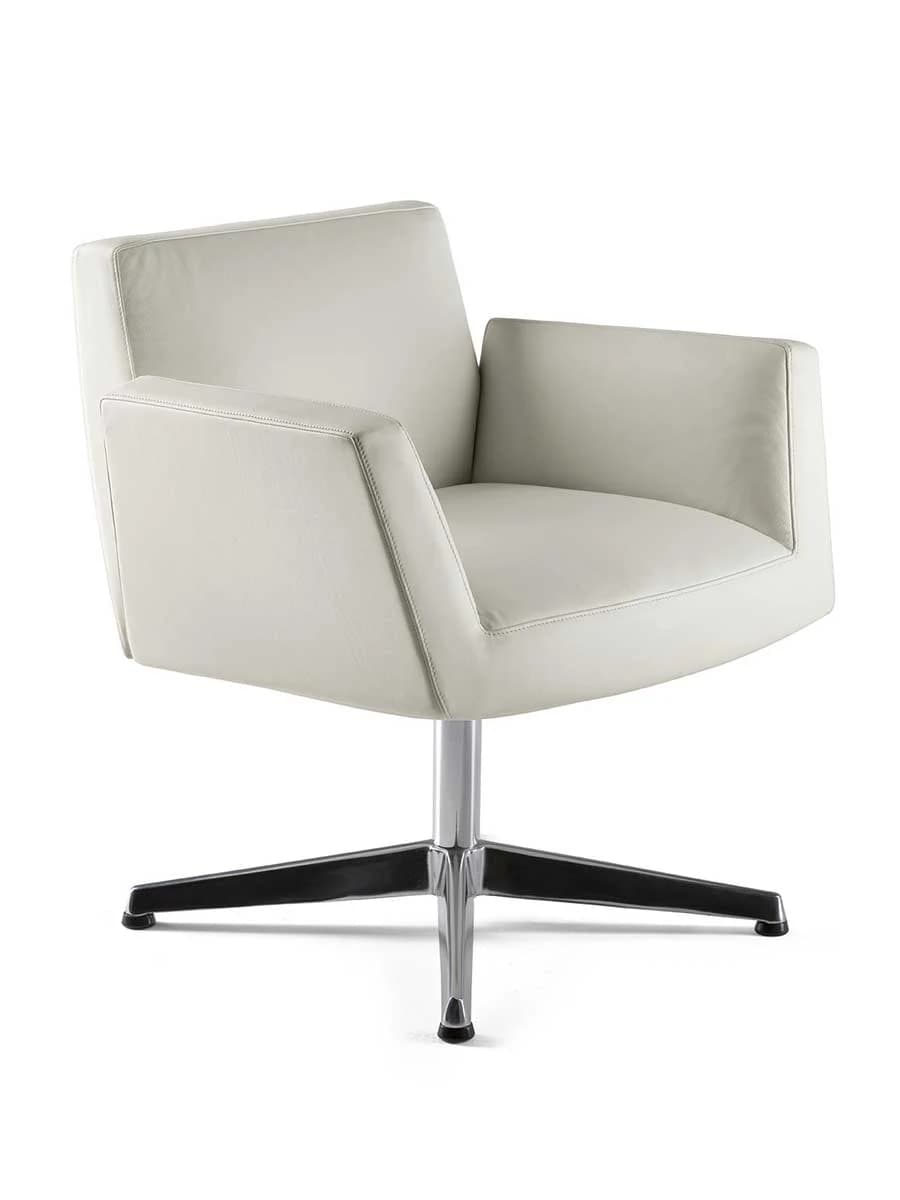
Chancellor Visitor Chair
Chancellor Visitor armchair: four-spoke base with return swivel, by Lievore Altherr Molina.
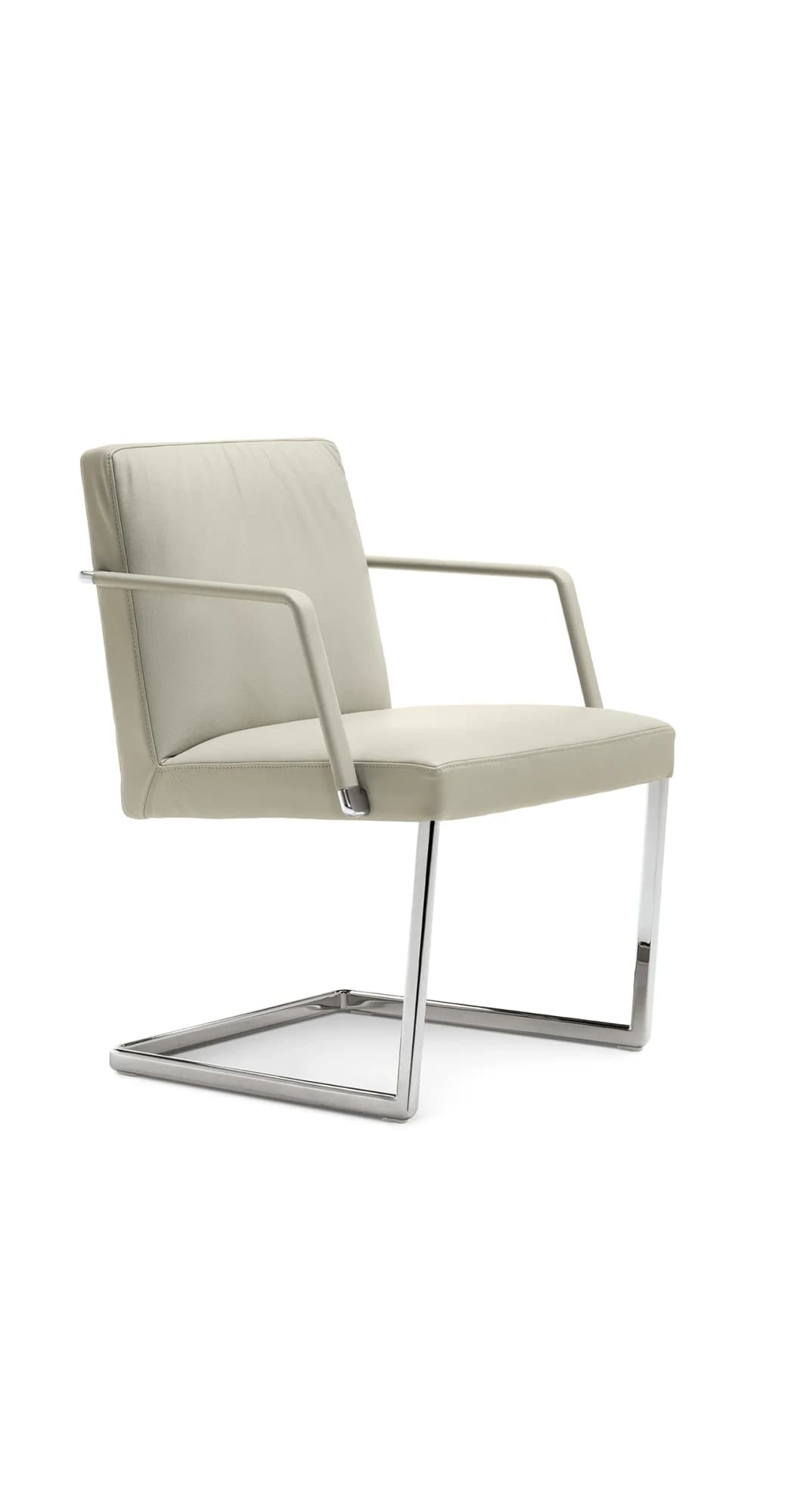
Chancellor Conference Cantilever Chair
Chancellor Conference: a cantilever chair for meeting tables by Lievore Altherr Molina.
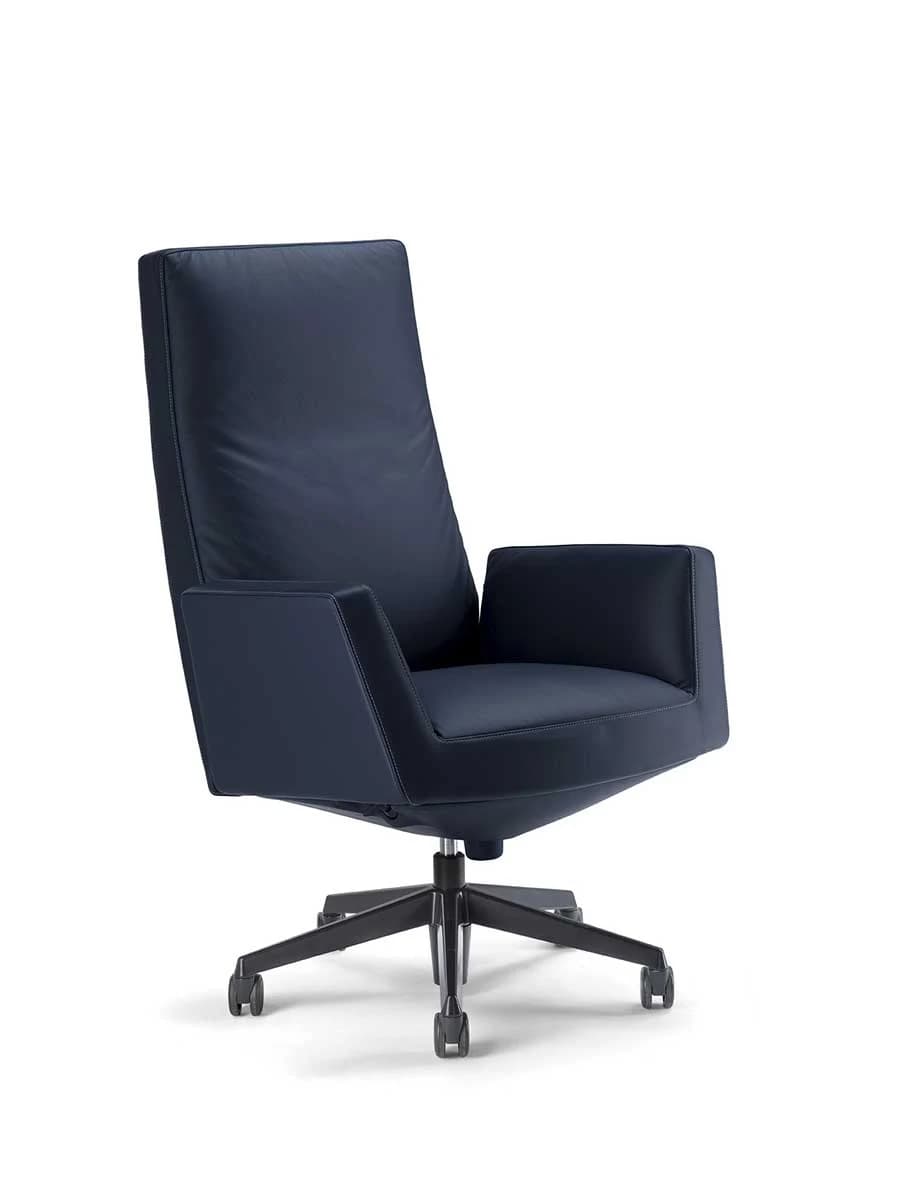
Chancellor Office Chair
Chancellor office chair with Syncron tilt and a five-spoke base, by Lievore Altherr Molina.