
Image source: Knoll — Brno Chair – Flat Bar
© Knoll and the respective rights holders. Quoted to accompany INTEBEE's independent design commentary and research.
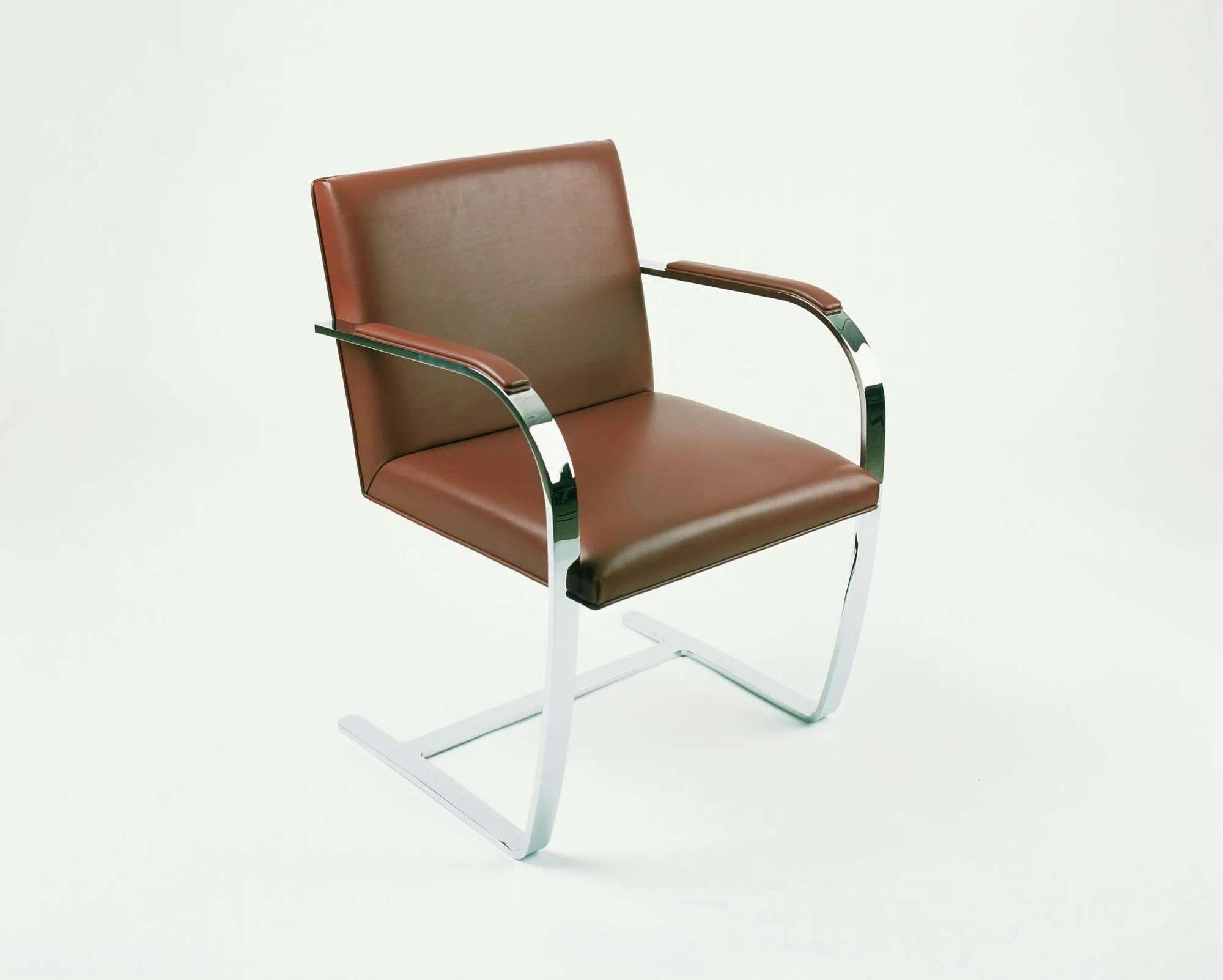
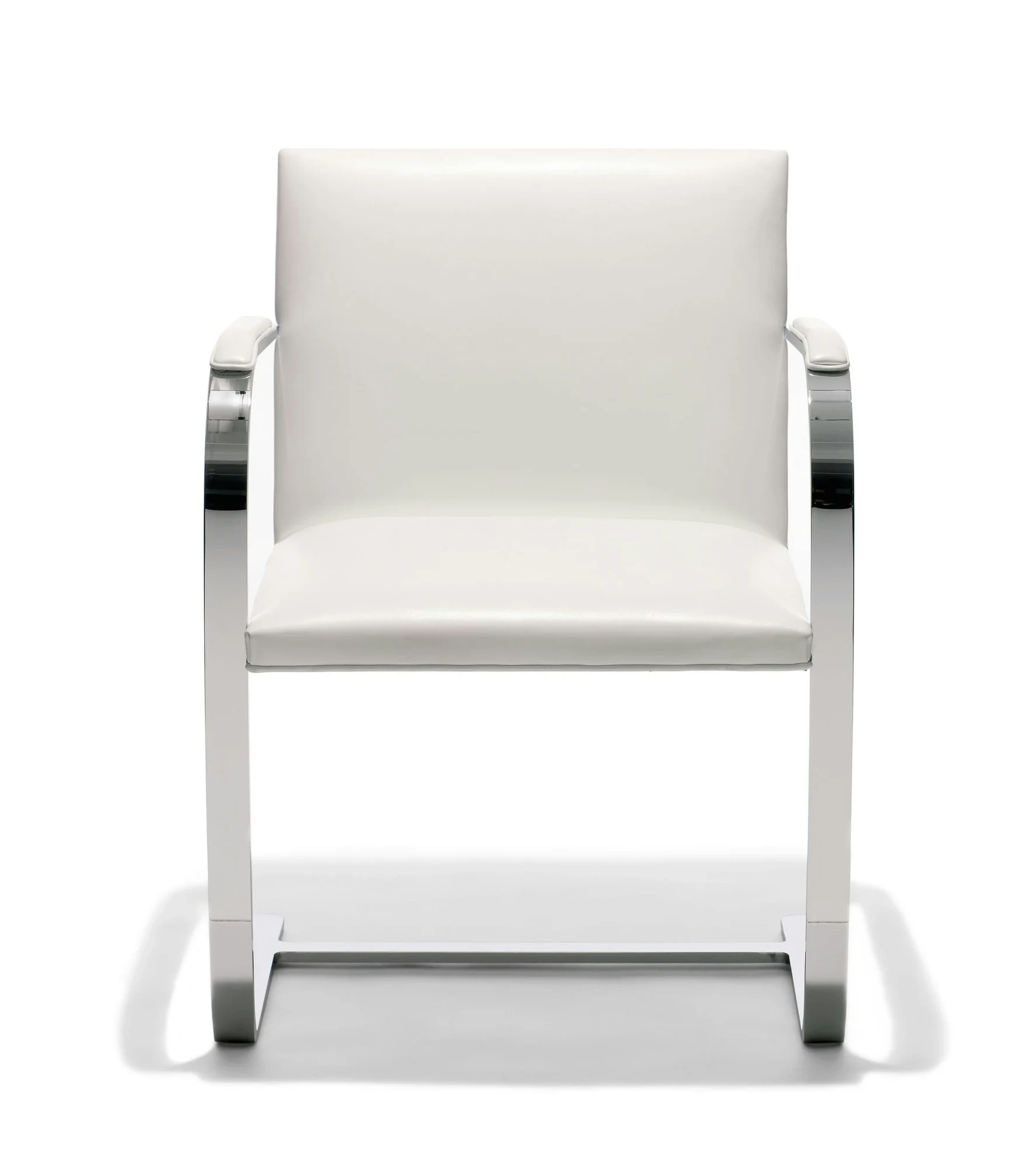
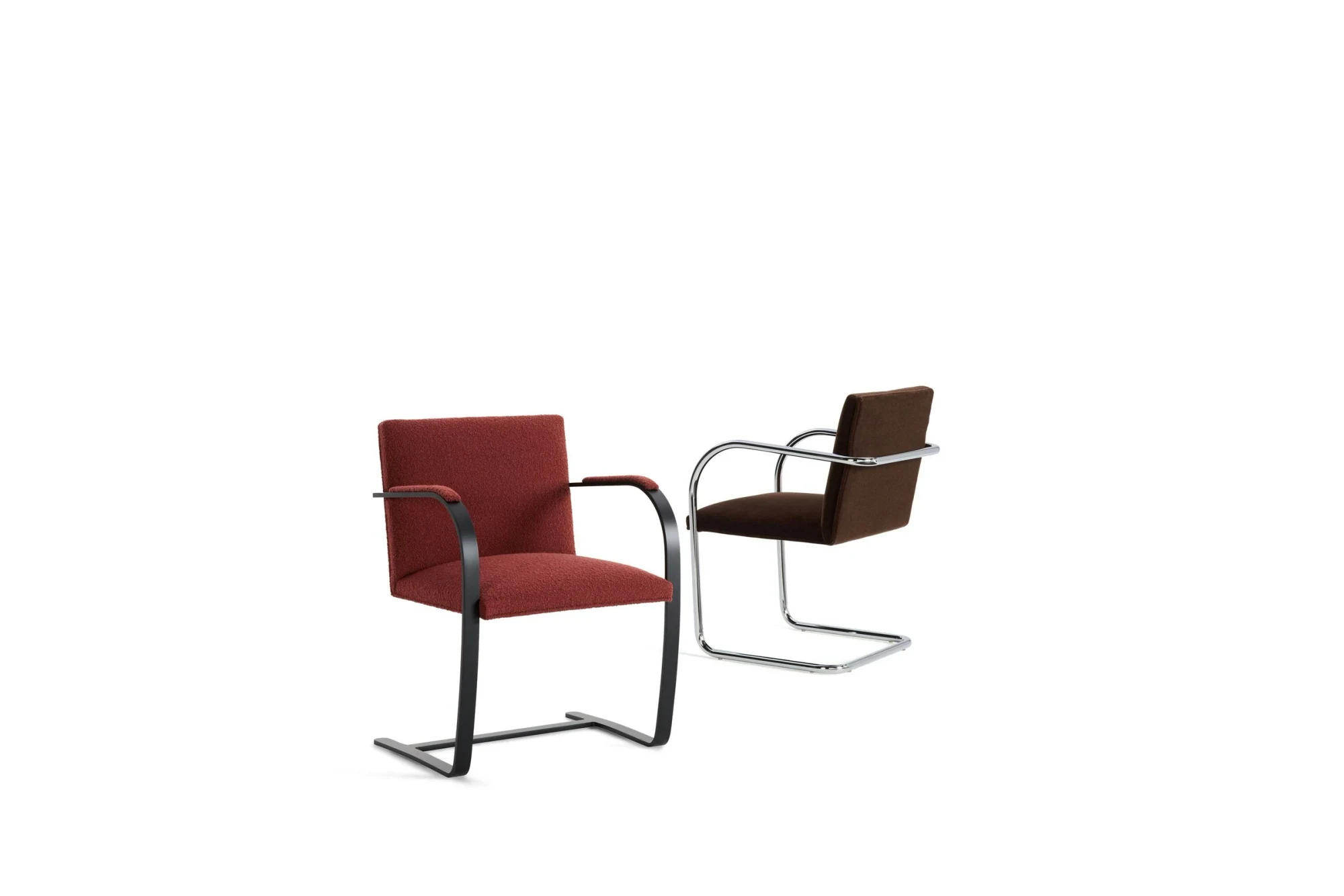
Brno Chair – Flat Bar
Mies van der Rohe's 1930 cantilevered flat bar chair, made for the Villa Tugendhat in Brno


578 × 800 × 572 mm
1930
Official product information
INTEBEE AI PUBLIC LIBRARY is an independent furniture design research and discovery platform. Product specifications, finishes, availability and other details may change. For current and definitive information, please refer to the manufacturer's official website.
Go to the official product pageSpecifying Brno Chair – Flat Bar for your design project?
INTEBEE is the FF&E specification platform for interior designers: spec sheets, finishes, floor plans and client-ready PDFs in one place.
Description
Overview
The Brno Chair, Flat Bar (255) is a cantilevered chair that Knoll dates to 1930. Knoll says the seat bounces slightly with the sitter and offers the chair with or without arm pads, on a flat bar frame in four finishes.
Construction
- Flat bar frame, hand-ground and hand-finished, with no visible connection between seat and frame
- Frame in polished chrome, antiqued bronze, polished stainless steel (304 bar stock, hand-buffed to a mirror finish) or onyx, an ultra-matte powder-coated steel
- Seat with an inner hardwood frame, variable density foam and Dymetrol seat suspension
- With arm pads (255A) or without (255C)
- Optional charcoal-coloured nylon glides recessed in the base of the frame
Specifications
- W 22¾" × D 22½" × H 31½" (578 × 572 × 800 mm); seat height 17½" (445 mm), arm height 25¾" (654 mm)
- Weight 37 lb for 255A in polished chrome (the KnollStudio price list)
Story
Made for a house in Brno
Knoll's cut sheet says Mies conceived the chair in 1930 for the Tugendhat house in the Czech city of Brno, and that its form reflects the spareness of his designs for the house and its interiors.
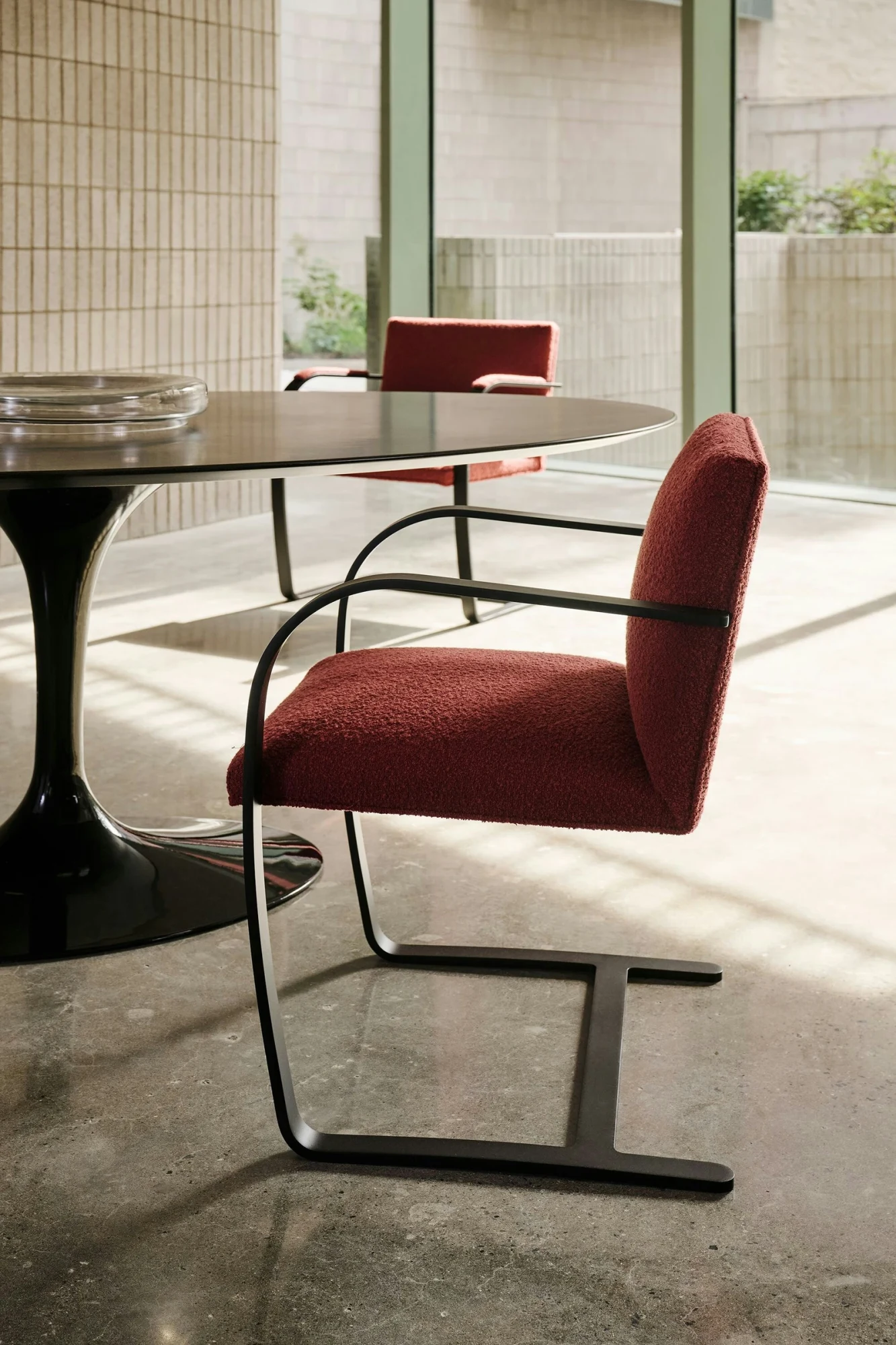 Image source: Knoll — Brno Chair – Flat Bar · © Knoll and the respective rights holders. Quoted to accompany INTEBEE's independent design commentary and research. · View official product page ↗ · Image use & copyright policy
Knoll's product page adds that 24 or more Brno chairs furnished the villa in 1930 and that one of them, in the master bedroom, was unique because of its flat bar frame.
The Four Seasons version
Eighteen years later Philip Johnson, who had been hired to design the interiors of the Seagram Building in midtown Manhattan, asked Knoll to put the flat bar chair into production as the primary seating of The Four Seasons Restaurant, but with added cushioning. Knoll says the chair was reintroduced with thicker cushions in 1958, with Mies's approval, and is still produced that way.
More by Ludwig Mies van der Rohe
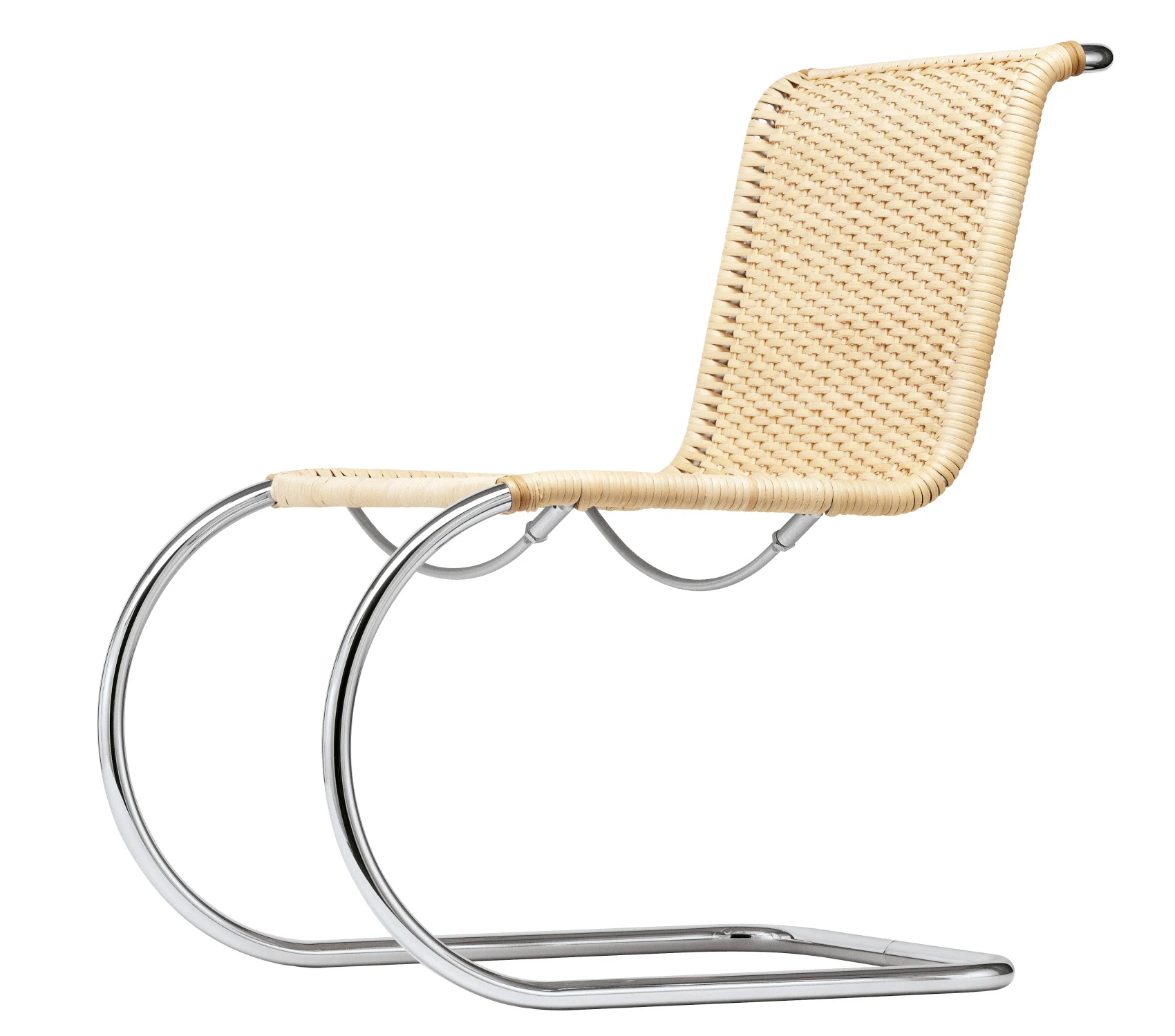
S 533 Cantilever Chair
Mies van der Rohe's curved cantilever chair of 1927 in a single circle of chrome-plated steel.
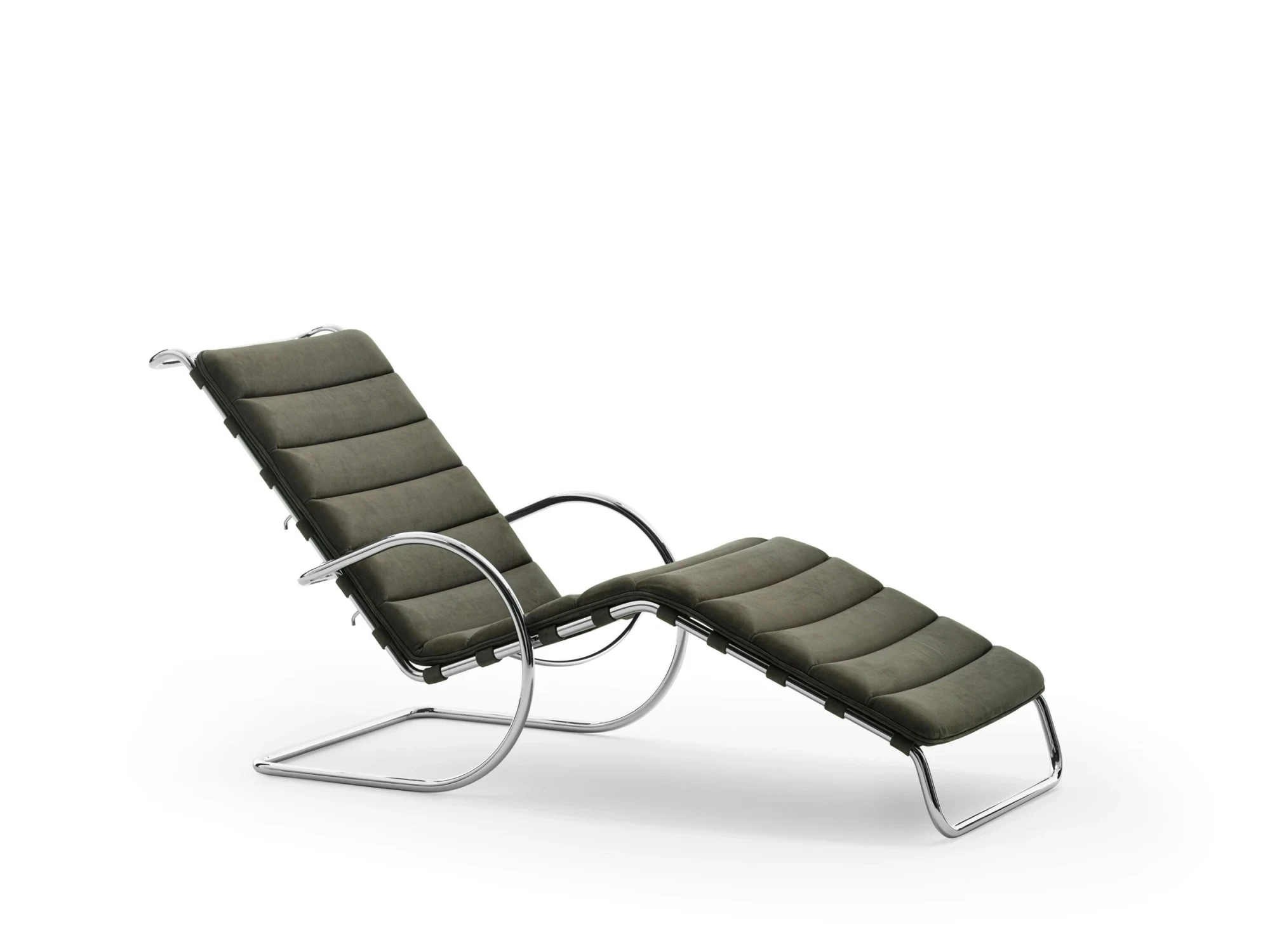
MR Adjustable Chaise Lounge
Mies van der Rohe's 1927 chaise on a two-piece chrome frame that adjusts in height and angle
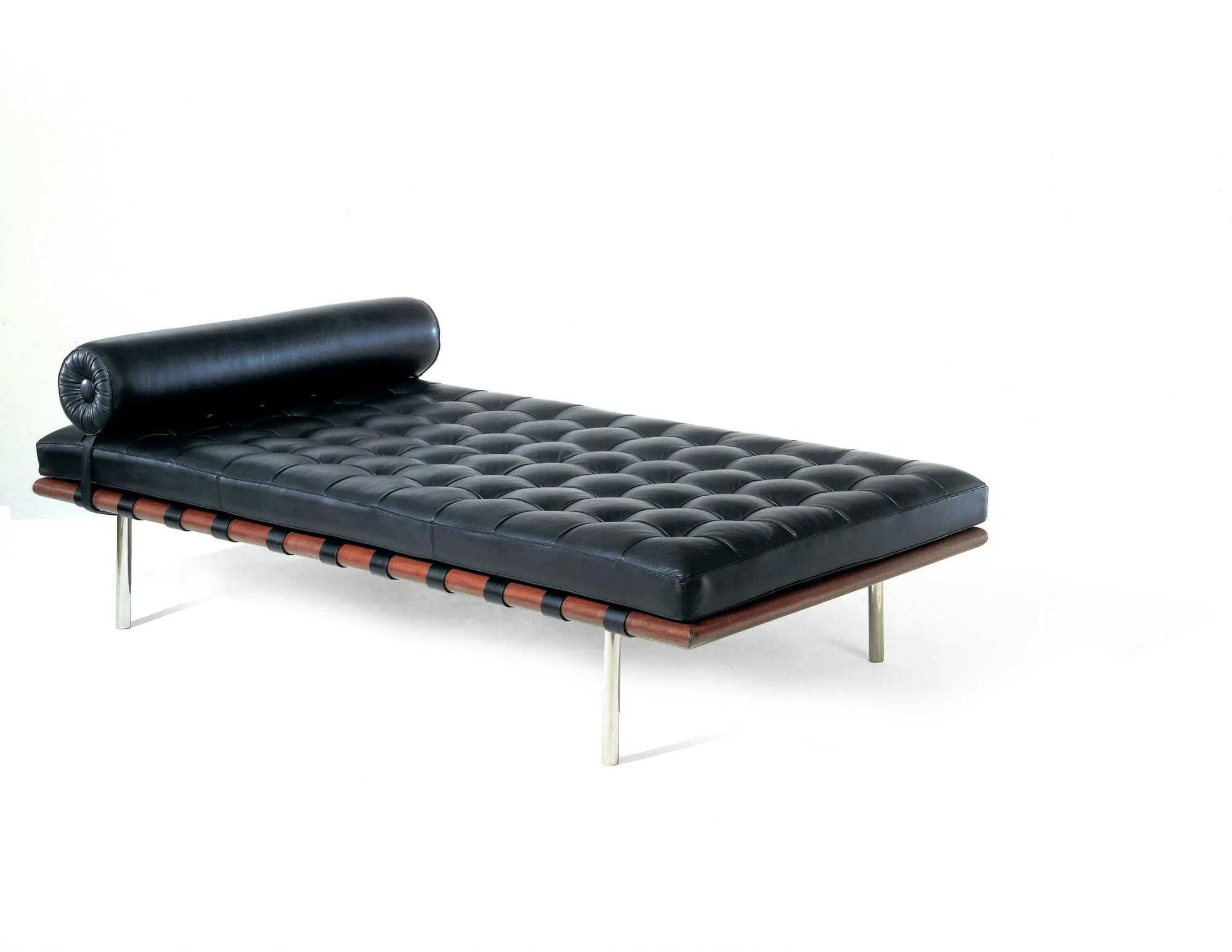
Barcelona Couch
Mies van der Rohe's 1930 couch: tufted cushion on a mahogany platform and steel legs
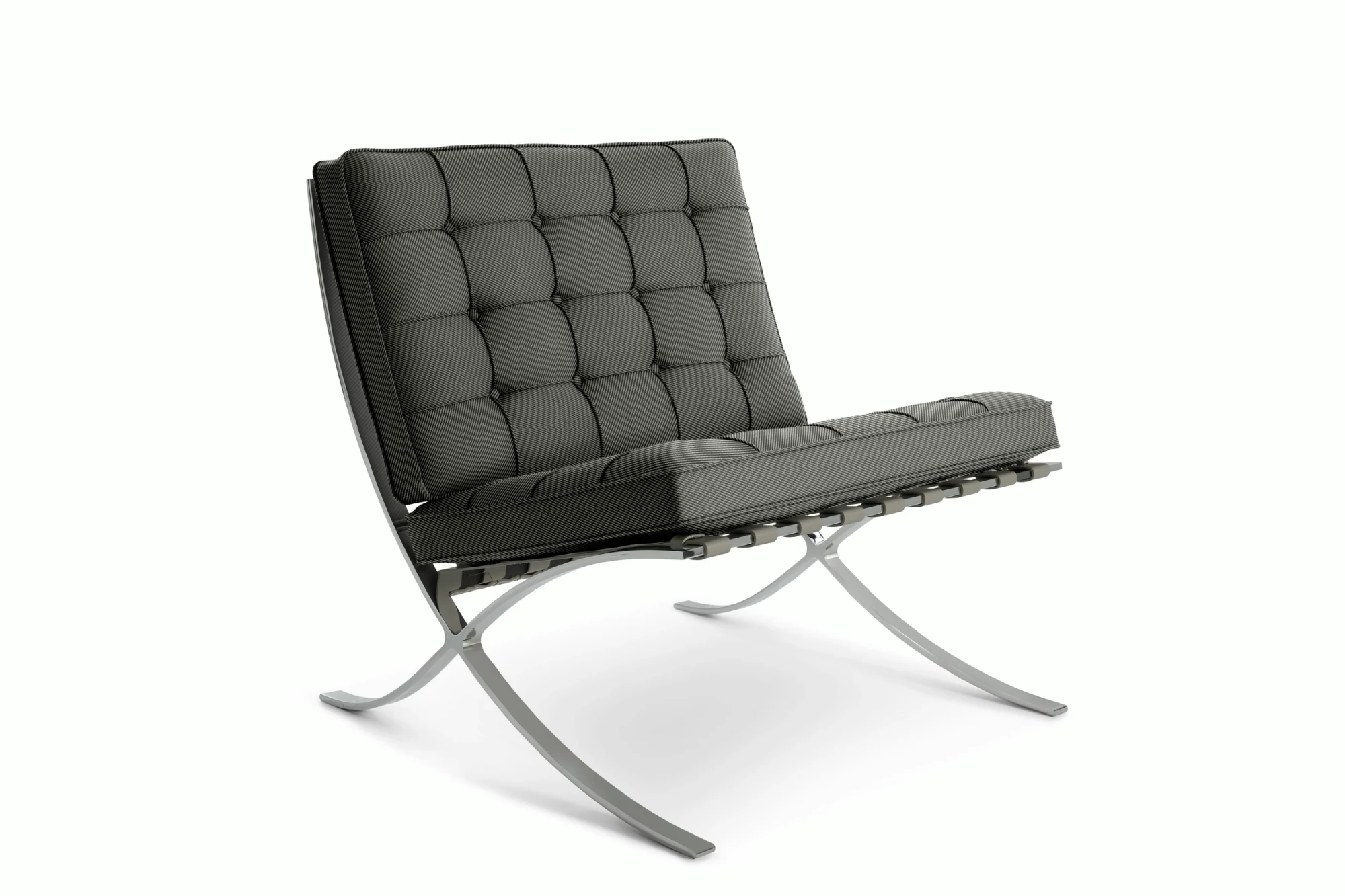
Barcelona Chair
Mies van der Rohe's 1929 lounge chair: steel frame and cushions of 40 hand-welted squares