

Collection Story
Origin
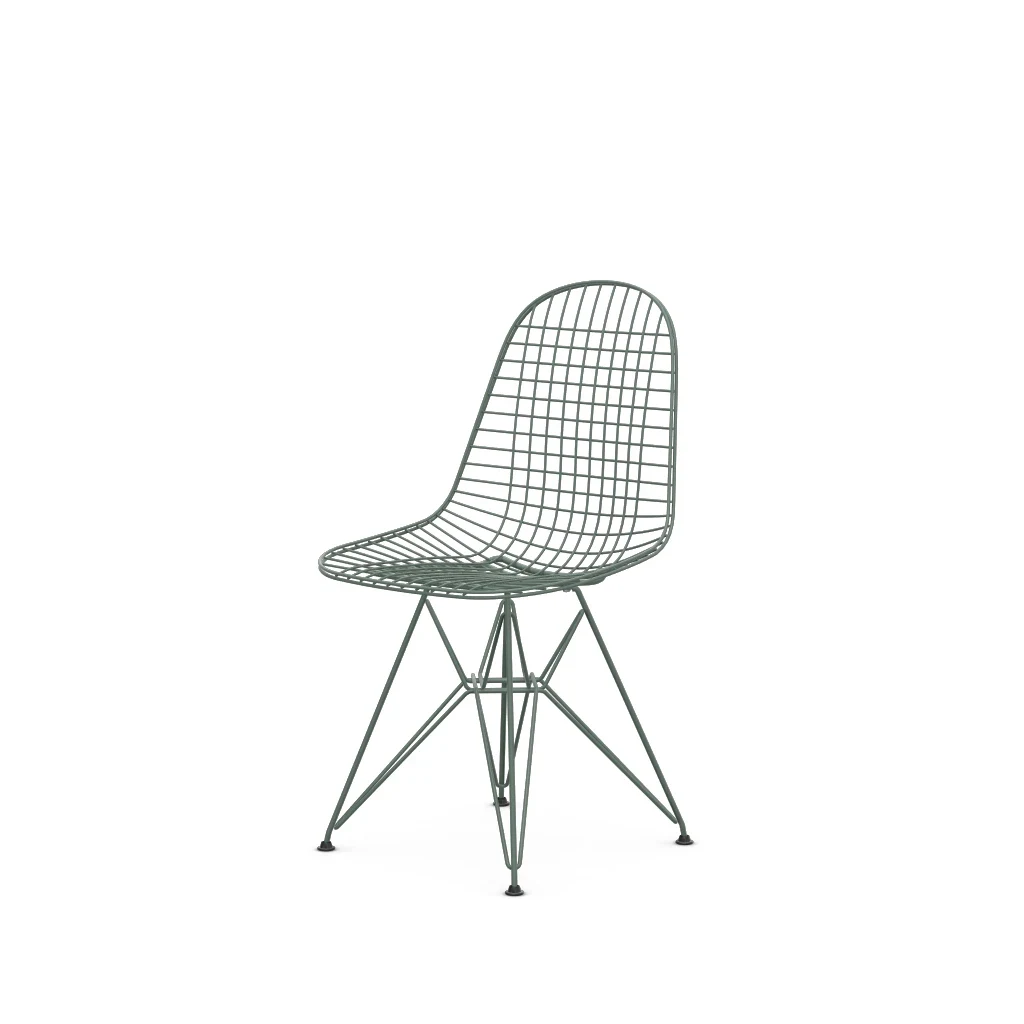
Vitra dates the Wire Chair to 1951 and credits Charles and Ray Eames. Steel wire had already proven itself in the bases the Eameses developed for their fibreglass seat shells and tables; they then applied its filigree transparency and visual lightness, paired with high load-bearing capacity, to the shell itself.
Design Language
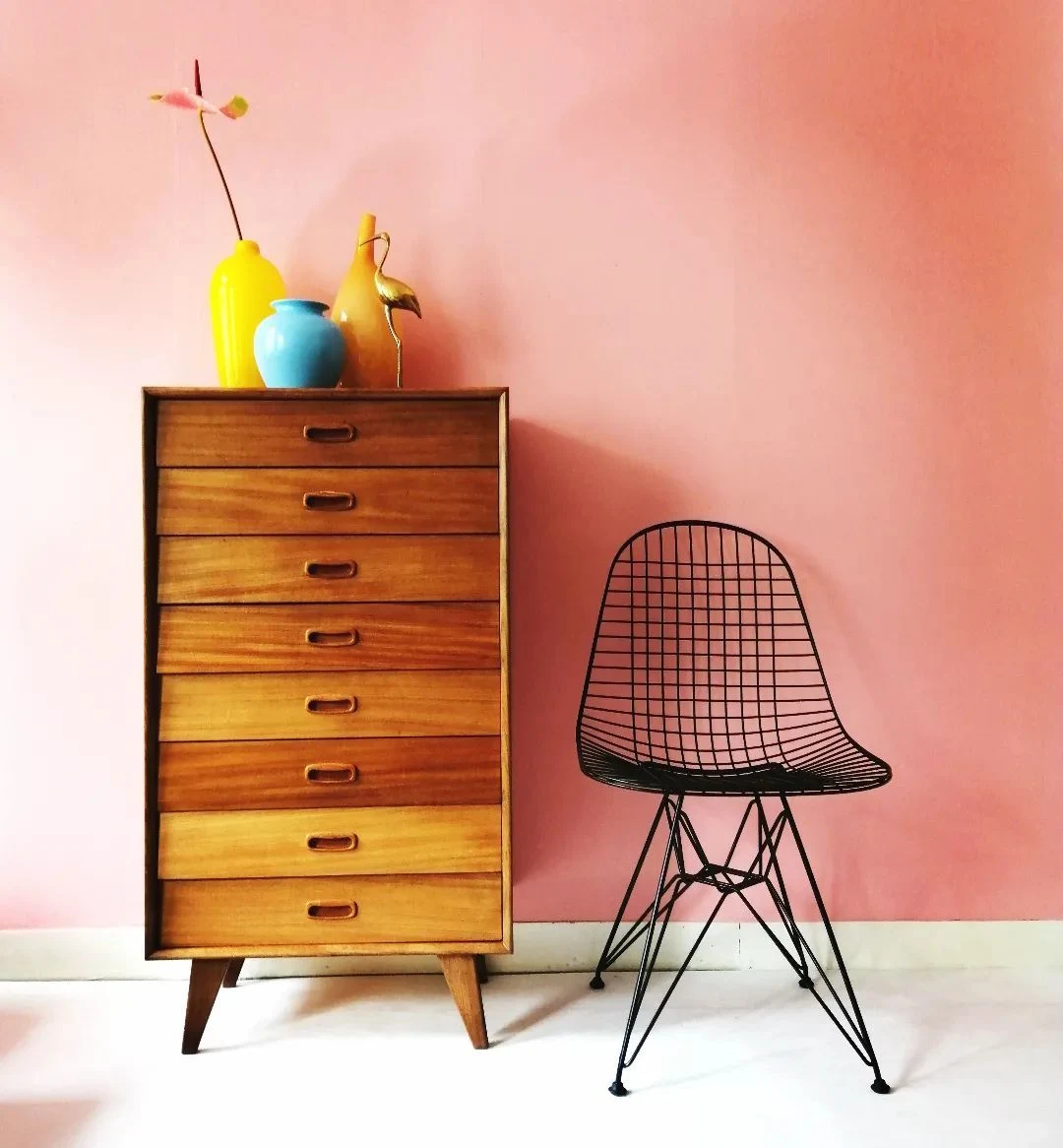
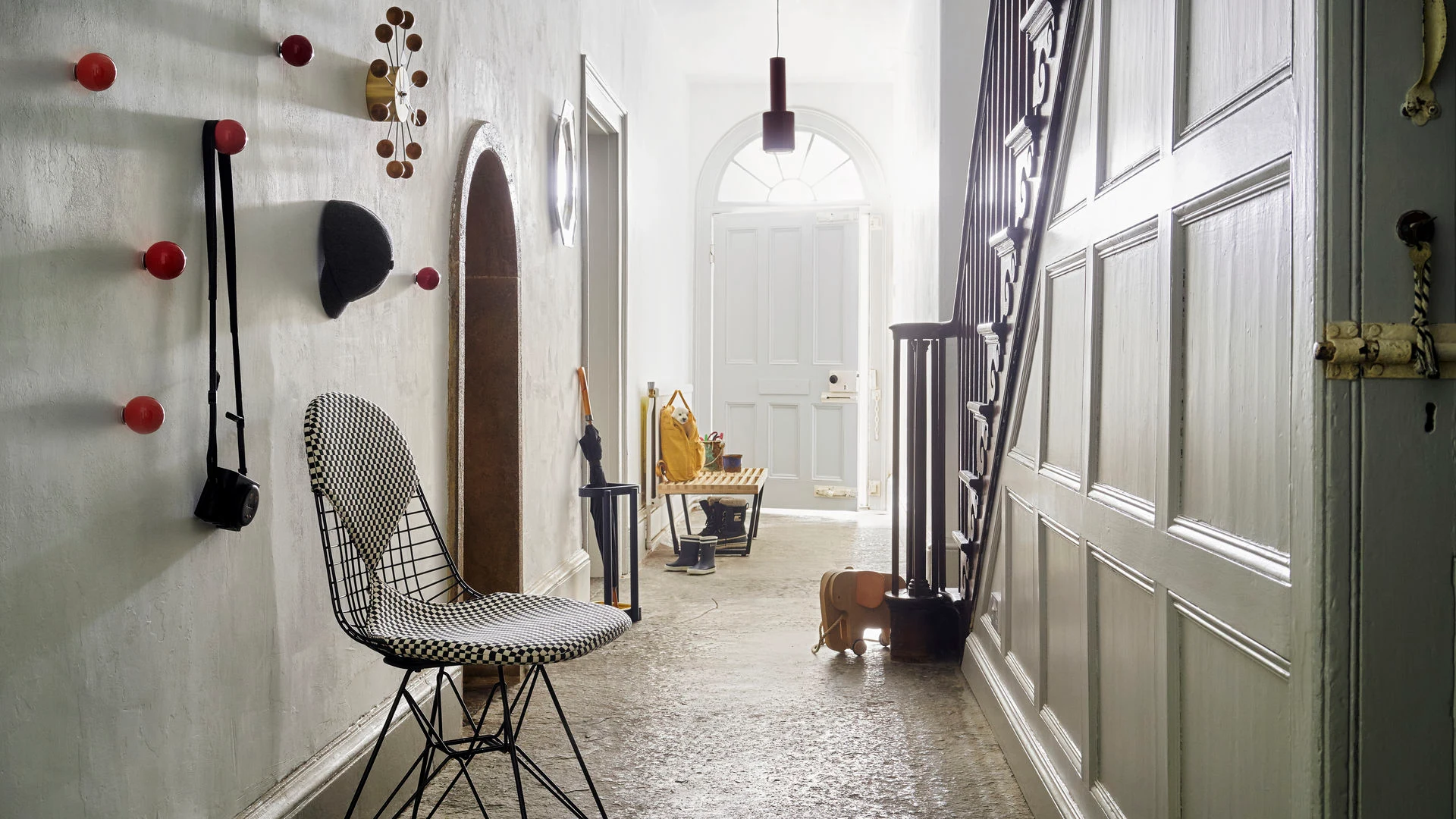
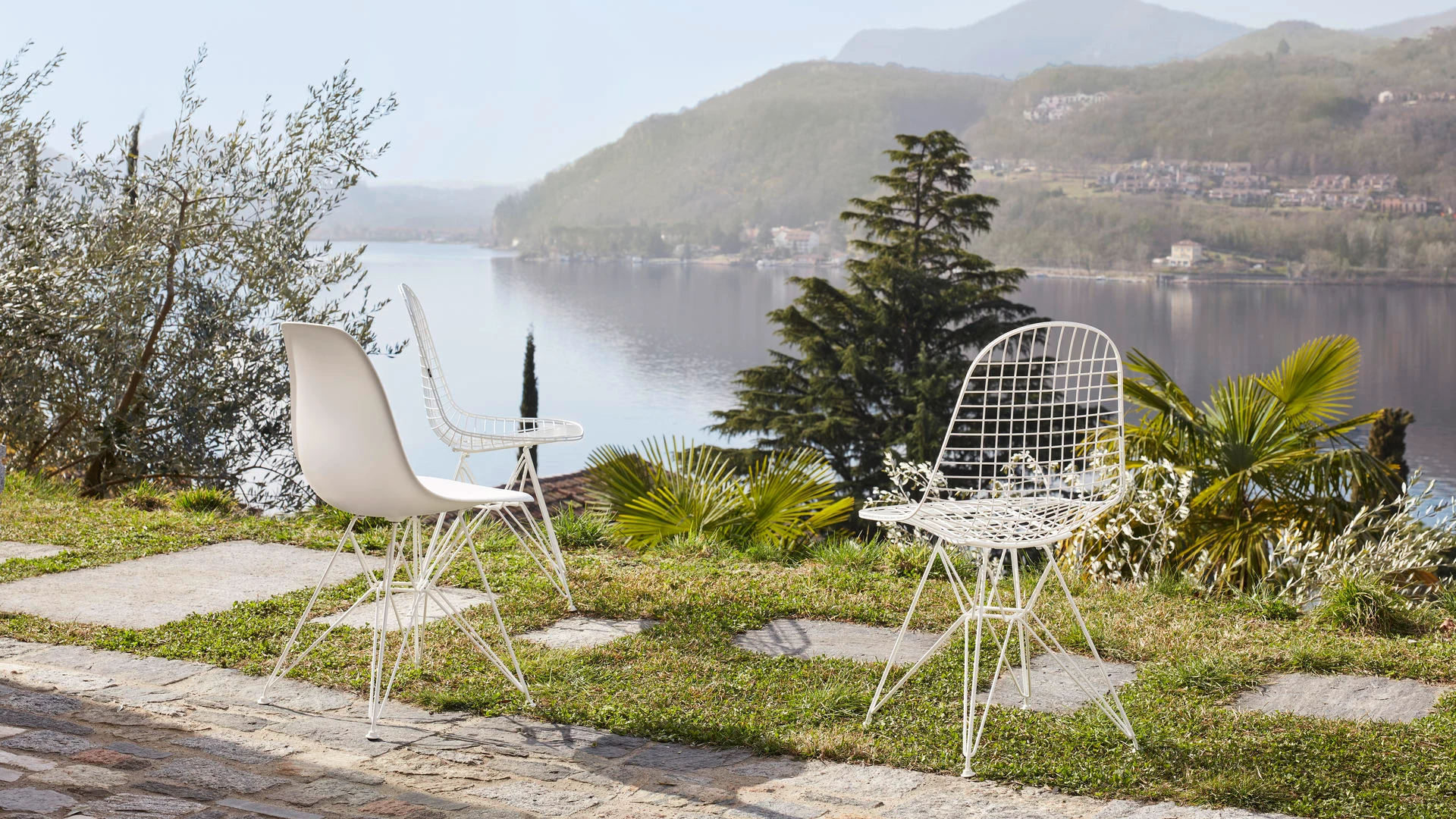
An orthogonal structure, spot welding and the binding of the wires along the outer edge between two stronger wires yield a stable, robust shell, and the use of a single material gives the chair a unified appearance. Like the Plastic Chairs it is a variation on the organically shaped one-piece seat shell and can be joined with a variety of bases. The shell is unupholstered or has a seat cushion or the two-piece seat-and-back pad known as the 'Bikini'.
Key Pieces
- Wire Chair DKR — dining height, rod ('Eiffel Tower') base
- DKX (cross-strut base), DKW (wood base) and DKL
- LKR lounge-height versions, and Wire Chair Stool Medium and High