
Image source: Herman Miller — Renew Link
© Herman Miller and the respective rights holders. Quoted to accompany INTEBEE's independent design commentary and research.
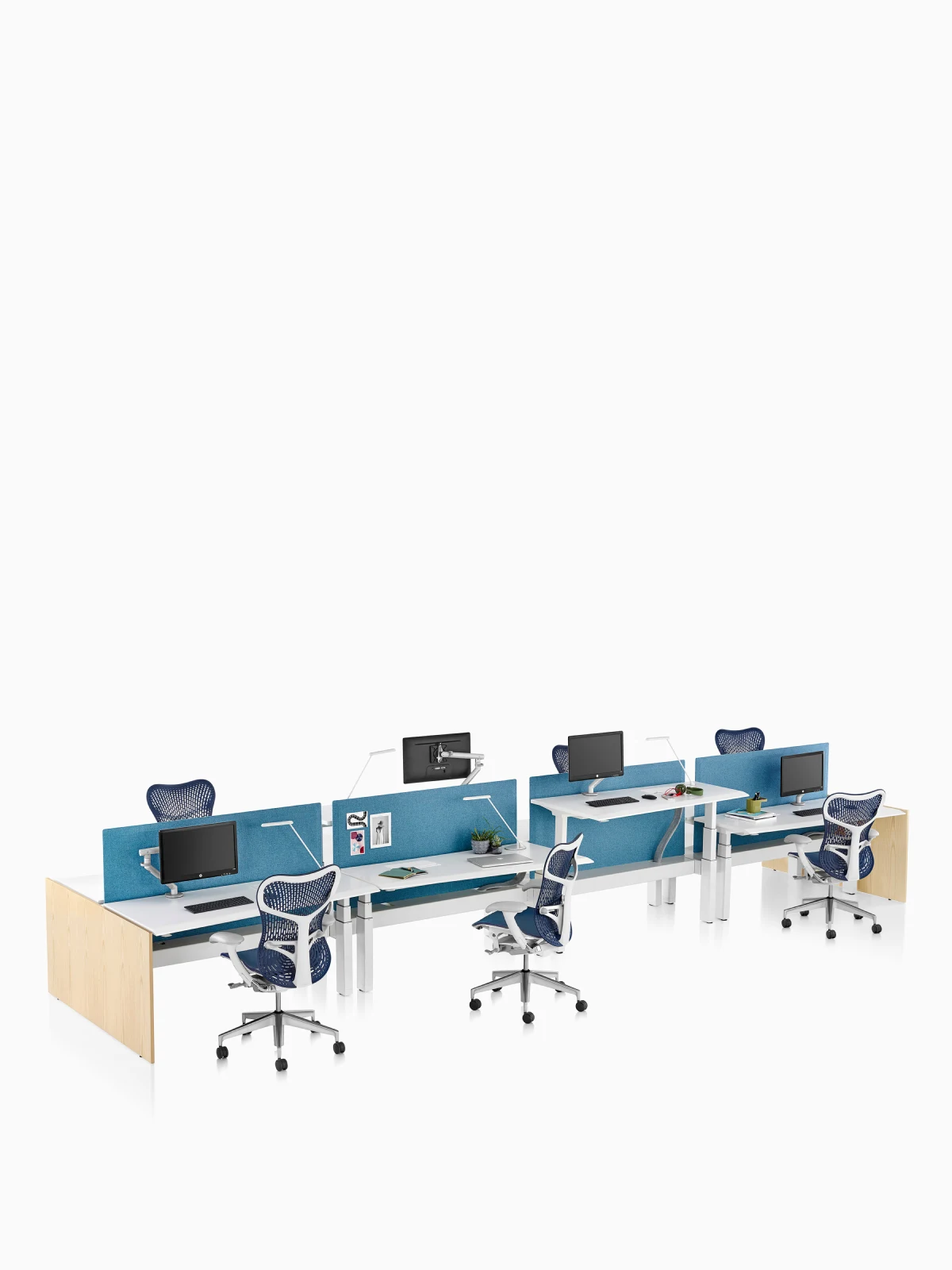
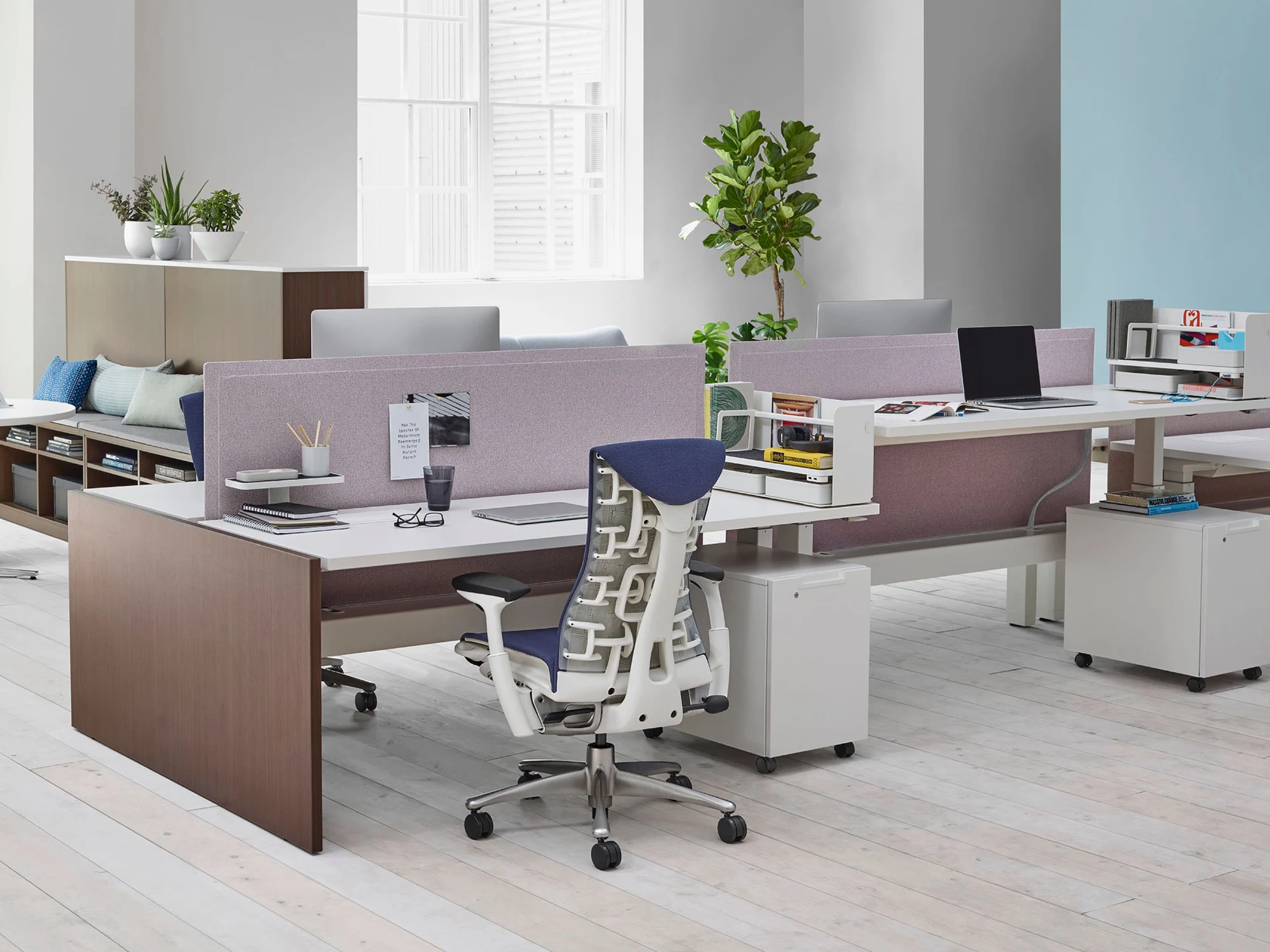
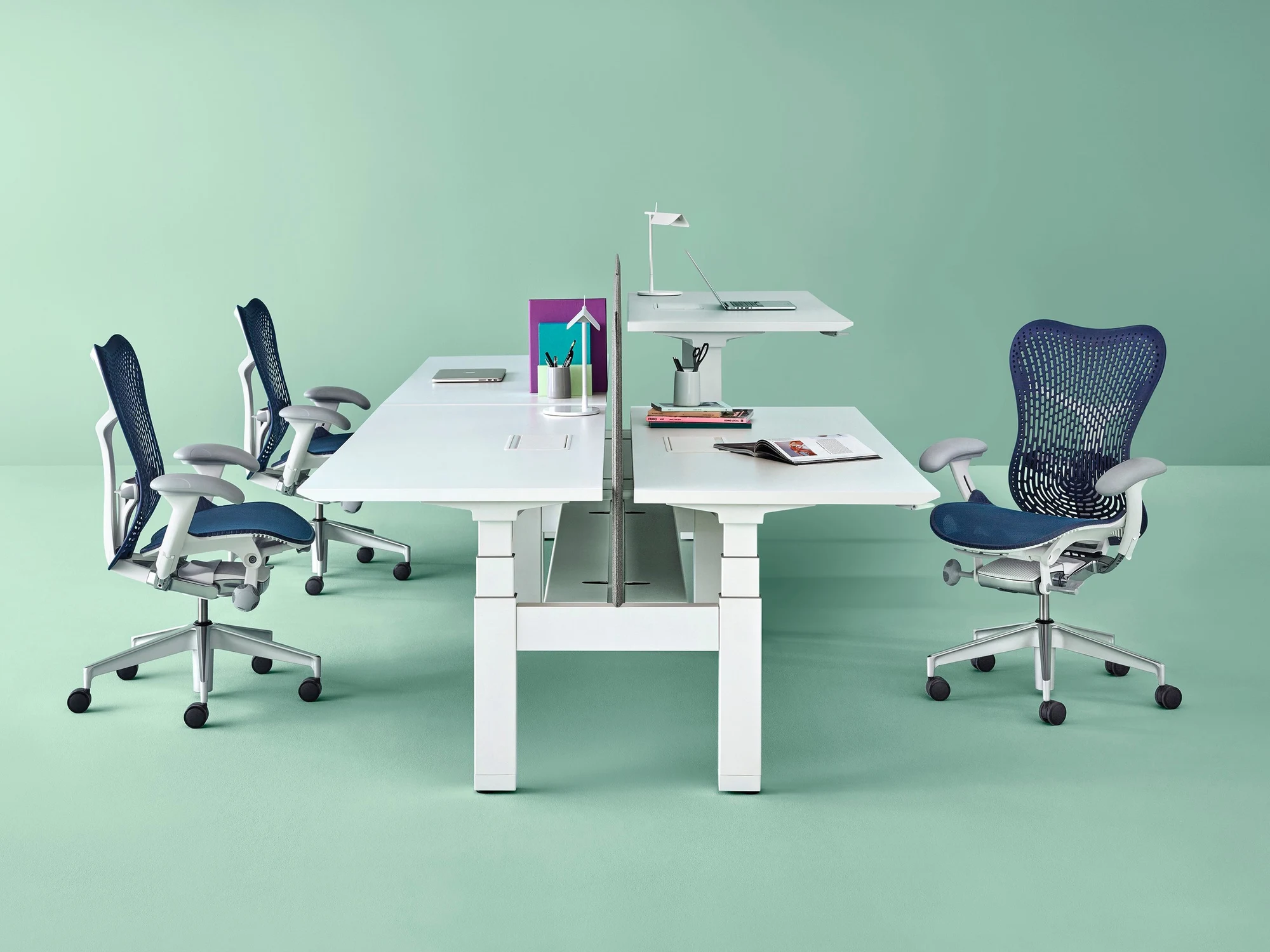
Renew Link
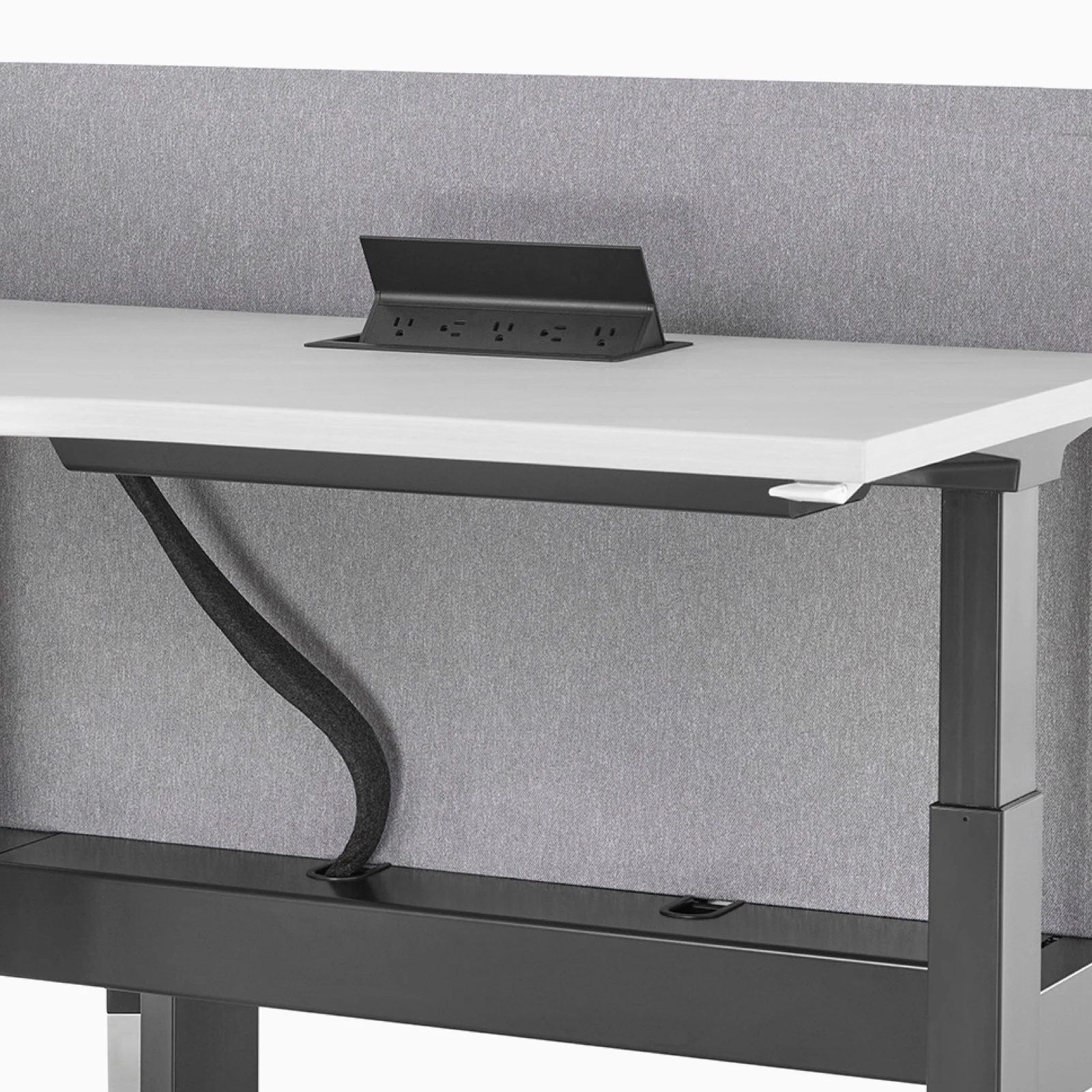
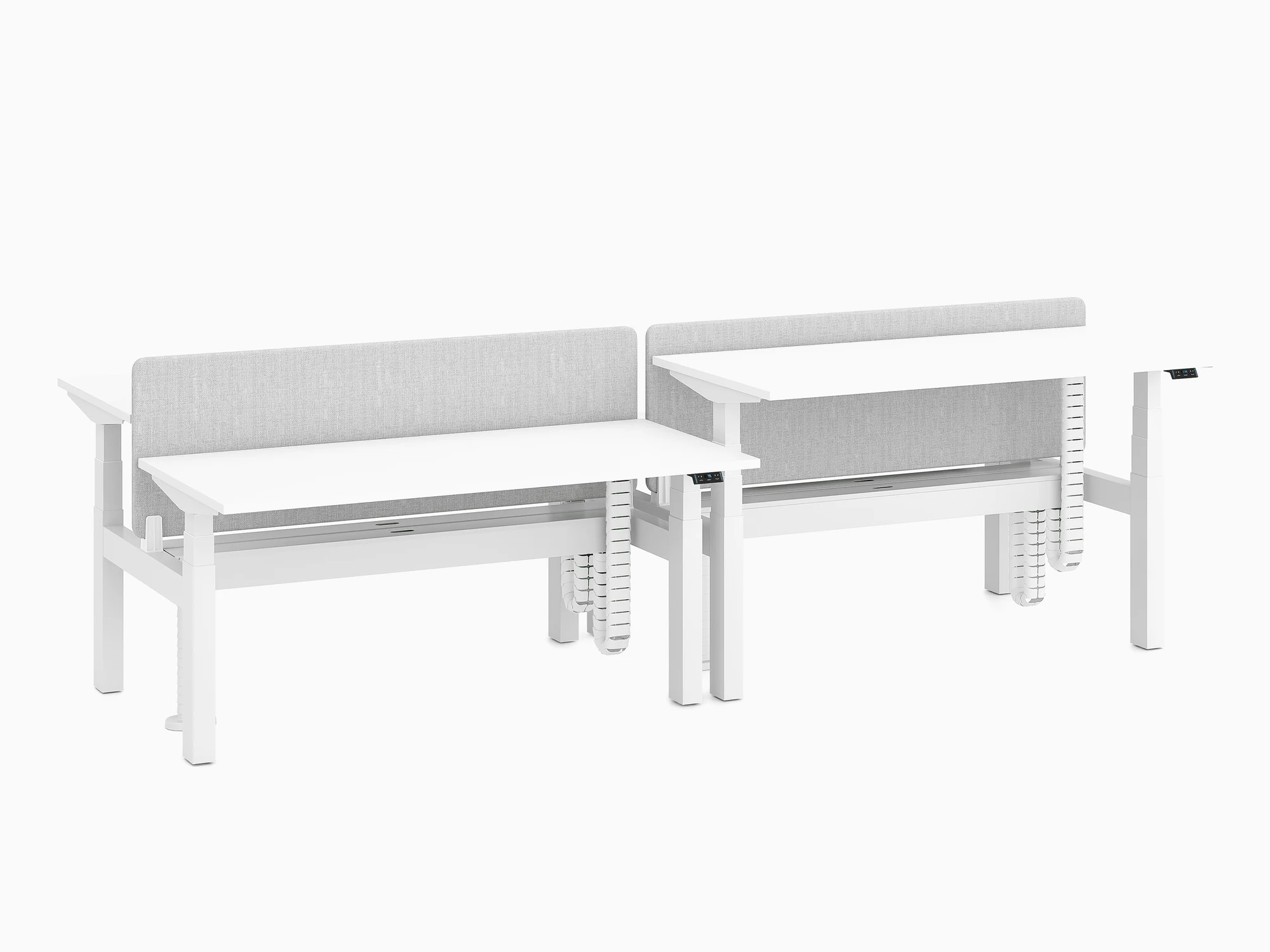
Sit-to-stand benching with angled trapezoid work surfaces and power and data routed to each desk.


2015
Official product information
INTEBEE AI PUBLIC LIBRARY is an independent furniture design research and discovery platform. Product specifications, finishes, availability and other details may change. For current and definitive information, please refer to the manufacturer's official website.
Go to the official product pageDescription
Overview
Renew Link is a height-adjustable benching system designed by Brian Alexander and introduced by Herman Miller in 2015. It accommodates both sitting and standing postures in shared work environments.
Construction
The work surfaces include trapezoid desktops that set people at shallow angles. Power and data are carried up from the floor to the surface, move with the desk as it changes height, and are stowed out of sight. The desk is raised and lowered with an intuitive paddle, and the legs are wide-set and angled.
Specifications
The specs page gives a standard electric height range of 27 to 46 in and an extended electric range of 22 to 48 in. Bench applications are back-to-back rectangular, back-to-back trapezoid, 120 degree and single-sided rectangular.
Story
Reducing eye contact in benching
Herman Miller says designer Brian Alexander observed how easily people in benching setups are distracted, often by eye contact with the person across from them. By staggering the work surfaces at a shallow angle, he reduced that glance across the bench while keeping the proximity that makes working together simple.
Introduced in 2015
The company announced Renew Link on 15 June 2015 as sit-to-stand benching for high-density workspaces, and describes the angled surfaces as forming a subtle sawtooth pattern.
More by Brian Alexander
Nevi Link
Sit-to-stand benching in rectangle and 120 degree shapes, with cable trough and screen options.
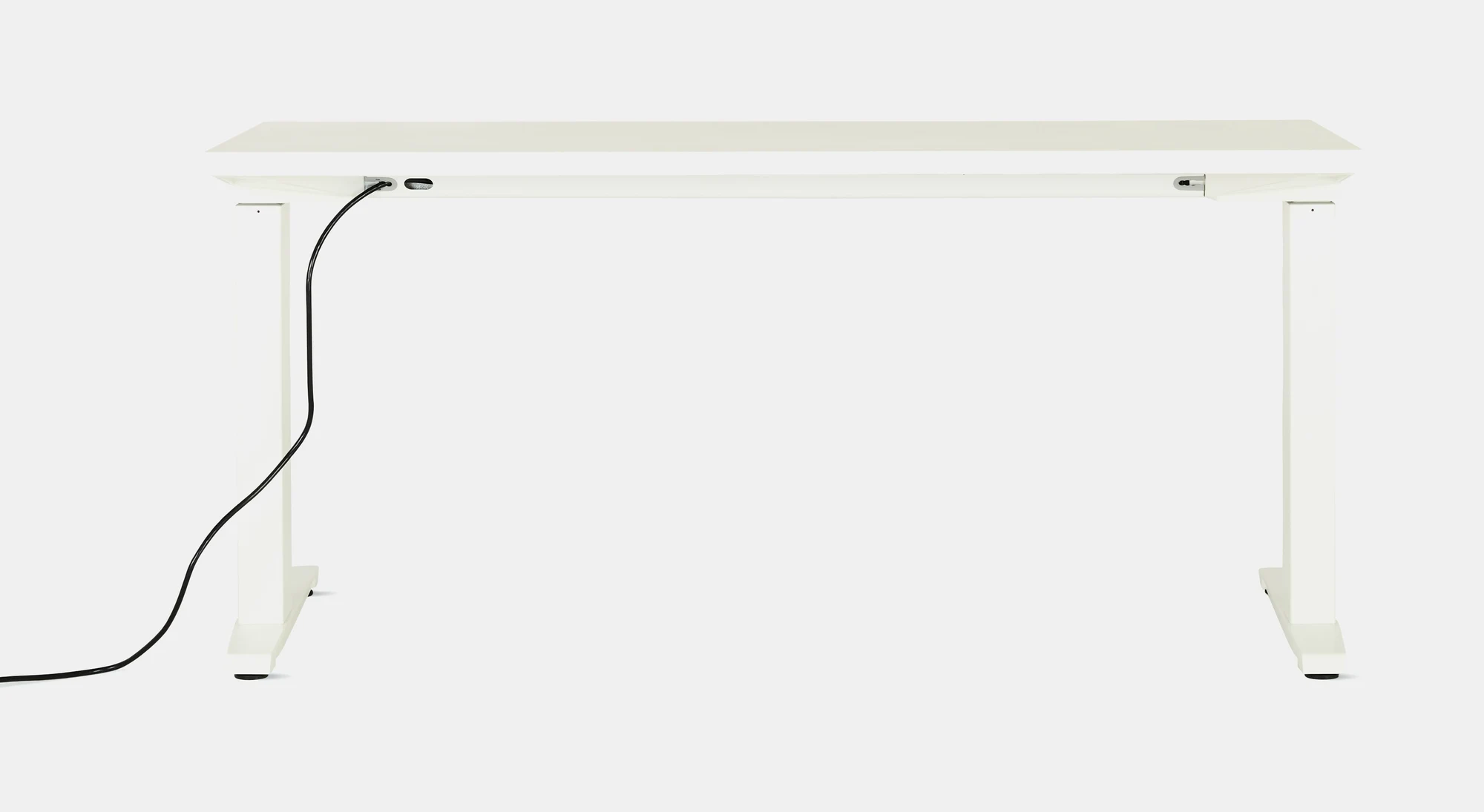
Renew Sit-to-Stand Tables
Brian Alexander's height-adjustable desk range with a paddle switch, in five shapes and many sizes.
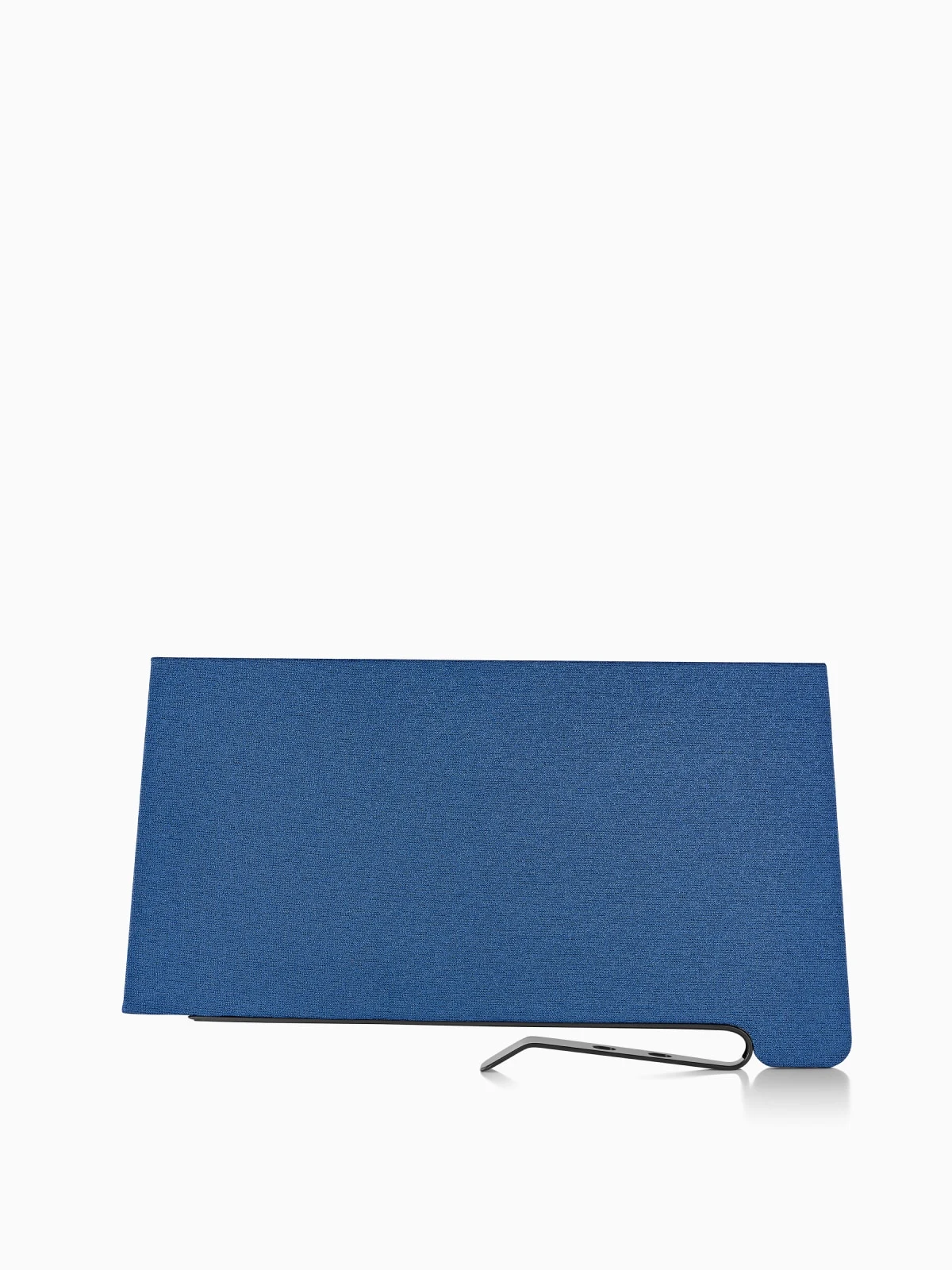
Personal Side Screen
A frameless, tackable fabric screen that slides onto a work surface like a paper clip.