Image source: Thonet — Bentwood Classics
© Thonet and the respective rights holders. Quoted to accompany INTEBEE's independent design commentary and research.
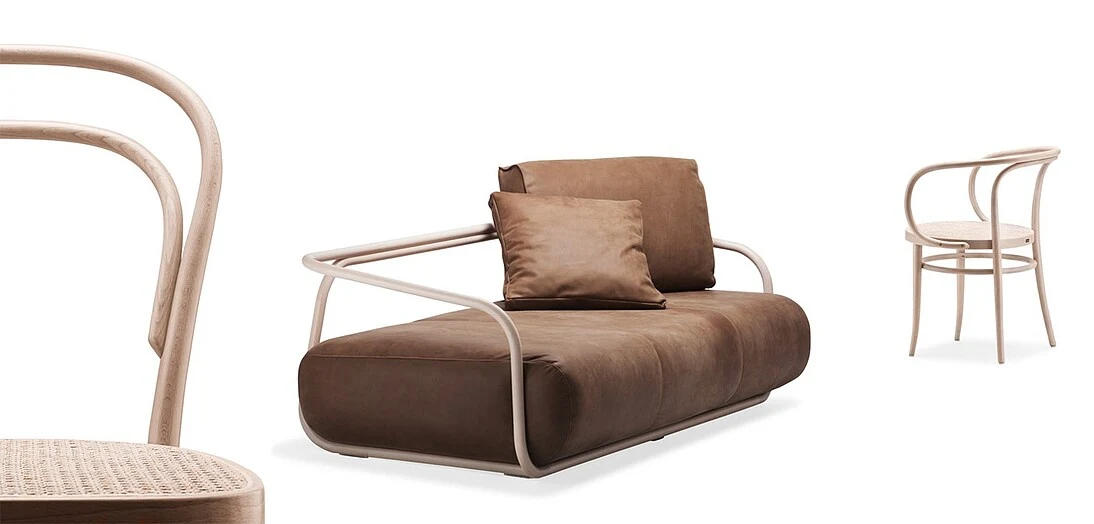


Collection Story
Origin
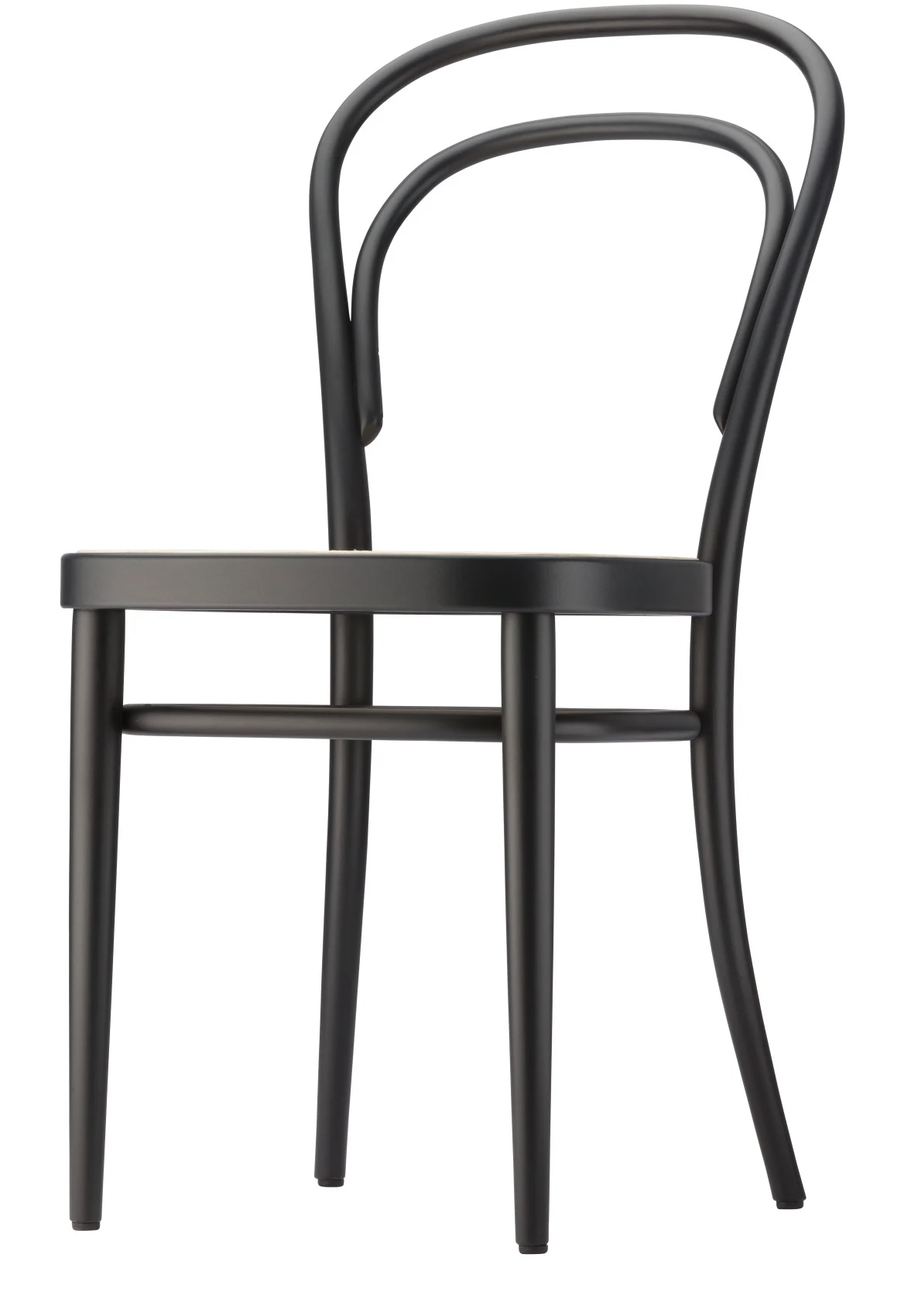
Thonet's bentwood classics grew out of Michael Thonet's experiments with bending wood, which began in the 1830s in Boppard with laminated strips boiled in glue (the "Boppard chair"). Moisture-sensitive glues made such chairs impossible to export by sea, so Thonet turned to solid wood and reinvented bending from scratch. In 1856 the Austrian state granted the Thonet brothers the right to make armchairs and table legs from wood bent with steam or boiling liquids, and in 1859 chair No. 14, today the 214, followed.
Design Language
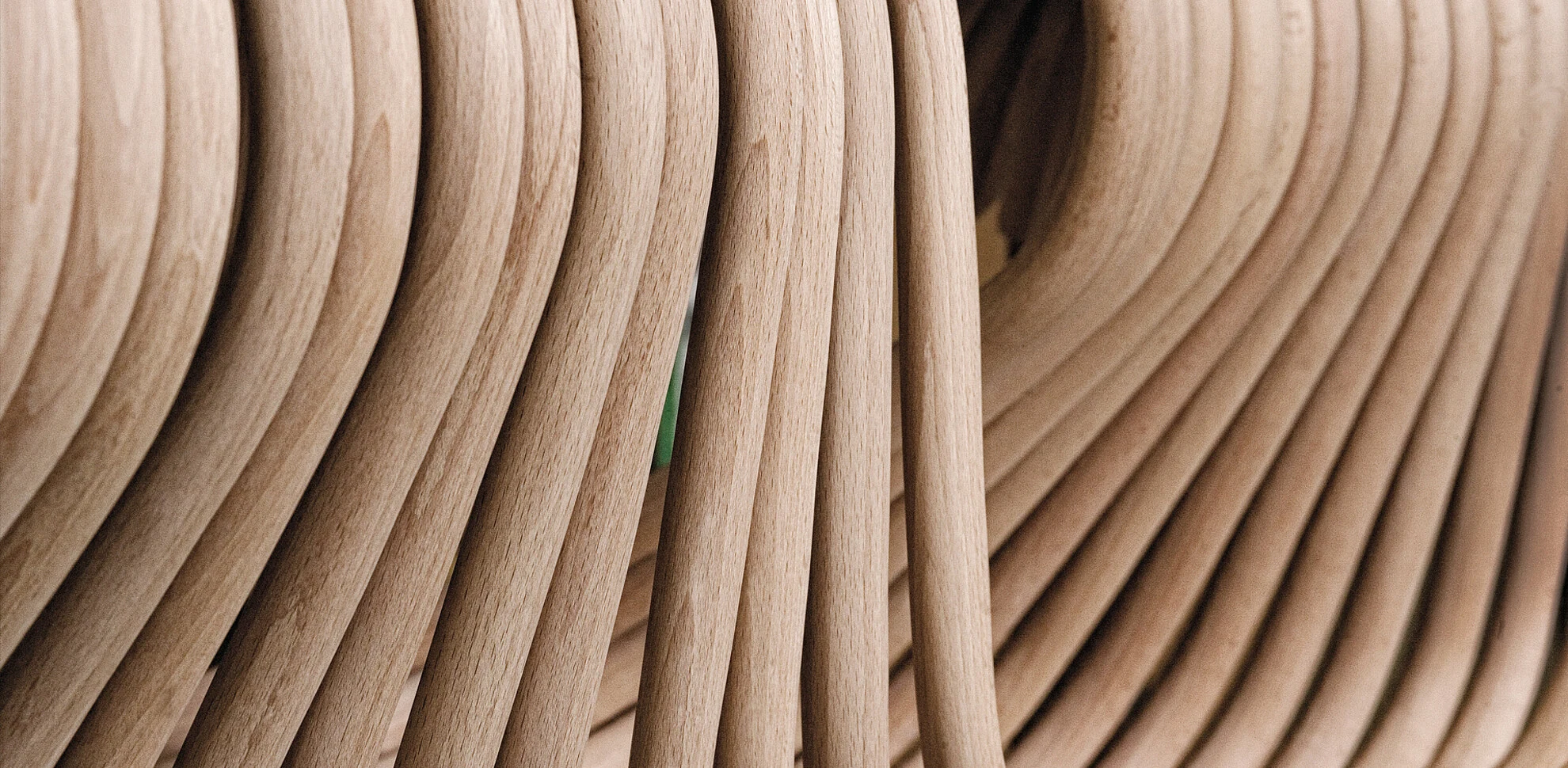
The method is still used in exactly the same way at Thonet: a turned beech rod is softened in a steam boiler, a metal band is attached to absorb the tensile forces, and two people press it into the bending mould. Glued joints gave way to screwed joints, every part except the seat became solid bent beech, and a stabilising foot ring was added. Rod cross-sections are sized to the load, so the furniture is light yet stable, built from standardised parts and shipped flat.
Key Pieces
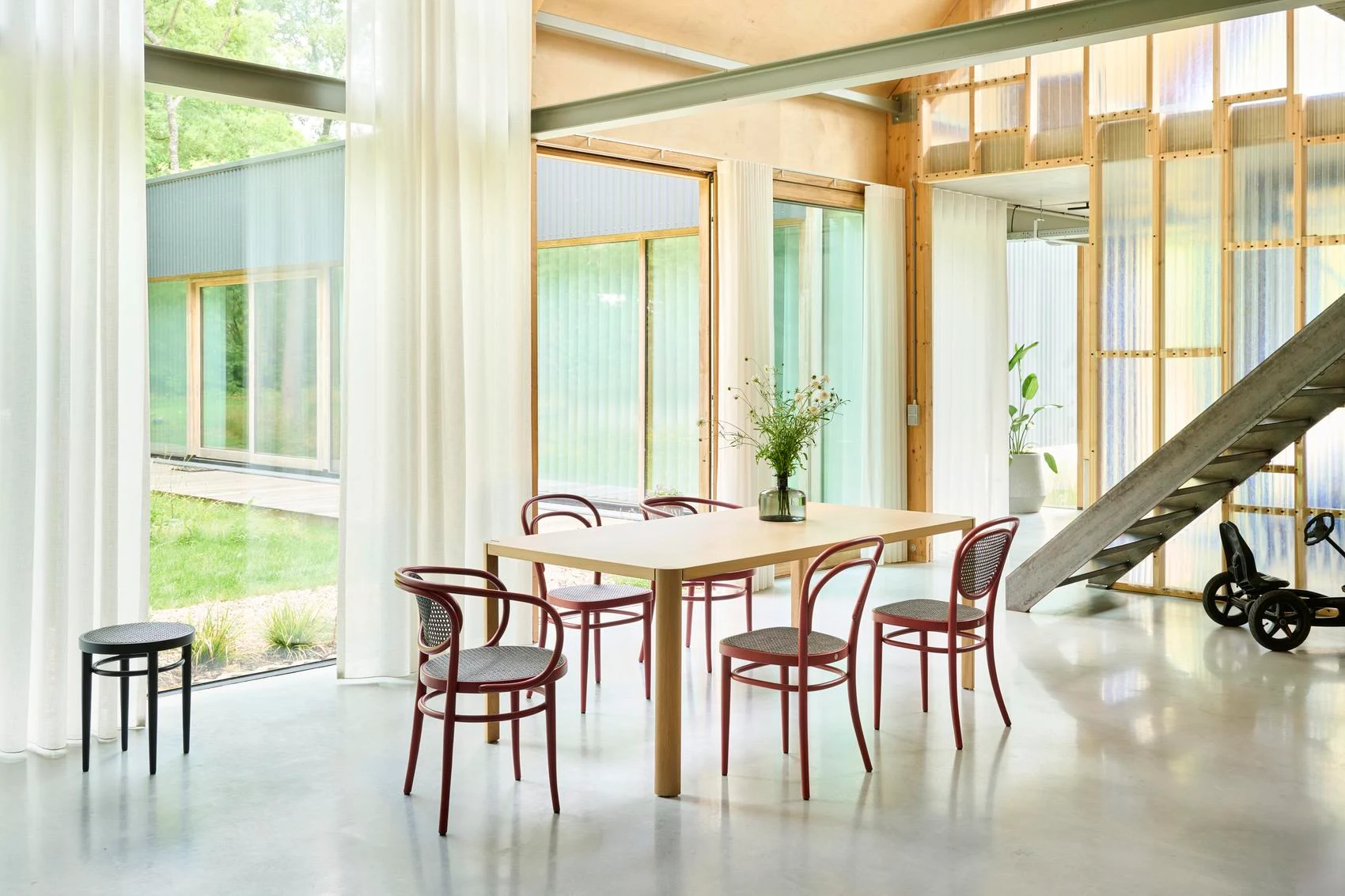
- 214 coffee house chair (Michael Thonet, 1859) and its variants 214 M, 214 P, 215 R
- 209 armchair (Gebrüder Thonet, 1900), admired by Le Corbusier
- 204 RH / 214 RH bentwood bar stools and stools
- 2002/C002 bentwood sofa and armchair
Pieces in this collection
Specifying pieces from Bentwood Classics for your design project?
INTEBEE is the FF&E specification platform for interior designers: spec sheets, finishes, floor plans and client-ready PDFs in one place.