
Image source: Thonet — 214 Chair
© Thonet and the respective rights holders. Quoted to accompany INTEBEE's independent design commentary and research.
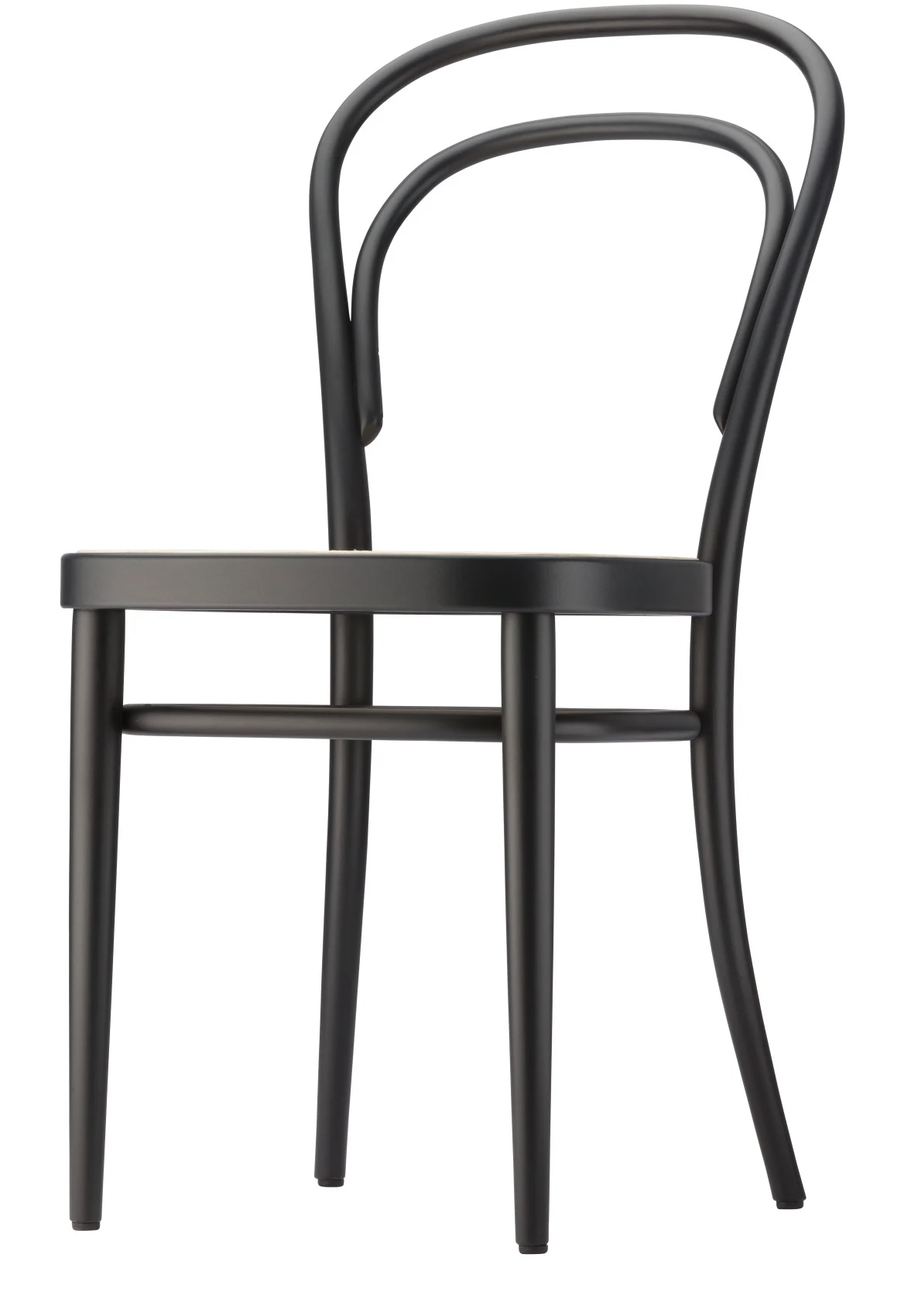
214 Chair
Michael Thonet's 1859 coffee house chair in bent solid beech: the start of modern furniture.


430 × 840 × 520 mm
1859
Germany
Approx. $1,100 (reference price; varies by region and retailer)
Official product information
INTEBEE AI PUBLIC LIBRARY is an independent furniture design research and discovery platform. Product specifications, finishes, availability and other details may change. For current and definitive information, please refer to the manufacturer's official website.
Go to the official product pageDescription
Overview
The 214 is the bentwood chair Michael Thonet designed in 1859, originally chair No. 14. Thonet calls it the most successful mass-produced product in the world to date and the chair that initiated the history of modern furniture. It is still made in Frankenberg (Hesse, Germany) in the traditional bending process. The 214 is the version with a canework seat; the same family includes the 214 M (moulded plywood seat) and 214 P (upholstered seat).
Construction
The chair is solid beech bent after the technique Michael Thonet perfected in the 1850s. Thonet sums it up as 1 idea, 6 parts, 2 screw nuts and 10 screws. The seat is canework with a supporting synthetic mesh. Thonet's material fact sheet lists solid wood (84.38 %), steel, cane, plastics and lacquer, and gives 95.31 % as the recyclable share. Originals carry the embossed Thonet logo with the year on the underside of the seat frame.
Specifications
- Dimensions (214): W 43 cm x D 52 cm x H 84 cm
- Seat height: 46 cm (47 cm on the 214 P)
- Weight: 2.7 kg on the product page; 3.2 kg total on the material fact sheet
- Beech finishes: clear varnished, or stained brightened, walnut, cherry, mahogany, dark brown or black
- Awards: German Sustainability Award Design 2021; German Ecodesign Award 2024, Timeless Design
Story
The Thonet principle
Michael Thonet spent the 1850s perfecting a way to bend solid wood, and chair No. 14, today the 214, was the result in 1859. Thonet's brochure says bending allowed serial production for the first time and, together with a simple new look and a low price, changed interior styling: homes, restaurants and cafés looked lighter and less massive. By 1930 more than 50 million of these chairs had been made.
Thirty-six chairs in one crate
Thirty-six disassembled chairs, screws included, were packed into a single crate and sent to Europe, North and South America, Asia and Africa, where they were assembled on arrival. Thonet's brochure also tells the anecdote of a chair that fell 57 metres from the first platform of the new Eiffel Tower restaurant in Paris and was not damaged.
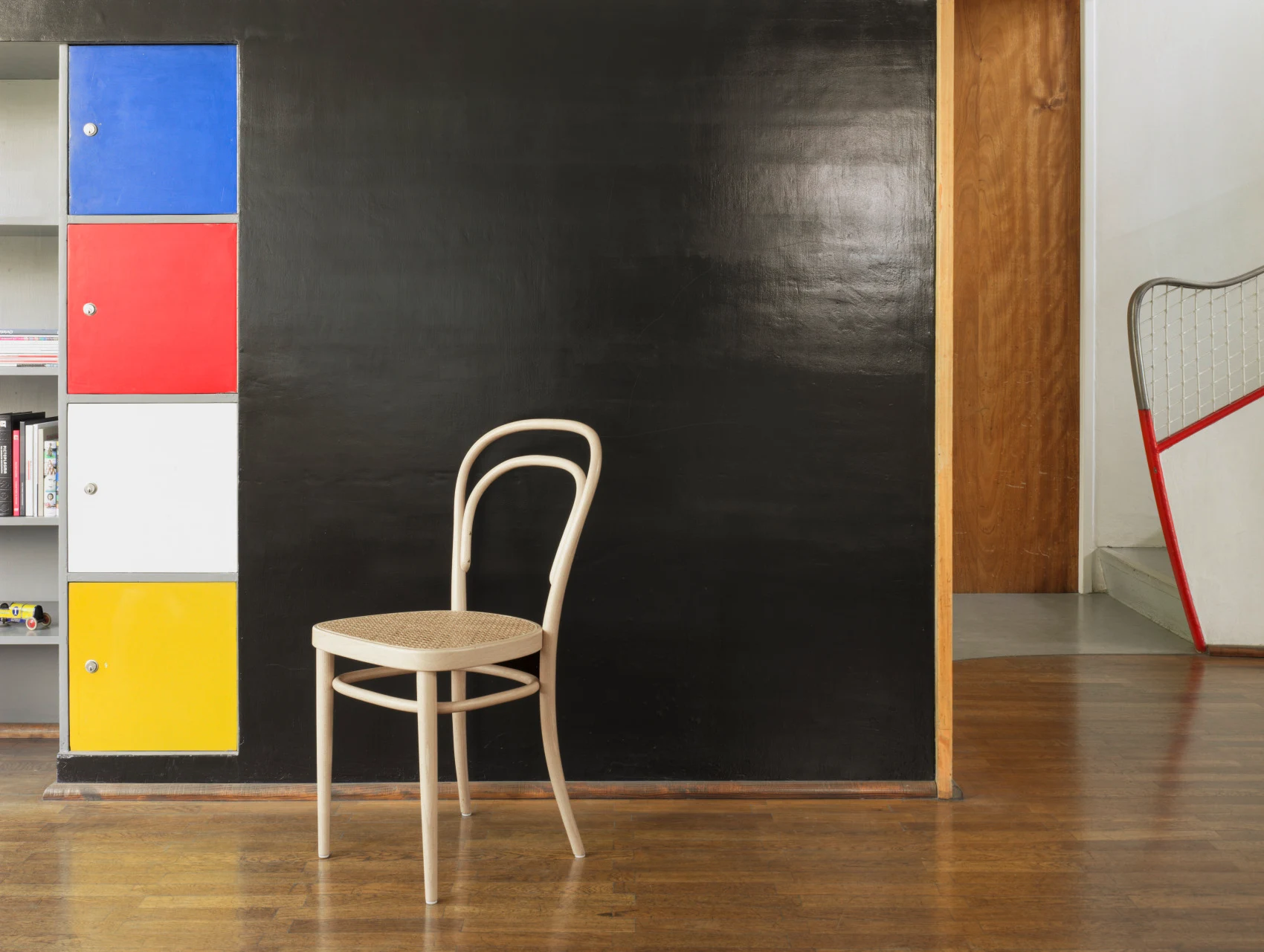 Image source: Thonet — 214 Chair · © Thonet and the respective rights holders. Quoted to accompany INTEBEE's independent design commentary and research. · View official product page ↗ · Image use & copyright policy