Super-Elliptical Table
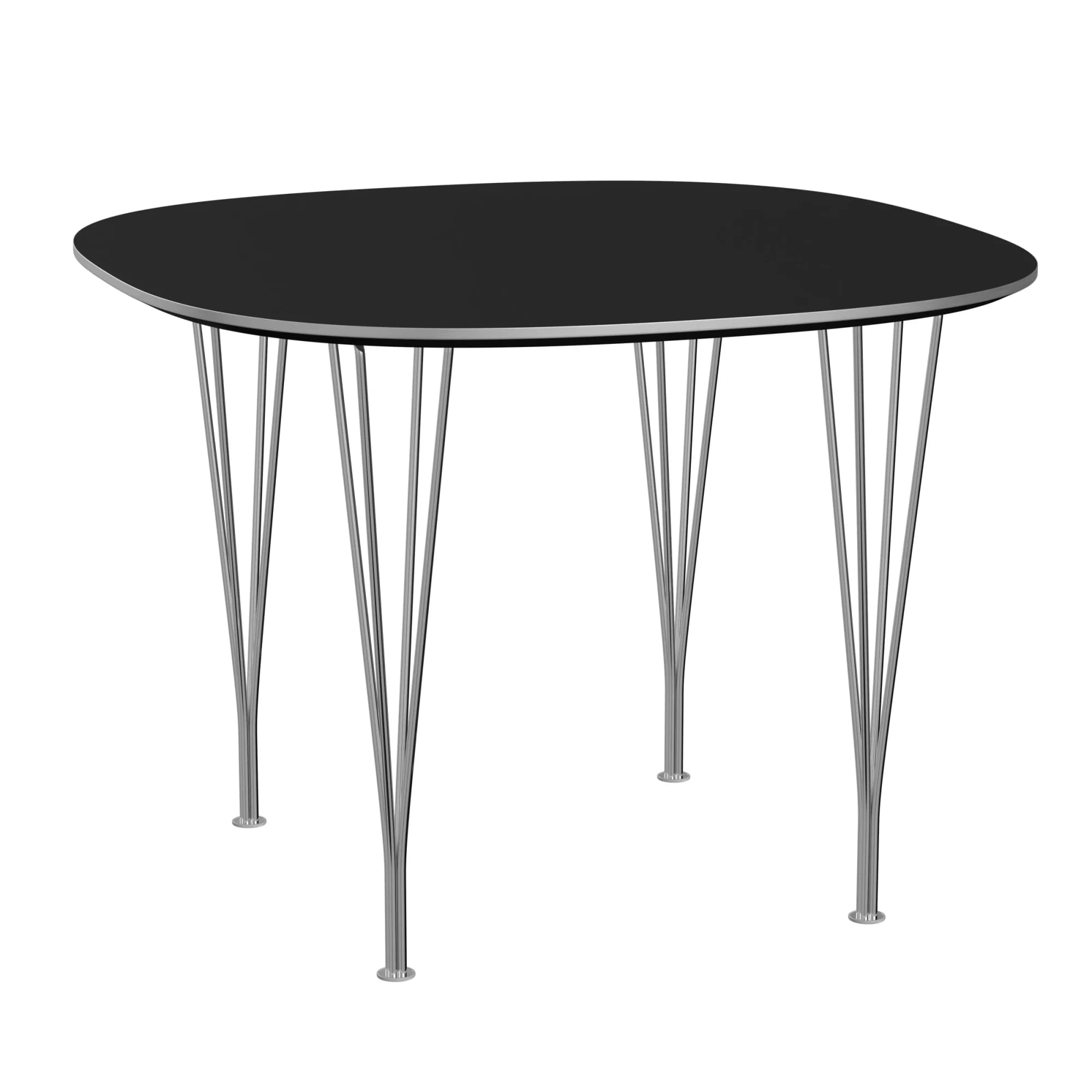
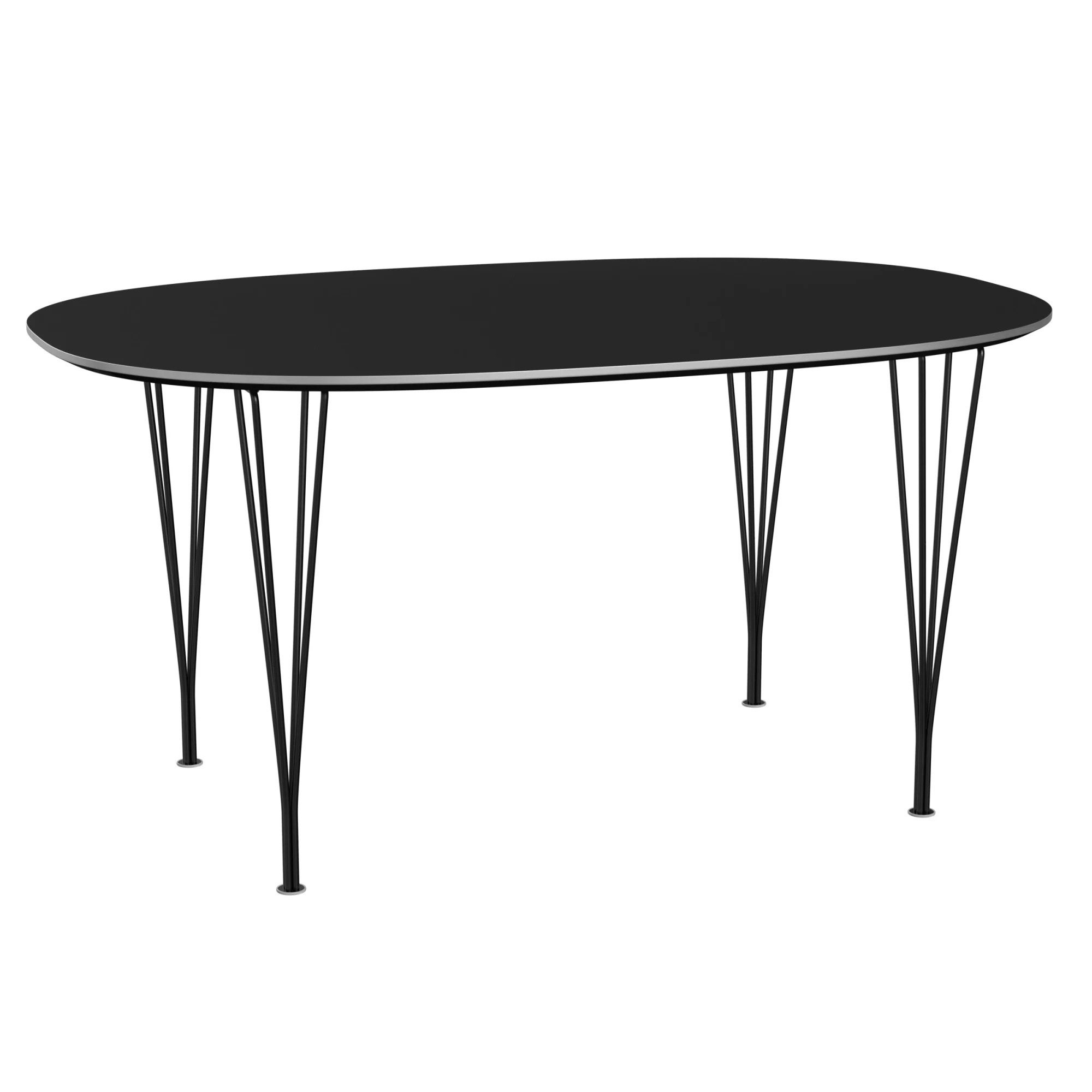
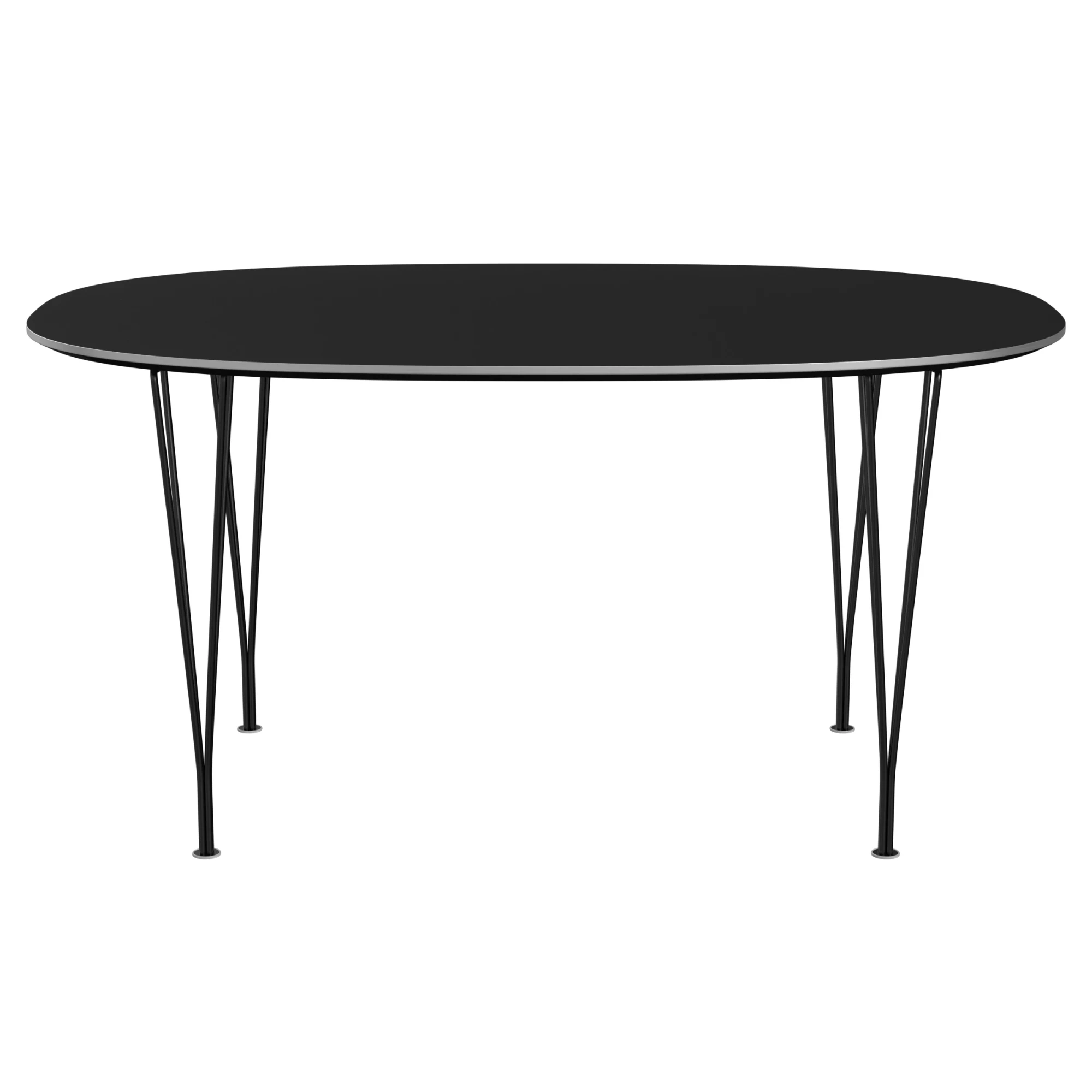
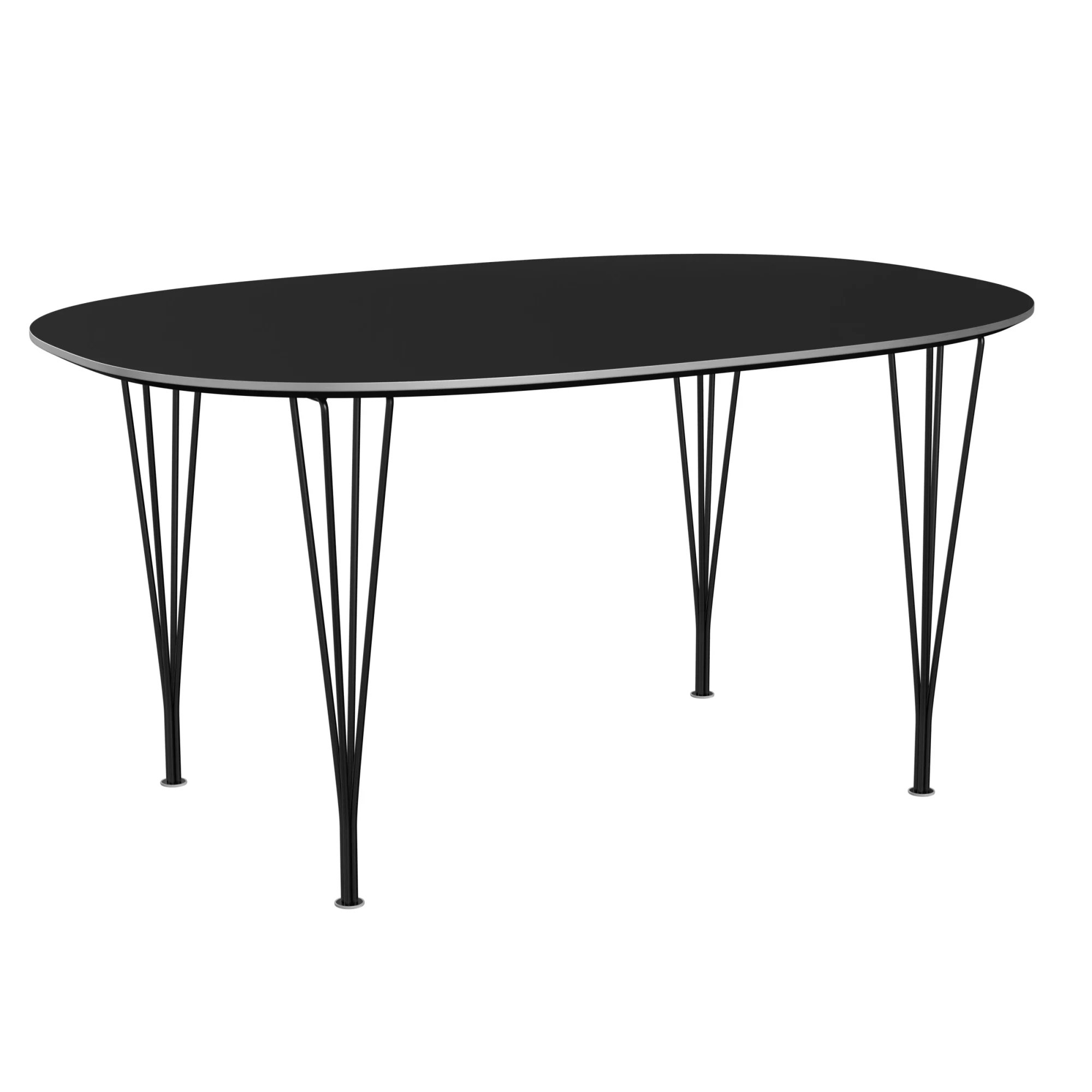
Piet Hein and Bruno Mathsson's 1968 Superellipse dining table B612: a 150 × 100 cm top on span legs


1500 × 720 × 1000 mm
Source: product page text — Superellipse™ Dining Table B612, 150 × 100 cm, 72 cm high — published as W 150 × D 100 × H 72 cm
1968
Denmark
USD 3,399, model B612: Tabletop: Fenix / Black, Edge: Aluminium / Brushed - Matt, Base: Powder Coated Steel / Black, Table Height: Base height 72 cm (default configuration), excl. VAT and taxes, fritzhansen.com US market, 2026-10-15
Description
Overview
The Superellipse™ Dining Table B612 is dated 1968 and credited to Piet Hein and Bruno Mathsson. The product page says the shape was inspired by Hein's solution to a traffic problem at Sergels Torg in Stockholm, a super elliptical roundabout.
Construction
- Top: 22 mm laminated chipboard in FENIX laminate or walnut veneer, with an aluminium edge
- Base: span legs in chromed or powder coated steel, in two heights
- Seating: the page says the table accommodates six chairs
Specifications
- L 150 × W 100 × H 72 cm, weight 32.2 kg
- Origin Denmark, per the fact sheet
Story
A roundabout turned into a table
Fritz Hansen's page says the Superellipse table was inspired by Piet Hein's solution to a traffic problem at Sergels Torg in Stockholm: a super elliptical roundabout. Wikipedia places the design challenge for the square in 1959 and its completion in 1967, and notes that Hein went on to use the shape in beds, dishes and tables.
No head of the table
The B612 accommodates six chairs for open, inclusive gatherings with no obvious head of the table, according to the manufacturer. Its fact sheet describes the shape as balancing the clarity of a rectangle with the flow of a circle, and adds that the table series was developed with Arne Jacobsen and Bruno Mathsson.