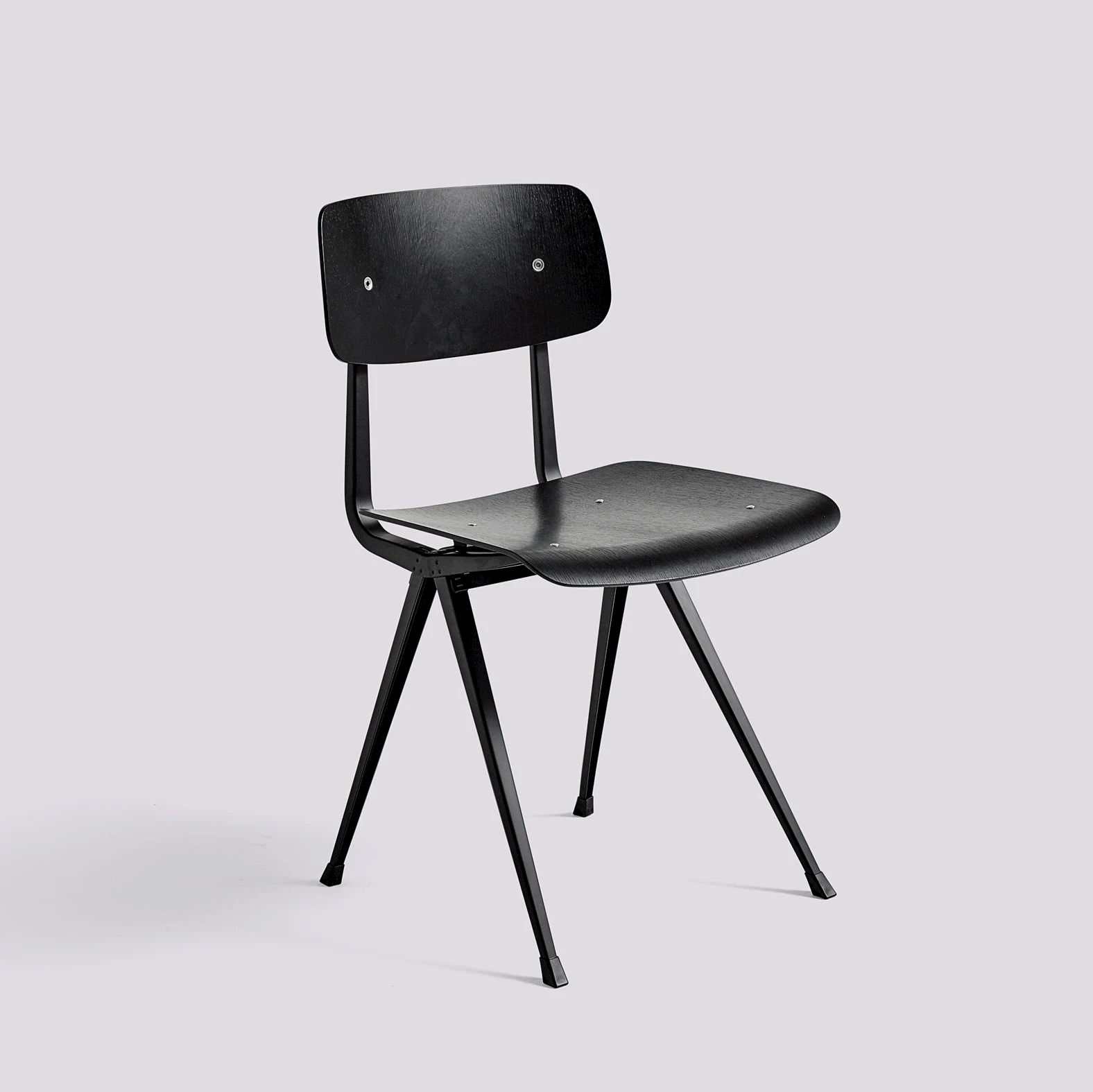
Image source: HAY — Revolt Chair
© HAY and the respective rights holders. Quoted to accompany INTEBEE's independent design commentary and research.
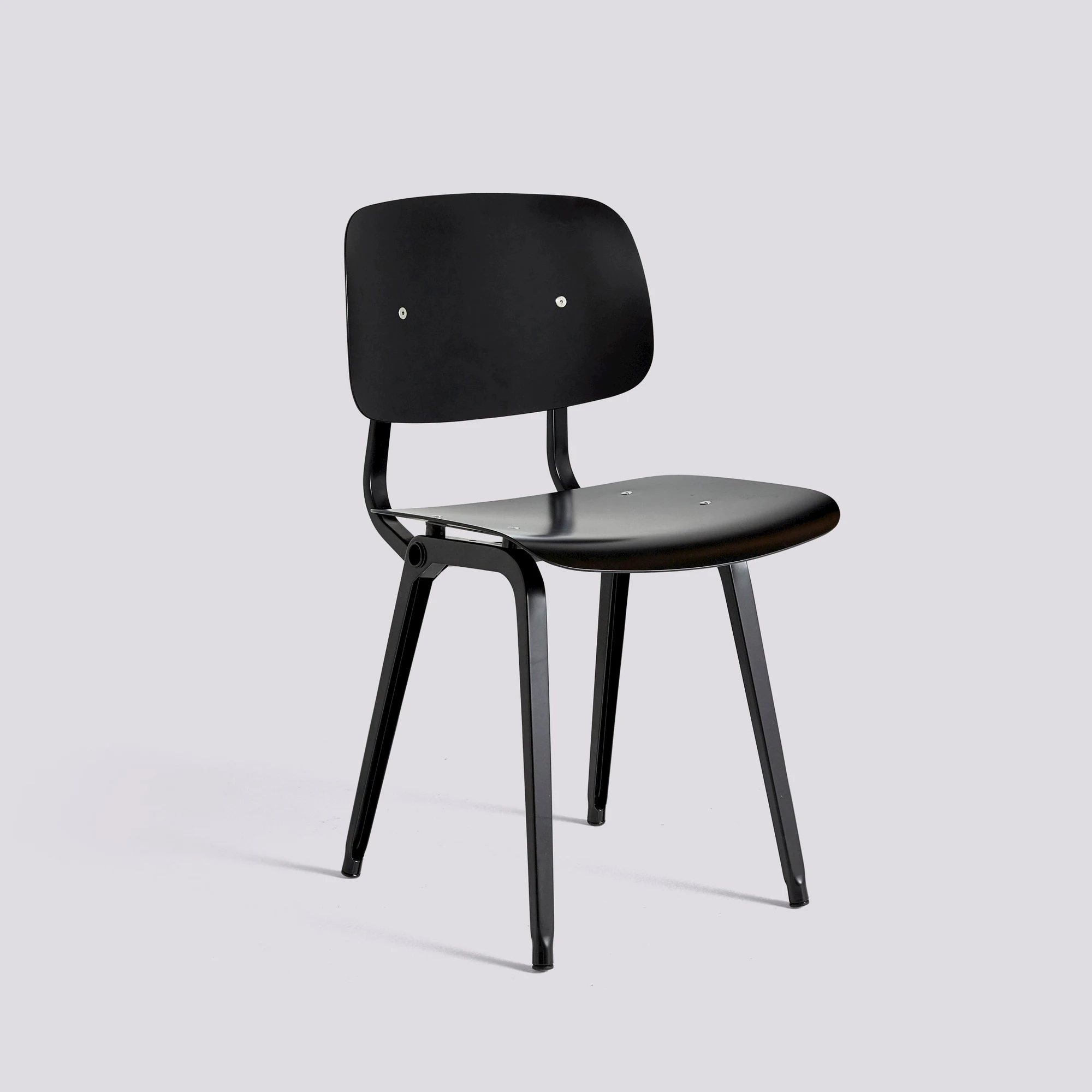
Revolt Chair
Reissue of Friso Kramer's 1953 chair with a bent sheet steel frame and a recycled ABS seat and back


455 × 810 × 495 mm
1953
Denmark
Official product information
INTEBEE AI PUBLIC LIBRARY is an independent furniture design research and discovery platform. Product specifications, finishes, availability and other details may change. For current and definitive information, please refer to the manufacturer's official website.
Go to the official product pageSpecifying Revolt Chair for your design project?
INTEBEE is the FF&E specification platform for interior designers: spec sheets, finishes, floor plans and client-ready PDFs in one place.
Description
Overview
The Revolt Chair is a reissue of a chair that Friso Kramer designed in 1953 while working at Ahrend; HAY brought it back together with Ahrend. HAY describes it as a minimalist chair with a bent sheet steel frame and a seat and back in recycled ABS: coloured shells are a mix of 30% recycled post-consumer and 70% virgin ABS, while black shells are 100% recycled post-consumer ABS.
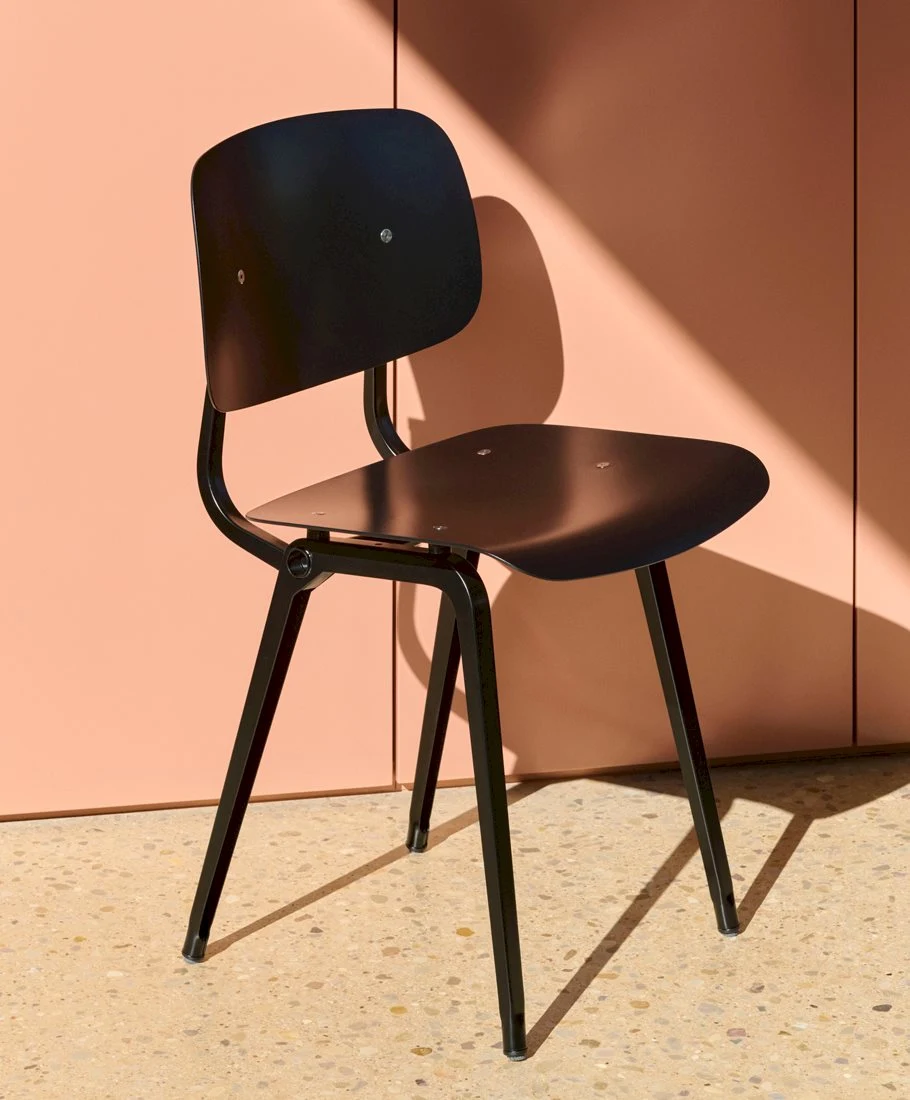 Image source: HAY — Revolt Chair · © HAY and the respective rights holders. Quoted to accompany INTEBEE's independent design commentary and research. · View official product page ↗ · Image use & copyright policy
Construction
According to the HAY product fact sheet, the base is powder coated bent steel plate and every variant has plastic gliders; the sheet lists felt gliders as the option for wooden floors. The backrest moves on a rubber washer attached to the frame. The sheet lists an EU Ecolabel and the EN 16139 L2 test (non-domestic seating).
Specifications
- Size (black shell, black frame, item AE796-A617): W 45.5 x D 49.5 x H 81 cm
- Seat height 46.5 cm, seat depth 42.5 cm, weight 4.5 kg
- Variants: 10, with shells in 9 colours on black, beige or ocean powder coated steel frames
Story
A 1950s design, reissued
Kramer created the Revolt while working at Ahrend in the 1950s, and the HAY fact sheet gives 1953 as the design year. HAY reissued it with Ahrend, keeping the functionality and resilience of the mid-century original but moving to materials that take environmental impact into account.
A Piece of History
The fact sheet sets Revolt next to Kramer's Result Chair as two icons of European design, and credits Kramer with a technique that used pressed sheet steel instead of steel tube. HAY says this reduced the amount of material used and led to an affordable product that could be made at industrial scale.
Dynamic comfort
HAY ties the comfort of the Revolt to its flexible sheet steel frame and to the movement of the backrest. The fact sheet calls it a task chair without the usual signs of one: no casters, no gas lift and no adjustments.