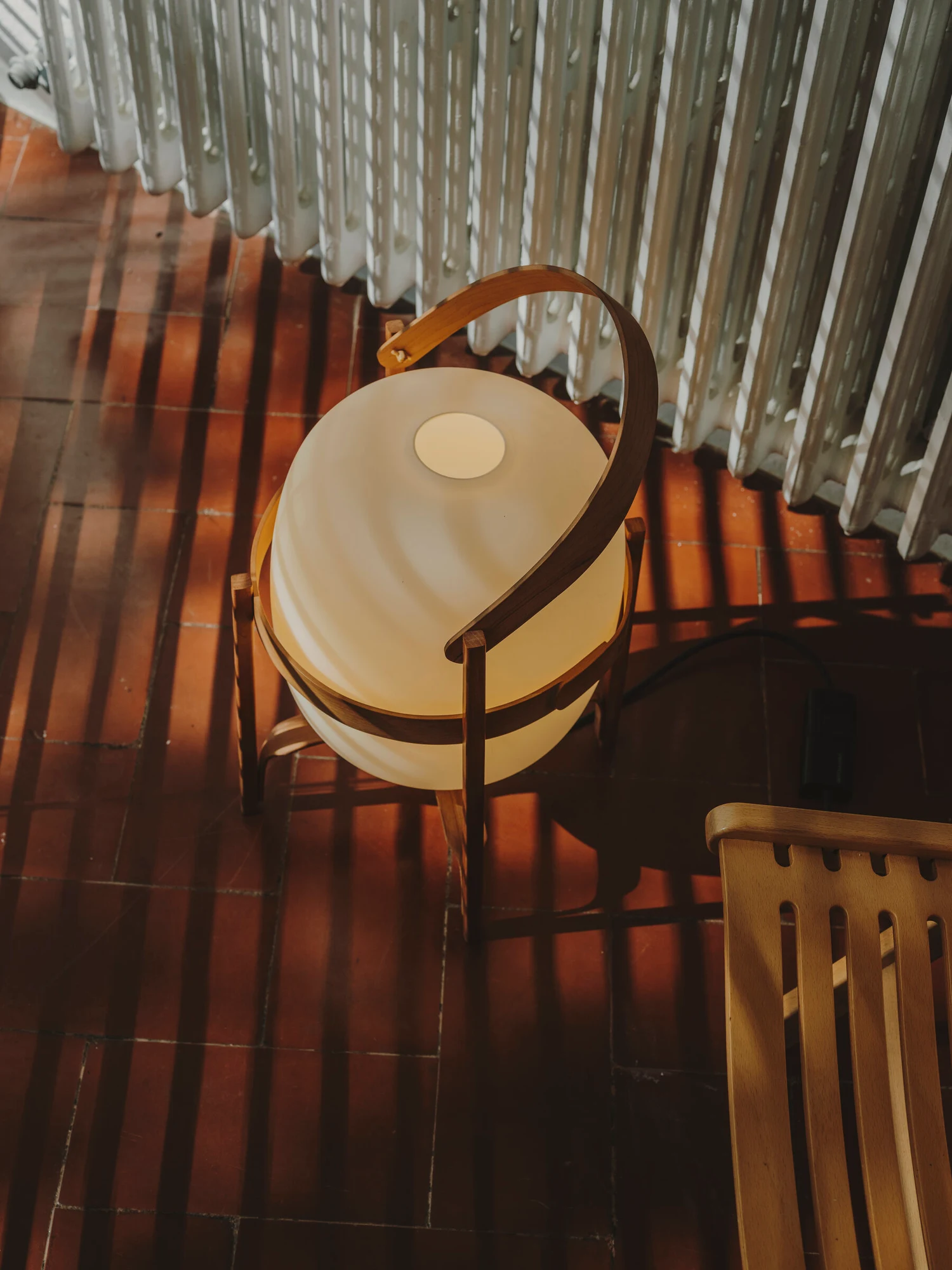
Cesta Table Lamp
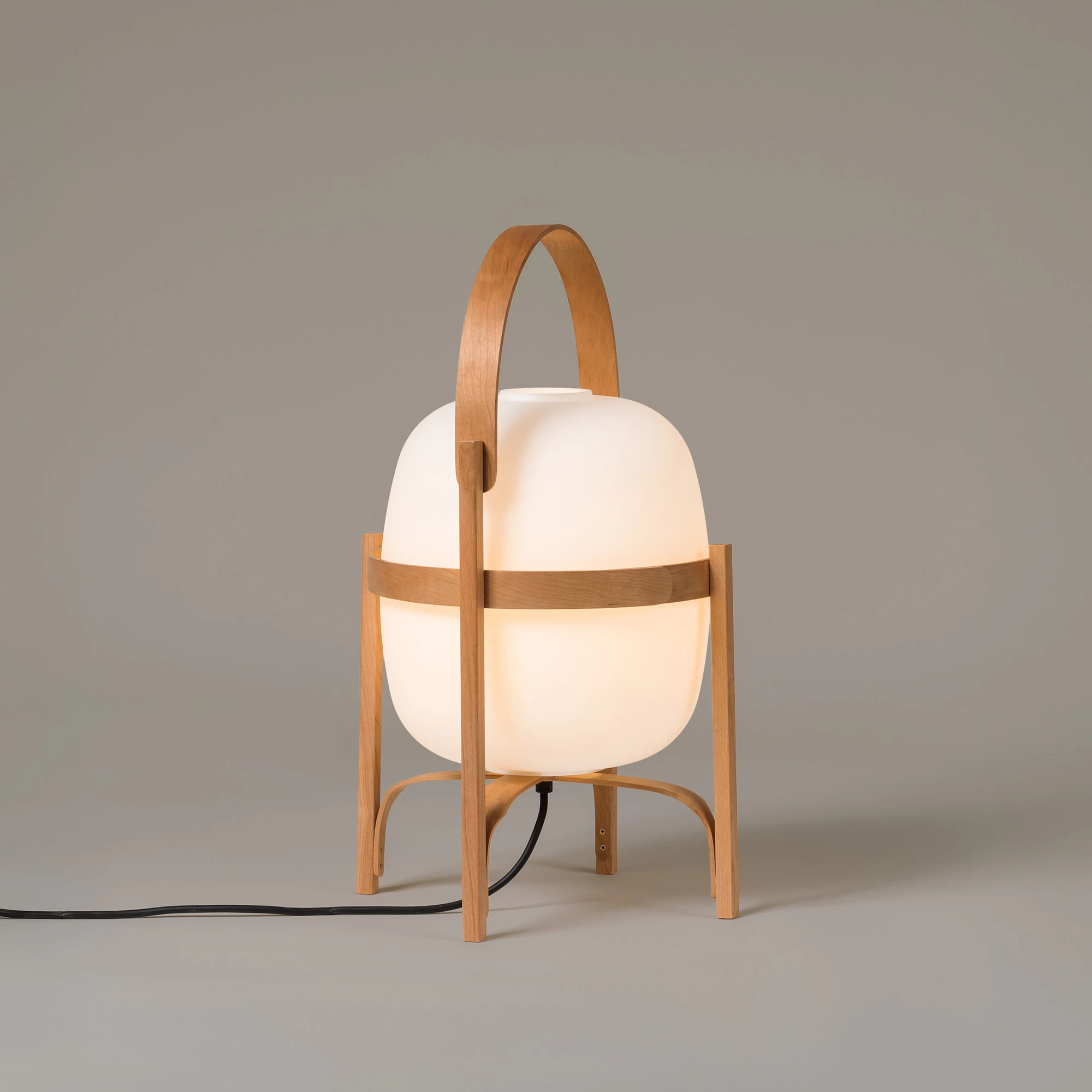
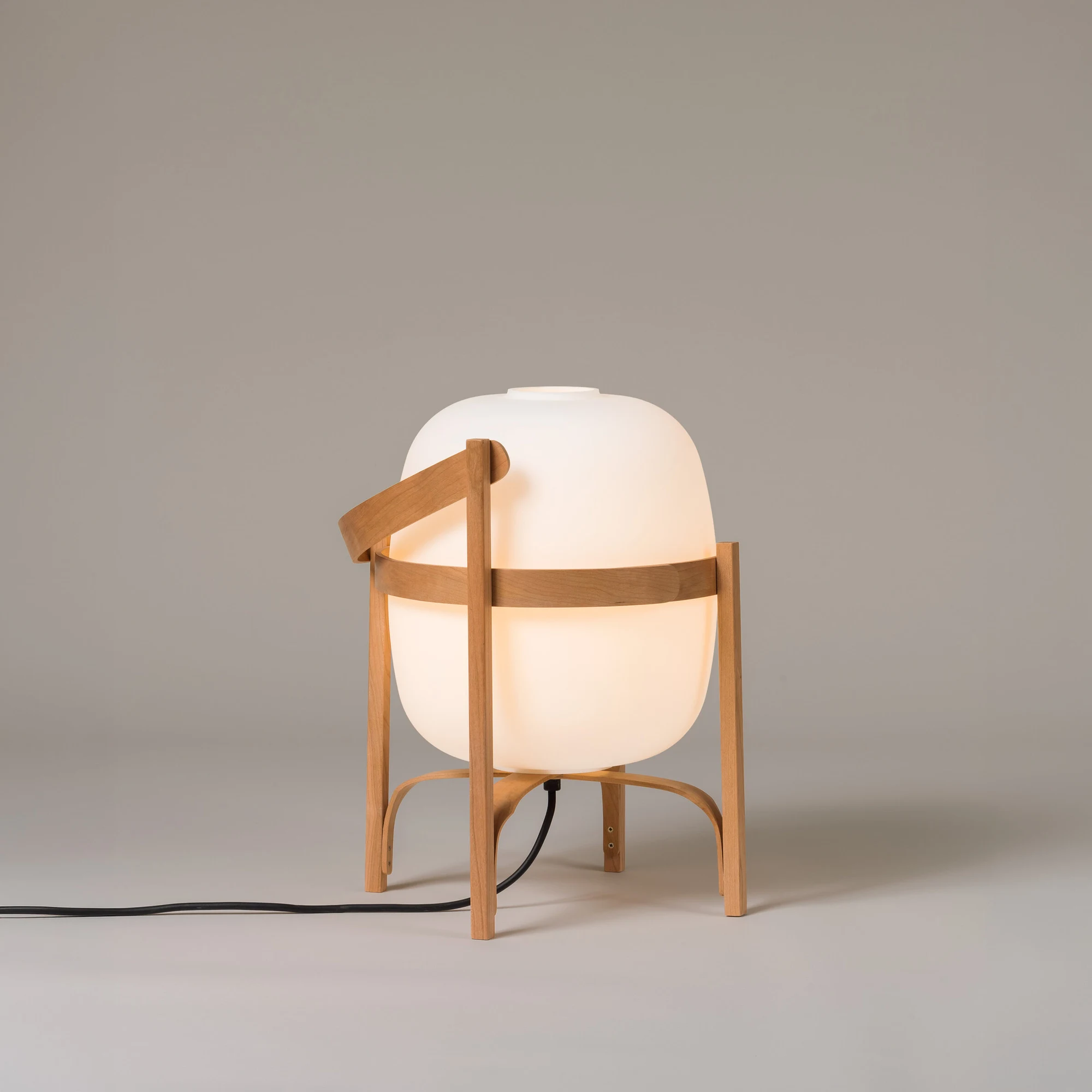
Miguel Milá's 1962 Cesta lamp: an opal glass globe in a cherry wood structure.


330 × 570 × 330 mm
Source: technical drawing image — Cesta CESTA01 — cherry wood structure, white opal glass shade (the standard Cesta, not Cestita) — published as W 33 × D 33 × H 57 cm
1962
2.7 kg
Description
Overview
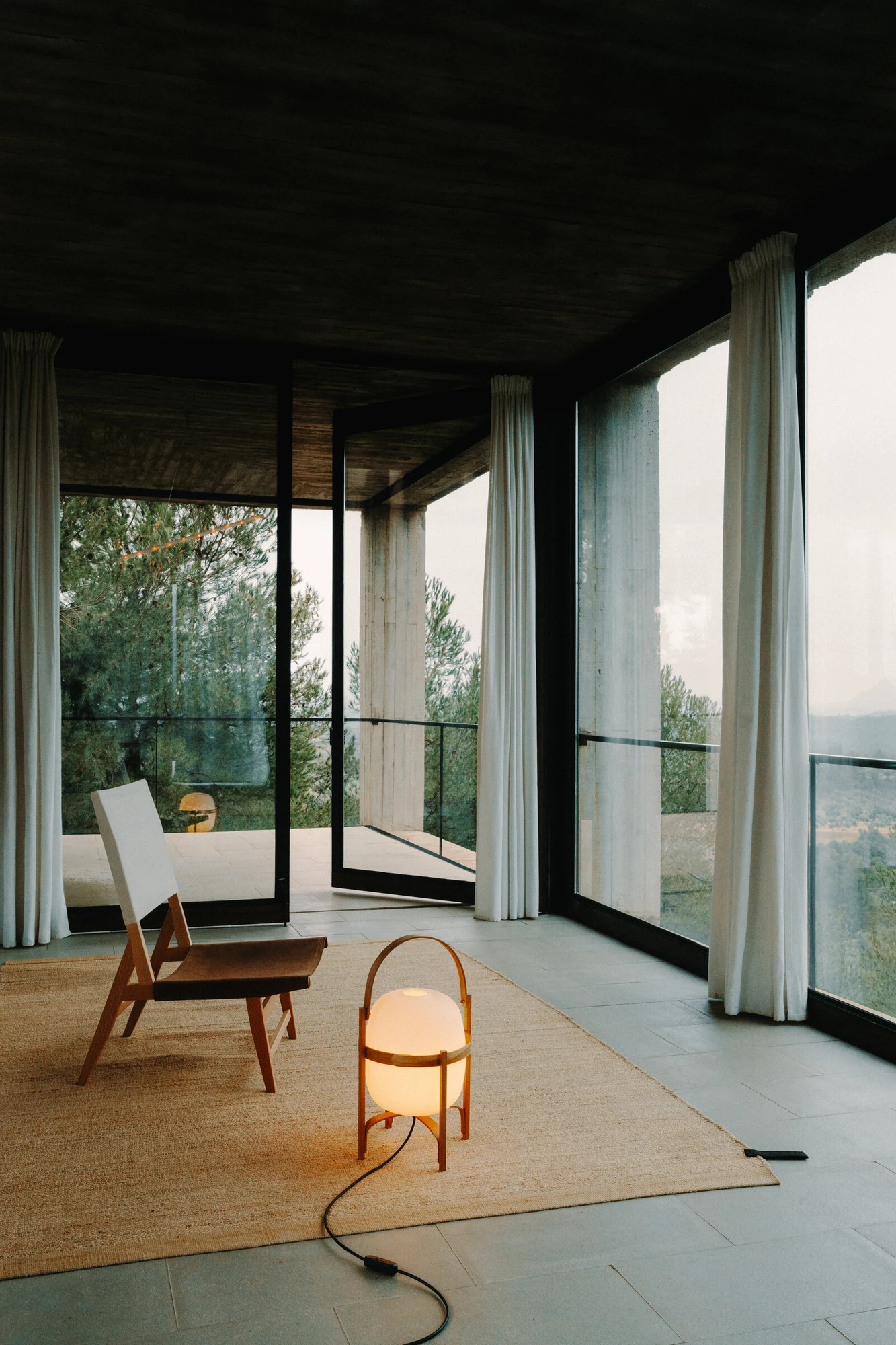
Cesta is a table lamp designed by Miguel Milá, dated 1962 on the Santa & Cole product page and data sheet (code CESTA01). Santa & Cole calls it a lamp-object that finds its place as naturally on a table as on the floor, and its data sheet says it can be picked up and carried easily. Its structure is cherry wood and its lampshade is white opal glass, a globe that, in the company's words, softly diffuses the light.
Construction
Santa & Cole says the lamp is crafted by European artisans using traditional steam-bending techniques, with each curve carefully polished and firmly assembled by hand. The data sheet gives the cherry wood structure and the white opal glass lampshade as the general description.
Specifications
- Dimensions: 57 cm high overall and 33 cm in diameter (drawing); a further 44 cm value on the sheet is not named
- Structure: cherry wood; lampshade: white opal glass
- Light source: E27 (maximum height 130 mm), 11 W LED, 1,521 lm, 2,700 K, dimmable; the European version includes the dimmable bulb, the American version recommends one
- Dimmer included; cable length 2.25 m; approximate weight (unpacked) 2.7 kg
- Suitable only for indoor use (IP20); regulations: UNE-EN 60598, 55015 and 60529 (European version); UL-153, dry location only (American version)
Story
A lamp for table or floor
Santa & Cole's product page says Cesta is a lamp-object that finds its place as naturally on a table as on the floor, with a cherry wood structure that protects the opal globe, which softly diffuses the light. The data sheet adds that the lamp can be picked up and carried easily.
Made by hand
The company says the lamp is crafted by European artisans using traditional steam-bending techniques, with each curve carefully polished and firmly assembled by hand. The page ranks Cesta among Miguel Milá's most widely recognized international icons, and the sheet dates it to 1962.