Butterfly Stool
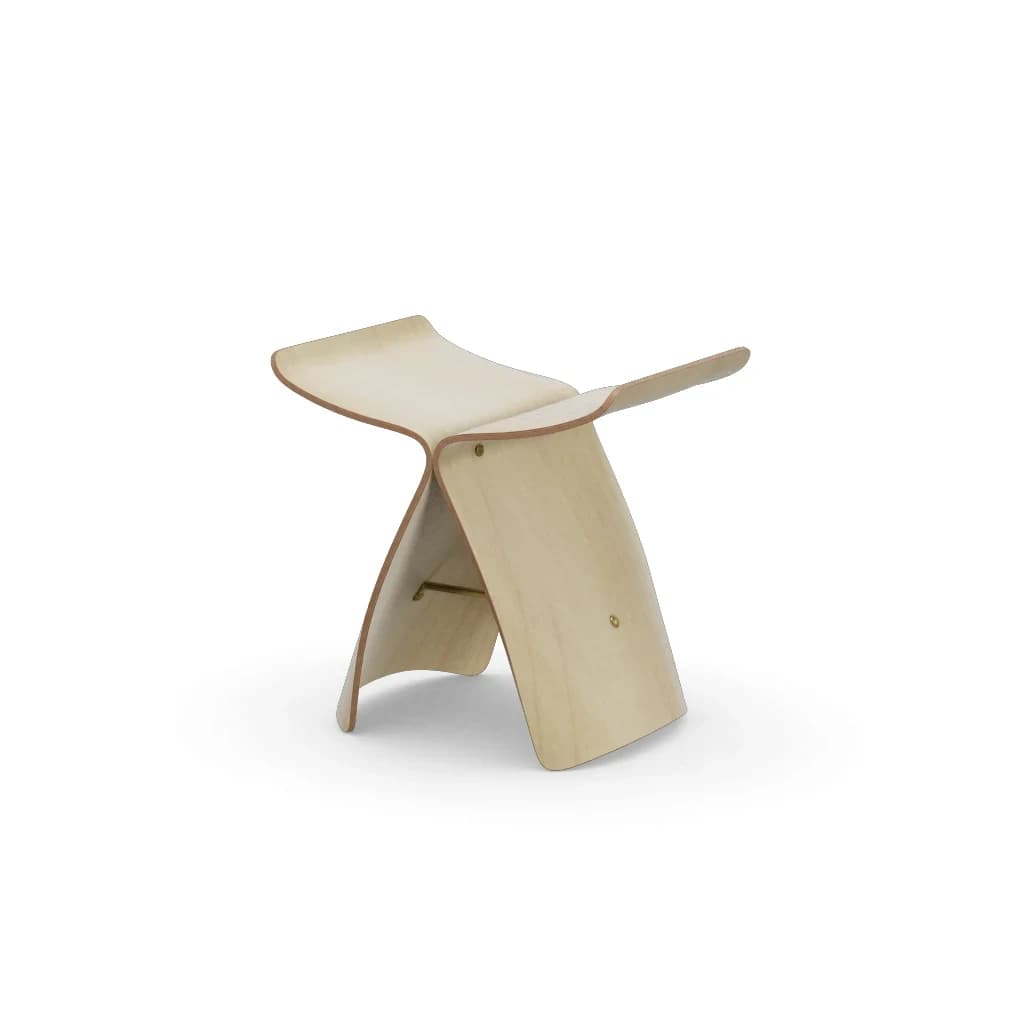
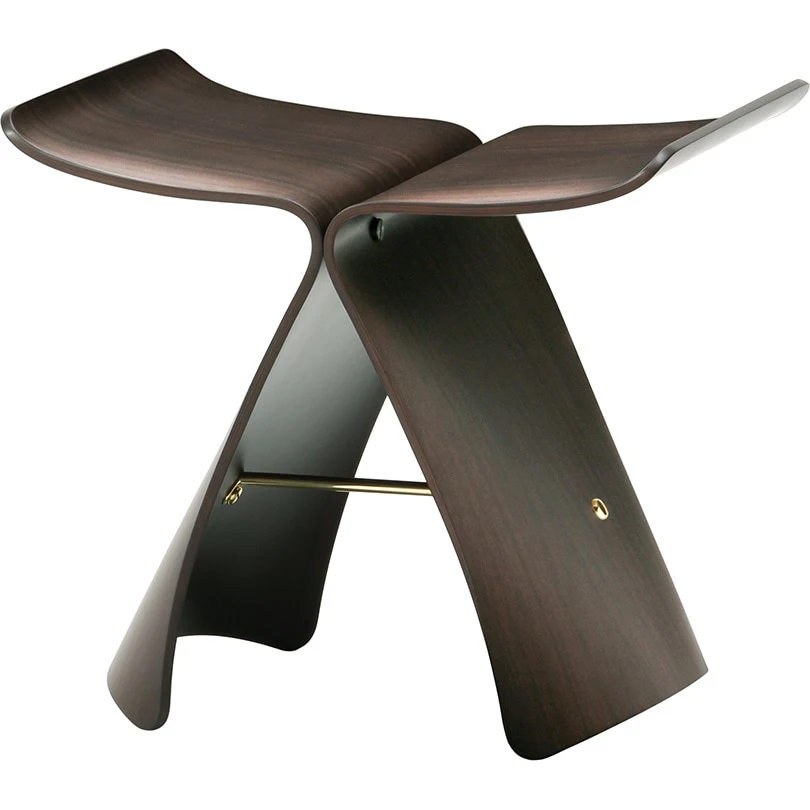
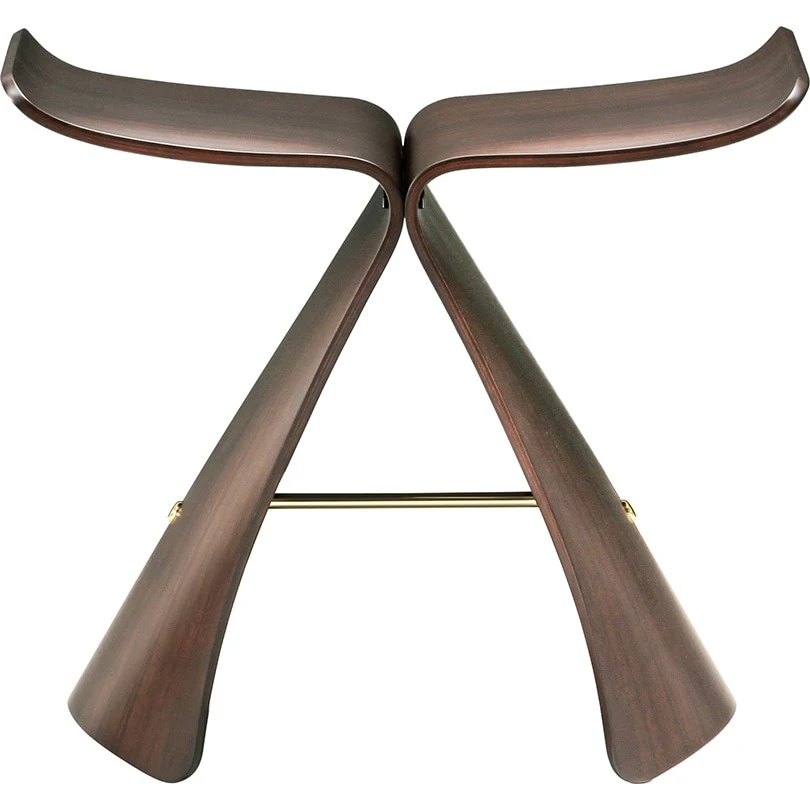
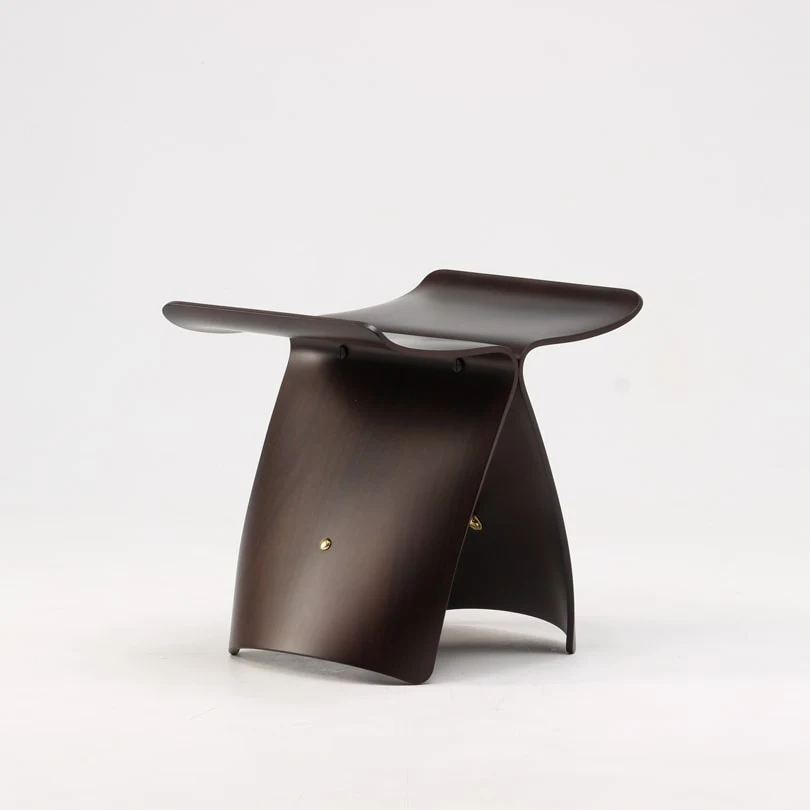
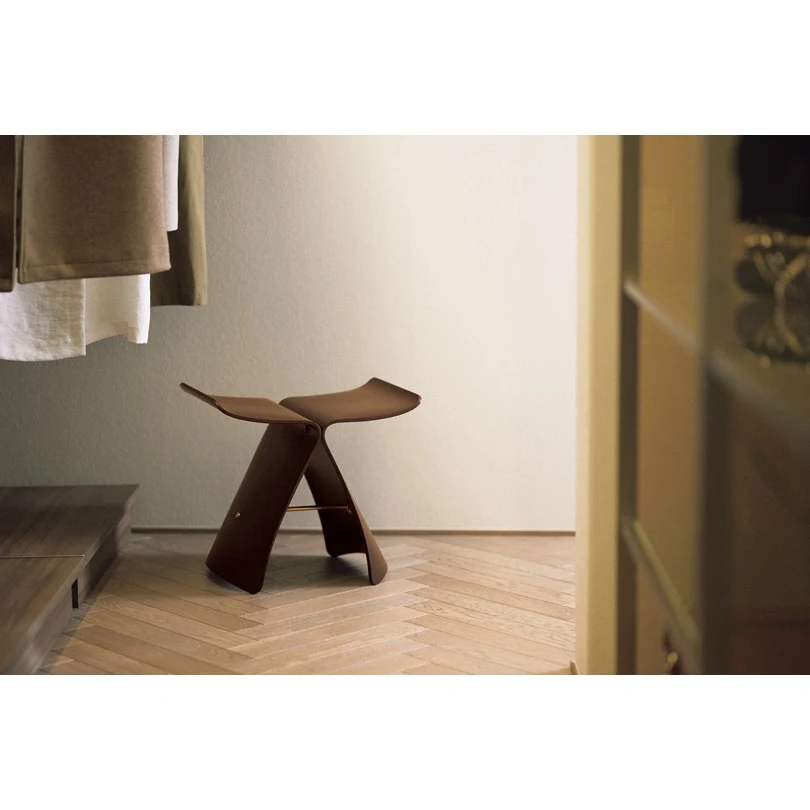
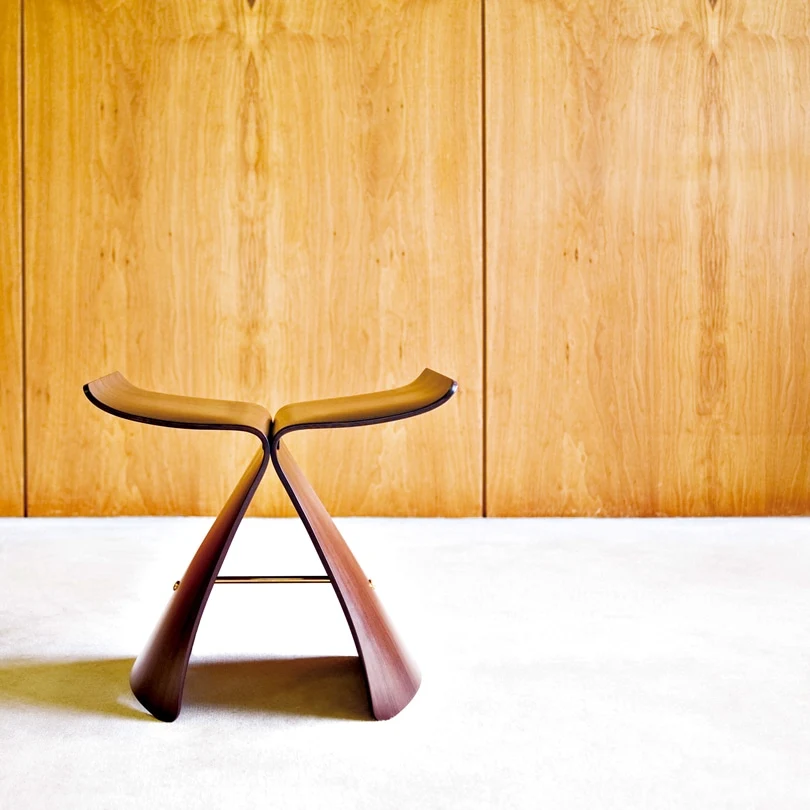
Sori Yanagi's Butterfly Stool of 1956: two moulded plywood pieces joined with brass.


425 × 387 × 310 mm
Source: product page text — S-0521RW-ST (rosewood, ST colour)
1956
Japan
Description
Overview
The Butterfly Stool (S-0521) was designed by Sori Yanagi and presented in 1956. Tendo Mokko's online store describes it as an icon of Japanese design, born when Yanagi's imagination met Tendo's technology. The page states that it is in the collections of museums around the world, including the Louvre and the Museum of Modern Art, New York. The model described here is S-0521RW-ST in flat-cut rosewood (ST colour); the same stool is also listed as S-0521MP-NT.
Construction
Two moulded plywood pieces of the same shape are joined with brass fittings, a simple structure. According to Tendo's designer page, the plywood is only 7 mm thick, built up by laying veneers sliced to about 1 mm one on another so that the grain directions cross, which increases strength. Tendo's product pages state that, unless a paint is specified, finishes are urethane resin.
Specifications
- Model: S-0521RW-ST (rosewood, flat-cut, ST colour)
- Dimensions: W 425 × D 310 × H 387 mm, seat height 340 mm
- Weight: 2.2 kg
- Awards and marks: Good Design Long Life Design Award; Green Purchasing compliant
- Related items: S-0521MP-NT (the stool in the maple variation) and cushion S-0048AA-AA
- Origin: Japan (online store product information, 原産地)
Story
Imagination and technique
Tendo's designer page says that after the war Sori Yanagi saw the moulded plywood technology of the Eameses, and that his meeting with Saburo Inui, who had researched moulded plywood at the craft guidance institute then in Sendai and later joined Tendo Mokko, led to the stool. The page adds that Yanagi designed by making models and relying on his own sense rather than drawings.
From prototype to exhibition
The online store says Yanagi founded the Yanagi Industrial Design Institute in 1950, designed the prototype of the Butterfly Stool, and after several years of research and development presented it in 1956 at the Yanagi Industrial Design exhibition held at Matsuya in Ginza. In 1958 the stool was selected for the permanent collection of the Museum of Modern Art, New York. The store notes that the two plywood pieces support each other, and that for this reason the stool is sometimes chosen as a wedding gift.