
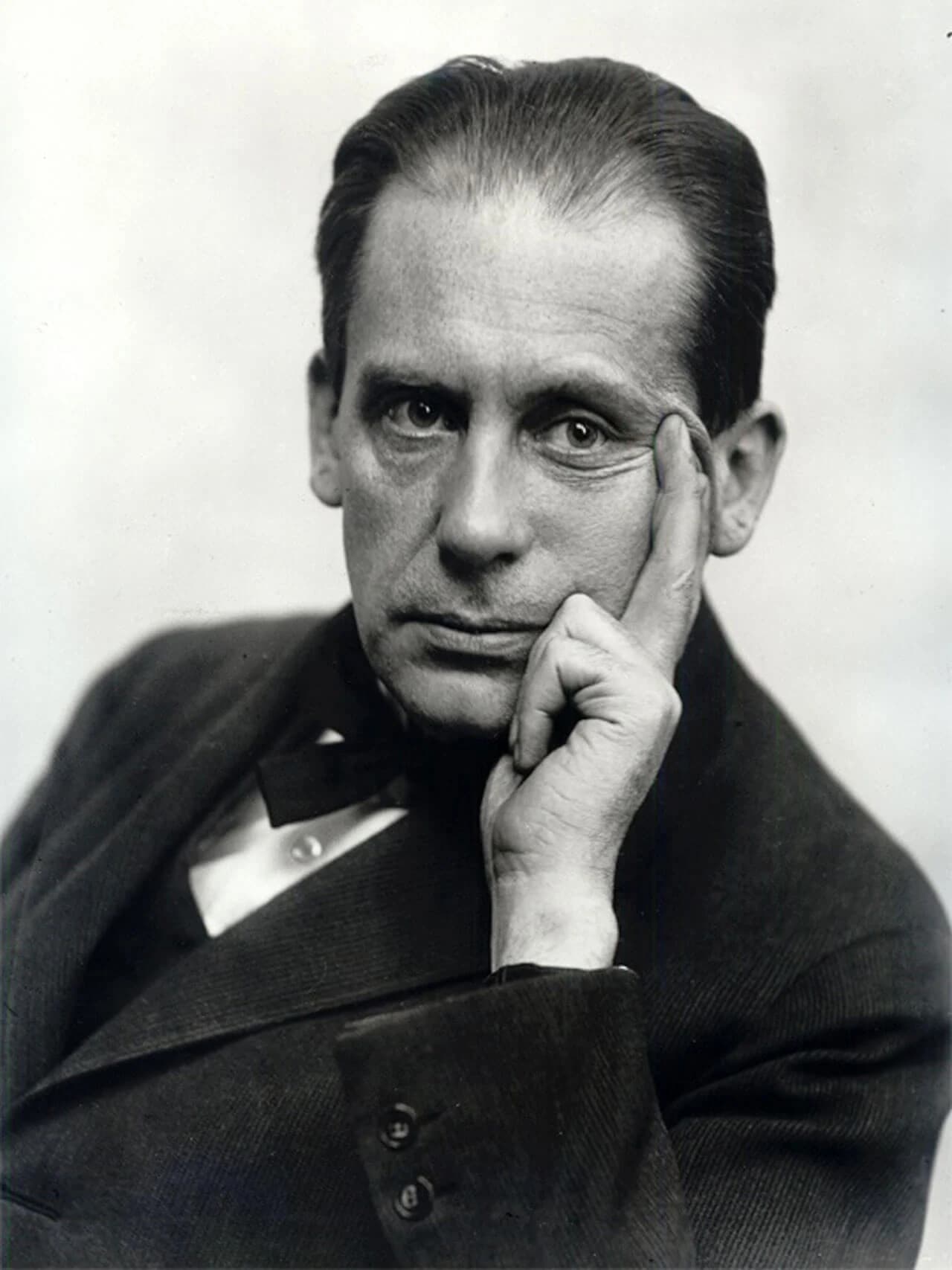
Designer
Walter Gropius
Walter Gropius (1883–1969) was born in Berlin. His great-uncle was the architect Martin Gropius. After studying architecture in Munich and Berlin, he joined the office of Peter Behrens in 1908, alongside Ludwig Mies van der Rohe and Le…
Biography
Background
Walter Gropius (1883–1969) was born in Berlin. His great-uncle was the architect Martin Gropius. After studying architecture in Munich and Berlin, he joined the office of Peter Behrens in 1908, alongside Ludwig Mies van der Rohe and Le Corbusier, and set up his own practice with Adolf Meyer in 1910.
Signature Style
Gropius mocked traditional architecture as "salon art". Rather than rejecting the industrial age, he made standardisation and prototypes productive tools, believing that "the creation of standard types for all practical commodities of everyday use is a social necessity". His furniture translates architecture into objects through a characteristic interpenetration of volume and linearity.
Notable Works
- Fagus Factory, Alfeld (with Adolf Meyer)
- Bauhaus Dessau school building (1925–26)
- F51 armchair (1920) and F51-2 / F51-3 sofas for the director's room in Weimar
- D51 armchair and benches (1922/23)
- Bauhaus door handles (1923)
- Gropius House, Lincoln, Massachusetts (1938)
Legacy
In 1919 Gropius became director of the Grand Ducal Saxon School of Arts and Crafts in Weimar and renamed it the State Bauhaus Weimar, which he led until 1928. He emigrated to England in 1934 and in 1937 to the United States, where he chaired the Department of Architecture at Harvard's Graduate School of Design until 1952 and co-founded The Architects Collaborative. Tecta produces his Bauhaus furniture as licensed reeditions.