
Image source: Tecta — F51 Armchair
© Tecta and the respective rights holders. Quoted to accompany INTEBEE's independent design commentary and research.
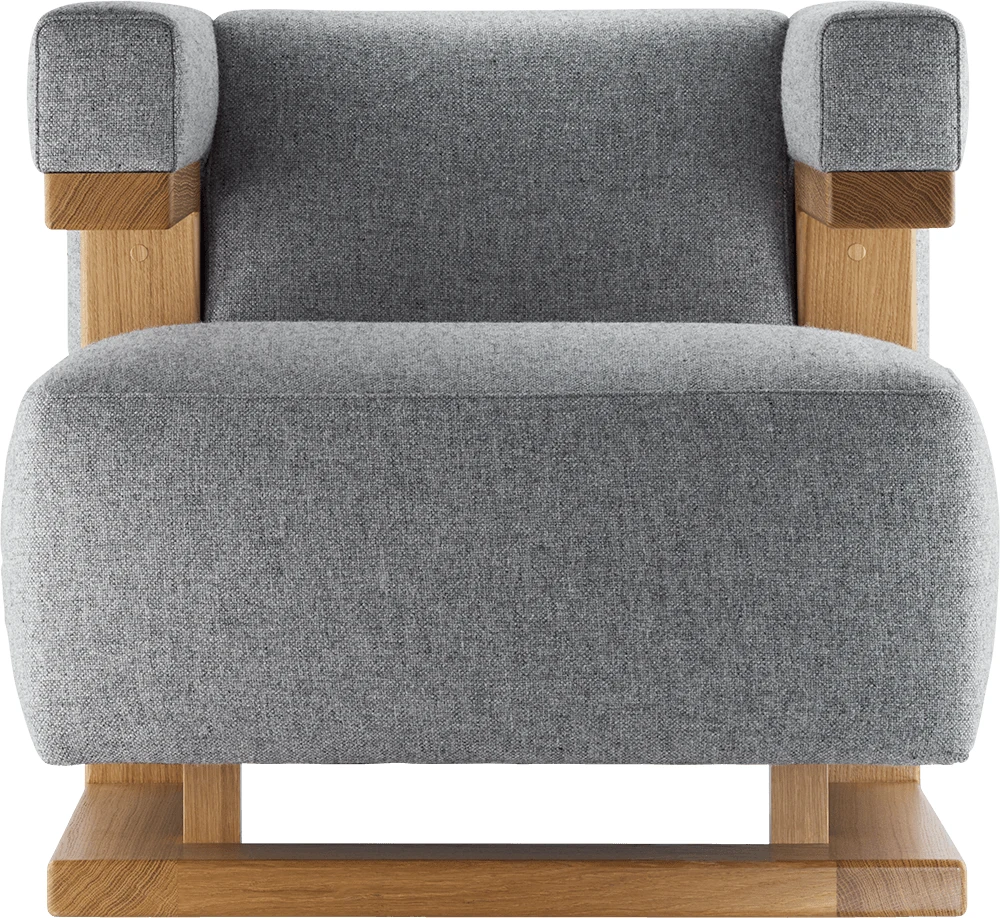
F51 Armchair
Walter Gropius's cubic armchair for the Bauhaus director's room in Weimar, a Tecta Bauhaus Original.


700 × 700 × 700 mm
1920
Approx. $5,700 (reference price; varies by region and retailer)
Official product information
INTEBEE AI PUBLIC LIBRARY is an independent furniture design research and discovery platform. Product specifications, finishes, availability and other details may change. For current and definitive information, please refer to the manufacturer's official website.
Go to the official product pageSpecifying F51 Armchair for your design project?
INTEBEE is the FF&E specification platform for interior designers: spec sheets, finishes, floor plans and client-ready PDFs in one place.
Description
Overview
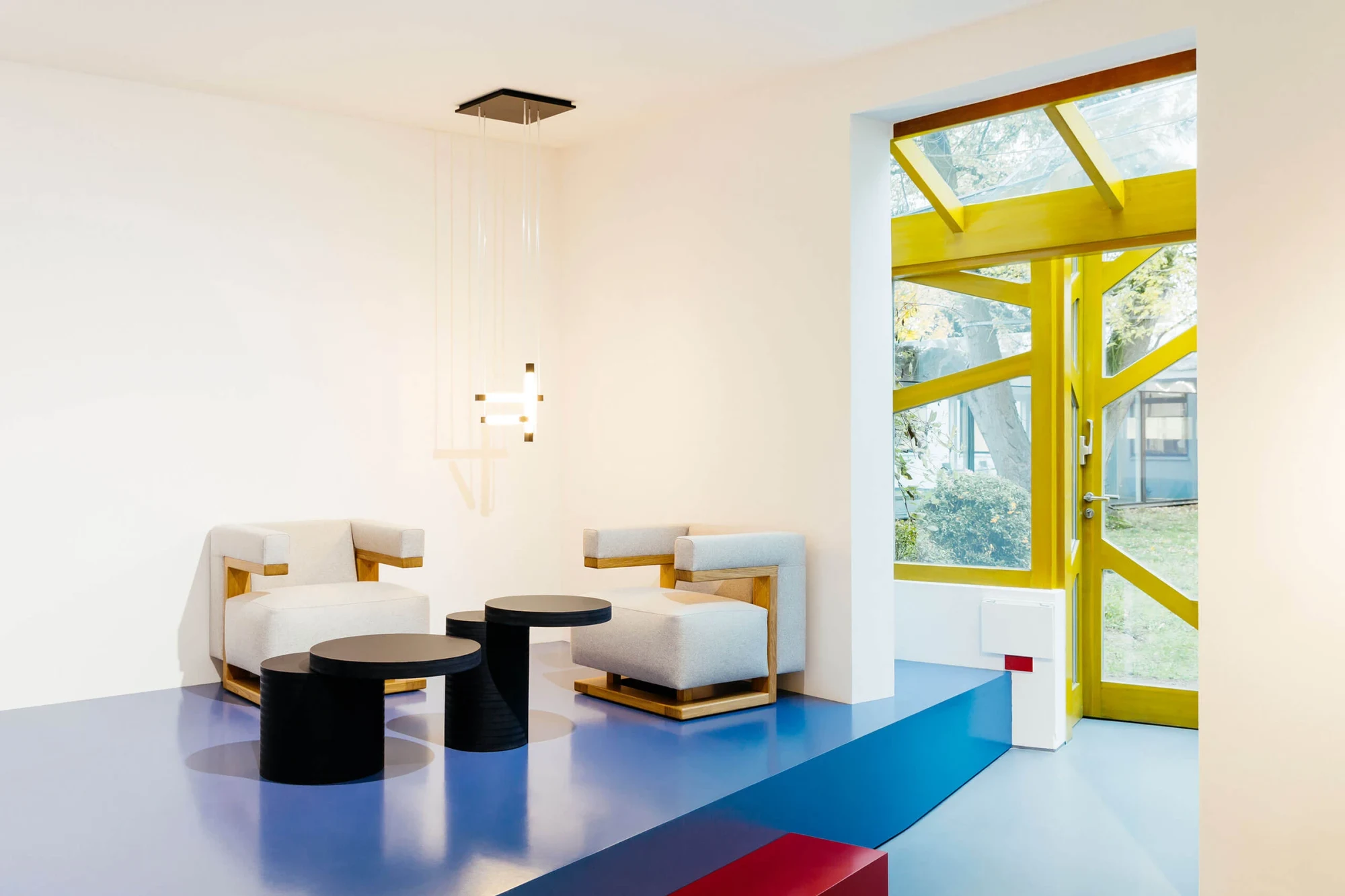
Tecta's product page calls the F51 (1920) not just any armchair but the iconic armchair for the director's room in the Weimar Bauhaus. Walter Gropius had by then created, in Tecta's words, a small holistic work of art spanning interiors, furniture, tapestry and ceiling lamp, in which nothing is randomly chosen and everything is connected. Tecta's shop text adds that the armrests project freely, so the user can sit very flexibly in many directions, a trait it calls entirely atypical and unique for an armchair even today. The F51 is a Bauhaus Original: Tecta says the Bauhaus Archive in Berlin has authorised its reeditions of Bauhaus models, which carry Oskar Schlemmer's signet.
Construction
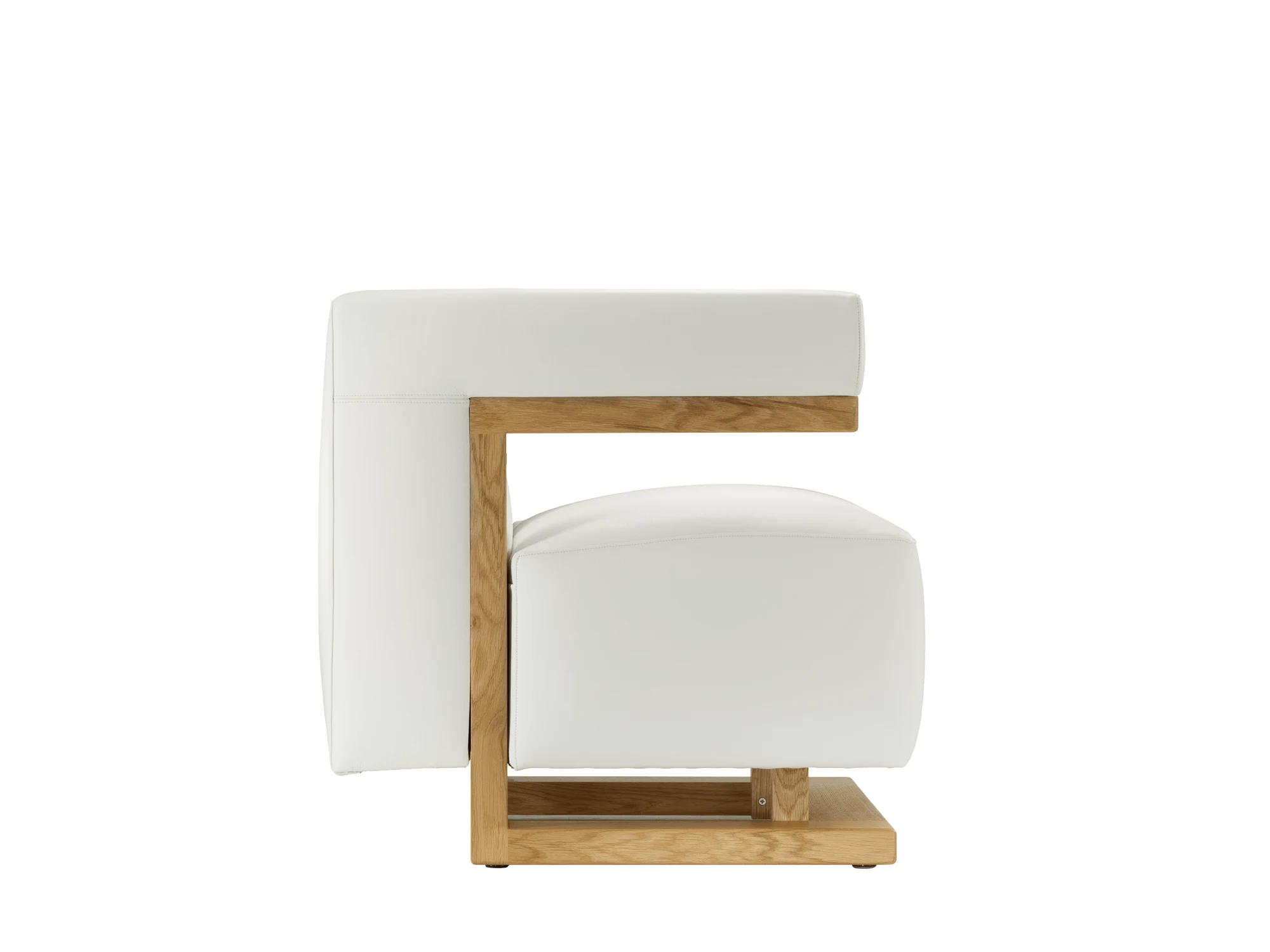
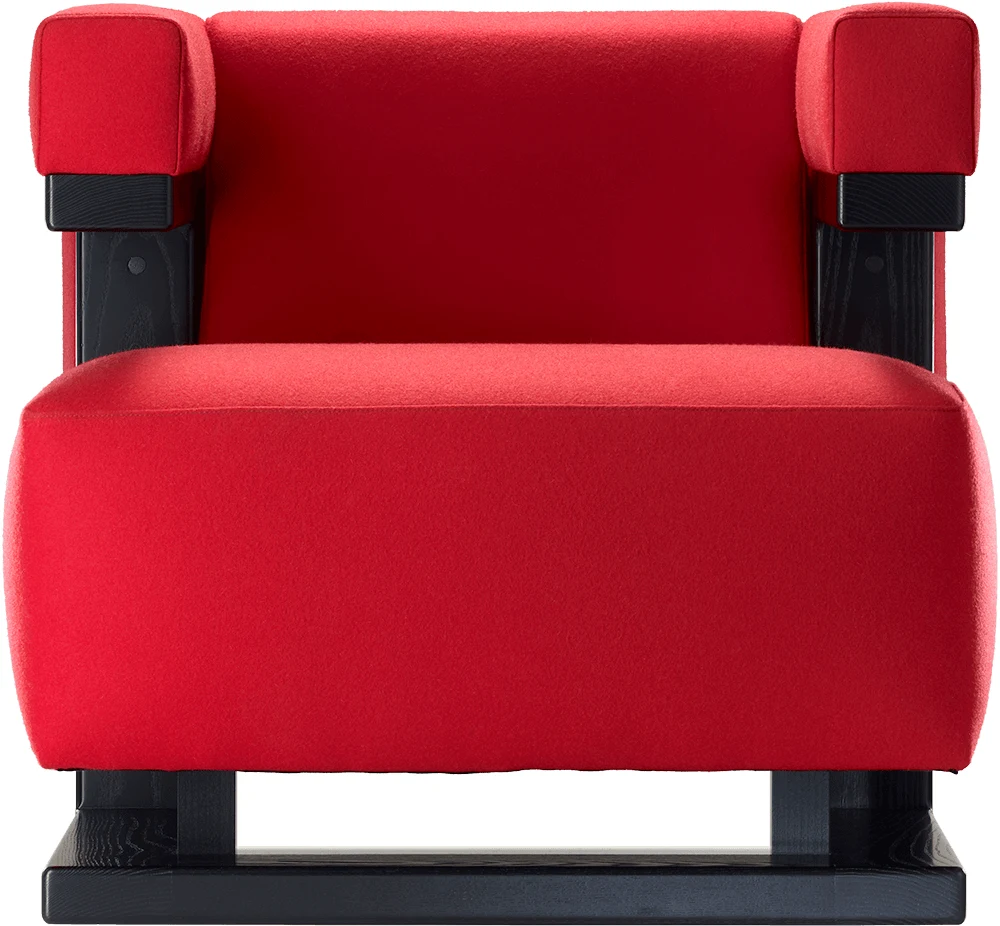
The shop text describes a cubic armchair and sofa group combining voluminous upholstery with a new supporting construction. Tecta's page says the projecting frame lifts the back of the seat and the armrest upholstery away from the floor, and that the crafted elements of the construction are openly revealed. The shop offers Hallingdal 65 upholstery (colours 0180 and 0200) on a solid oak, solid walnut or solid ash frame in natural, or ash lacquered black; many further configurations are available on request.
Specifications
- Dimensions: W 70 × D 70 × H 70 cm, seat height 42 cm (Tecta product page drawing)
- Shop listing (T10106.2): W 63 × H 67 × D 60 cm, seat height 42 cm
- Frame: solid oak, walnut or ash (natural), or ash lacquered black
- Upholstery: Hallingdal 65 in the shop
Story
The director's room in Weimar
Tecta's page says that anyone who studies the isometric layout of the director's room can see the furniture as part of a three-dimensional coordinate system. The shop text puts the armchair and sofa group at the centre of the ensemble and says that its interpenetration of volume and linearity recalls Gropius's contemporary housing projects, notably the "Baukasten im Grossen" designs.
A precursor of the cantilever
According to Tecta, every major designer passing through the Weimar room was influenced by the ideas of the F51, whose protruding armrests can be seen as a precursor of Mart Stam's chairs without back legs and anticipate Marcel Breuer's stool on runners of 1925. Tecta's Axel Bruchhäuser is quoted: "The first cantilever chair concept is from Walter Gropius, the first cantilever armrest architecture from El Lissitzky"