 fredericia.com
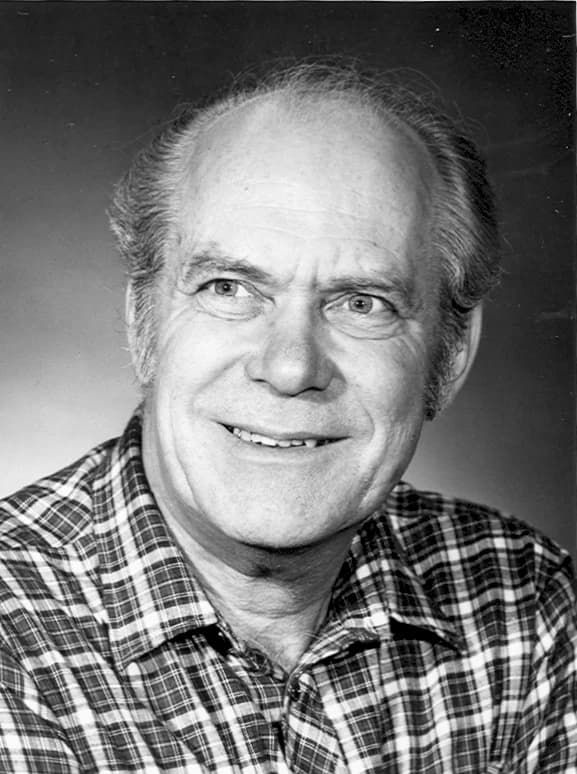
Image source: Poul M. Volther
© The respective rights holders. Quoted to accompany INTEBEE's independent design commentary and research.
Designer
Poul M. Volther
Poul M. Volther (1923-2001) was a prominent Danish designer and, in Fredericia's words, a key figure in the development of Danish modernism. He began his career as a cabinetmaker and then continued his education at the Copenhagen School of…
Biography
Background
Poul M. Volther (1923-2001) was a prominent Danish designer and, in Fredericia's words, a key figure in the development of Danish modernism. He began his career as a cabinetmaker and then continued his education at the Copenhagen School of Arts and Crafts. In 1949, at 26, he joined the furniture design studio of FDB under Børge Mogensen, a position he secured through the recommendation of his friend and colleague Hans J. Wegner. In 1950 he took over leadership of the studio, and by 1955 he had set up his own design studio.
Signature Style
Fredericia describes Volther as rooted in rational design principles and inspired by the functional philosophy of the Bauhaus movement, and credits him with an inquisitive approach to new techniques, close attention to detail and a deep grasp of material properties. At FDB he built on Mogensen's aim of functional, accessible furniture for the general public. His own quoted aim reads: "I strive for solutions with a high degree of functionality, aesthetics, and quality - designed with the user in focus."
Notable Works
- Corona Chair (1964): the lounge chair made today by Fredericia, which grew out of the Pyramid Chair of 1953 and a collaboration with the producer Erik Jørgensen.
- Corona Ottoman: the footstool listed beside the chair, with the same frame and upholstery as the lounge chair.
Legacy
After opening his studio Volther produced work for bespoke exhibitions and for industrial production for companies such as AB Gemla and Erik Jørgensen's Møbelfabrik. He also taught at the Danish School of Arts and Crafts, now the Royal Danish Academy, and Fredericia says his standards of craftsmanship and minimalist design left a lasting impression on later furniture designers. Fredericia calls him a pioneer of minimalist furniture design who left an indelible mark on the history of Danish design.
Collections

Products
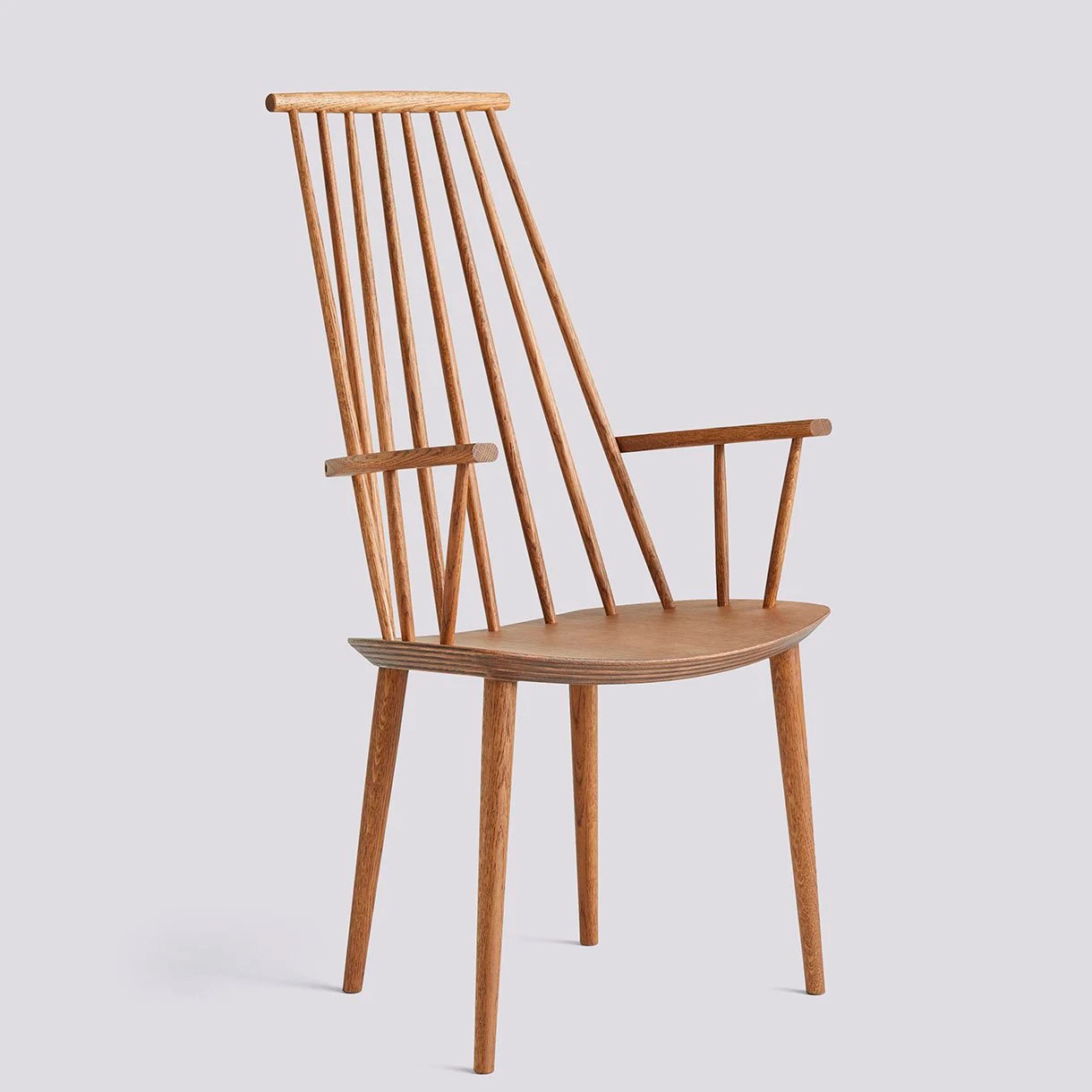
J110 Chair (J-series)
Poul M. Volther's J110 armchair with long back rods and curved armrests, reproduced by HAY
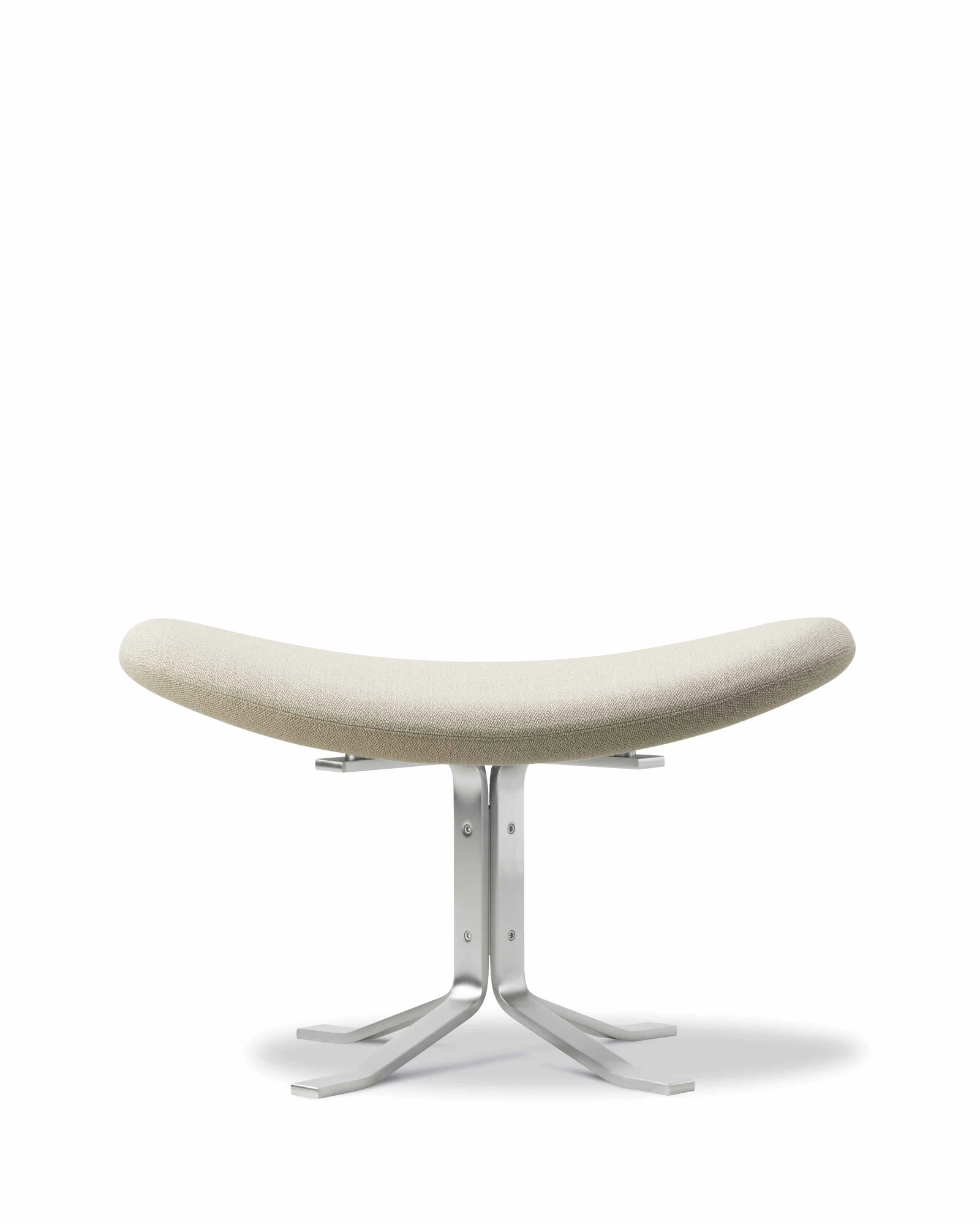
Corona Ottoman
Poul M. Volther's 1964 Corona Ottoman (5002): a footstool on a spring steel frame.
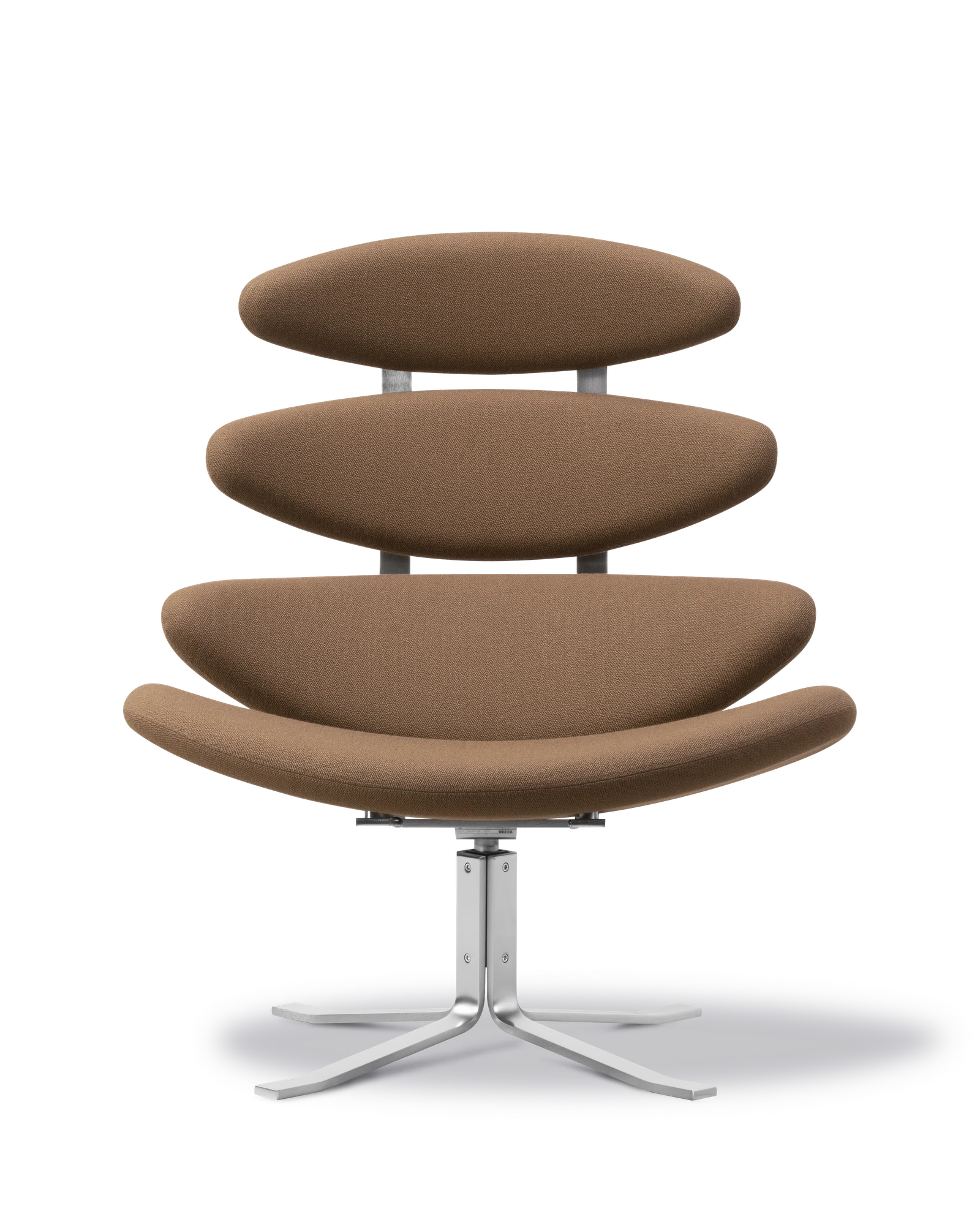
Corona Chair
Poul M. Volther's 1964 Corona Chair (5000): four elliptical pads on a spring steel swivel base.