

Collection Story
Origin
Verner Panton began exploring a chair made from a single material and formed in one piece in the early 1950s. Vitra says he had the drawings by the mid-1950s and completed the first full-scale model in 1958, but manufacturers did not want to pursue the daring concept. Willi Fehlbaum, the founder of Vitra, agreed only after his son Rolf and the head of product development, Manfred Diebold, visited Panton and returned with glowing reports. The collaboration with Vitra began in 1963.
From prototype to series
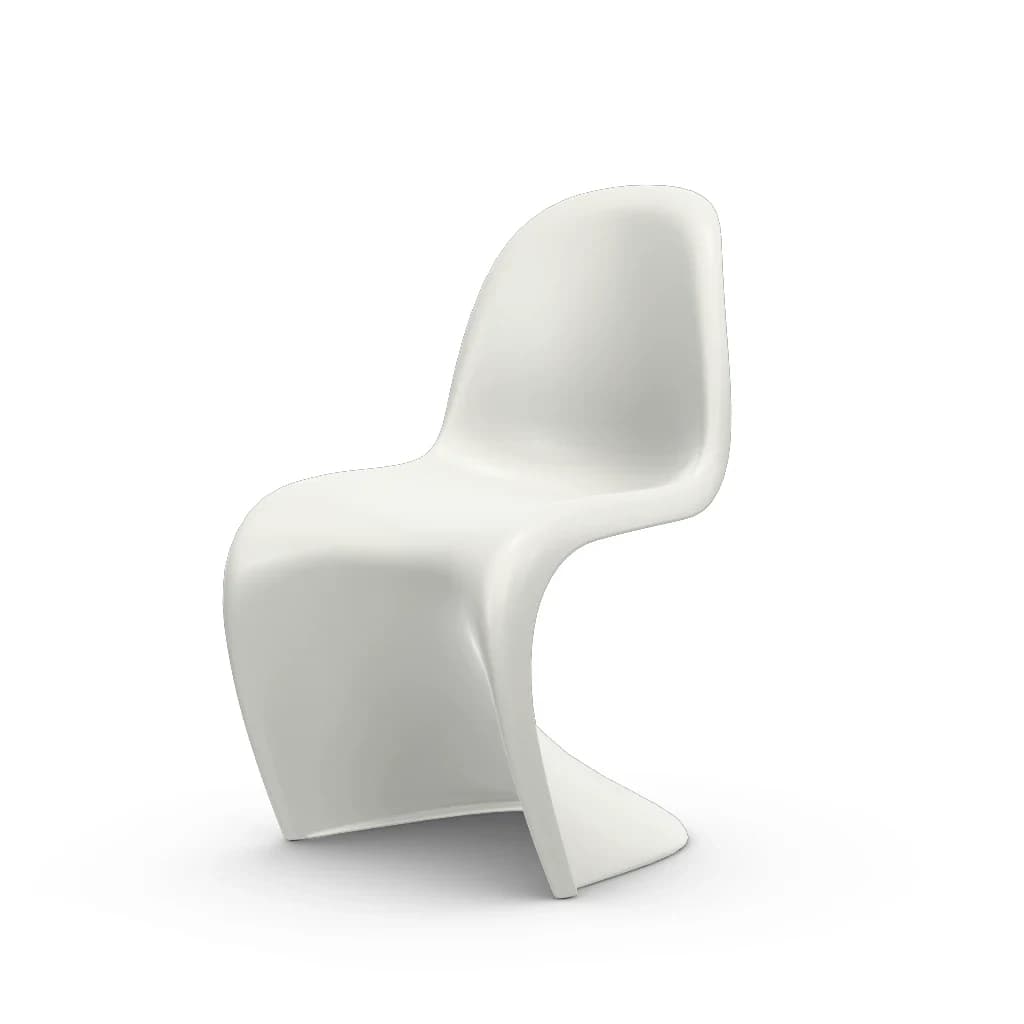
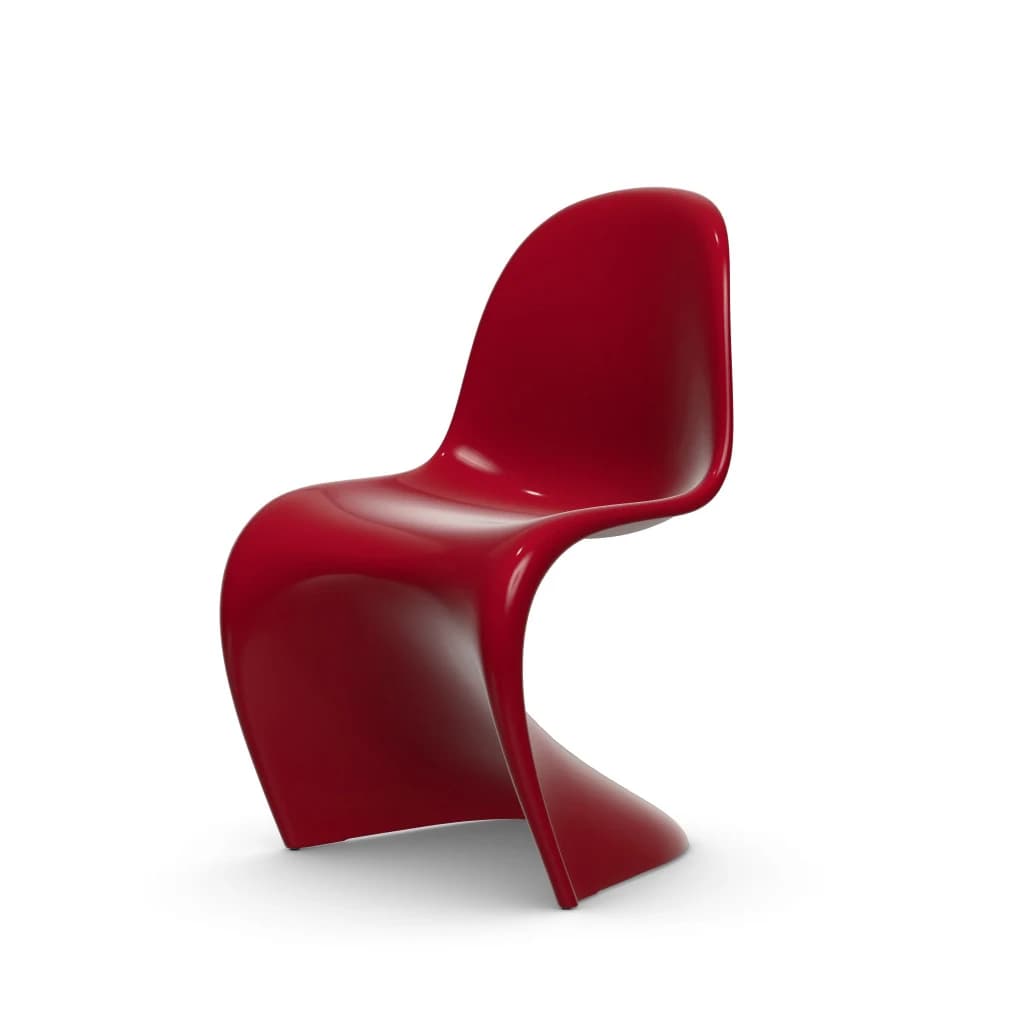
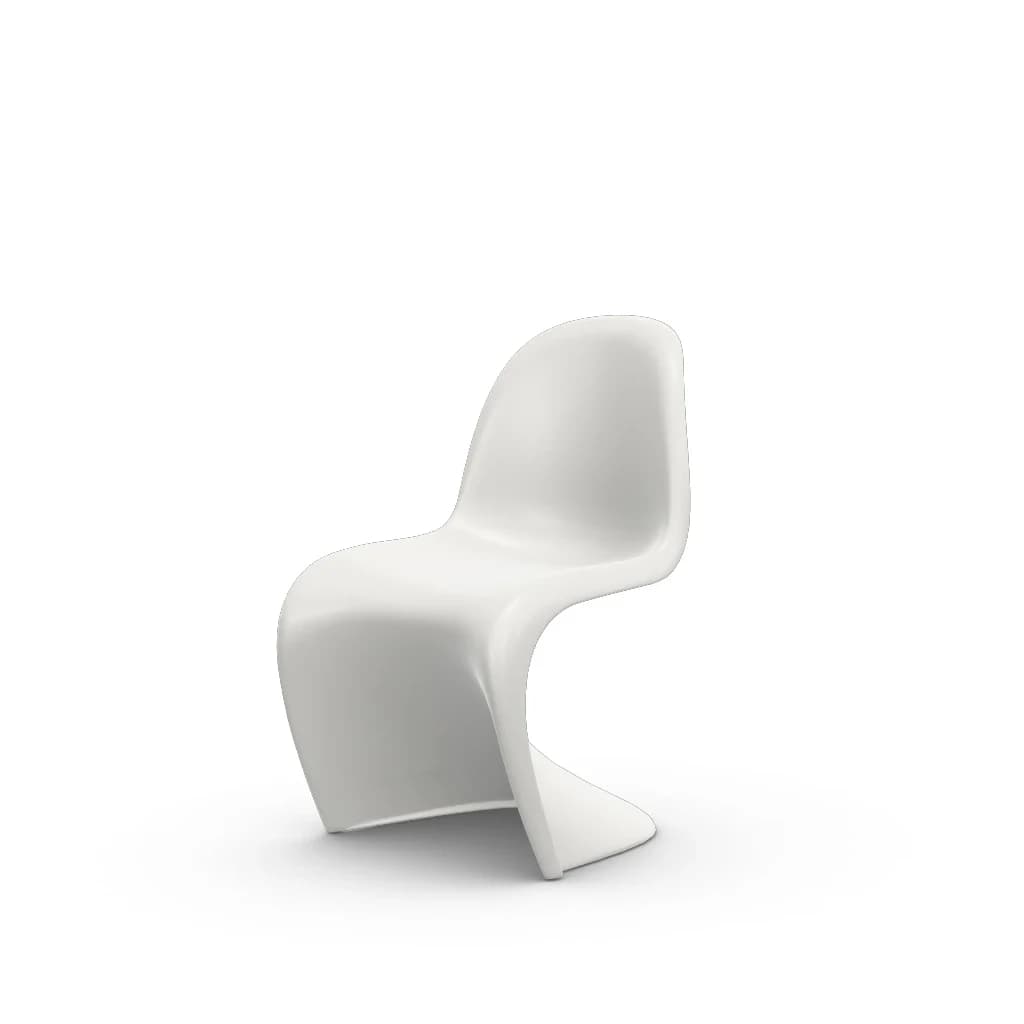
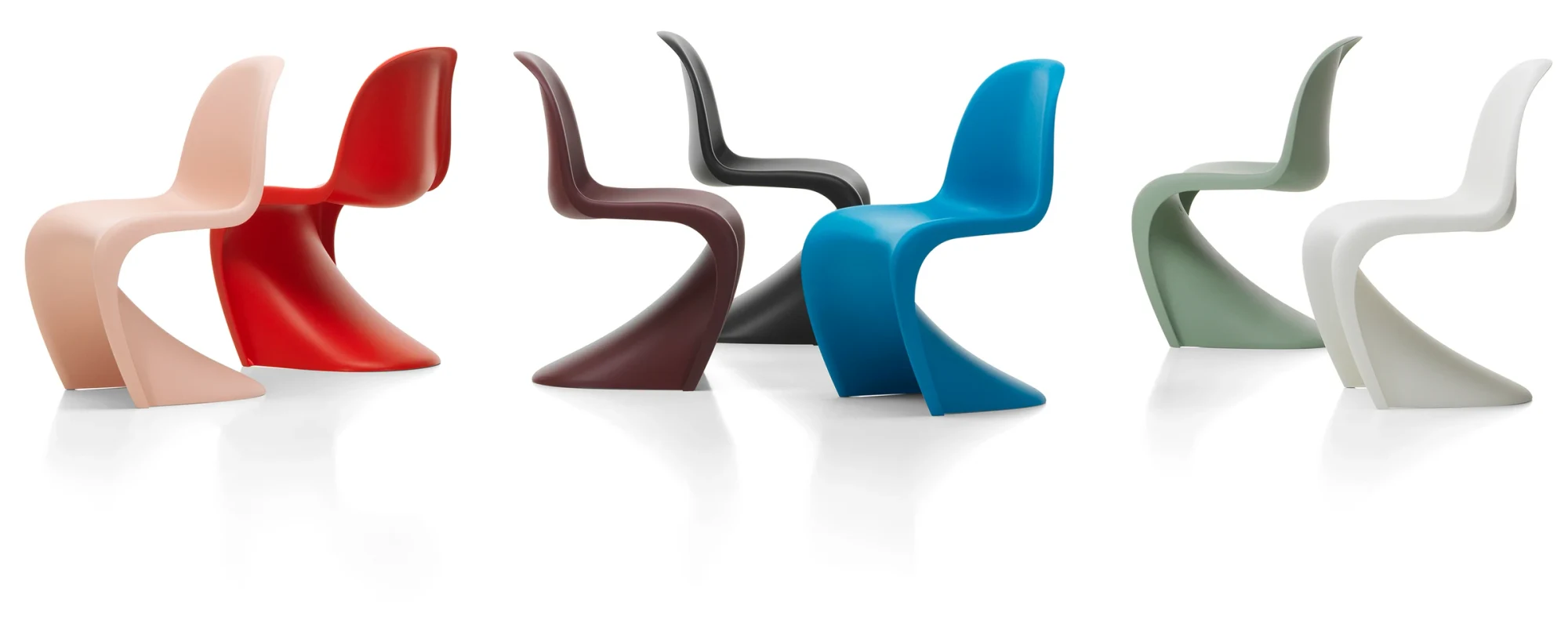
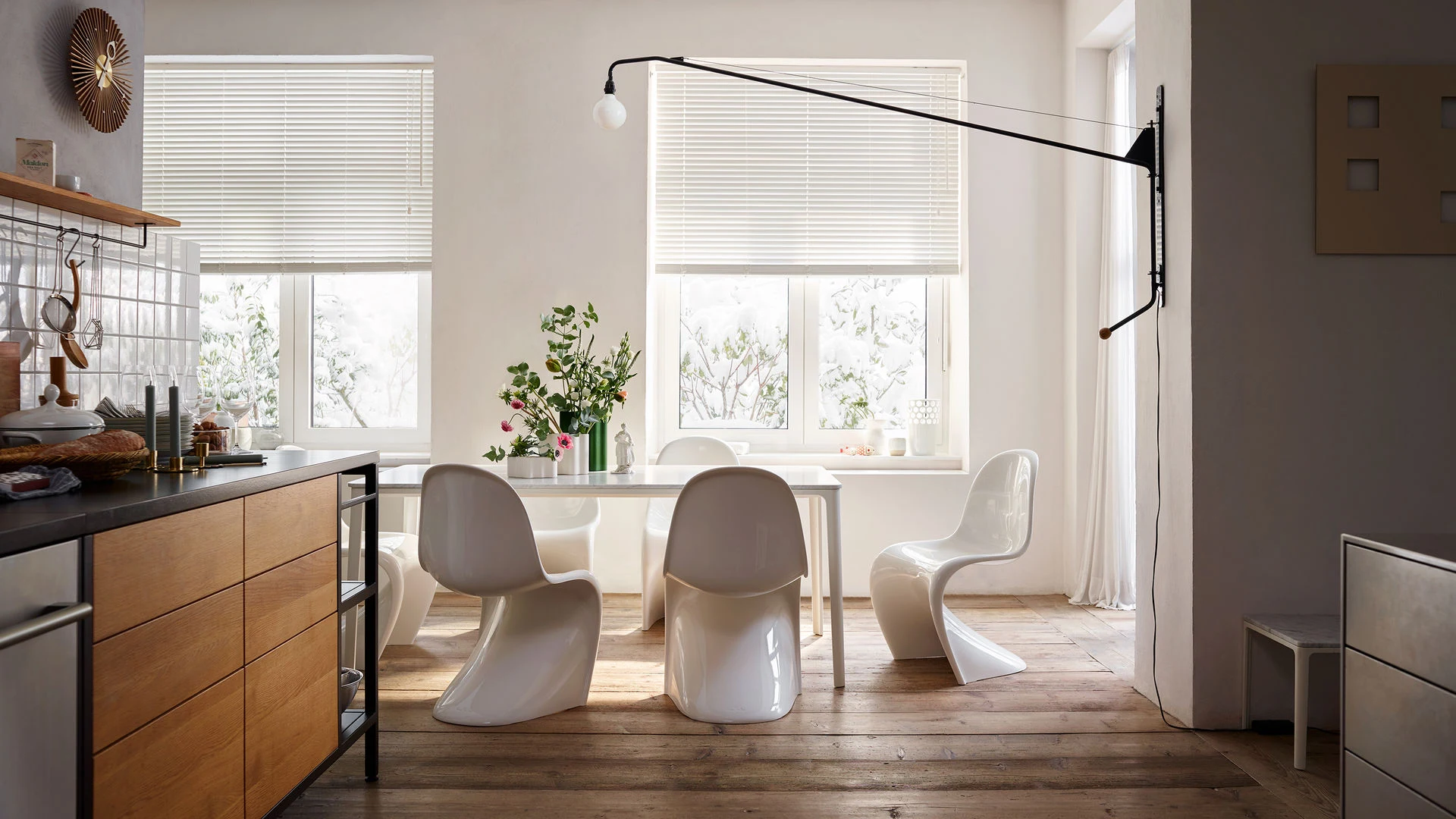
Reconciling Panton's contours with the limits of plastics technology took several years of research and ten prototypes made by hand from glass-fibre reinforced polyester. A pilot series of 150 pieces followed in 1967 and caused a sensation, but the process was too costly to meet demand. After tests with rigid polyurethane foam from Bayer, mass production began in 1968 with a new moulding technique. A thermoplastic from BASF reduced finishing work but proved far less resistant to ageing and weathering, and production was discontinued in 1979. Polypropylene followed in 1999, and Vitra now offers two models: the Panton Chair Classic, made of rigid polyurethane foam with a glossy surface, and the Panton Chair, a polypropylene version with a matt finish. Since 2006 the polypropylene version has also come as the children's chair Panton Junior.
Recognition
The chair was hailed as a sensation and received numerous prizes. Wikipedia reports that it was unveiled in the Danish design journal Mobilia in 1967, entered the Danish Culture Canon in 2006 and is held in permanent museum collections in New York, London, Berlin and Copenhagen. A Vitra magazine interview with Marianne Panton adds that the home of Willi and Erika Fehlbaum was the setting for the well-known picture of Panton Chairs in a row by a swimming pool.
Key Pieces
- Panton Chair
- Panton Chair Classic
- Panton Junior