Image source: Fritz Hansen — Ant
© Fritz Hansen and the respective rights holders. Quoted to accompany INTEBEE's independent design commentary and research.


Collection Story
Origin
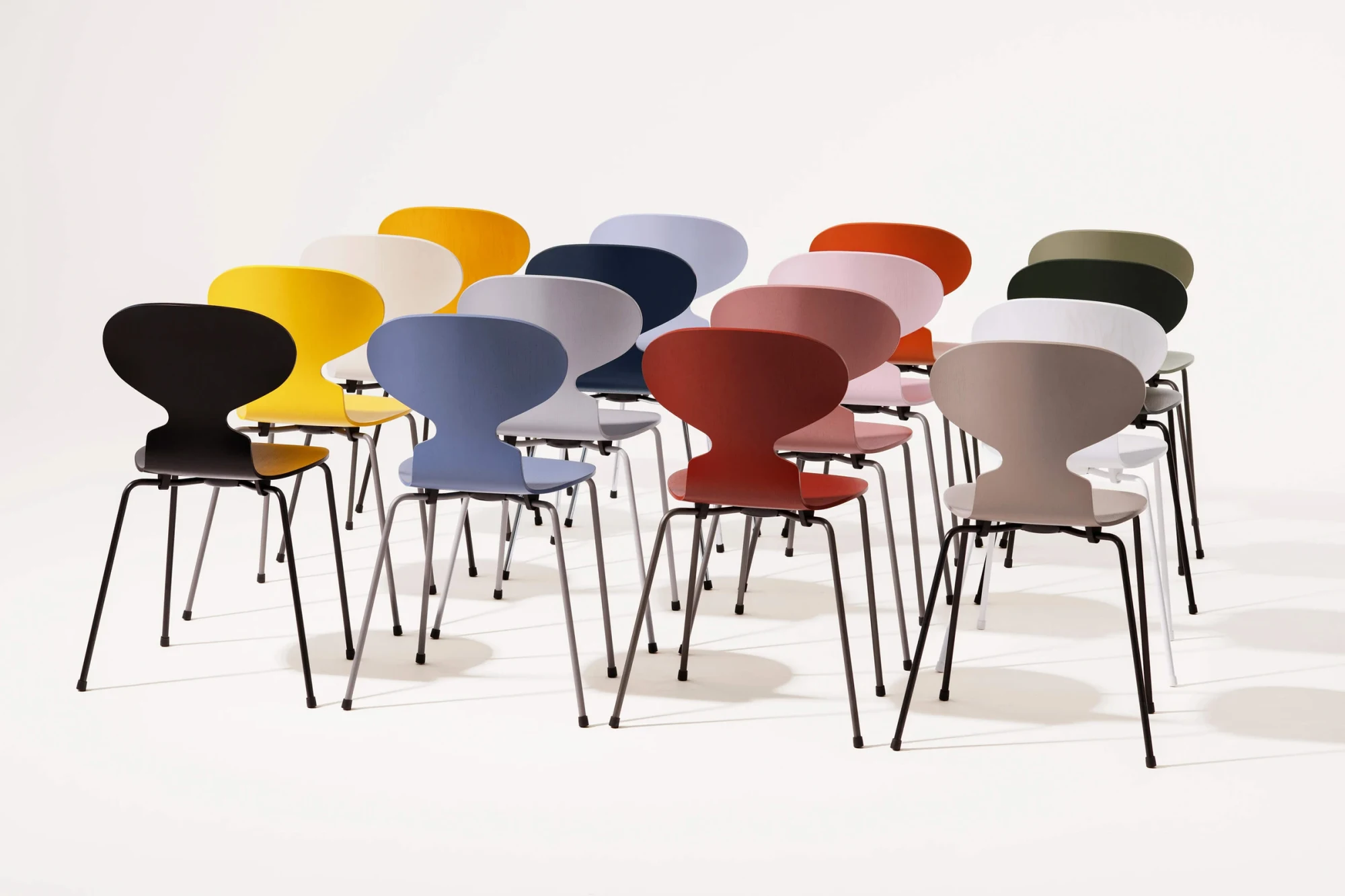
The Ant is Arne Jacobsen's stacking chair of 1952 for Fritz Hansen. The series page says it was created for the canteen of Novo Nordisk, as a single shell of laminated plywood on slim steel legs; Wikipedia adds that Novo, then Novo Industries, ordered 300 chairs and that this convinced Fritz Hansen to produce it. The Series 7 sheet names the Ant as the breakthrough of the partnership between Jacobsen and the company, which had begun in 1934.
Design Language
Wikipedia says the Danish name, Myren, comes from the chair's resemblance to an ant with its head raised, and that it was designed to be light, stable and easy to stack. The original had three plastic legs and a form-moulded laminated veneer seat; tubular steel replaced the plastic later. For Fritz Hansen the look is delicate and artful, "much like the curves of a musical instrument".
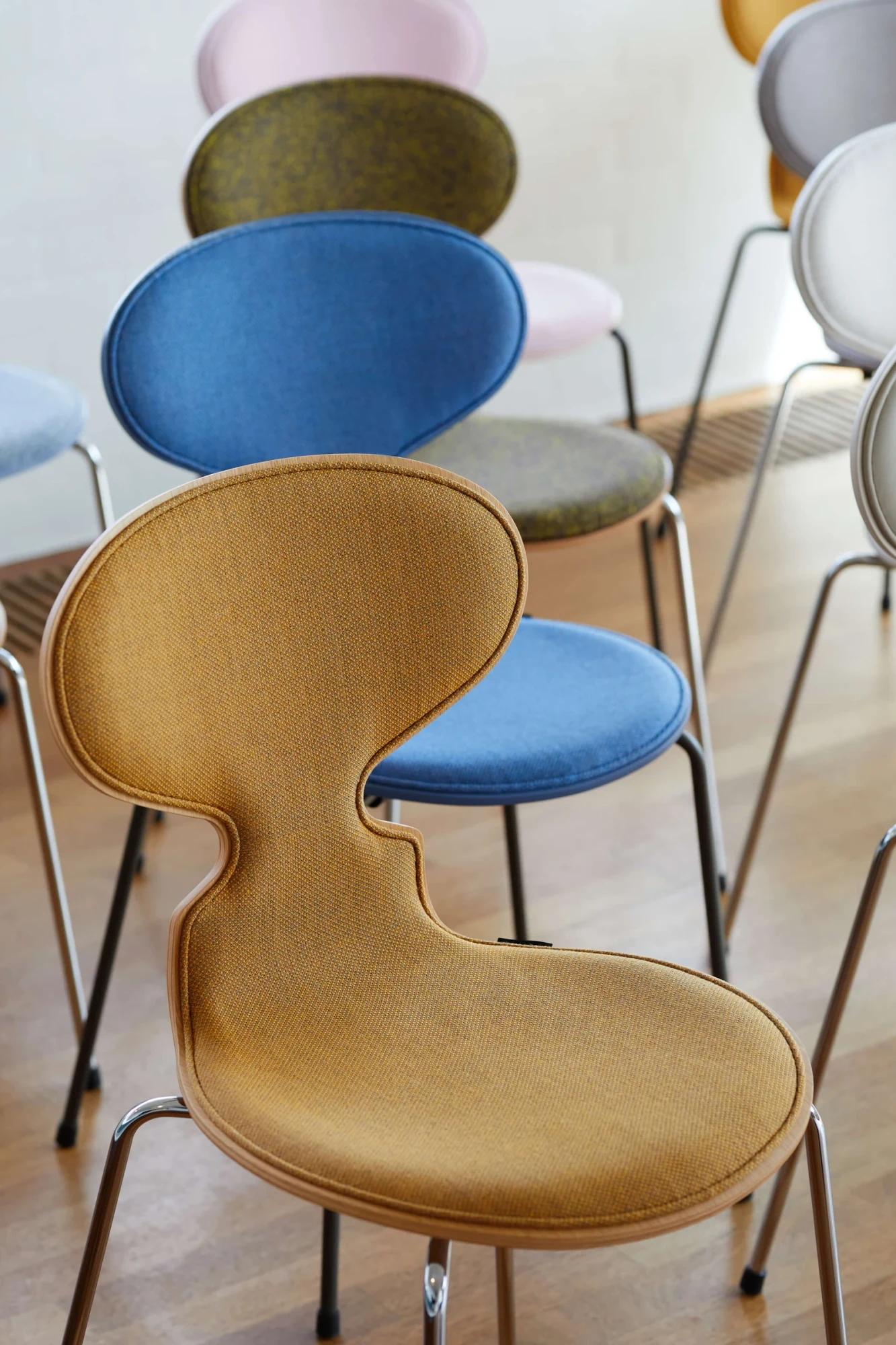 Image source: Fritz Hansen — Ant · © Fritz Hansen and the respective rights holders. Quoted to accompany INTEBEE's independent design commentary and research. · View official website ↗ · Image use & copyright policy
Key Pieces
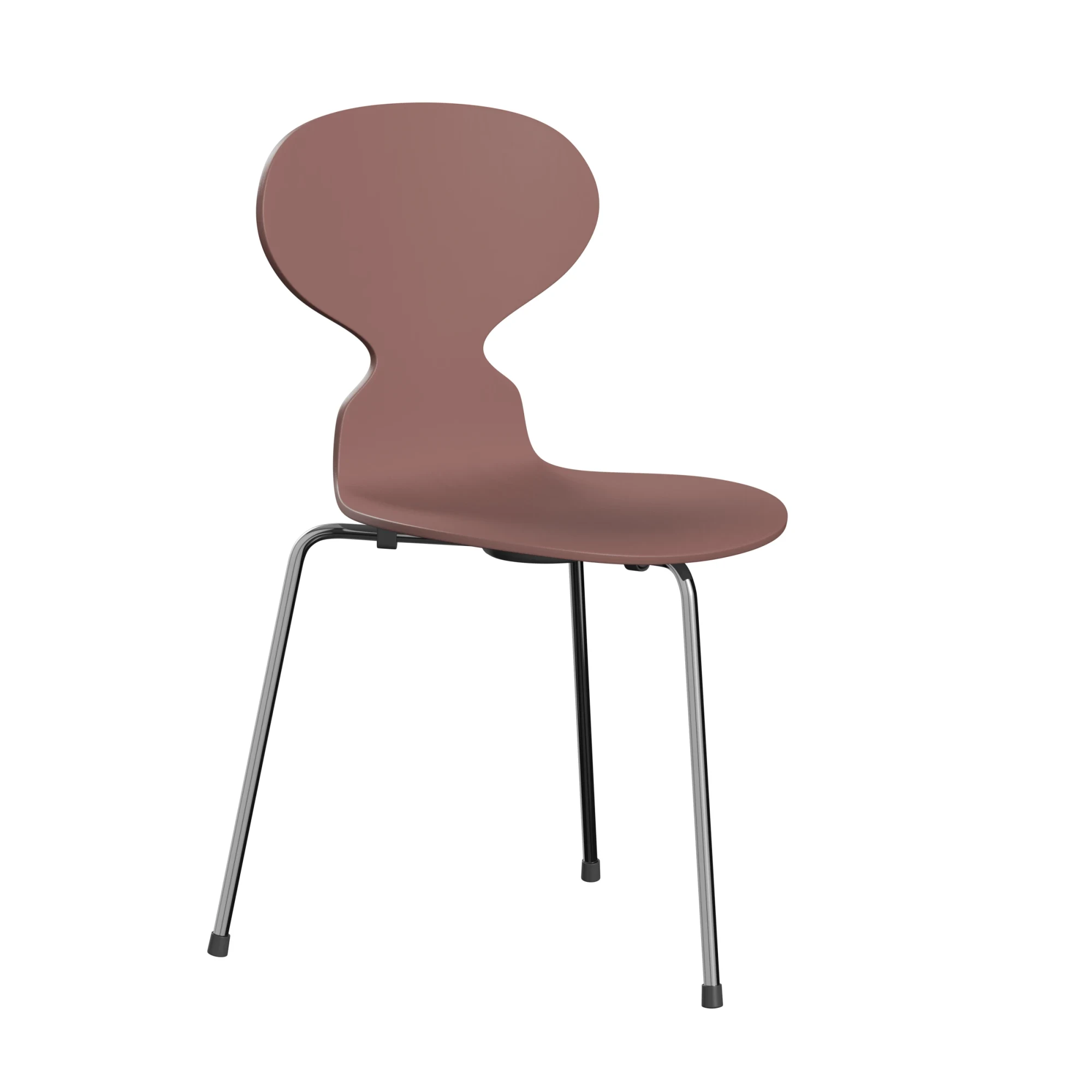
- Ant 3100 with three legs, launched in 1952 according to the product data
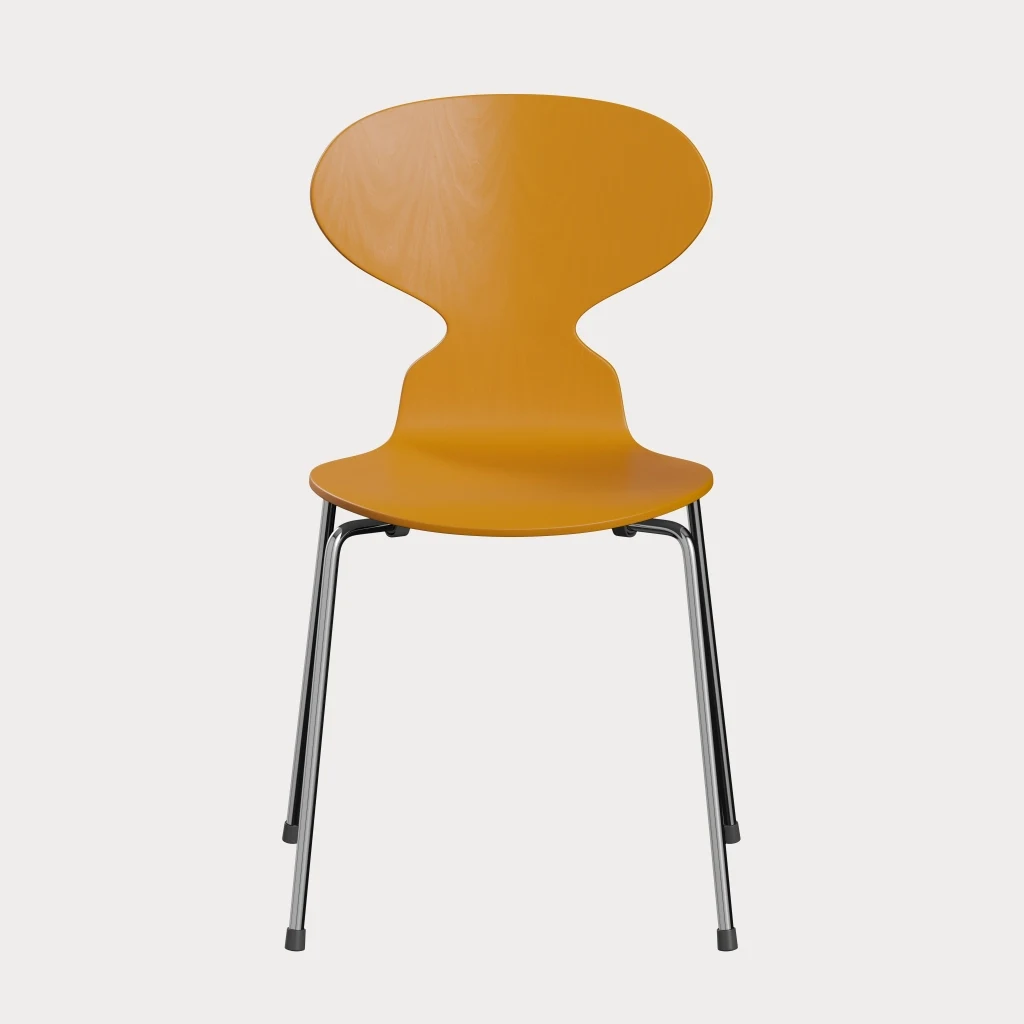
- Ant 3101 with four legs
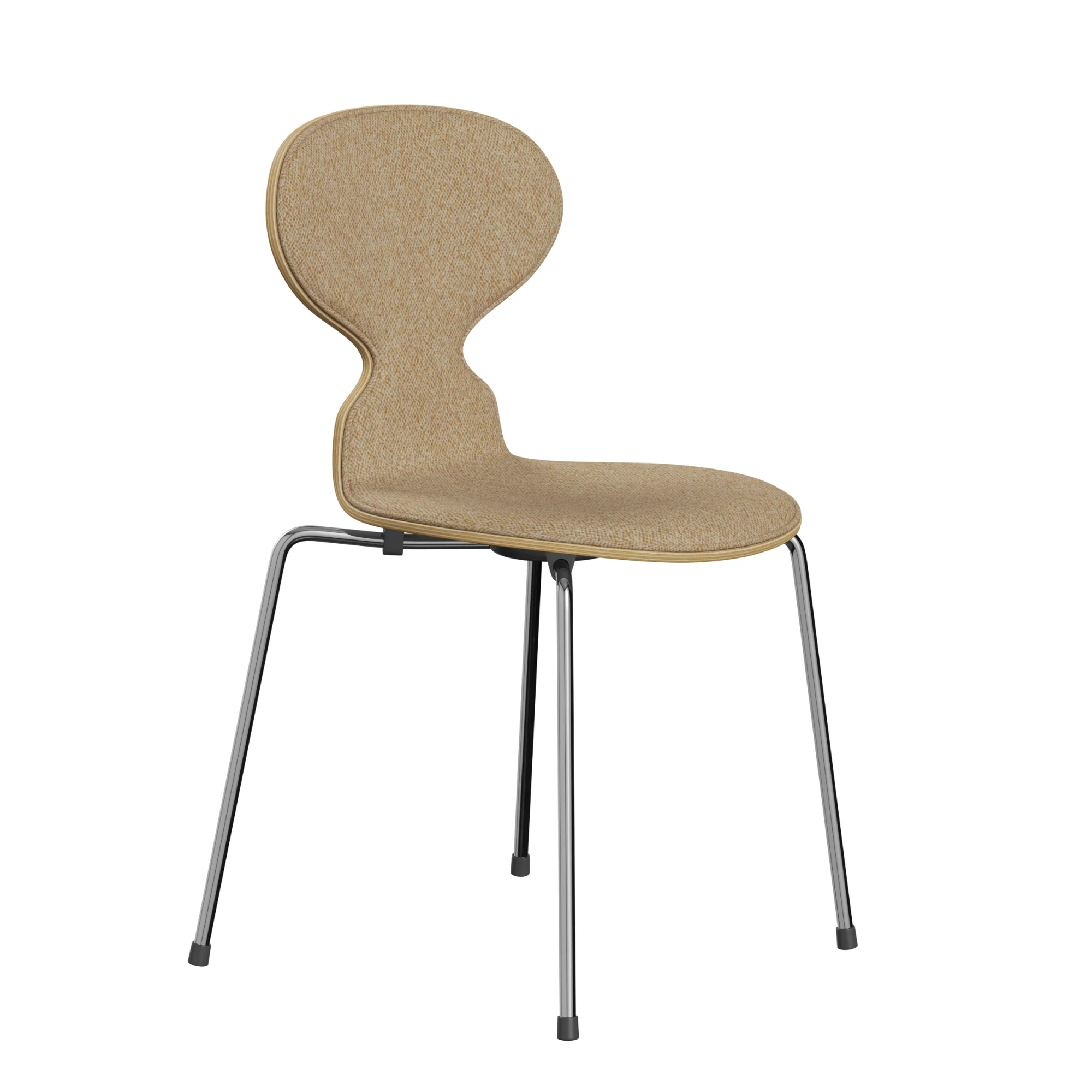
- Front-upholstered 3100 and 3101, with a choice of three or four chromed or powder-coated steel legs
- Ant Children's Chair 3101, marked NEW on the series page, with 2023 as launch year in the product data
Pieces in this collection
Specifying pieces from Ant for your design project?
INTEBEE is the FF&E specification platform for interior designers: spec sheets, finishes, floor plans and client-ready PDFs in one place.