
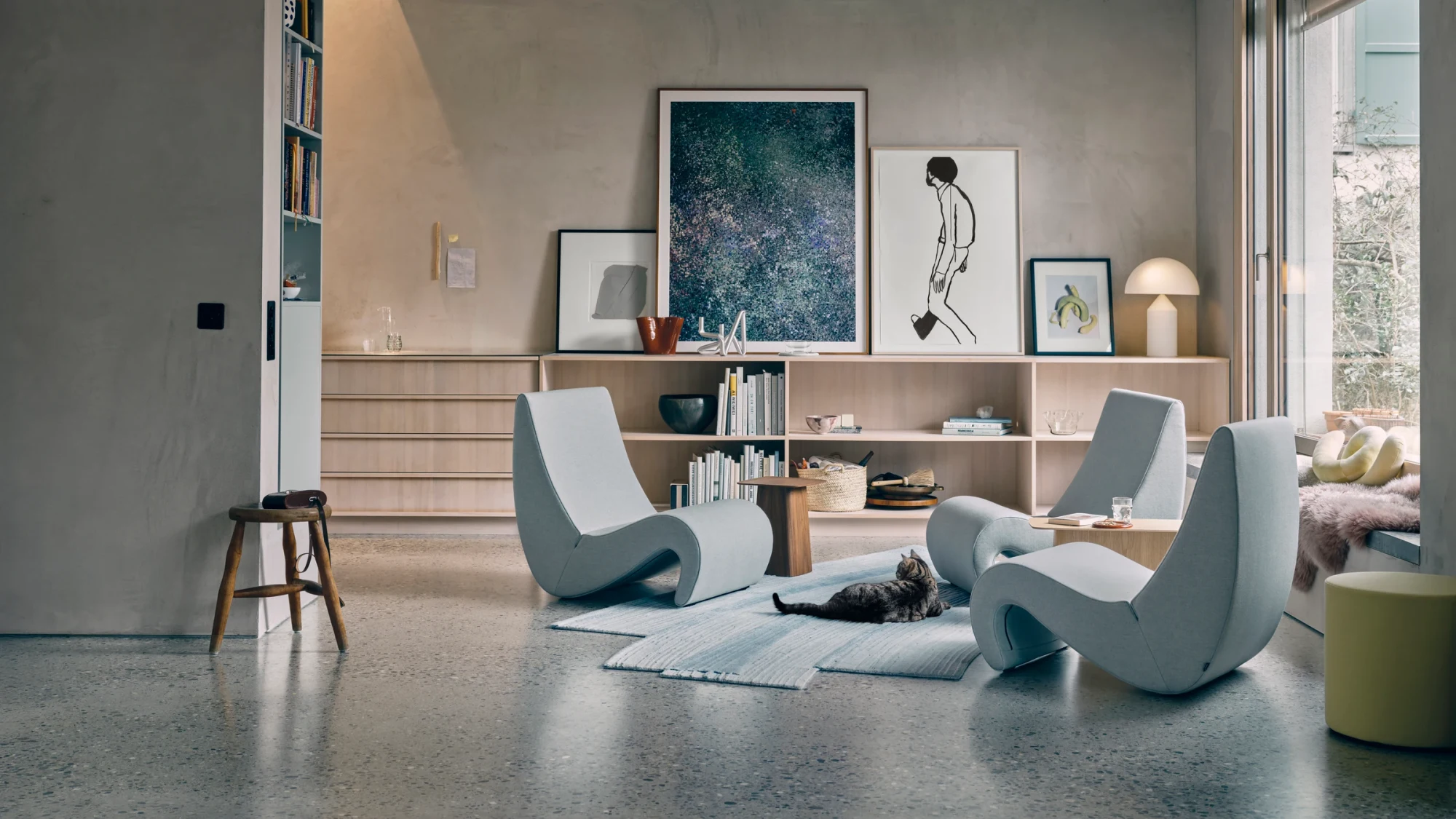


Collection Story
Origin
The Amoebe family is credited to Verner Panton and dated 1970. Vitra's family page says the chair was created in 1970 in several versions for Panton's installation "Visiona II", which it calls a bold, psychedelic-futuristic living environment staged on an exhibition ship at the Cologne Furniture Fair. Panton's own website describes the setting: from the end of the 1960s to the mid-1970s the chemical company Bayer rented a pleasure boat for every Cologne furniture fair and had a well-known designer turn it into a temporary showroom, mainly to promote synthetic products in home furnishings. Panton was commissioned twice; the 1970 "Visiona II" show presented the Fantasy Landscape.
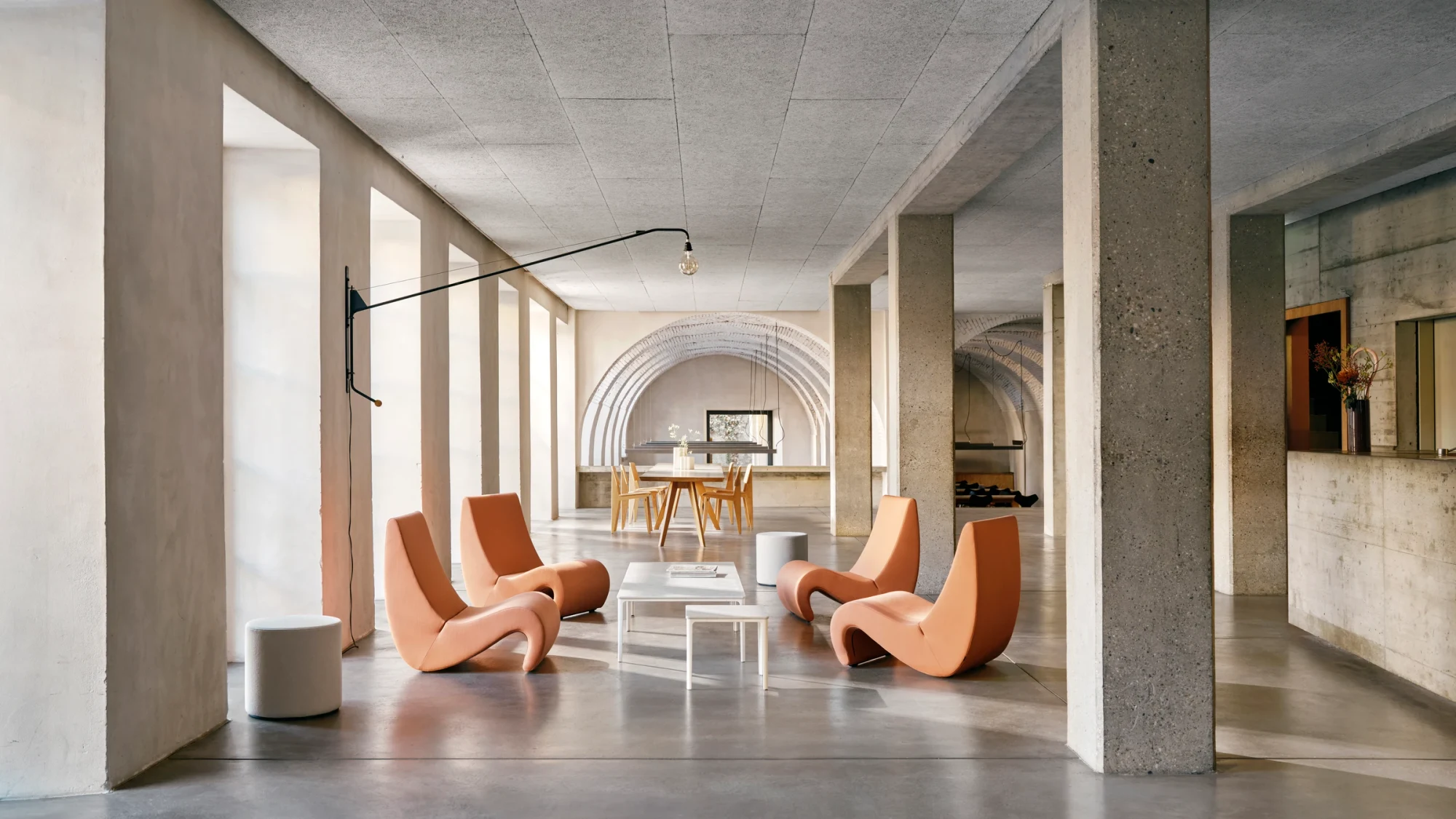
Design Language
Vitra says Amoebe was conceived as a low-slung lounge sculpture that embodies the free-spirited ethos of 1960s design. Seat and backrest form a sculptural unity, and the organic shape is inspired, as the name suggests, by single-celled organisms. The Highback version carries the backrest up and over the sitter's head; Vitra's sheet ties this canopy to feelings of shelter, seclusion and privacy. Vitra calls both chairs handcrafted and says their covers are removable and can be replaced or refitted by trained professionals.
Production
Panton's website lists the Amoebas under 1969 / 1970 as a small series. The low armchair was designed in two variants for the exhibition, with a plastic shell and integrated foam upholstery giving the structure. In 1970 the firm Hukla produced the small version in a slightly changed form without the plastic shell, and since 2006 and 2008 Vitra Home has made both shapes and sizes again.
Key Pieces
- Amoebe
- Amoebe Highback