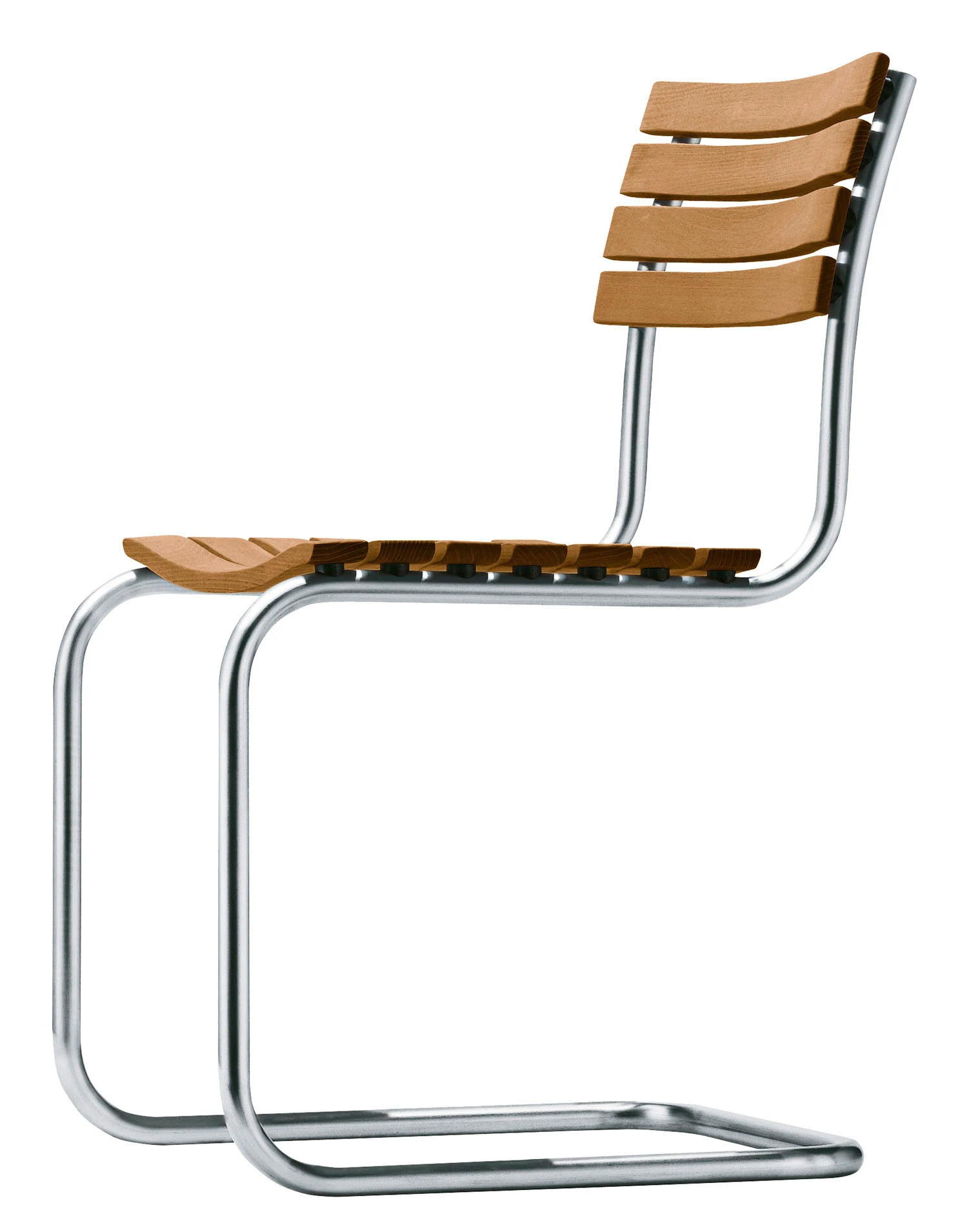
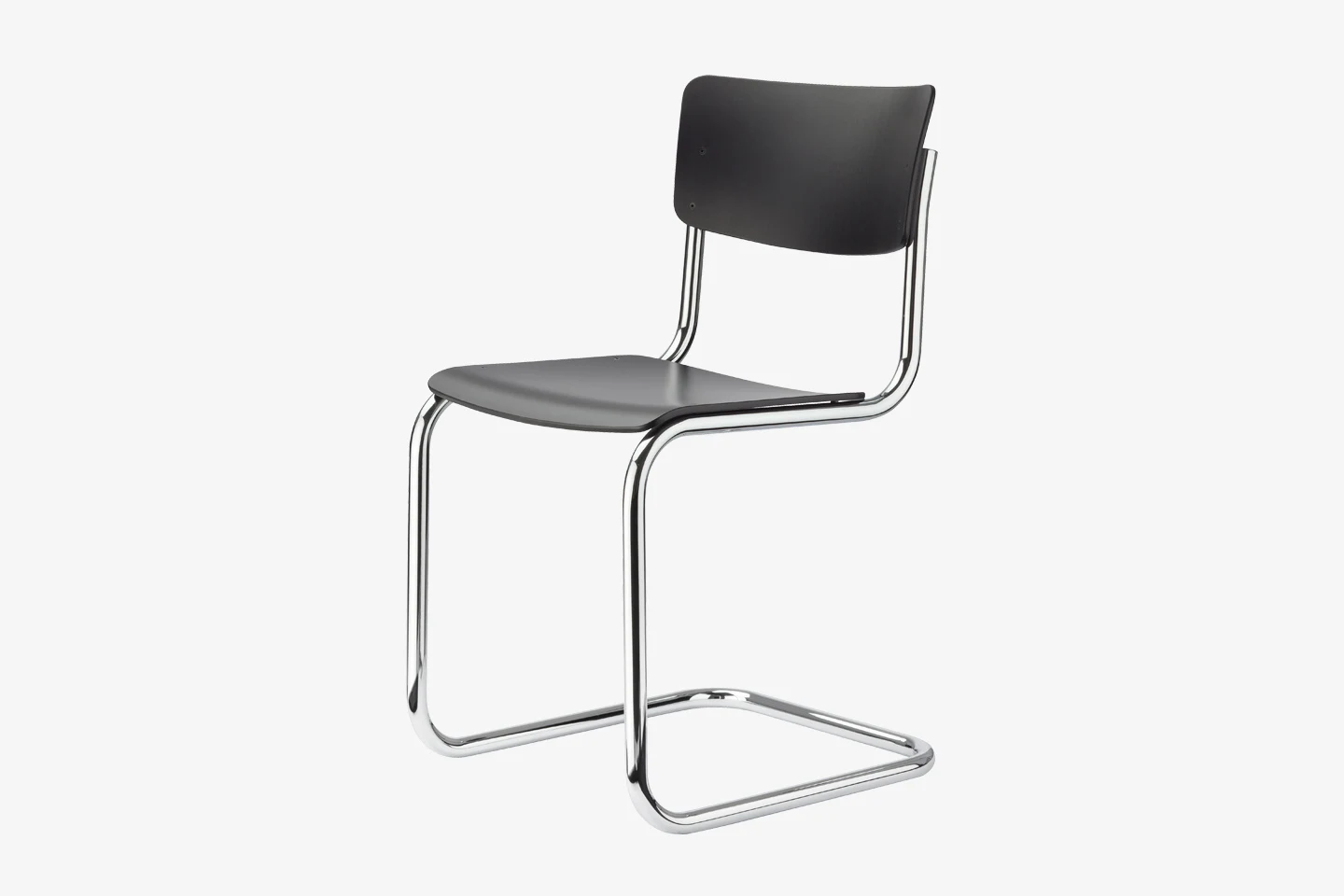
Image source: Thonet — S 33 / S 34 Cantilever Chair
© Thonet and the respective rights holders. Quoted to accompany INTEBEE's independent design commentary and research.
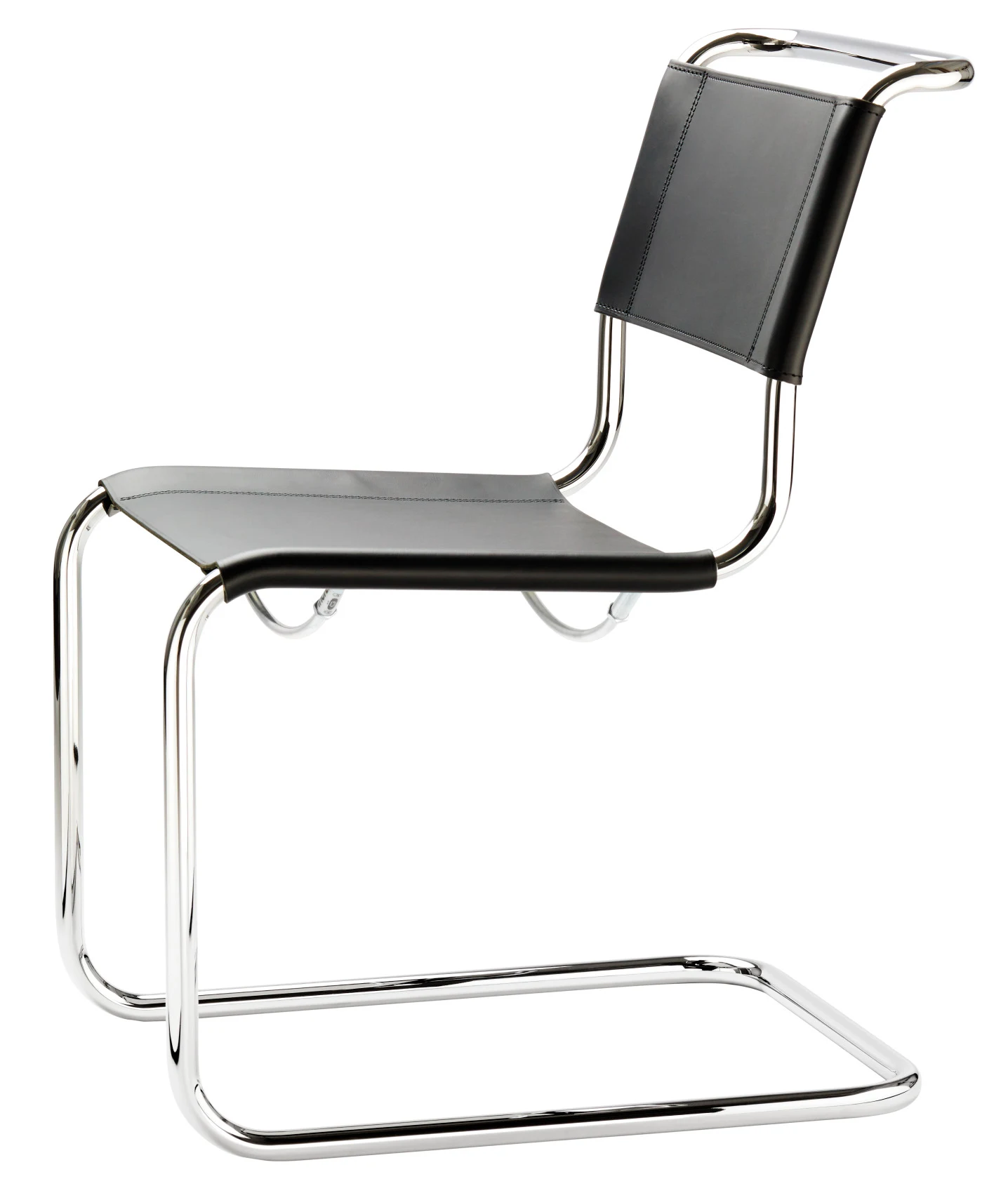
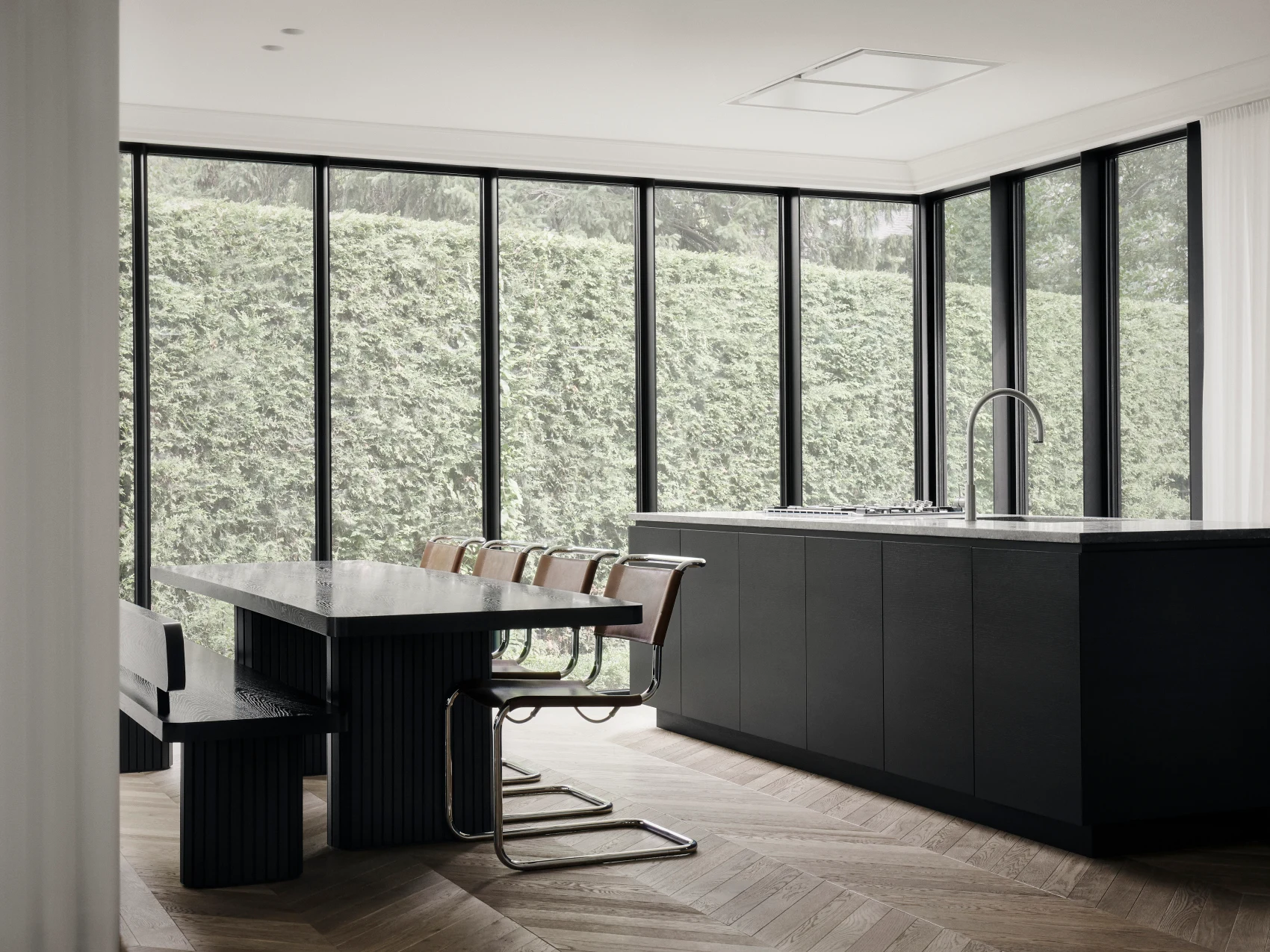
S 33 / S 34 Cantilever Chair
Mart Stam's armless cantilever chair of 1926, one of the first without rear legs.


500 × 840 × 640 mm
1926
Germany
Official product information
INTEBEE AI PUBLIC LIBRARY is an independent furniture design research and discovery platform. Product specifications, finishes, availability and other details may change. For current and definitive information, please refer to the manufacturer's official website.
Go to the official product pageSpecifying S 33 / S 34 Cantilever Chair for your design project?
INTEBEE is the FF&E specification platform for interior designers: spec sheets, finishes, floor plans and client-ready PDFs in one place.
Description
Overview
The S 33 is Mart Stam's cantilever side chair, listed on Thonet's page as S 33 N and credited to Mart Stam, 1926. It has no armrests; its sibling S 34 is the same chair with armrests. Thonet shows the S 33 in butt leather, fabric and synthetic mesh, and describes it together with the S 34 as one of the first cantilever chairs.
Construction
Thonet writes that only the tensile properties of cold-bent tubular steel make the flexible cantilever effect possible, and that the comfort comes from the springing of the tube, which makes sophisticated padding unnecessary. The frame is chrome-plated or coated; the brochure lists butt leather, buffalo leather, fabric or synthetic mesh for seat and back.
Specifications
- Dimensions (S 33): W 50 cm x D 64 cm x H 84 cm
- Seat height: 46 cm
- Frame: chrome-plated steel tube, or deep black / pure white coatings
- Seat and back: butt leather, buffalo leather, fabric or synthetic mesh
- Made in: Frankenberg, Germany (Thonet brochure)
Story
From gas pipes to a chair
The brochure traces the chair back to 1925, when Mart Stam began experimenting with thin gas pipes and first joined them with the flanged fittings plumbers use. His next step was a chair that no longer stood on four legs. Thonet notes that at that time Stam was interested not yet in the springing effect of cold-bent steel but in a plain, unornamented form that fitted the modern buildings of the day.
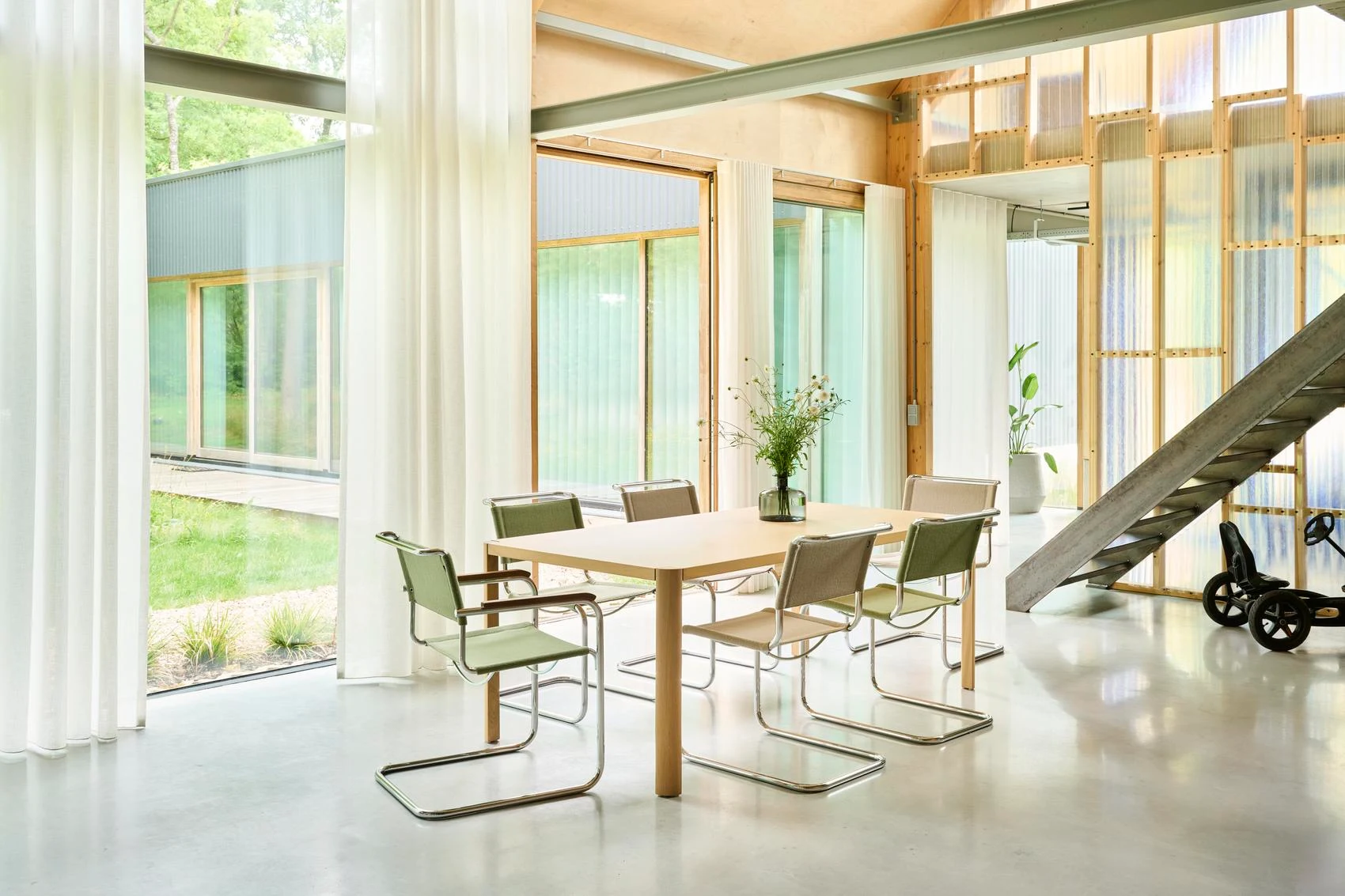 Image source: Thonet — S 33 / S 34 Cantilever Chair · © Thonet and the respective rights holders. Quoted to accompany INTEBEE's independent design commentary and research. · View official product page ↗ · Image use & copyright policy
Stuttgart, 1927
Stam presented his chair with no rear legs when the Weissenhof project opened in Stuttgart in 1927, and the S 33 and the S 34 caused a sensation at the Werkbund exhibition there. The artist Kurt Schwitters, quoted by Thonet, wrote in 1927 after seeing the first cantilever chairs: "Why four legs if two will suffice?" Thonet's page dates the S 33 design to 1926 and calls the pair part of a revolutionary concept of a new attitude towards architecture and life.