
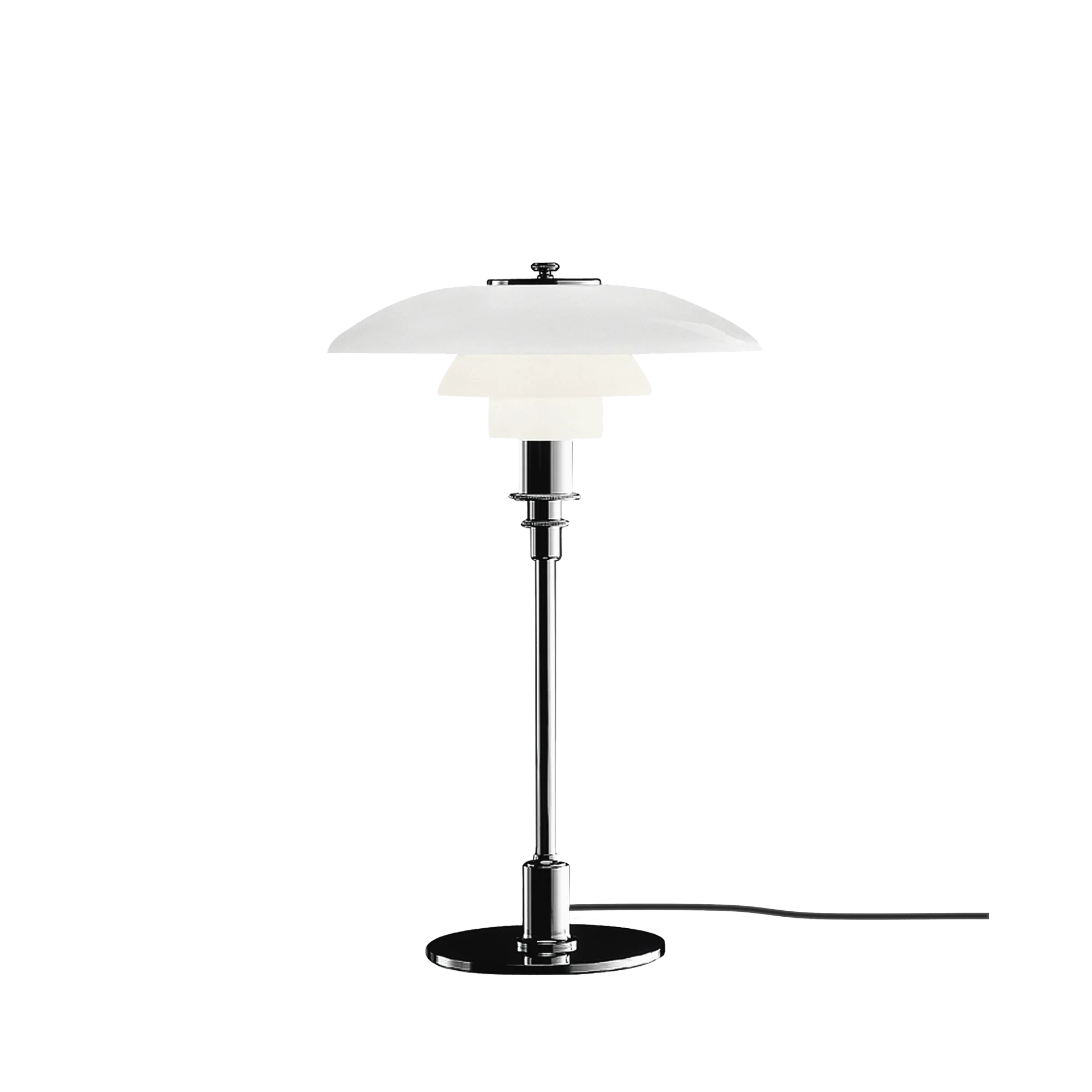
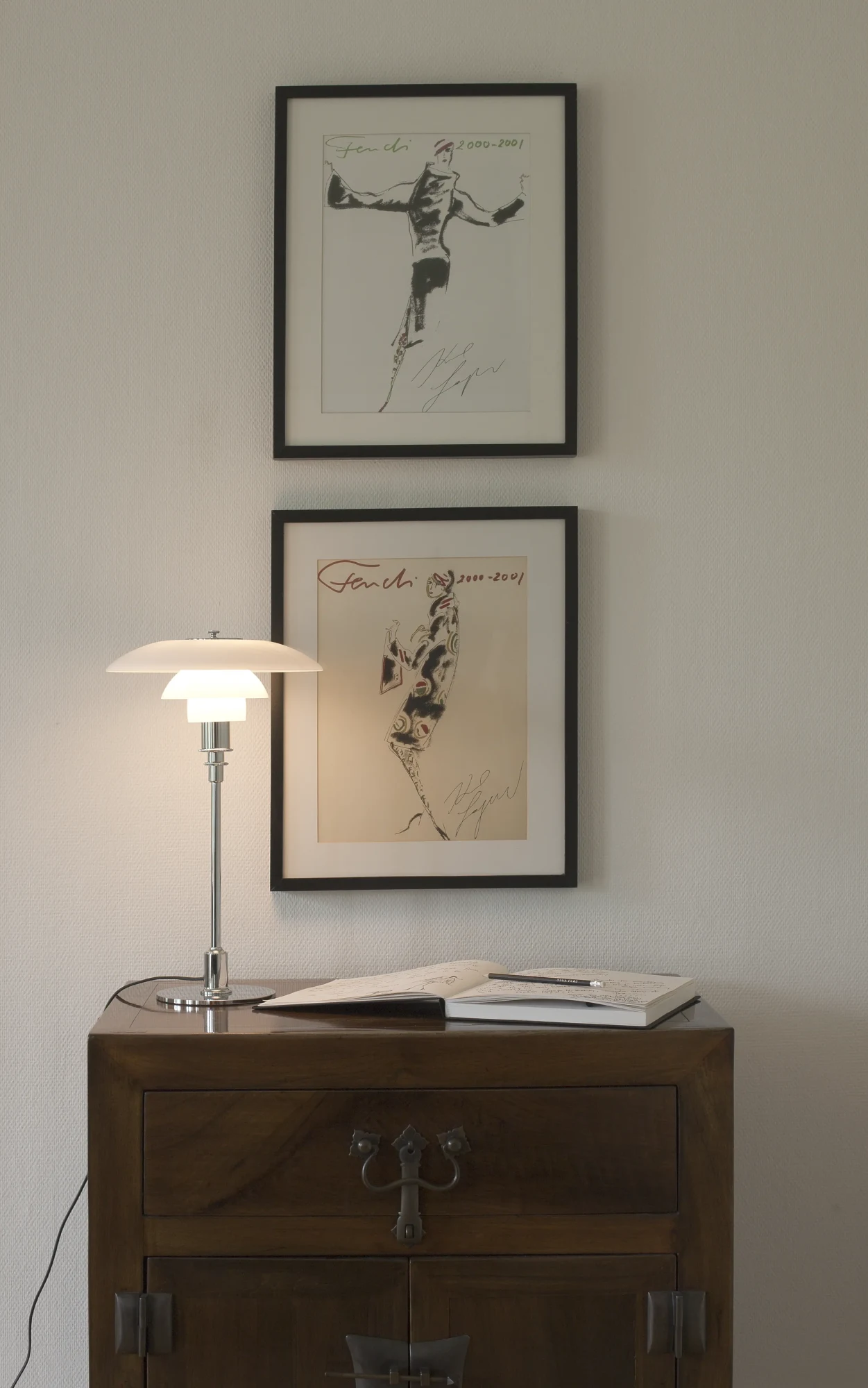
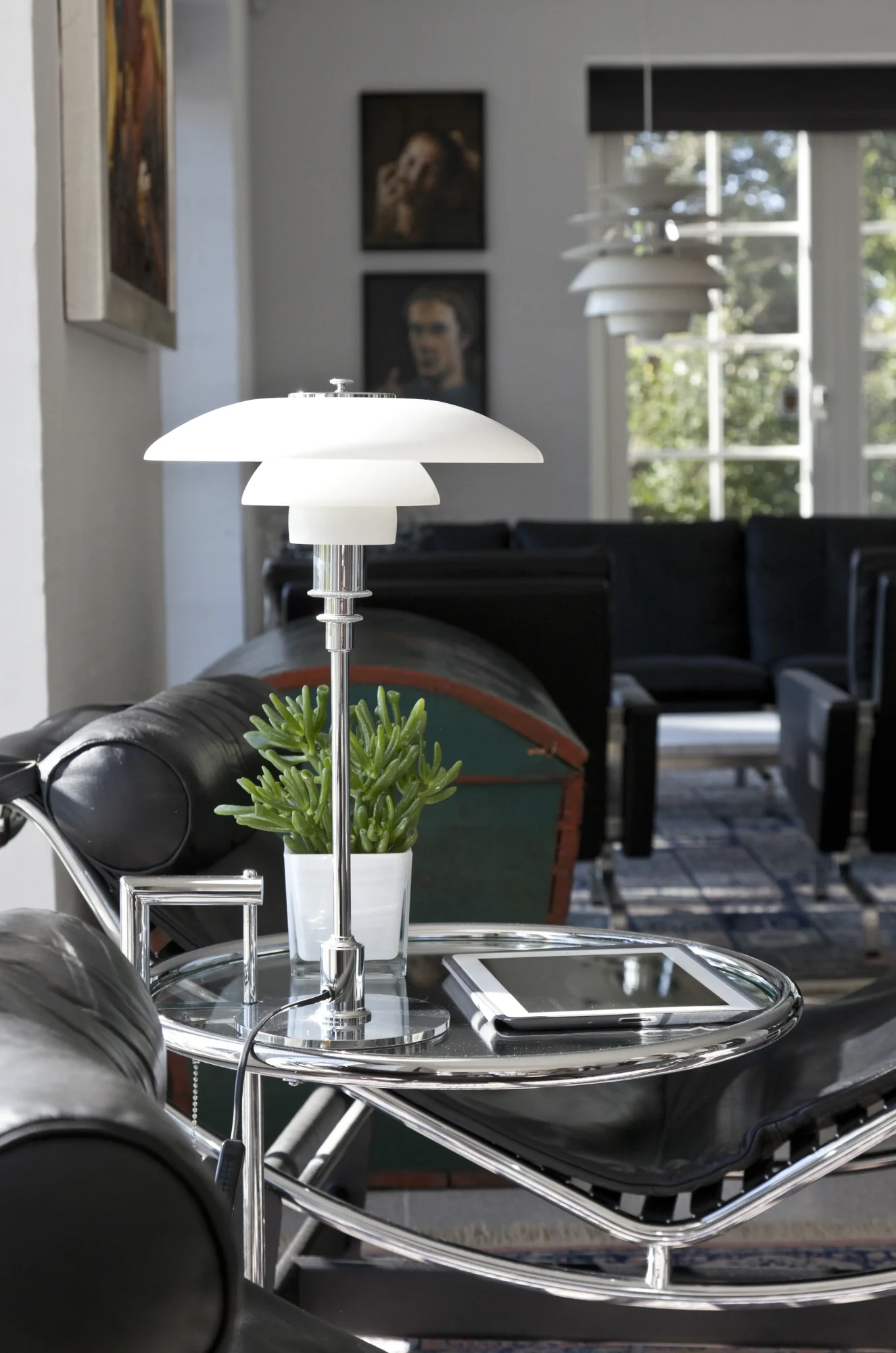
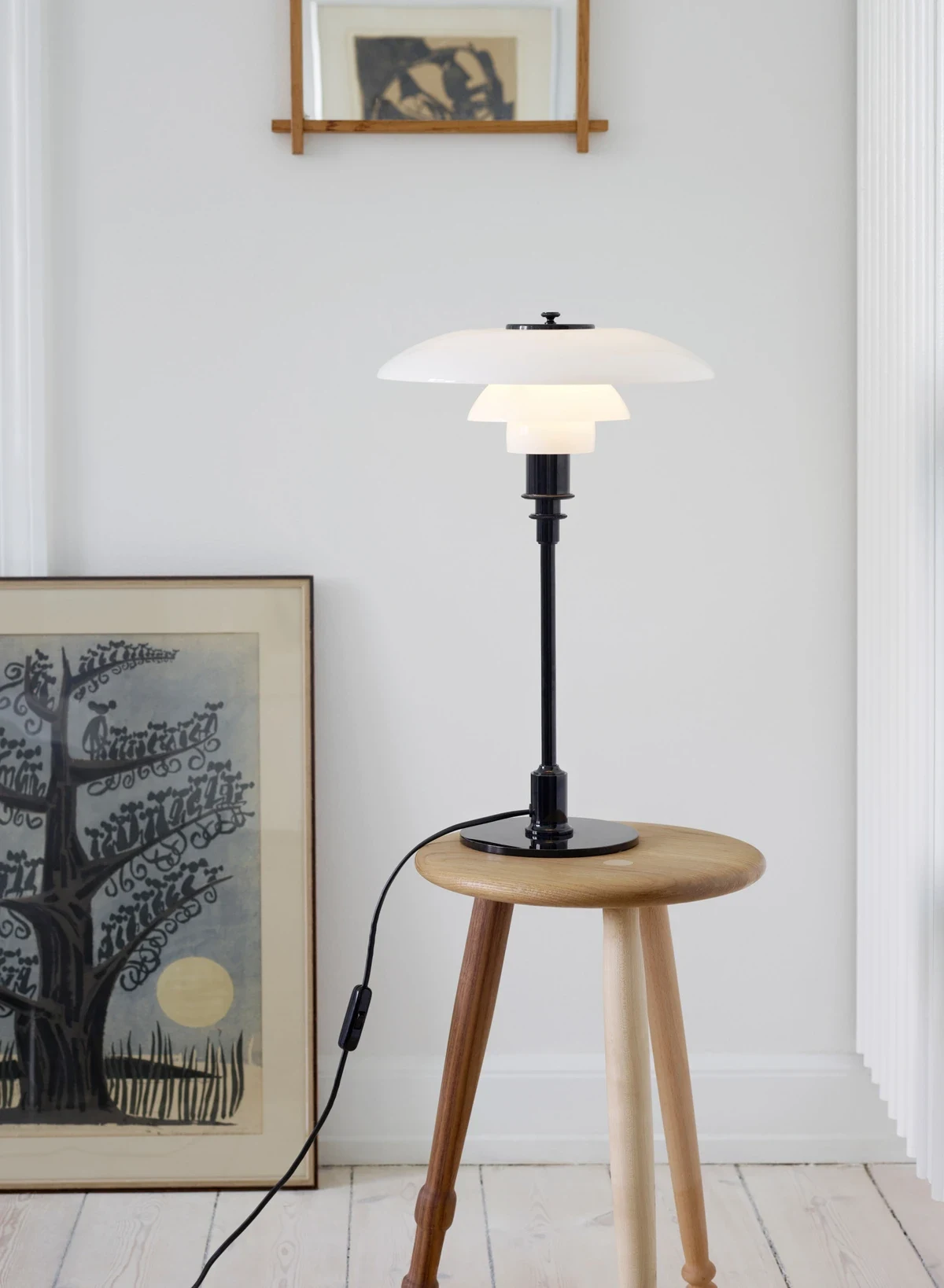
PH 3/2 Table Lamp
Poul Henningsen's three-shade table lamp in mouth-blown opal glass, first introduced in 1925


285 × 470 × 285 mm
Source: product page text — High Lustre Chrome Plated (E14, European version, 90352-5744162801-01): shade Ø285 mm, height 470 mm
1925
Description
Overview
The PH 3/2 Table Lamp is credited to Poul Henningsen and made by Louis Poulsen; the page says it was first introduced in 1925. It is based on his three-shade system, created in 1925 to shape excellent non-glare lighting. The number refers to the shades: the page describes a top shade of approximately 30 cm with the lower shades from the 2/2 version.
Construction
- Shades: mouth-blown three-layered opal glass, glossy on top and sandblasted matt on the underside, which gives a soft and diffused light distribution
- Top plate, body and base: aluminium, metallised or high lustre chrome plated
- The page says each lamp is partly handmade in Denmark
Specifications
- Size: Ø 285 × H 470 mm (High Lustre Chrome Plated, European version)
- Light source: 1 × 40 W E14 (not included); 254 lm
- Protection: IP20, electric shock protection II without ground
- Mounting: 3 m cord with plug and a Louis Poulsen on/off switch
- Finishes: Brass Metallised, Black Metallised, High Lustre Chrome Plated; glossy colour editions Pale Rose, beige, burgundy, deep green and deep blue
Story
The three-shade system
The page dates Henningsen's three-shade system to 1925, created to shape excellent non-glare lighting, and says the first lamp using the multi-shade system was made with Louis Poulsen for the Paris exhibition that same year, where the 'Paris Lamp' won gold. Henningsen's approach to light was scientific: he used the logarithmic spiral as the foundation, and the three shades, with the dispersed reflection through the glass, curb glare and shadow.
Top shade and bulb
For the PH 3/2 Table, the page describes a top shade of approximately 30 cm and says the lower shades are the ones from the 2/2 version. A note on the page says the size of the three shades is adjusted for optimum performance and comfort, and that the bulb should always stay discreetly within the middle shade to avoid glare and give optimal light distribution to the top shade.
More by Poul Henningsen
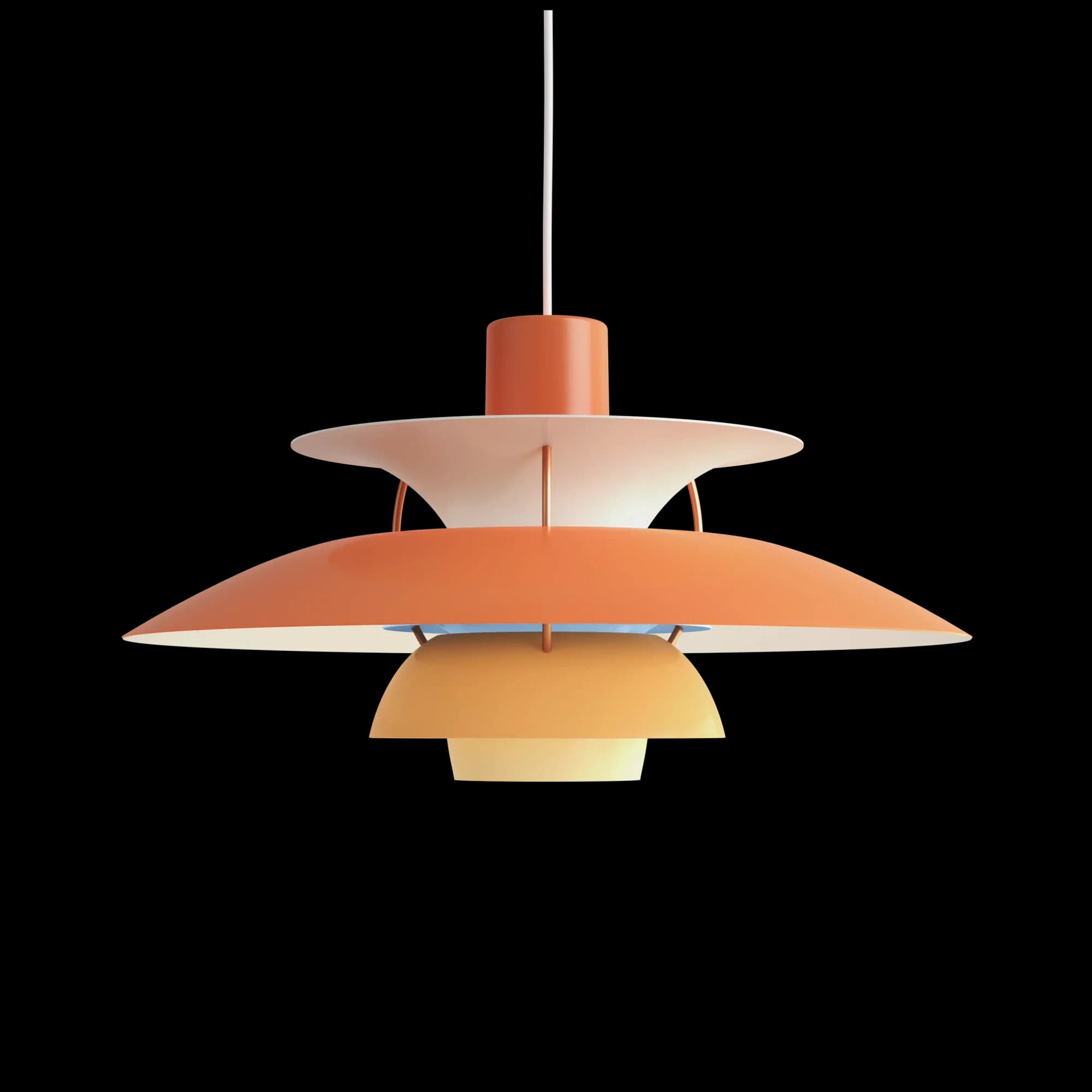
PH 5 Pendant
Poul Henningsen's PH 5 pendant (1958): three-shade system for soft, completely glare-free light
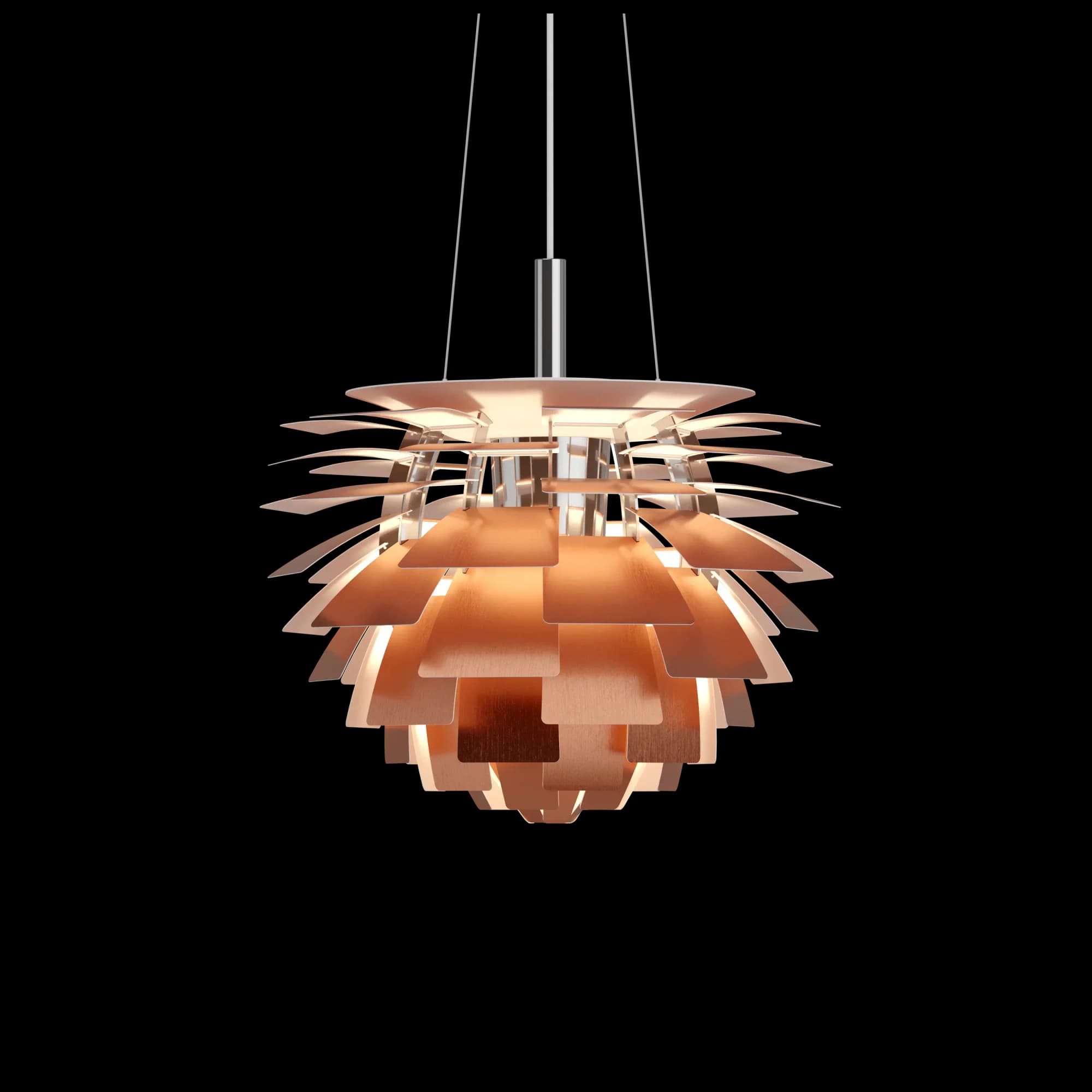
PH Artichoke
PH Artichoke by Poul Henningsen (1958): 72 leaves, glare-free light, for Langelinie Pavillonen
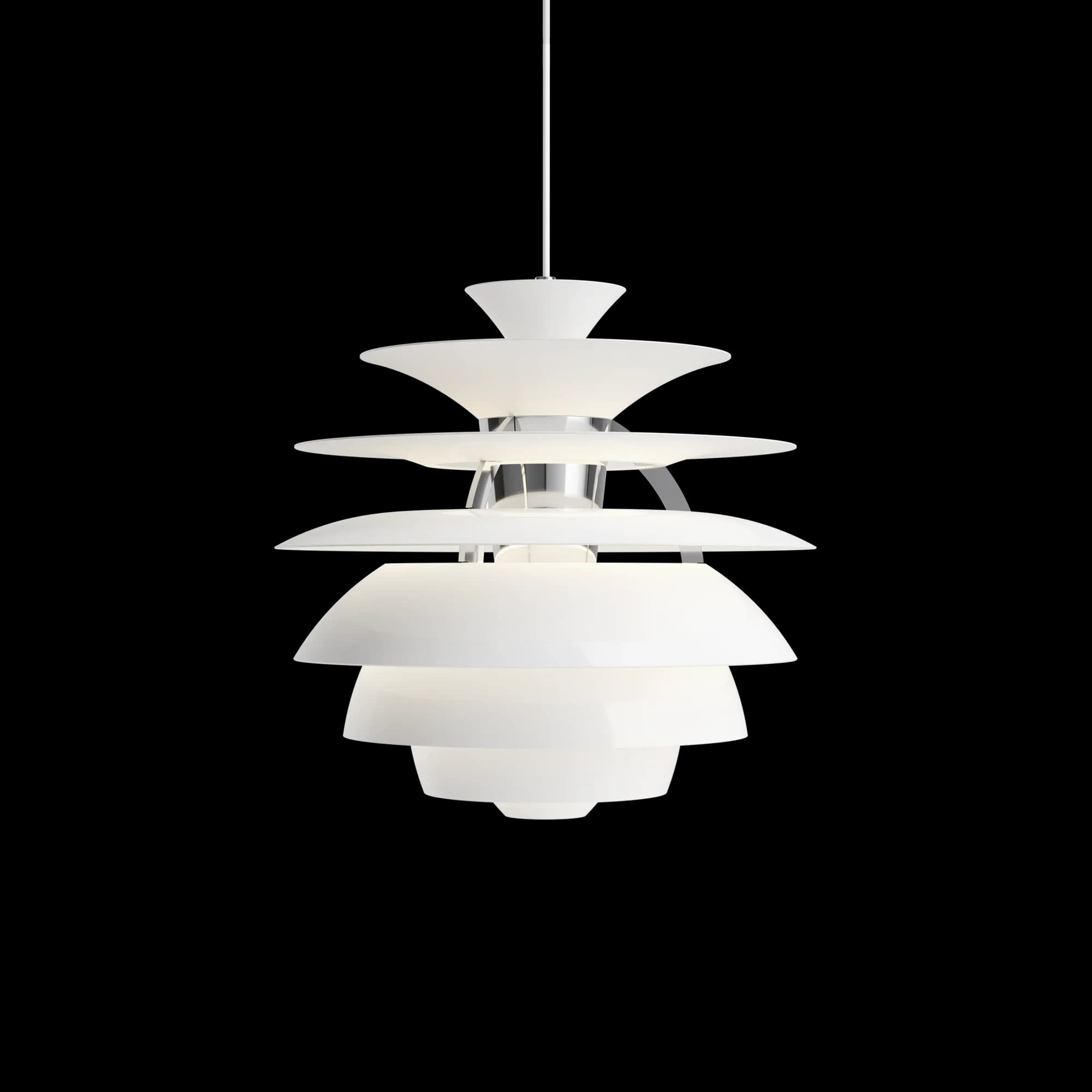
PH Snowball
Poul Henningsen's PH Snowball (1958): concave rings for spherical, 100% glare-free light