
Image source: Carl Hansen & Søn — OW224 Rungstedlund Dining Table
© Carl Hansen & Søn and the respective rights holders. Quoted to accompany INTEBEE's independent design commentary and research.
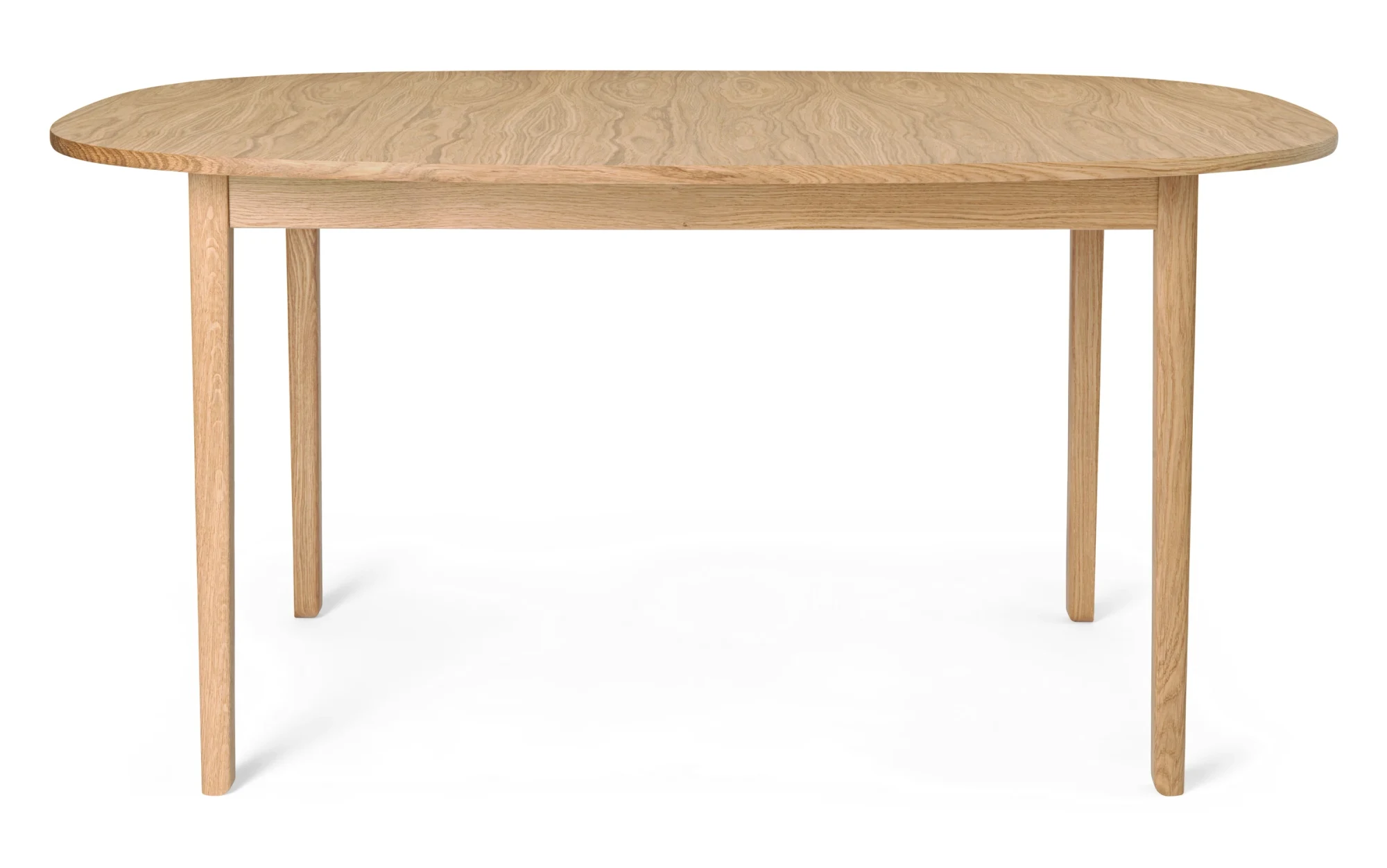
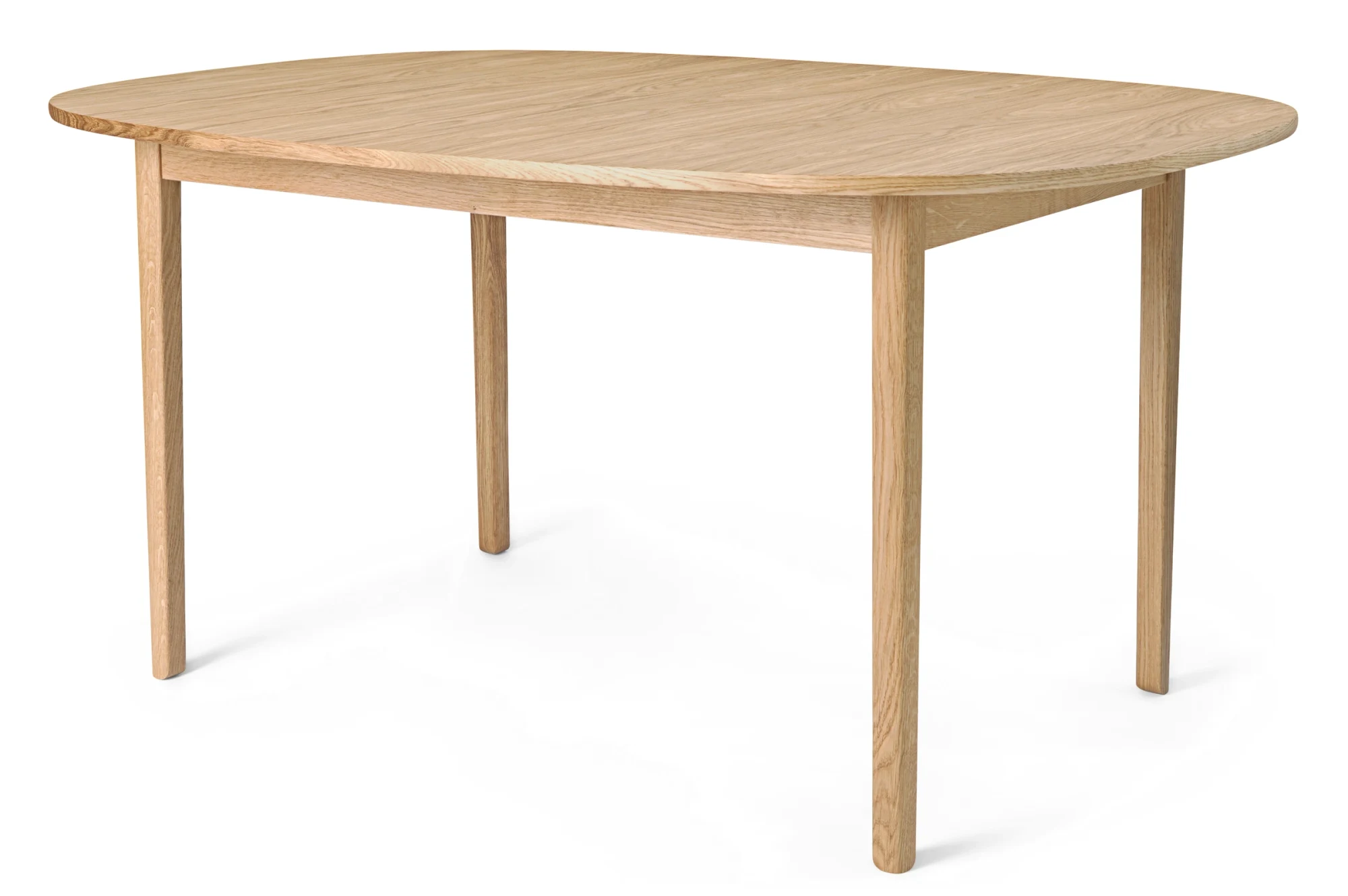
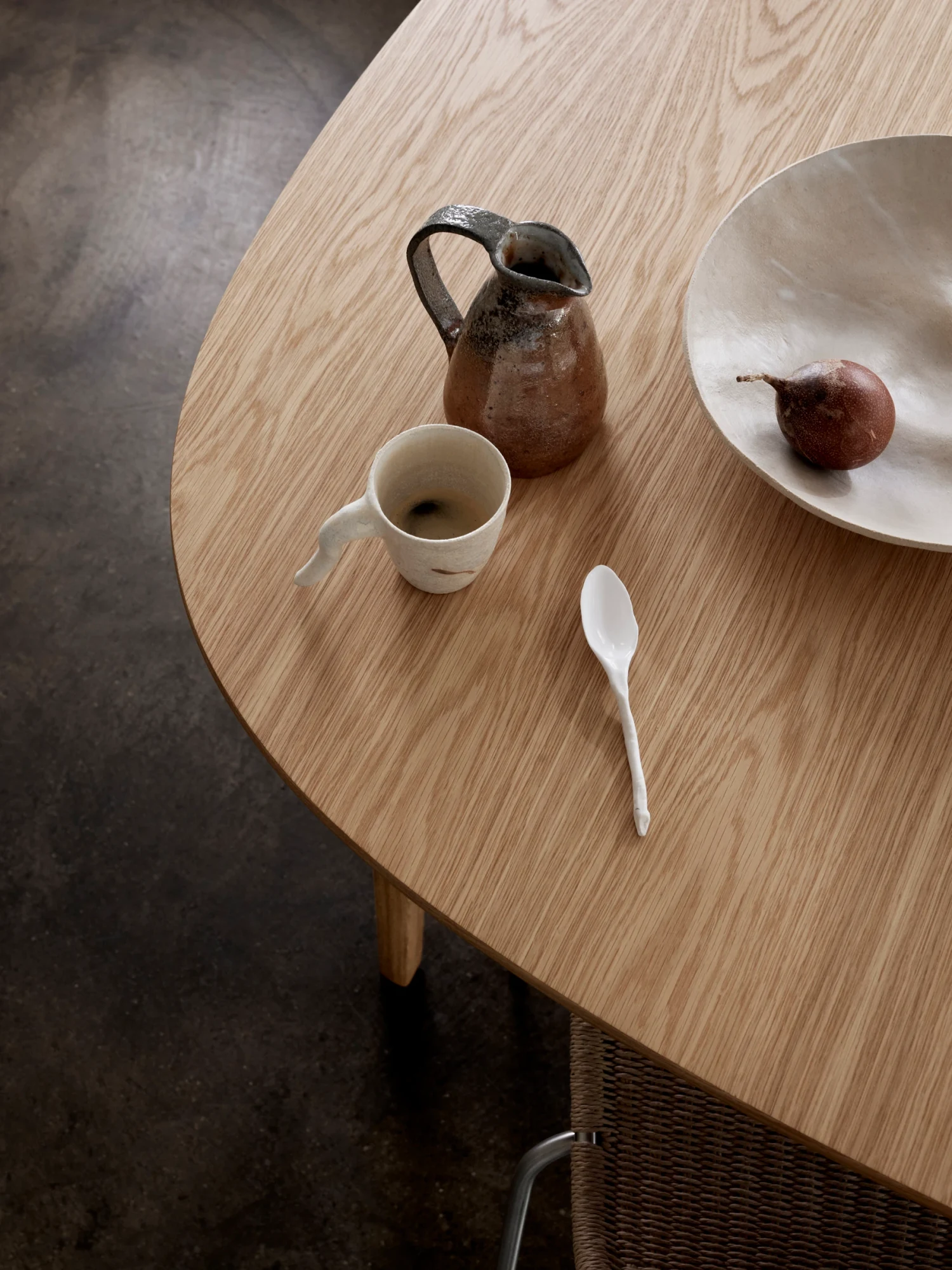
OW224 Rungstedlund Dining Table
Ole Wanscher's elliptical OW224 Rungstedlund table in bookmatched oak veneer, 1962


1450 × 720 mm
1962
Approx. $4,100 (reference price; varies by region and retailer)
Official product information
INTEBEE AI PUBLIC LIBRARY is an independent furniture design research and discovery platform. Product specifications, finishes, availability and other details may change. For current and definitive information, please refer to the manufacturer's official website.
Go to the official product pageSpecifying OW224 Rungstedlund Dining Table for your design project?
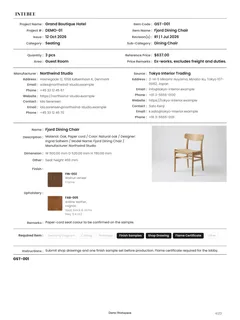
INTEBEE is the FF&E specification platform for interior designers: spec sheets, finishes, floor plans and client-ready PDFs in one place.
Description
Overview
The OW224 Rungstedlund Dining Table is a sculptural elliptical table that Ole Wanscher designed in 1962 for Rungstedlund, today a museum. Its top is bookmatched oak veneer, and the table is extendable; the extension leaves are sold separately.
Construction
- Top: softly curved, in bookmatched oak veneer
- Legs: square, with a subtle slope on the inside and rounded on the outside
- Extension: leaves in oak, or in grey or black MDF
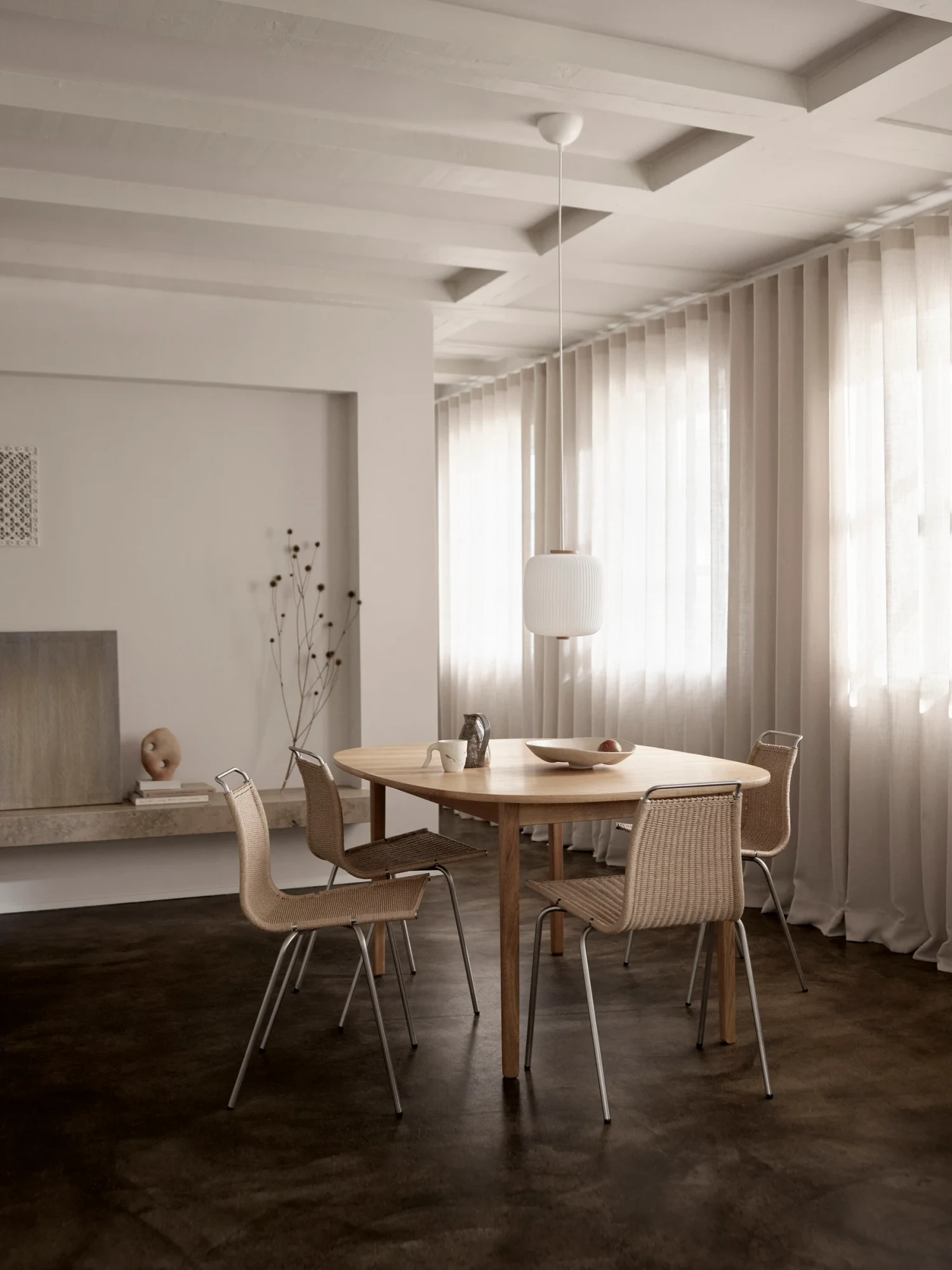 Image source: Carl Hansen & Søn — OW224 Rungstedlund Dining Table · © Carl Hansen & Søn and the respective rights holders. Quoted to accompany INTEBEE's independent design commentary and research. · View official product page ↗ · Image use & copyright policy
Specifications
- Largest drawing values, not labelled with axes: 145 cm (top view) and 72 cm (vertical); no depth value is printed
Story
Made for Rungstedlund
The page says the table was originally intended for Rungstedlund, which today holds a museum; the German shop page, translated here, names it as the Karen Blixen Museum.
Eighteenth-century influence
Carl Hansen & Søn describes the table as showing Wanscher's admiration for 18th-century English furniture, visible in its softly curved silhouette. It calls the extendable table a timeless solution for flexible dining.
More by Ole Wanscher
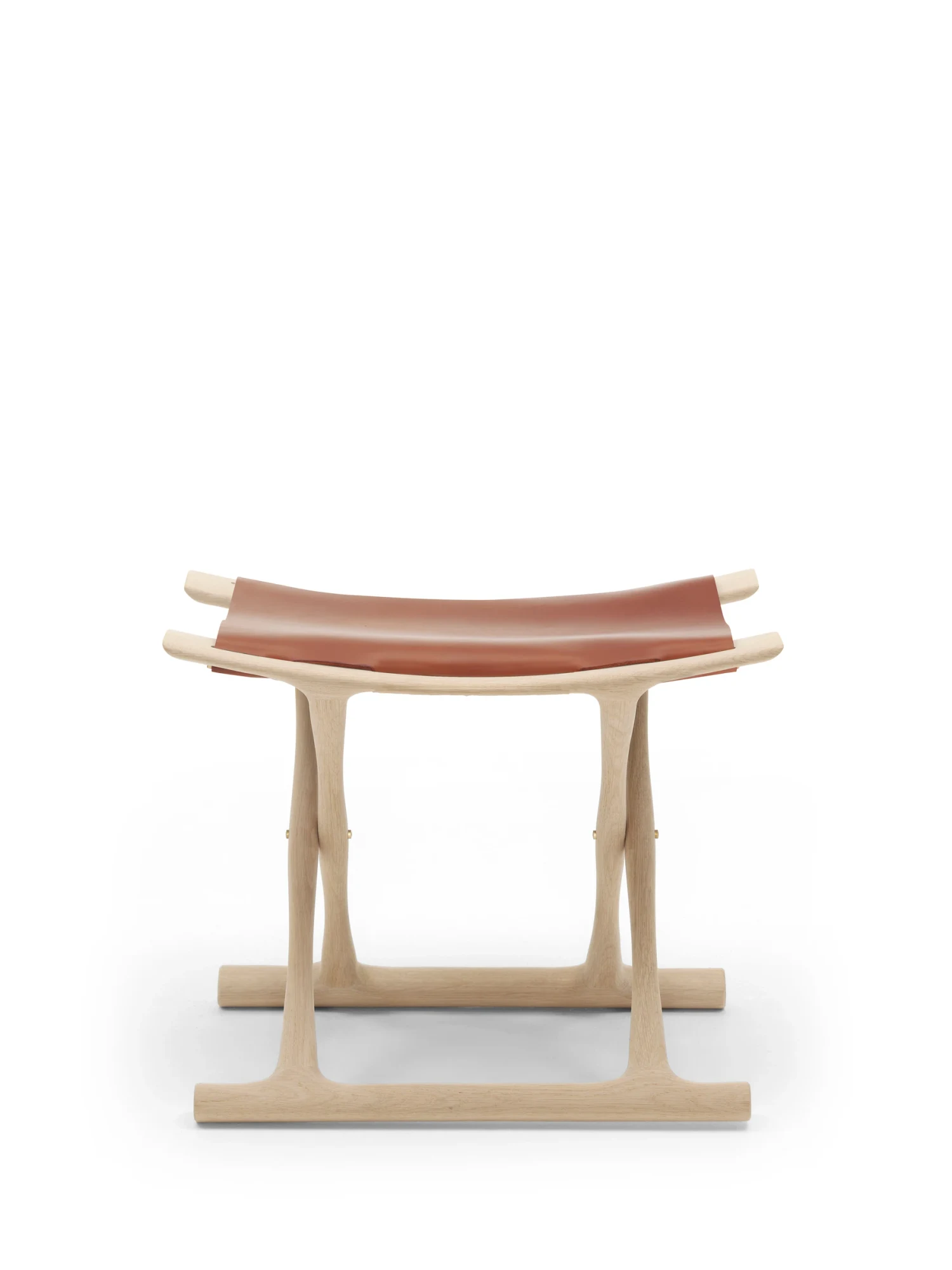
OW2000 Egyptian Folding Stool
Ole Wanscher's OW2000 Egyptian Folding Stool, inspired by Temple of Thebes furniture
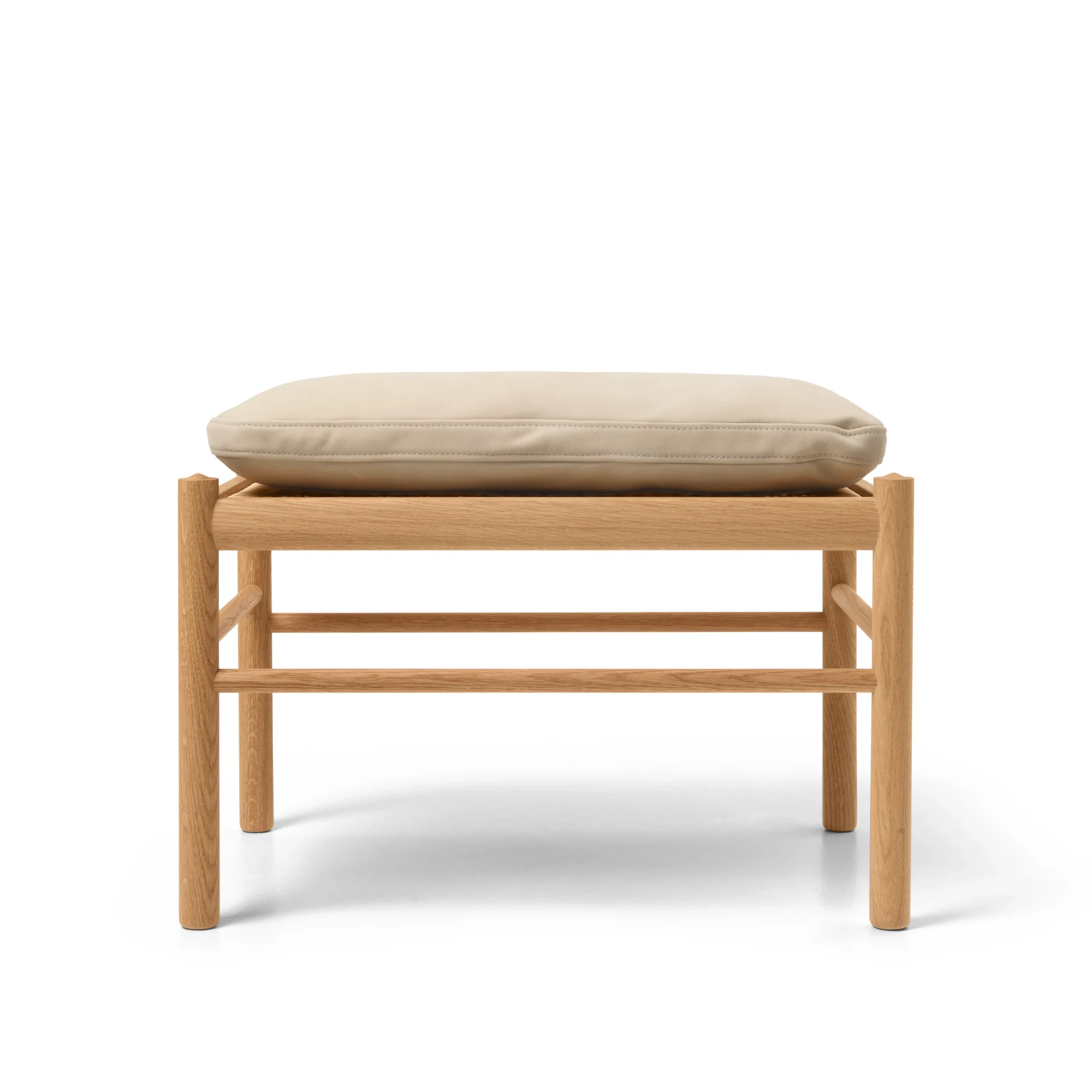
OW149F Colonial Footstool
Ole Wanscher's light OW149F Colonial Footstool with a hand-woven cane seat
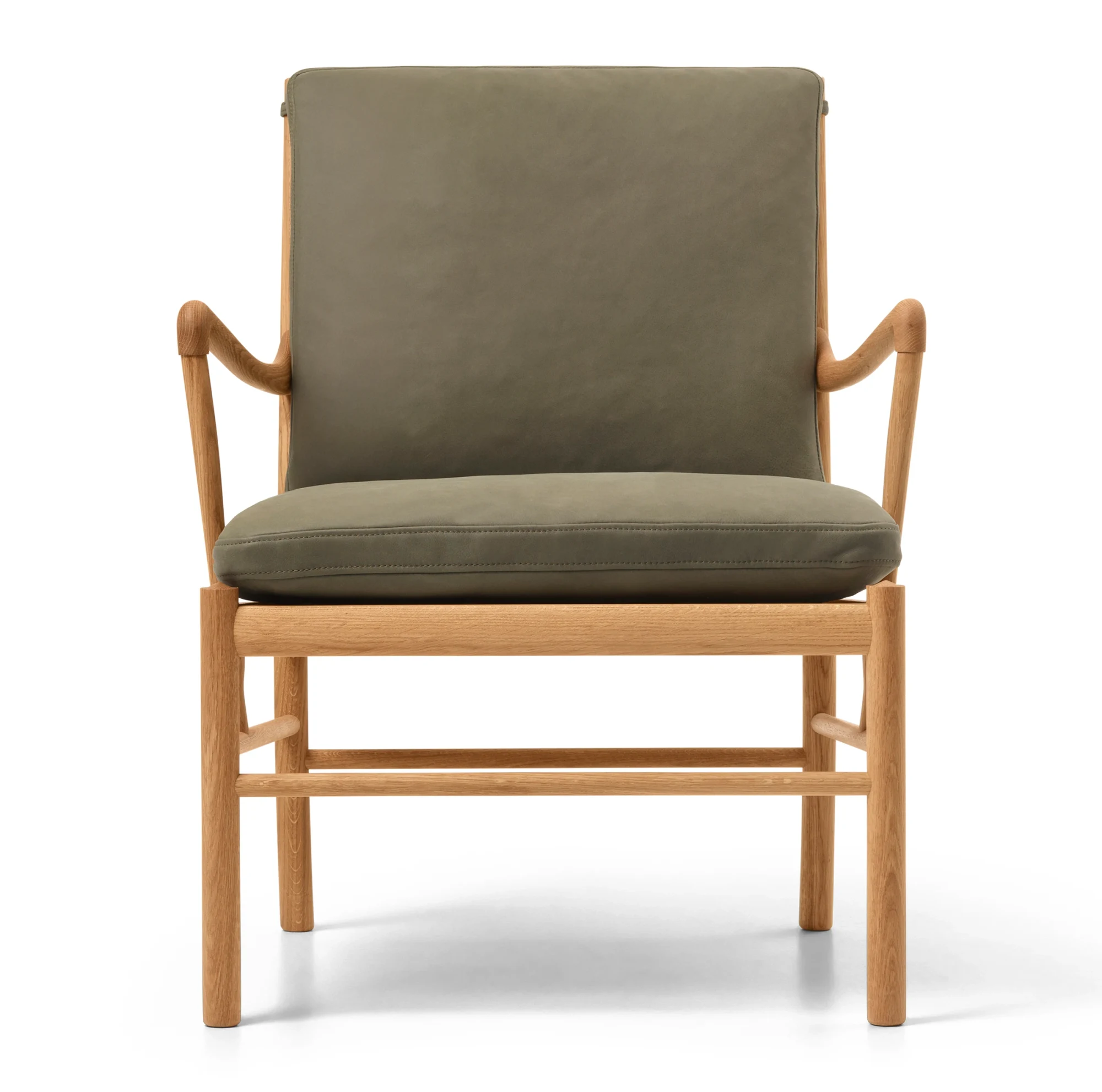
OW149 Colonial Chair
Ole Wanscher's slim Colonial Chair with curved armrests that rise to a point
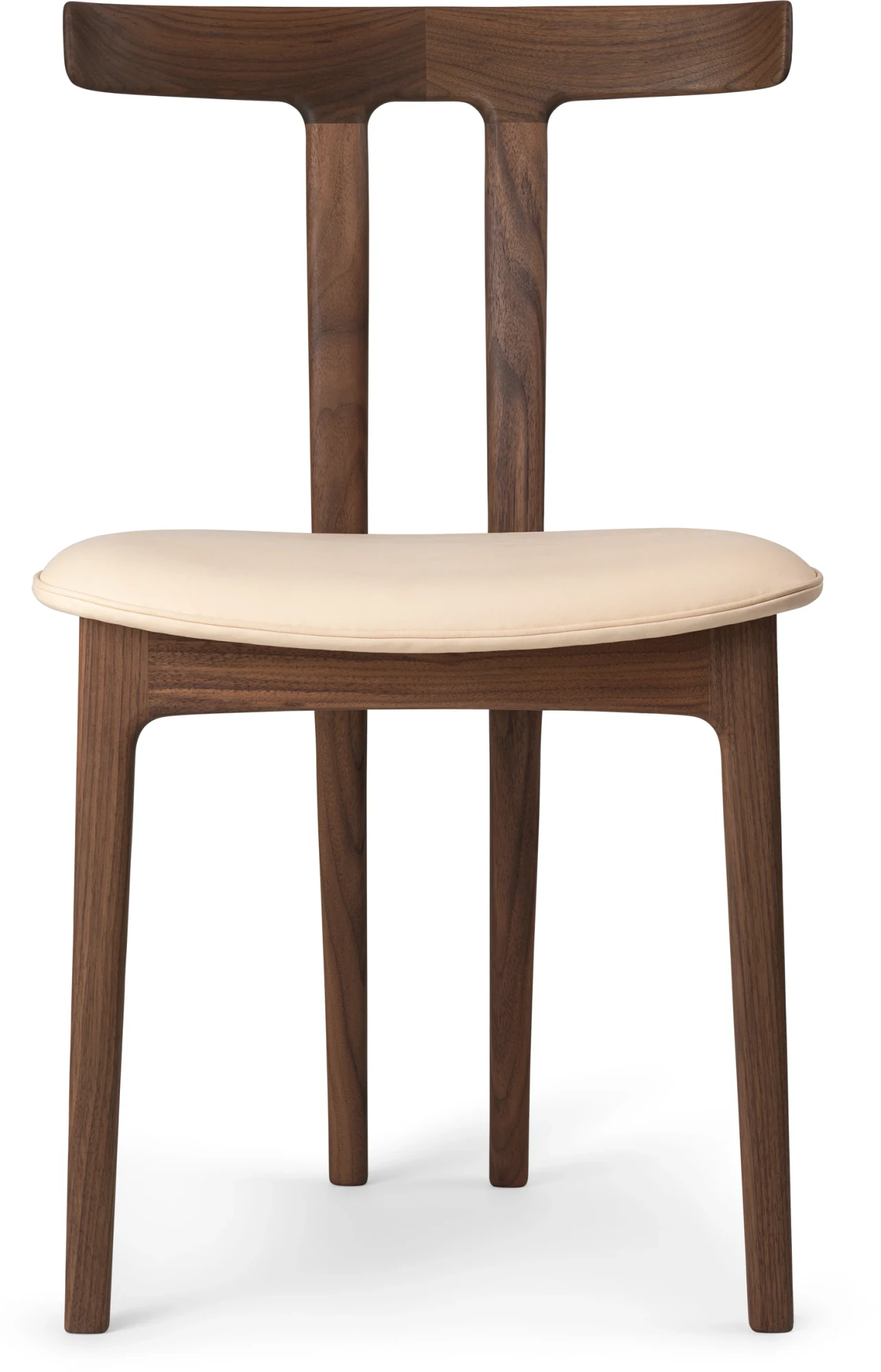
OW58 T-Chair
Ole Wanscher's relaunched OW58 T-Chair with a T-shaped backrest and three-legged look