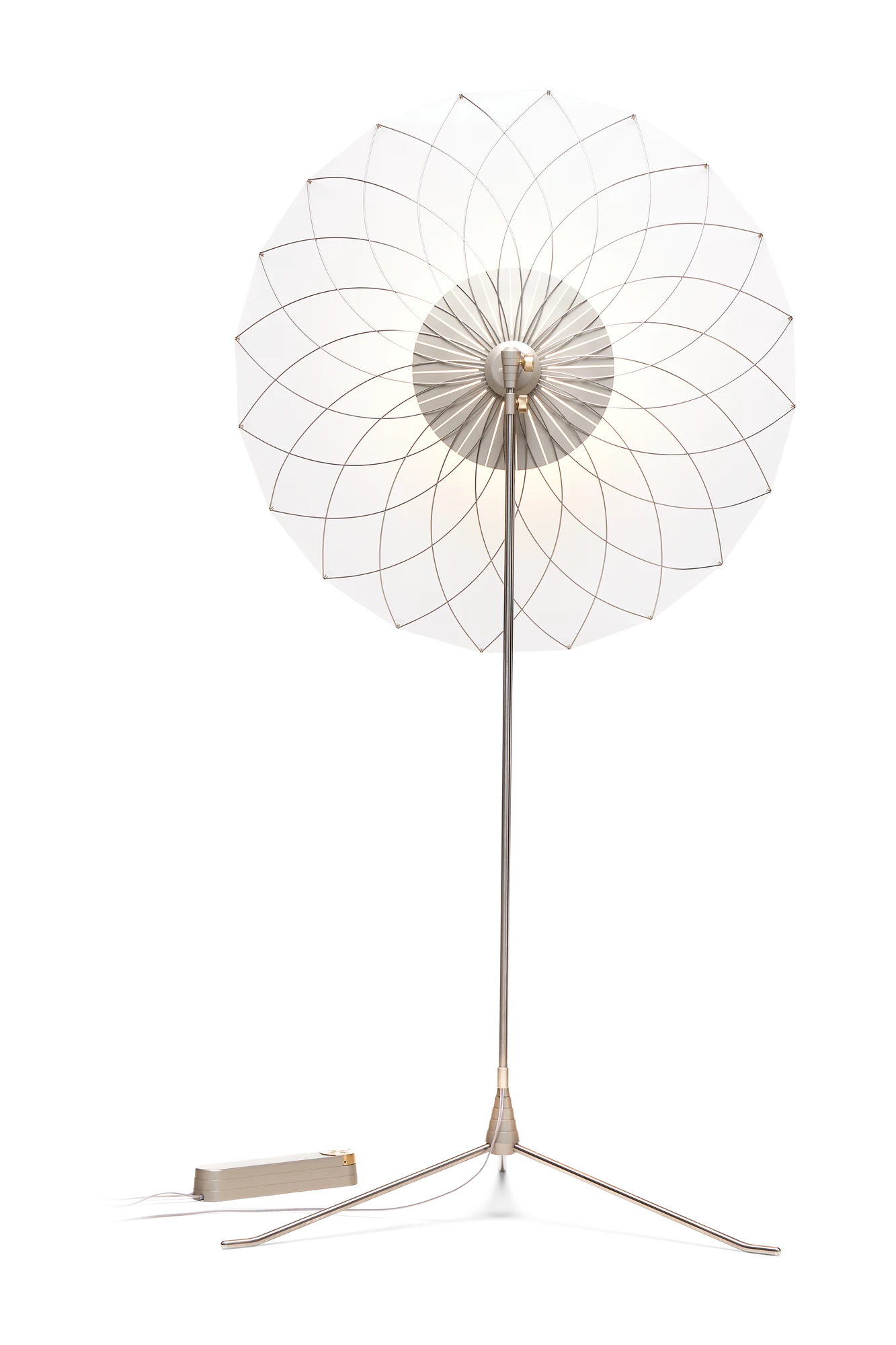
Image source: Moooi — Meshmatics
© Moooi and the respective rights holders. Quoted to accompany INTEBEE's independent design commentary and research.
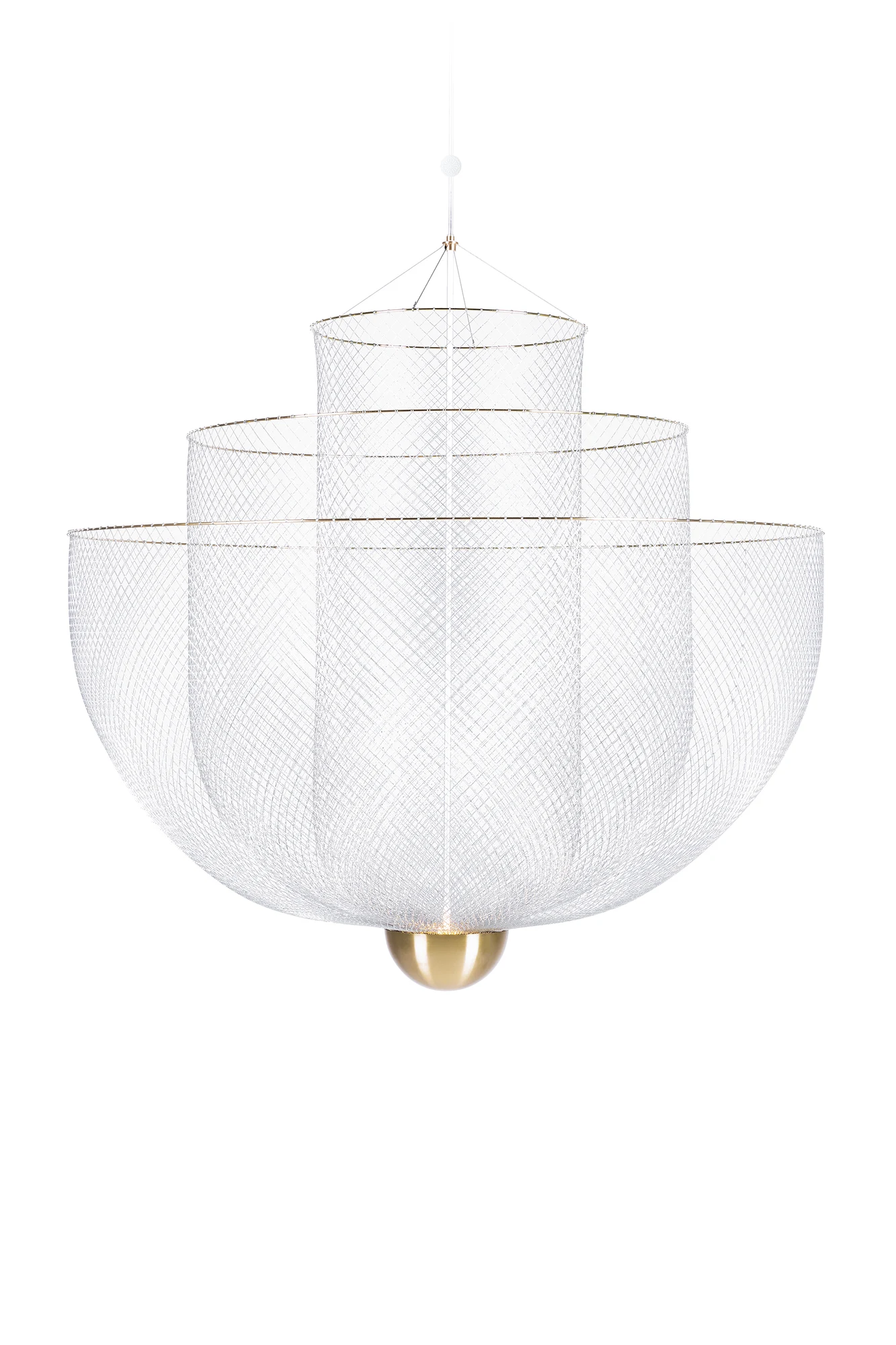
Meshmatics
Meshmatics by Rick Tegelaar, 2017: a chandelier of wire netting formed into three mesh layers.


900 × 900 × 900 mm
2017
Approx. $5,400 (reference price; varies by region and retailer)
Official product information
INTEBEE AI PUBLIC LIBRARY is an independent furniture design research and discovery platform. Product specifications, finishes, availability and other details may change. For current and definitive information, please refer to the manufacturer's official website.
Go to the official product pageSpecifying Meshmatics for your design project?
INTEBEE is the FF&E specification platform for interior designers: spec sheets, finishes, floor plans and client-ready PDFs in one place.
Description
Overview
The Meshmatics chandelier by Rick Tegelaar turns thin, flexible steel wire with hexagonal gaps into three mesh layers. The LED light is reflected from the three mesh bowls, and because the material is transparent the chandelier gives off a soft glow without creating a visual block.
Construction
The chandelier is galvanised steel and brass. It is fitted with 1 LED source (included) of 12 W max: 388 lm, up to 2700 K, CRI 84, 50,000 hours. Emission is in every direction. A 250 cm cable that may be shortened leads to a steel-coated ABS Pebble III canopy. The Wireless Wall Switch, DALI dt6 and smart home integration (Zigbee, Matter) can control it, while mains or ELV dimmers cannot.
Specifications
- 90 x 90 x 90 cm (W x D x H; Ø 90 cm)
Story
Wire netting formed over a mould
Rick Tegelaar has a special interest in undervalued materials, and the Meshmatics from 2017 started from wire netting. He developed a machine and a set of tools that form the wire in a controlled and accurate way. The material is stretched over a mould and shrinks into its form, and the tension that comes from stretching is captured in a very efficient structure.
Tegelaar finds it interesting to take a material and, without changing too much, see what other possibilities can arise through design.