
Image source: Vitra — Landi Chair
© Vitra and the respective rights holders. Quoted to accompany INTEBEE's independent design commentary and research.
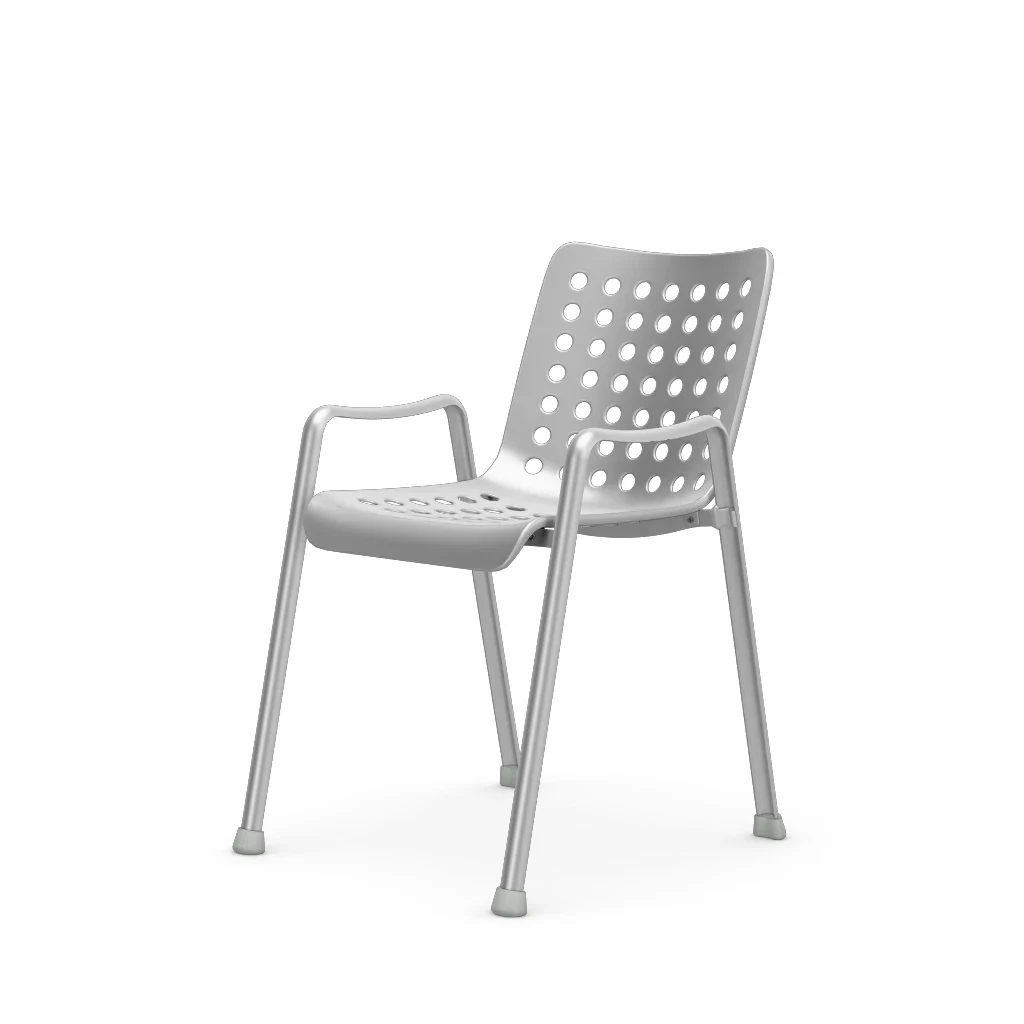
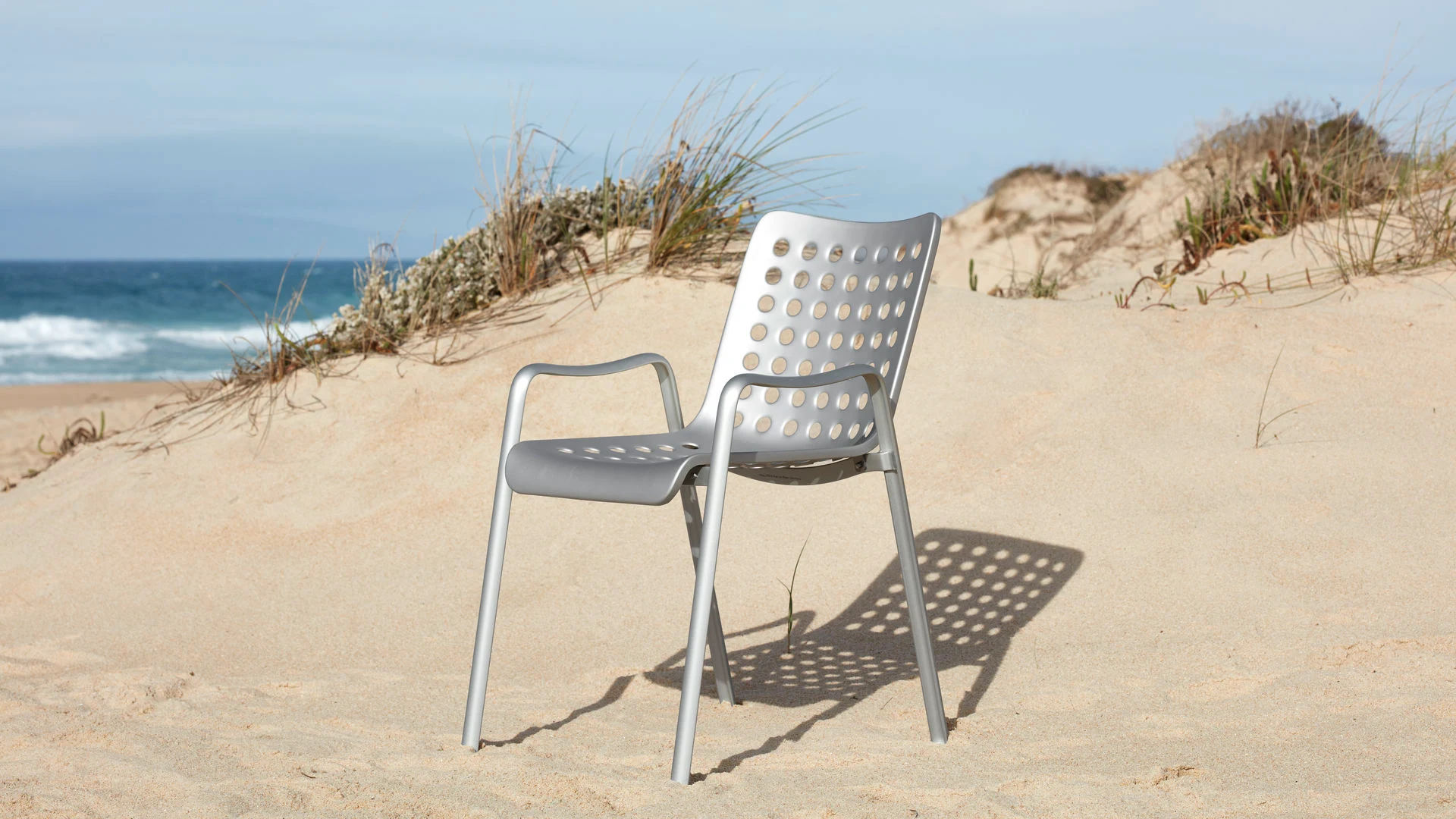
Landi Chair
Hans Coray's 1938 all-aluminium chair with a perforated moulded shell

515 × 795 × 650 mm
1938
Official product information
INTEBEE AI PUBLIC LIBRARY is an independent furniture design research and discovery platform. Product specifications, finishes, availability and other details may change. For current and definitive information, please refer to the manufacturer's official website.
Go to the official product pageSpecifying Landi Chair for your design project?
INTEBEE is the FF&E specification platform for interior designers: spec sheets, finishes, floor plans and client-ready PDFs in one place.
Description
Overview
Hans Coray designed the Landi Chair in 1938 for the 1939 Swiss National Exhibition. Its aluminium construction separates a self-supporting base from a perforated seat shell.
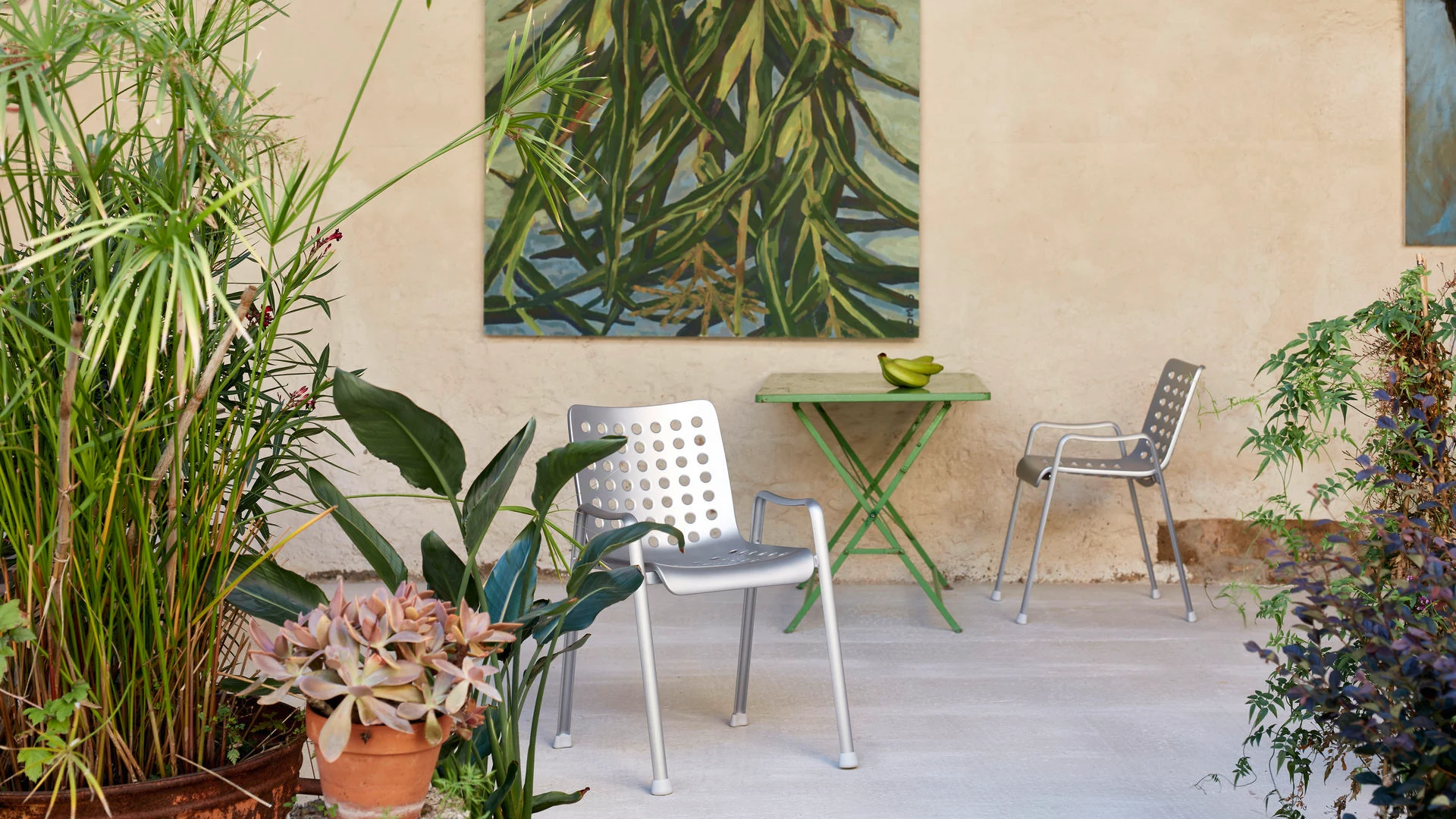 Image source: Vitra — Landi Chair · © Vitra and the respective rights holders. Quoted to accompany INTEBEE's independent design commentary and research. · View official product page ↗ · Image use & copyright policy
Construction
- U-shaped profiles connected by welded crossbeams
- Low armrests integrated into the base
- Shell punctured with 91 holes
- Lightweight, stackable and weather-resistant
Specifications
- W515 × D650 × H795 mm
- Stackable up to six high
Story
A new shell-and-base typology
Vitra places Landi in the history of twentieth-century design because Coray formed a three-dimensional seat shell separately from its supporting base.
Material used economically
The 91 openings reduce weight and allow the shell to flex. The same perforation pattern became the chair's identifying visual feature.