
Image source: Tendo Mokko — Kashiwado Chair
© Tendo Mokko and the respective rights holders. Quoted to accompany INTEBEE's independent design commentary and research.
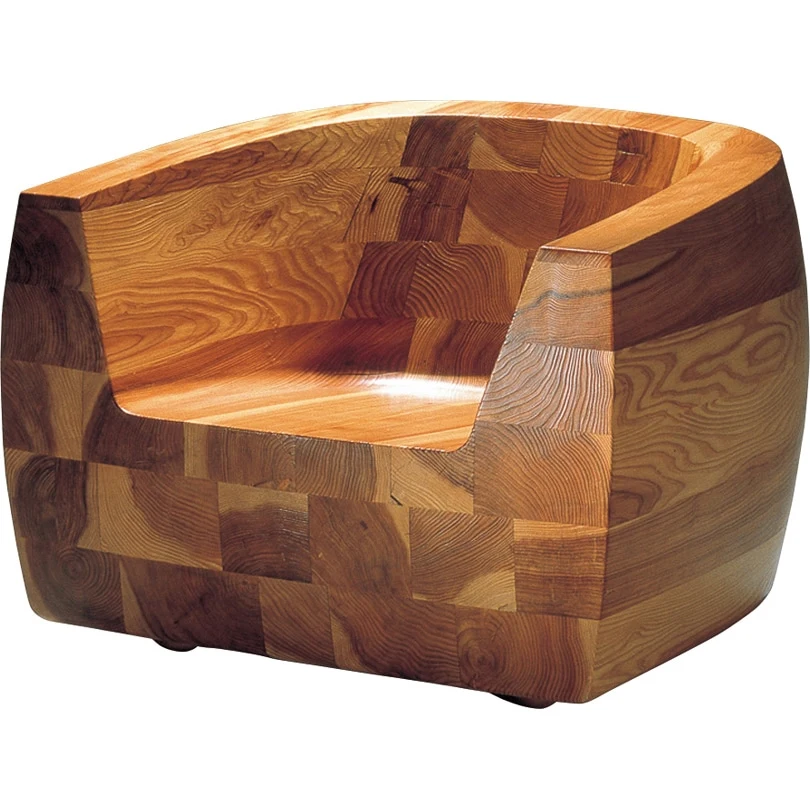
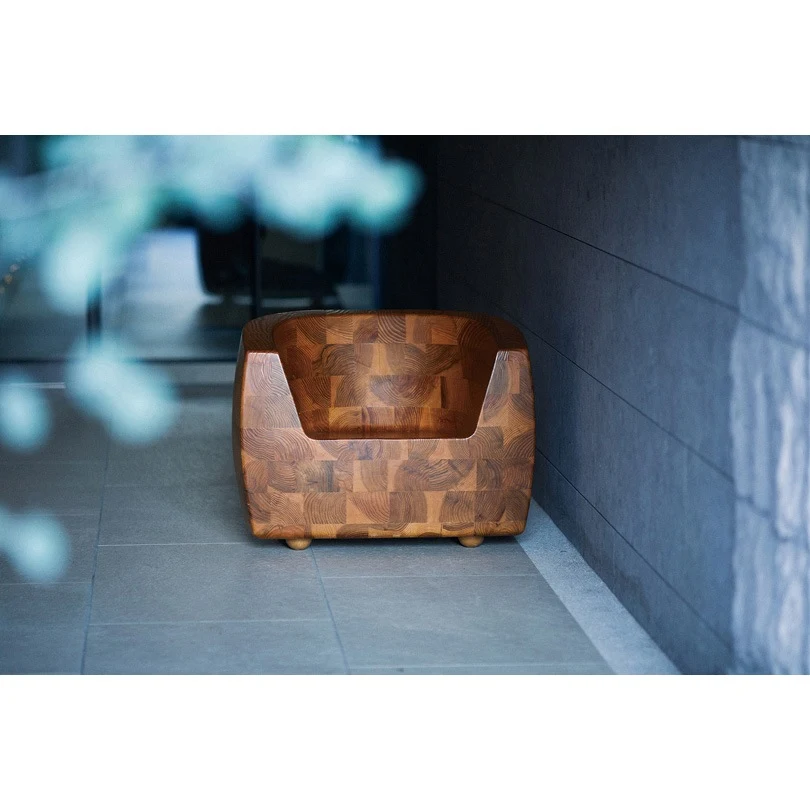
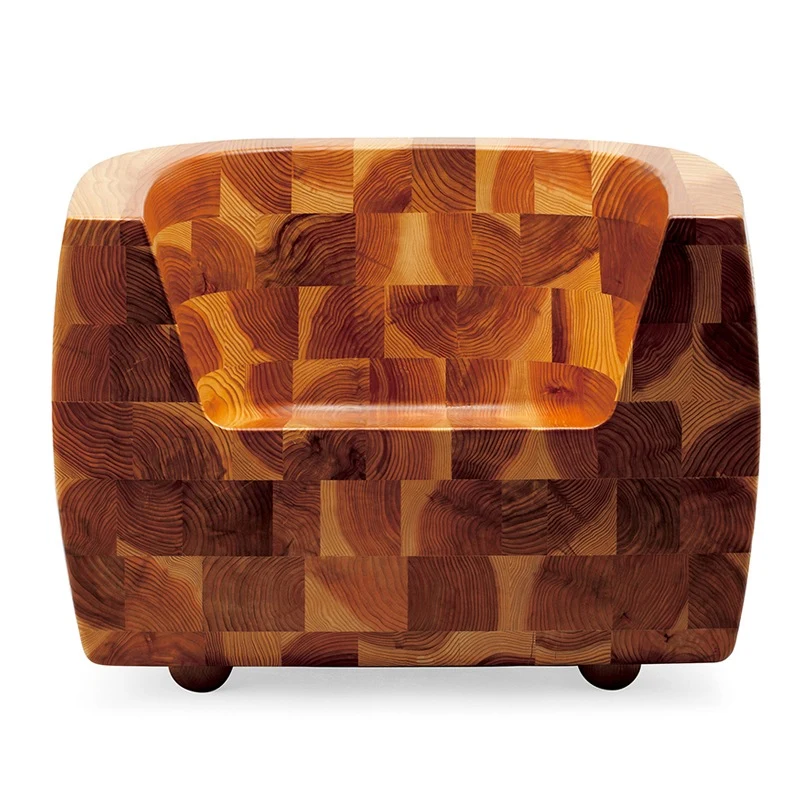
Kashiwado Chair
Isamu Kenmochi's 1961 Kashiwado Chair: solid Japanese cedar, stacked in blocks and carved.


850 × 630 × 770 mm
1961
Japan
Official product information
INTEBEE AI PUBLIC LIBRARY is an independent furniture design research and discovery platform. Product specifications, finishes, availability and other details may change. For current and definitive information, please refer to the manufacturer's official website.
Go to the official product pageSpecifying Kashiwado Chair for your design project?
INTEBEE is the FF&E specification platform for interior designers: spec sheets, finishes, floor plans and client-ready PDFs in one place.
Description
Overview
The Kashiwado Chair (柏戸イス, S-7165SG-NT) was designed in 1961 by Isamu Kenmochi when he was working on the interior of the Atami Garden Hotel, as the shop text of Tendo Mokko states; Tendo's product page credits the design to Kenmochi Design Associates. The store says the chair was later presented to commemorate the promotion of the sumo wrestler Kashiwado, a famed rikishi from Yamagata Prefecture, to yokozuna, and that this gave the chair its name. Tendo adds that the chair, made only of solid wood, is an unusual presence for a company that excels at moulded plywood.
Construction
Tendo states that the chair uses the rough grain of the base of a Japanese cedar (sugi), the part called batsukon (stump), stacked in blocks and carved to reach its imposing form. The surface has an uzukuri treatment in which the relief of the grain stands out. Unless a paint is specified, Tendo's finish is urethane resin.
Specifications
- Model: S-7165SG-NT (sugi, natural)
- Dimensions: W 850 × D 770 × H 630 mm, seat height 330 mm
- Weight: 78 kg
- Green Purchasing compliant
- Origin: Japan (shop product table, 原産地)
Story
Designed for the Atami Garden Hotel
Tendo's online store says Isamu Kenmochi, a designer who supported the foundations of Japanese Modern, designed the chair in 1961 while handling the interior of the Atami Garden Hotel. The store's designer text notes that Kenmochi often collaborated with the architect Kenzo Tange and that the Atami Garden Hotel and the VIP room of the 1964 National Yoyogi Gymnasium, whose spectator seating Tendo Mokko made, came from this pairing.
Named after a yokozuna
The chair was later presented to mark the promotion to yokozuna of Kashiwado, a celebrated sumo wrestler from Yamagata Prefecture, and the name comes from that gift. Tendo calls it a chair with a dignity like that of a yokozuna.