Image source: Cappellini — Combi Center
© Cappellini and the respective rights holders. Quoted to accompany INTEBEE's independent design commentary and research.
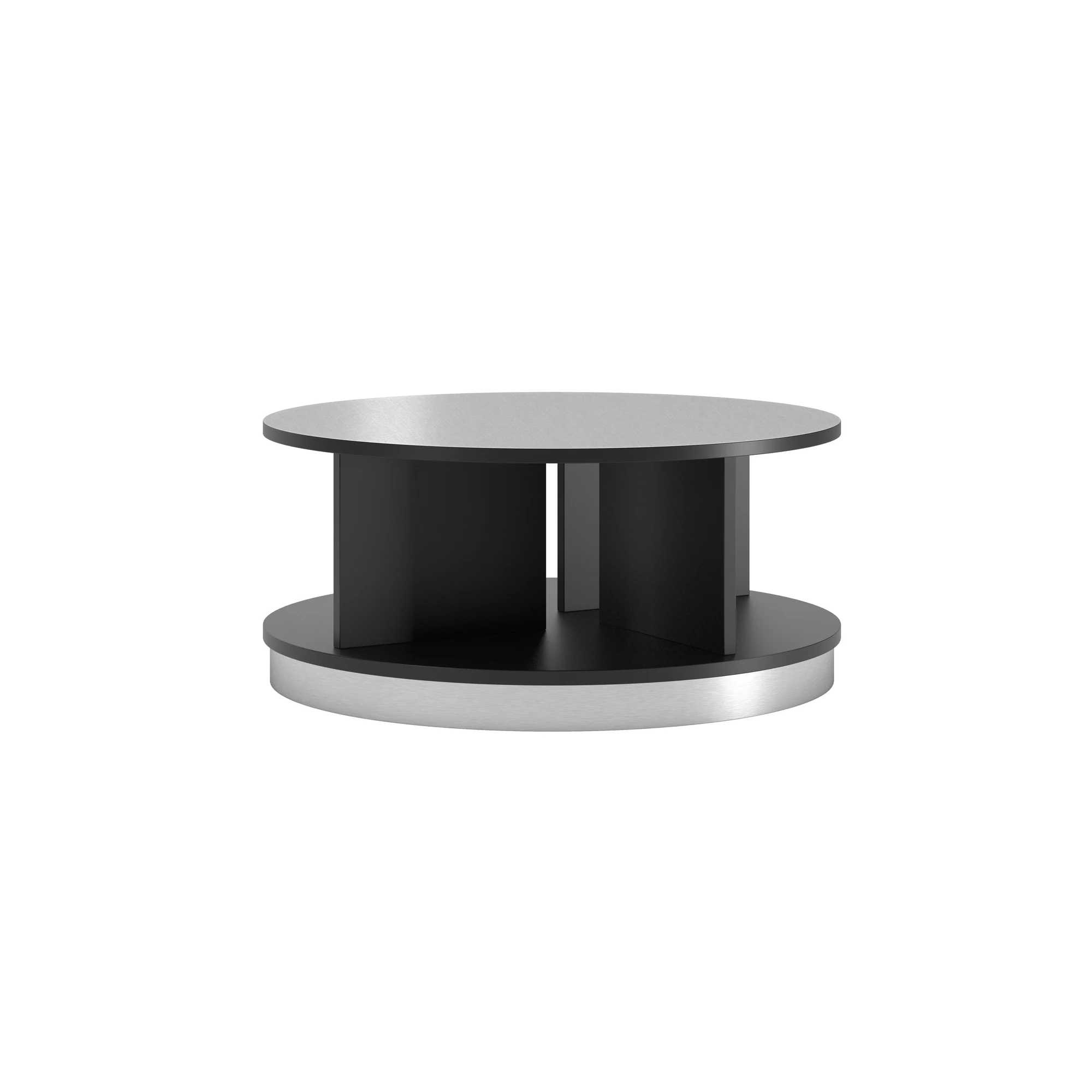
Combi Center
Round coffee table with four open compartments between two tops, by Joe Colombo


840 × 370 × 840 mm
2025
Italy
Official product information
INTEBEE AI PUBLIC LIBRARY is an independent furniture design research and discovery platform. Product specifications, finishes, availability and other details may change. For current and definitive information, please refer to the manufacturer's official website.
Go to the official product pageDescription
Overview
The Combi Center is a round coffee table by Joe Colombo with two tops separated by four vertical supports, which form four open compartments. Cappellini says it is inspired by the column container Colombo designed in 1963 and that it belongs to the Combi Center modular system of cylindrical elements of different heights.
Construction
The structure and top are medium-density fibreboard panels in a matt lacquered finish, with aluminium on the top and in the base frame. The base uses high pressure laminate panels on an aluminium frame, and concealed black plastic casters let the table move.
Specifications
84 x 84 x 37 cm (CMB1).
Story
From a 1963 column container
Cappellini describes the Combi Center table as inspired by the column container that Joe Colombo designed in 1963. The table keeps the cylindrical form and uses two tops held apart by four vertical supports.
A modular system of stackable cylinders
The table is part of the Combi Center modular system, which Cappellini bases on cylindrical elements of different heights that can be stacked and combined with each other. The four open compartments between the tops are meant for books, magazines and small objects.