
Image source: Living Divani — Bukva Bookcase
© Living Divani and the respective rights holders. Quoted to accompany INTEBEE's independent design commentary and research.
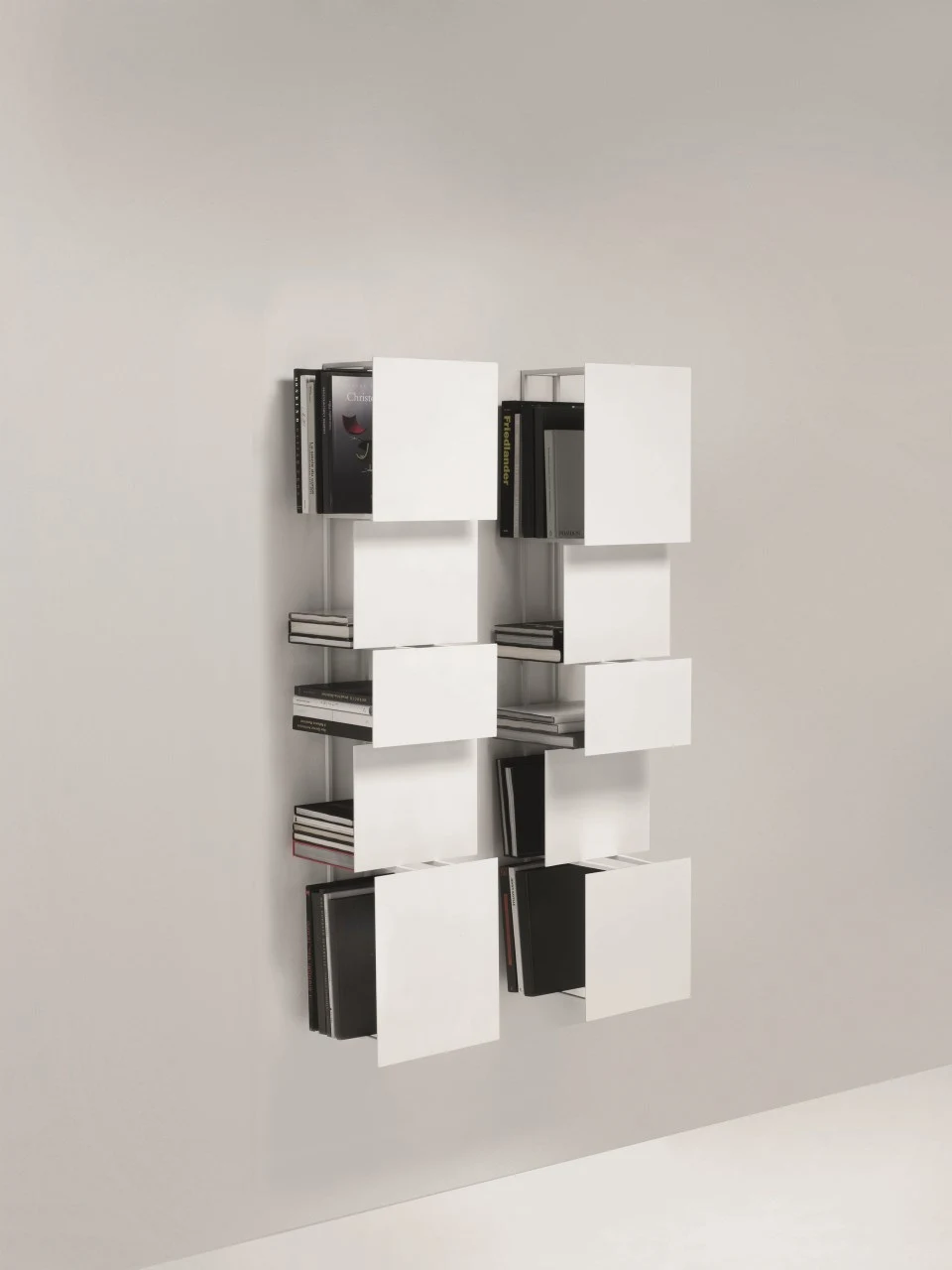
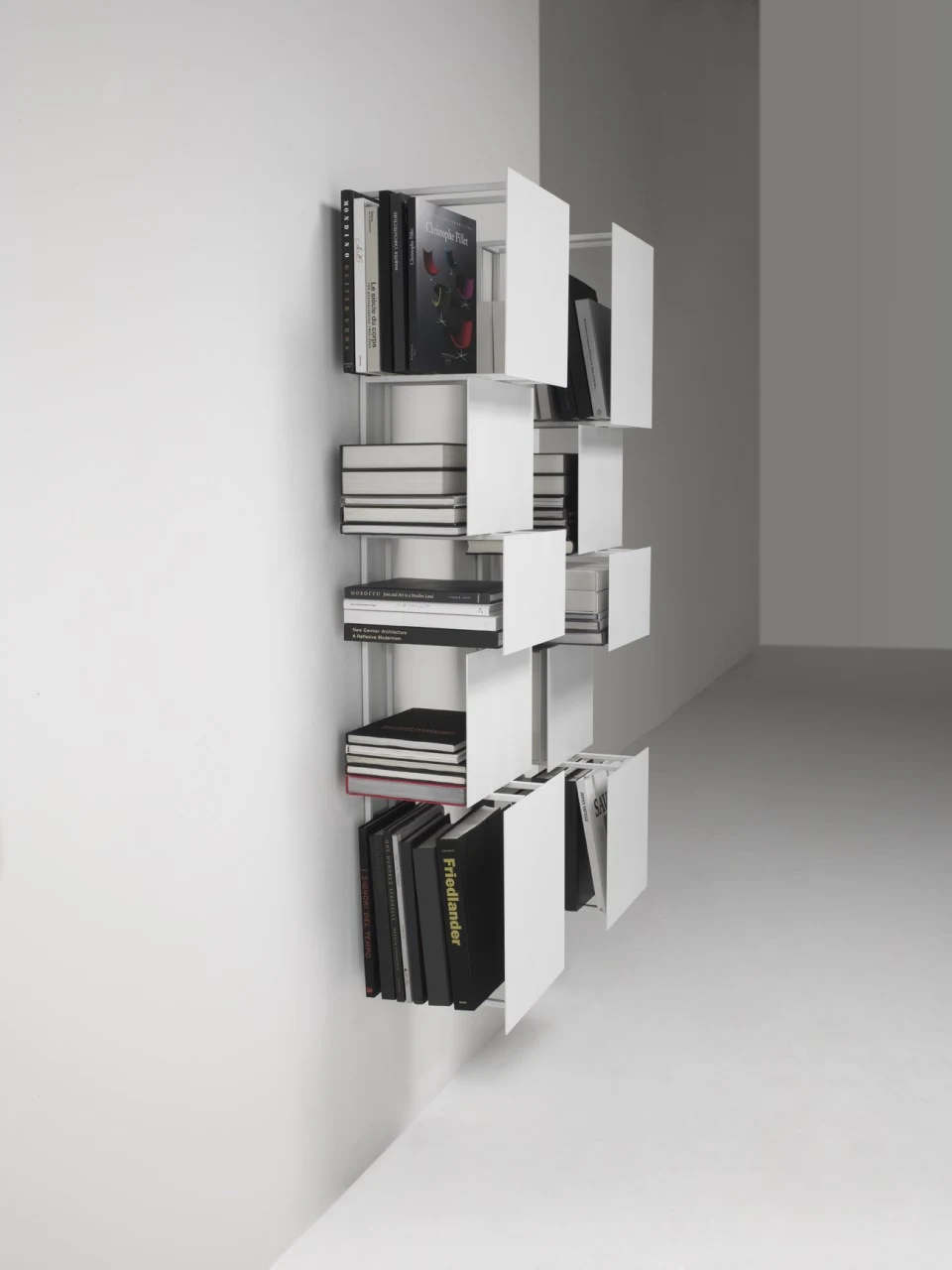
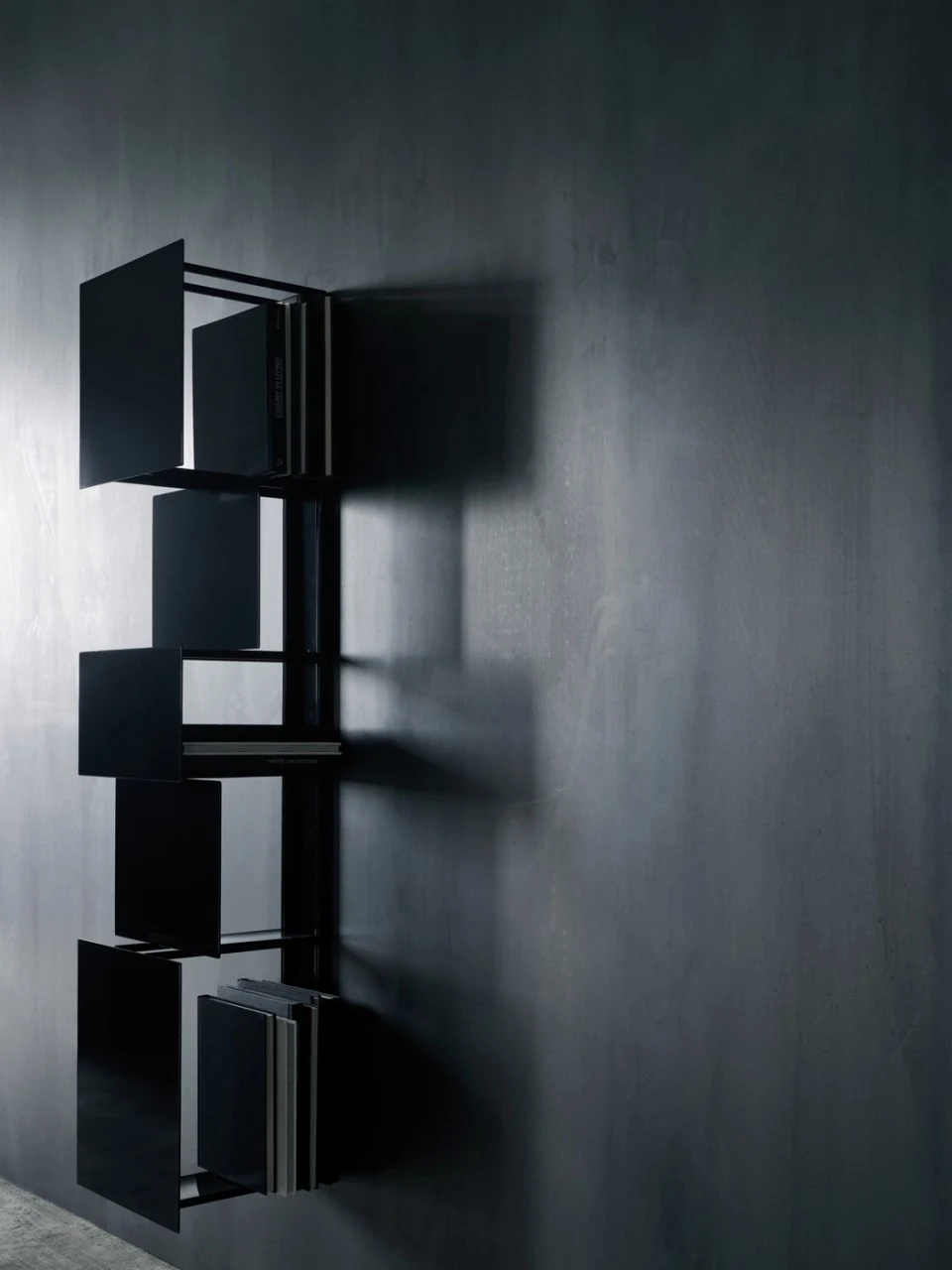
Bukva Bookcase
Bukva Bookcase by Victor Vasilev: a sculpture-bookcase of detached, tangent squared elements.


350 × 1540 × 350 mm
2011
Official product information
INTEBEE AI PUBLIC LIBRARY is an independent furniture design research and discovery platform. Product specifications, finishes, availability and other details may change. For current and definitive information, please refer to the manufacturer's official website.
Go to the official product pageSpecifying Bukva Bookcase for your design project?
INTEBEE is the FF&E specification platform for interior designers: spec sheets, finishes, floor plans and client-ready PDFs in one place.
Description
Overview
Bukva is a bookcase designed by Victor Vasilev in 2011, a sculpture-bookcase composed of a series of squared, detached and tangent elements. Each vertical module is made of 5 panels of different sizes and depth.
Construction
The supporting frame is 12x12 mm square-section tubular steel, with a frontal panel in 3 mm steel plate. Vertical and horizontal covers are in aluminium plate 10/10. Structure and covers are finished in epoxy powder coating, in RAL 9010 white, RAL 9017 black or a burnished colour. Modules are fixed directly to the wall with the supplied plates, and can be mounted even upside down.
Specifications
Overall size: 35 x 35 x 154 cm (module).
Story
A sculpture-bookcase of detached, tangent squares
Victor Vasilev designed Bukva in 2011. Squared elements, detached from one another yet tangent, make up a series that reads as a sculpture-bookcase. A vertical module takes 5 panels that differ in size and depth.
Steel frame and aluminium covers
Square-section tubular steel of 12x12 mm forms the supporting frame, and the frontal panel is cut from 3 mm steel plate. Aluminium plate 10/10 makes the vertical and horizontal covers. The same three finishes are offered for structure and covers, and the modules hang straight on the wall via the plates supplied with them.