
Image source: Emeco — 1006 Navy Chair
© Emeco and the respective rights holders. Quoted to accompany INTEBEE's independent design commentary and research.
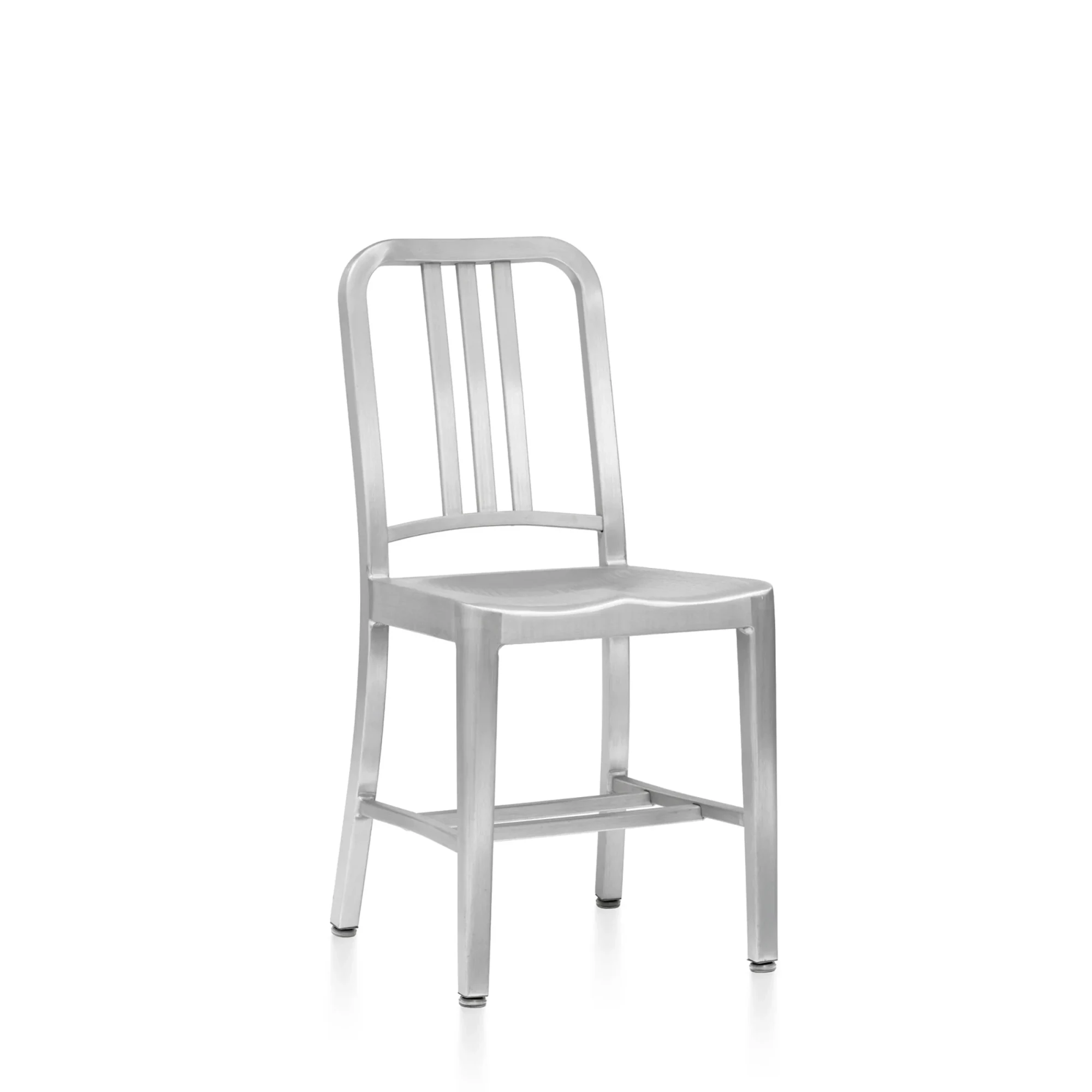
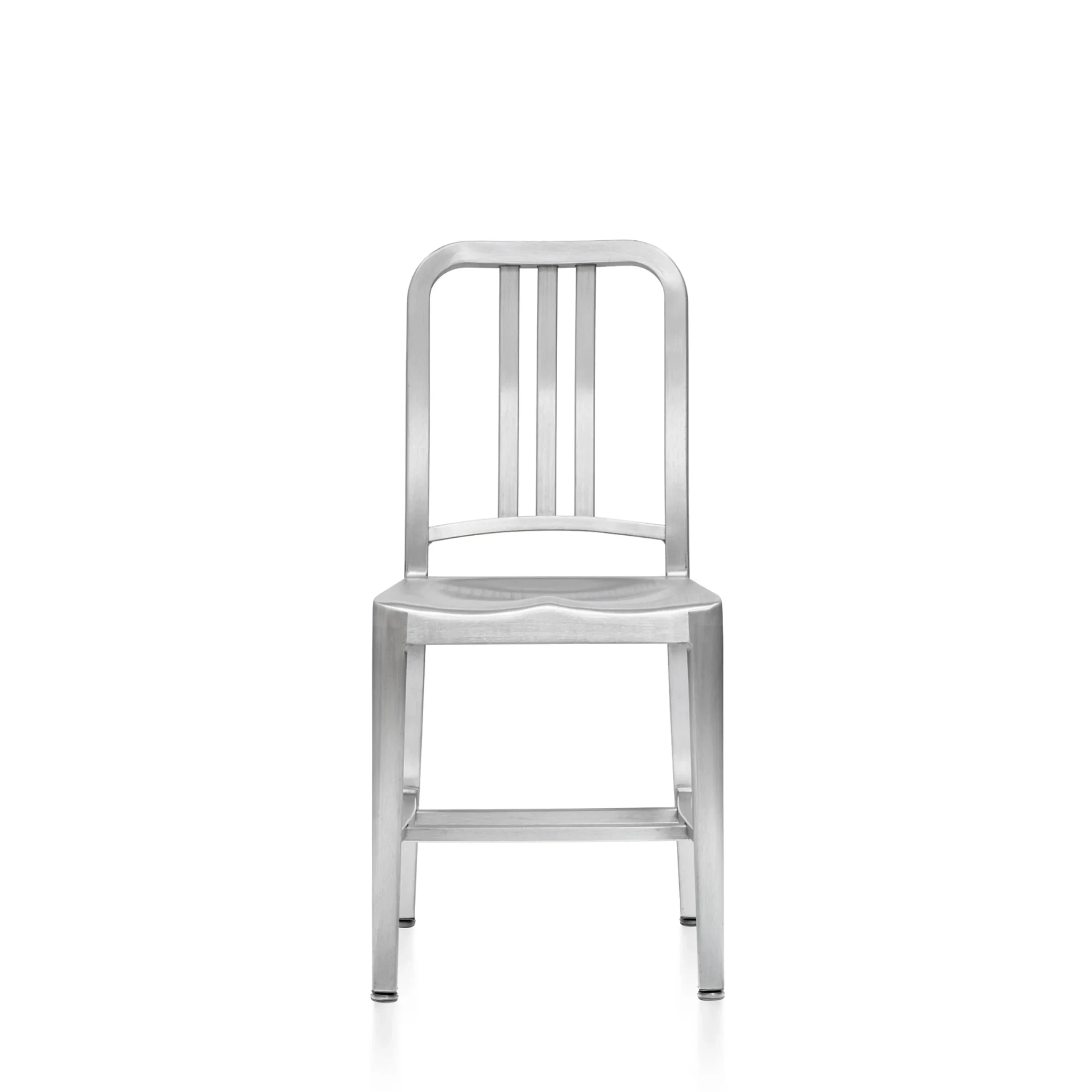
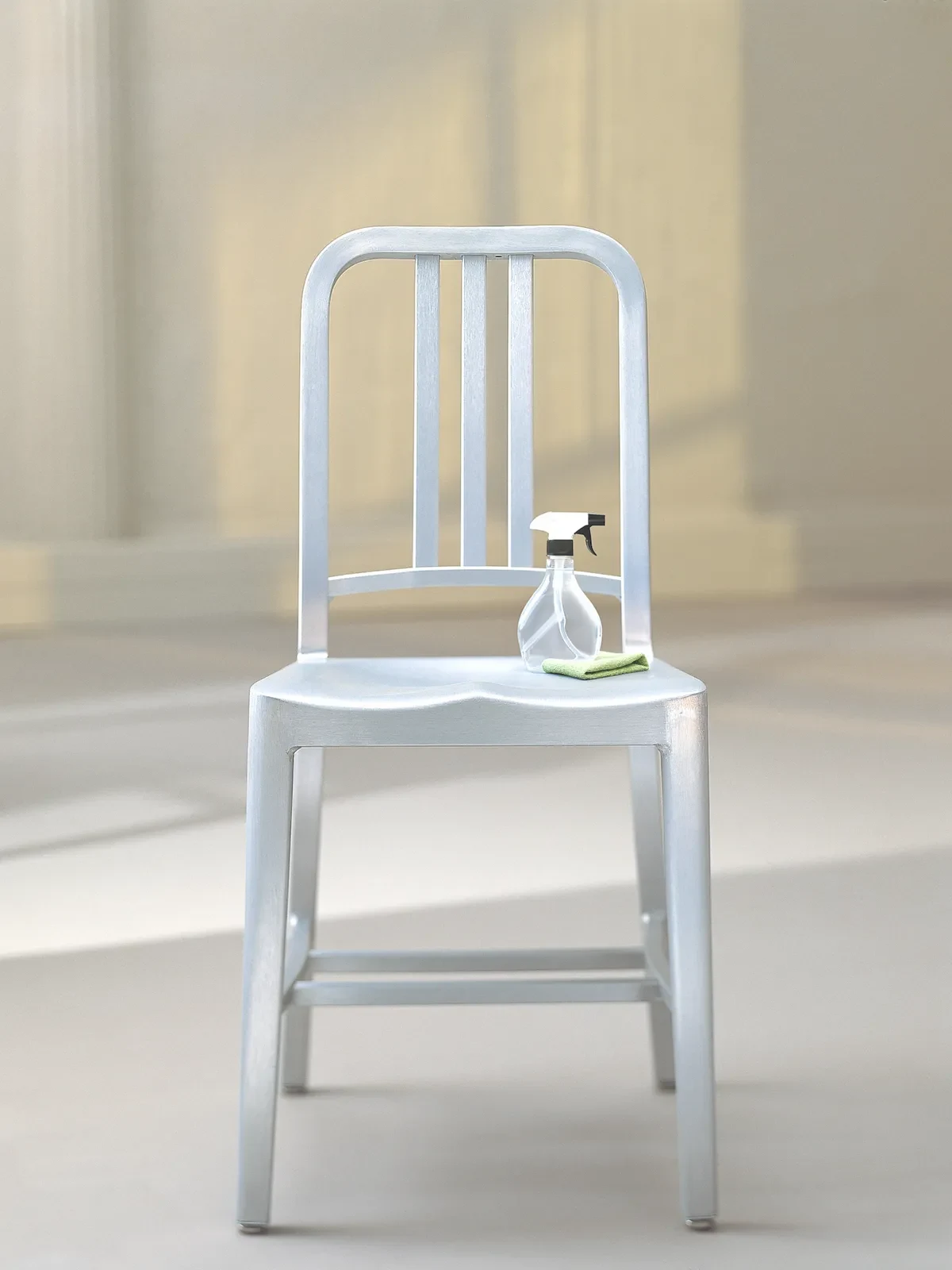
1006 Navy Chair
The 1944 Navy chair, built by hand from 80% recycled aluminum in Hanover, Pennsylvania.

395 × 865 × 495 mm
1944
United States
Official product information
INTEBEE AI PUBLIC LIBRARY is an independent furniture design research and discovery platform. Product specifications, finishes, availability and other details may change. For current and definitive information, please refer to the manufacturer's official website.
Go to the official product pageSpecifying 1006 Navy Chair for your design project?
INTEBEE is the FF&E specification platform for interior designers: spec sheets, finishes, floor plans and client-ready PDFs in one place.
Description
Overview
The 1006 Navy Chair® was created in 1944 for the US Navy. According to Emeco, the Navy wanted a chair that was lightweight, non-corrosive, fire resistant and able to stand up to life aboard warships and submarines. Emeco still builds it by hand at its factory in Hanover, Pennsylvania; its page lists the chair under outdoor chairs. The standard version is Hand Brushed aluminum, and a Hand Polished finish is also listed.
Construction
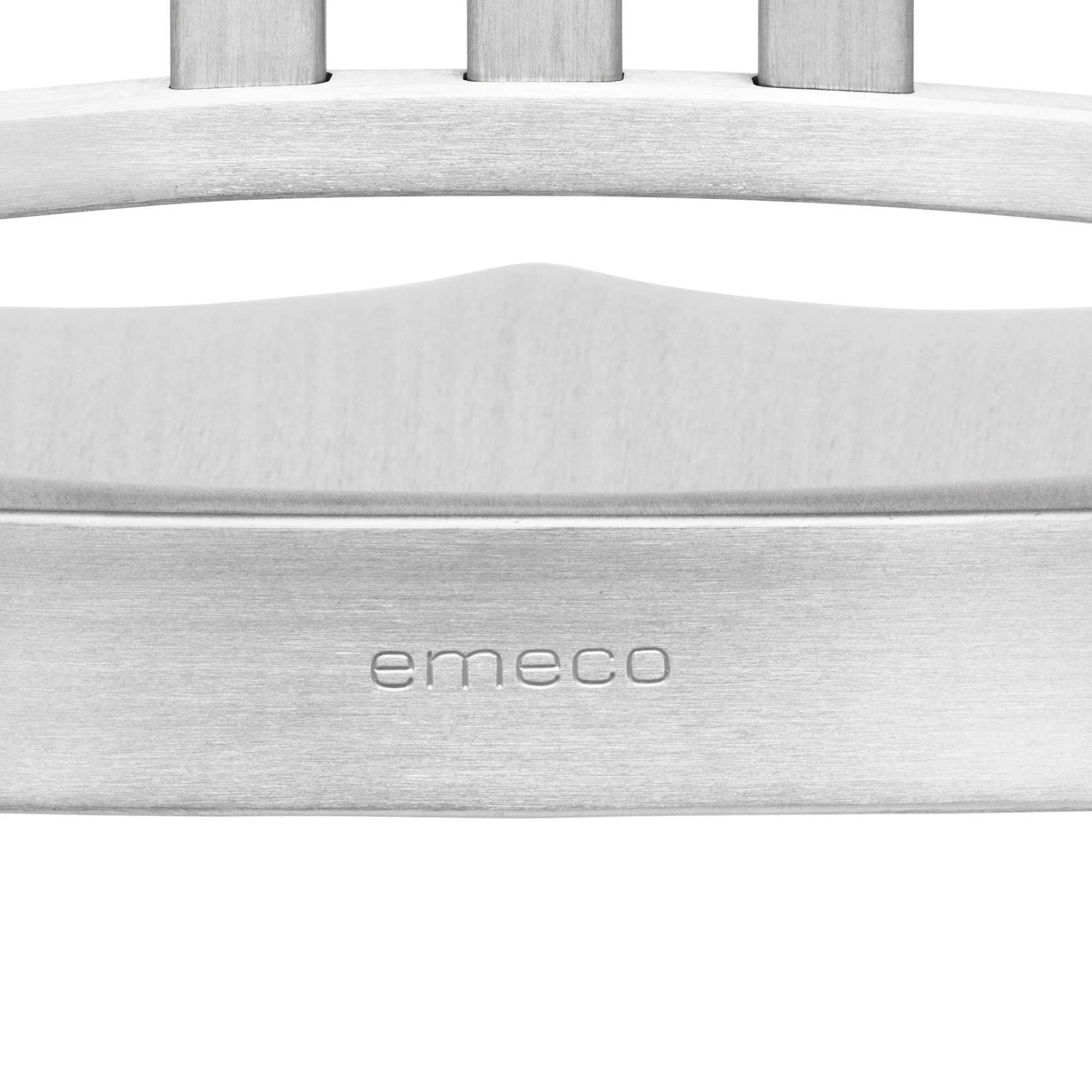
The material is 80% recycled aluminum, hand brushed (clear anodized). Emeco says craftsmen form, weld, grind, heat-treat, hand brush and anodize recycled aluminum in the 77-step process that Dinges developed with Alcoa experts. Glides are TPU plastic, with optional hard-floor and carpet glides, and the page offers an optional seat pad.
Specifications
- W 39.5 × D 49.5 × H 86.5 cm (15.5" × 19.5" × 34")
- Seat: W 39.5 × D 38 cm, seat height 45.5 cm
- Weight: 3 kg (7 lbs)
- Strength and stability: ANSI/BIFMA X5.1
- Carbon footprint: 14.88 kg CO2e
Story
Built for the US Navy
Emeco's account says the US Navy commissioned a chair in the throes of WWII. Wilton C. Dinges, who founded Emeco in the 1940s in Hanover, Pennsylvania, chose aluminum because it is lightweight, non-corrosive, fire resistant and non-magnetic, so as not to interfere with the instruments on board. Together with Alcoa experts he developed a 77-step process that turns scrap aluminum, a wartime necessity, into chairs of extraordinary strength. Emeco tells how Dinges proved his point by throwing a chair out of a Chicago hotel room window; the unscathed chair sealed the contract.
Proudly unimproved since 1944
Emeco says the chair had an estimated life cycle of 150 years and far exceeded the Navy's specifications. The company describes it as a humble but proud four-legged chair with a rich heritage, still made with the same 77-step process: "Proudly unimproved since 1944."