Designer
Katsuhei Toyoguchi
Katsuhei Toyoguchi (豊口 克平, 1905–1991) was a Japanese industrial designer born in Akita. After graduating from the Tokyo Higher School of Arts and Crafts (today part of Chiba University) he began working as a designer, first under Nobuo…
Biography
Background
Katsuhei Toyoguchi (豊口 克平, 1905–1991) was a Japanese industrial designer born in Akita. After graduating from the Tokyo Higher School of Arts and Crafts (today part of Chiba University) he began working as a designer, first under Nobuo Moriya and, after Moriya's sudden death, under Chikatada Kurata, with whom he formed the Keiji Kobo studio in 1928.
Career
In 1933 he entered the Ministry of Commerce and Industry's Industrial Arts Institute (the ministry is now called METI), where he worked mainly on furniture planning and research and, at its Sendai base, put effort into chairs made for Japanese people and ergonomic experiments. After the war his design work reached aircraft interiors, cameras and precision instruments such as microscopes. He set up his own design institute in 1959 and taught design at Musashino Art University until his retirement in 1976.
Notable Works
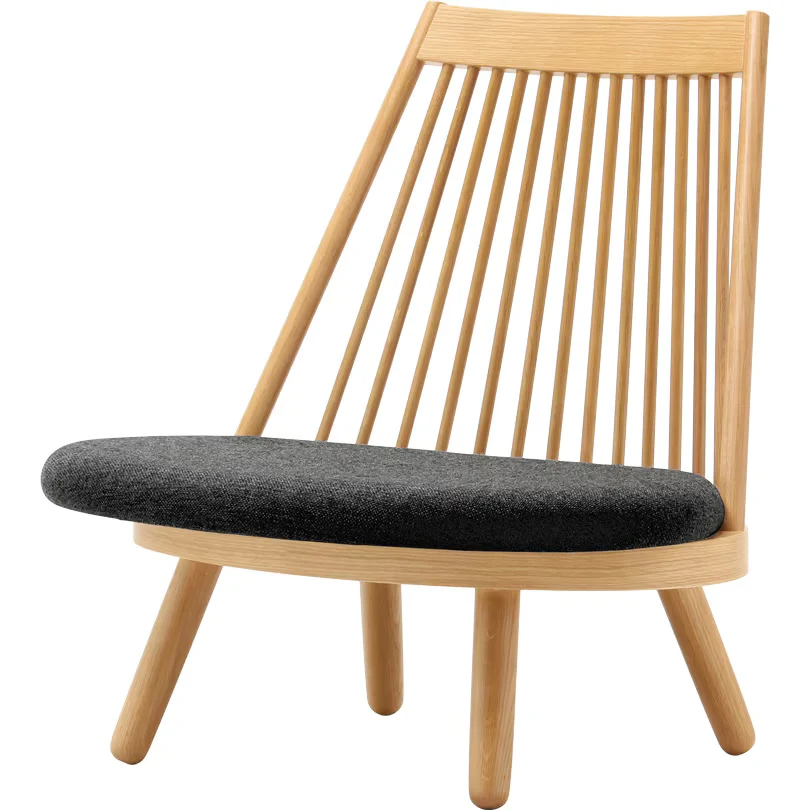
He designed the interior of the Japan Air Lines DC-9 and the Olympus Auto 35 camera of 1963. His best-known chair is the oval Spoke Chair, nicknamed Toyo-san's chair, which Tendo Mokko makes today.
Recognition
He received the Prime Minister's commendation in 1971, the Order of the Sacred Treasure, Third Class, in 1976 and the first Design Merit Award of the Ministry of International Trade and Industry and the Kunii Kitaro Special Prize. He also led the design department of the ministry's Agency of Industrial Science and Technology and served as honorary director of the Japan Interior Designers' Association and the Japan Industrial Designers' Association.
Specifying pieces from Katsuhei Toyoguchi for your design project?
INTEBEE is the FF&E specification platform for interior designers: spec sheets, finishes, floor plans and client-ready PDFs in one place.