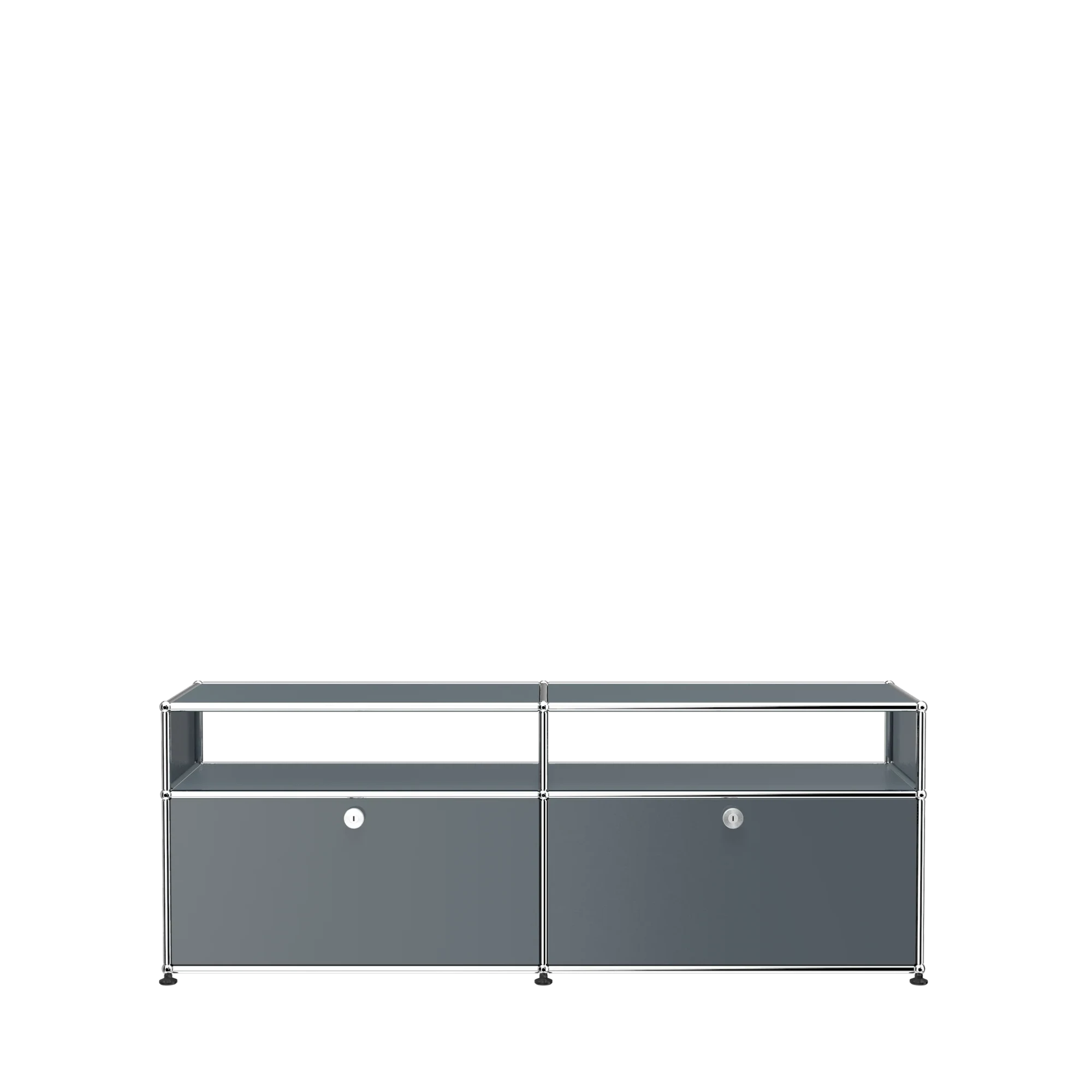
Image source: USM — USM Haller
© USM and the respective rights holders. Quoted to accompany INTEBEE's independent design commentary and research.


Collection Story
Origin
USM Haller grew out of architecture. In 1961 Paul Schärer Jr. asked the Swiss architect Fritz Haller to design a new factory and office building for USM in Münsingen, and in 1962 the two began developing a furniture system with the same modularity as Haller's steel building system. The final design was completed in 1965, when its ball joint was patented. Intended for USM's own offices, it went on sale in 1969 after Banque Rothschild in Paris ordered 600 workstations.
Design Language
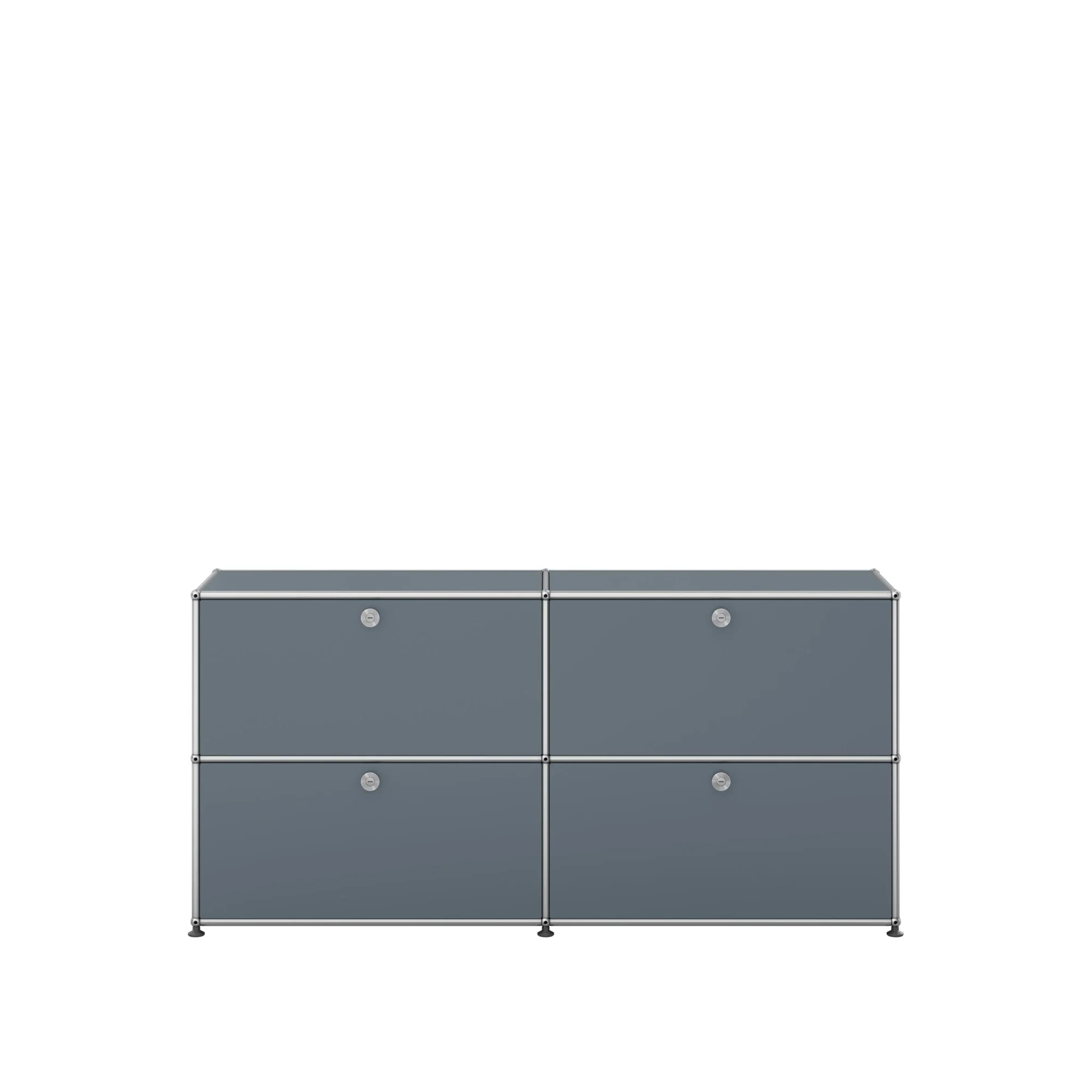
USM calls USM Haller the pioneer of modular furniture. Every piece is built from chrome-plated steel tubes, brass ball joints and powder-coated metal panels in 14 colours. Tubes, panels and doors in different sizes allow almost endless combinations, from a small side unit to a wall-filling shelf, and every newly developed option remains compatible with existing furniture.
Key Pieces
Sideboards, shelving, media units, bedside tables, pedestals and reception counters are all configurations of the same kit. Later extensions include USM Haller E with integrated cable-free lighting (2017), USM Haller World of Plants (2021), the Lock C electronic lock (2022) and USM Haller Soft Panel (2026). USM Haller was recognised as a work of applied art in 1988 and entered MoMA's permanent collection in 2001.
Pieces in this collection
Specifying pieces from USM Haller for your design project?
INTEBEE is the FF&E specification platform for interior designers: spec sheets, finishes, floor plans and client-ready PDFs in one place.