

Collection Story
Origin
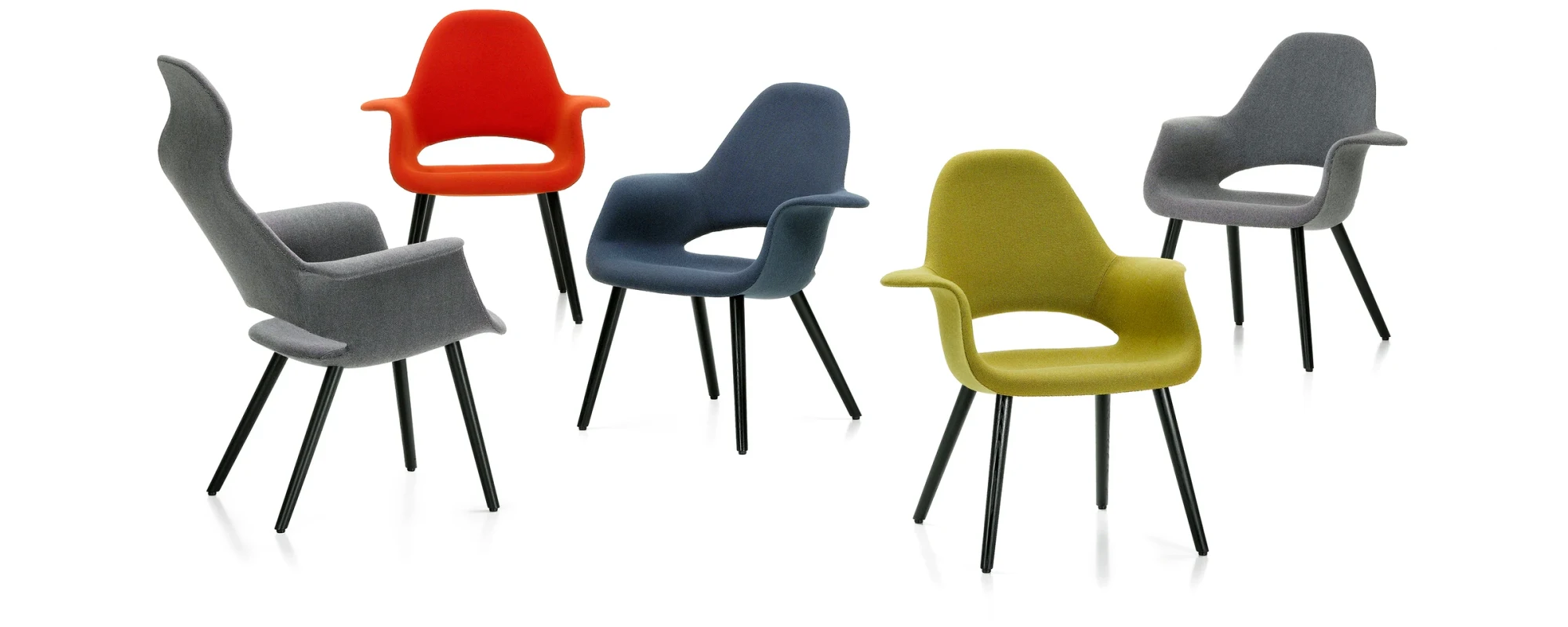
The Organic Chair family is credited to Charles Eames & Eero Saarinen and dated 1940. Vitra writes that the Organic Chair, in its words a "small and comfortable reading chair", was developed in several versions for the 1940 competition 'Organic Design in Home Furnishings', organised by the Museum of Modern Art in New York. Its sculptural shapes were ahead of their time, but without suitable manufacturing techniques the armchair never went into production. Organically shaped seat shells could be made and sold in large quantities only from 1950, as Charles and Ray Eames's Plastic Armchair and Saarinen's Tulip Chair show.
The competition
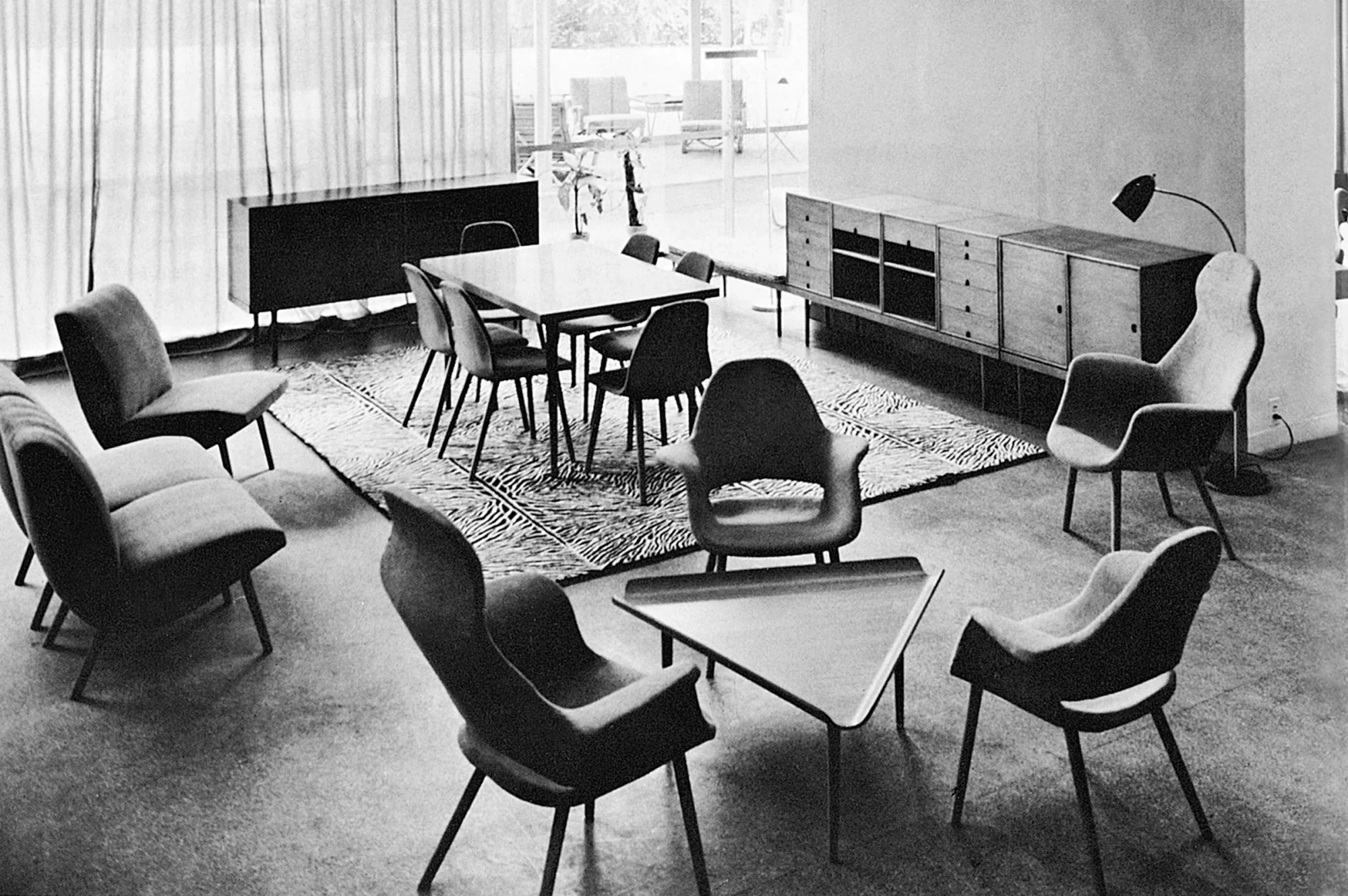
MoMA announced an 'Industrial Design Competition for the 21 American Republics', known today as 'Organic Design in Home Furnishings'. Eames and Saarinen, then in their early thirties and design instructors at the Cranbrook Academy of Art, prepared eight entries, six of them chairs, with a one-piece plywood seat shell shaped in three dimensions to the contours of the body. Because no machinery existed for that shape, they made the prototypes by hand, with help from a student named Ray Kaiser. They won first prize in both categories they entered, yet no manufacturer could produce the chairs in quantity. Charles Eames later called the work a statement of concept.
A Vitra original since 2004
One of the few surviving chairs from the 1941 presentation is held by the Vitra Design Museum. Its curators studied it after the turn of the millennium, and Vitra then approached the Eames and Saarinen families about producing it. It was launched in 2004, and the name refers to the exhibition. Vitra makes three of the six versions shown as prototypes in 1940.
Key Pieces
- Organic Chair
- Organic Highback
- Organic Conference