

Collection Story
Origin
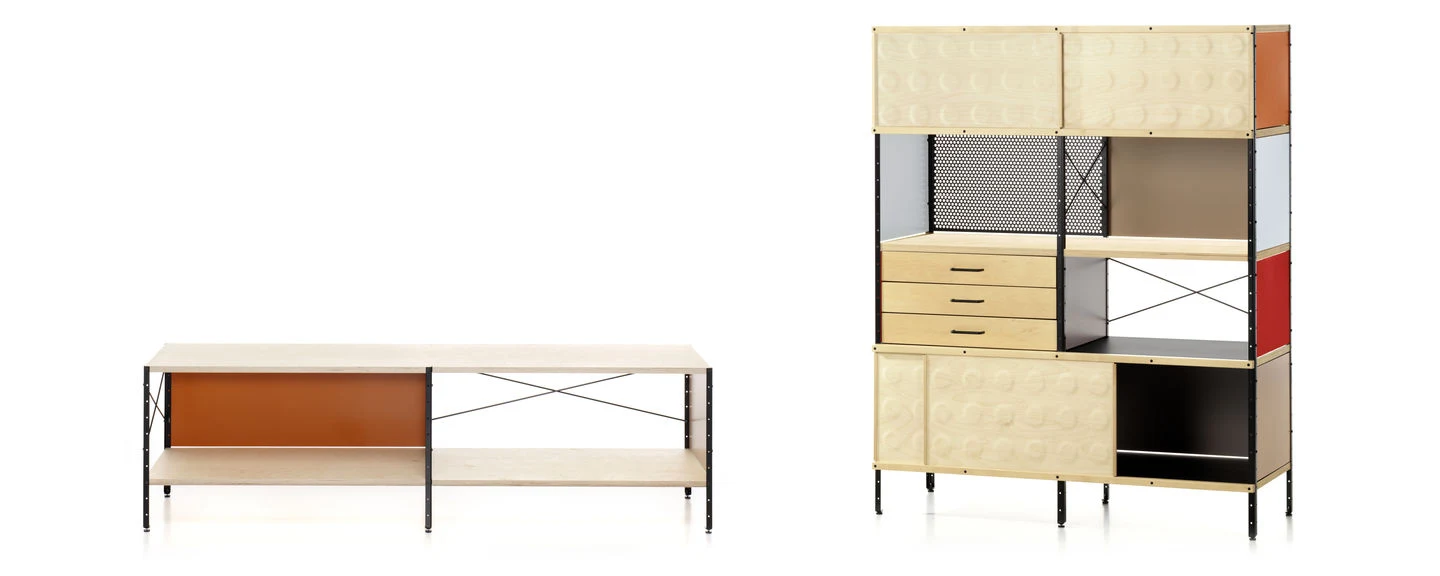
The Eames Storage Unit ESU family carries the names Charles & Ray Eames and the year 1949. That year, Vitra says, the couple developed a system of freestanding, multifunctional shelves and desks, and like the Eames House that was built at the same time, the system followed the principles of industrial production. The system took two forms: the Eames Storage Unit (ESU) and the Eames Desk Unit (EDU).
Colours and units
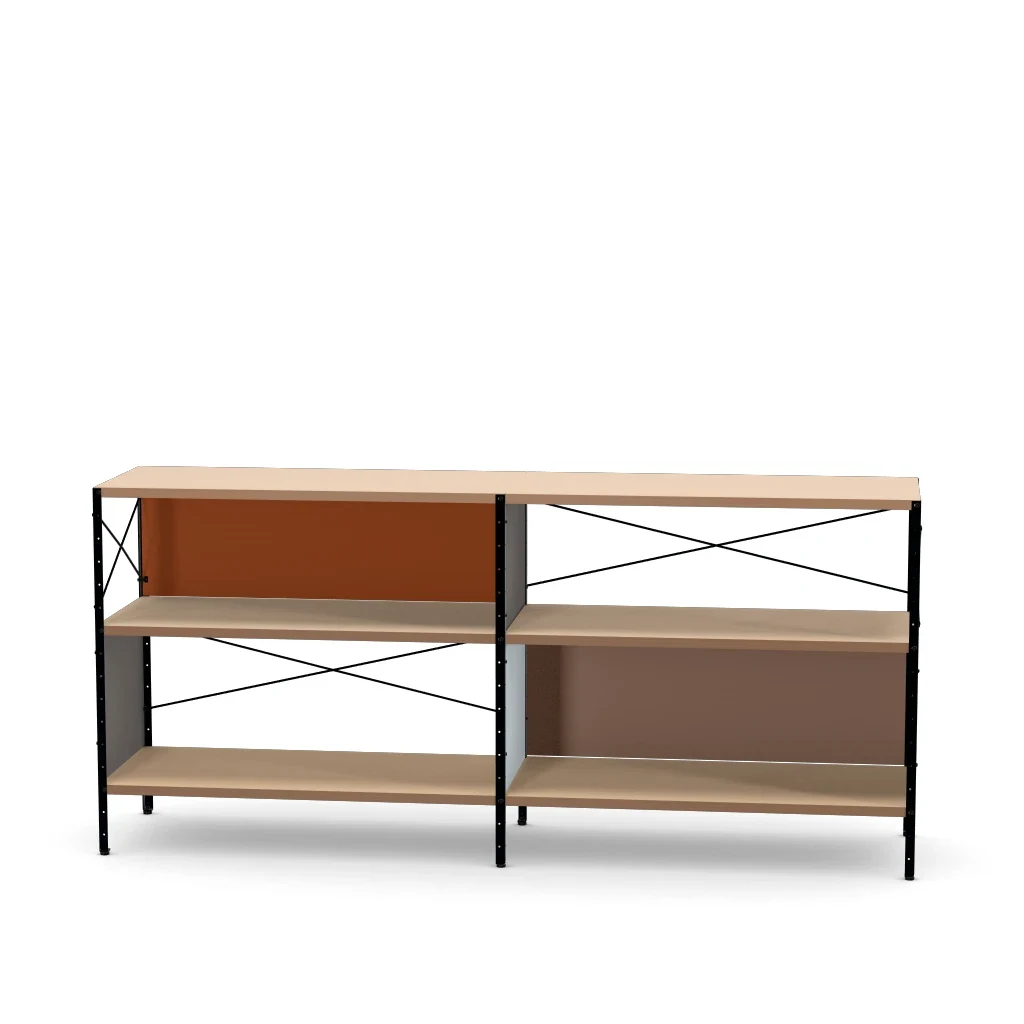
Vitra worked with the Eames Office and the Dutch designer Hella Jongerius on a carefully defined colour scheme for the ESU and the EDU. The aim was a contemporary look that keeps the spirit of the 1940s and 1950s in view. Within the ESU, the wider ESU Shelf is available in various heights, from a sideboard to a tall bookshelf, and the somewhat narrower ESU Bookcase is fitted with drawers and sliding doors.
The original system
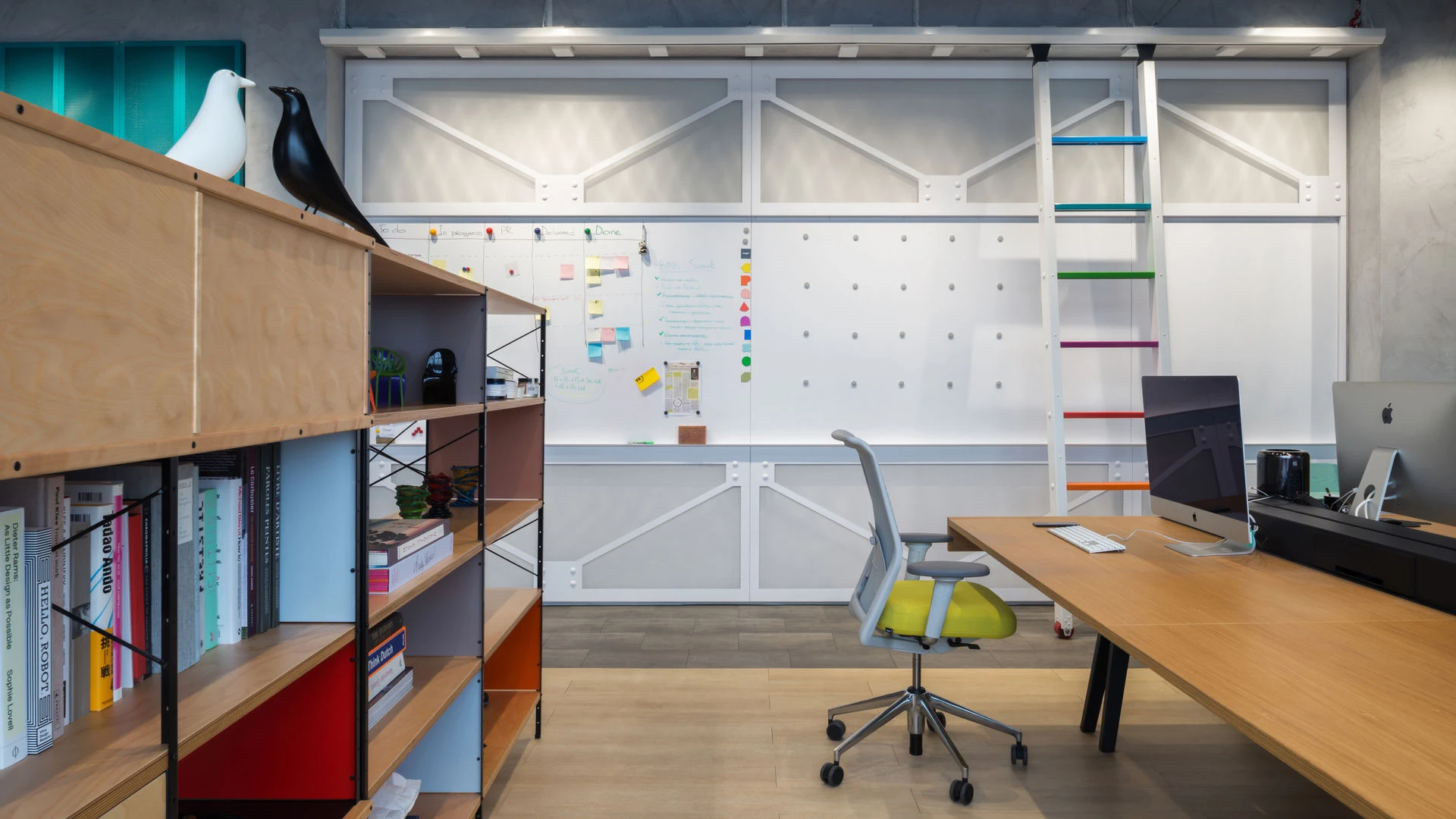
The Eames Foundation describes the first storage units as a system of standard elements that could be arranged into many types of unit for the living room, the dining room, the bedroom or as a room divider. Buyers could choose open storage, closed storage or drawers, and the foundation lists two colour schemes, a colourful one and a neutral one. Vitra and Herman Miller are named as the makers that still produce the ESU.
Key Pieces
- Eames Storage Unit ESU, Shelf
- Eames Storage Unit ESU, Bookcase