
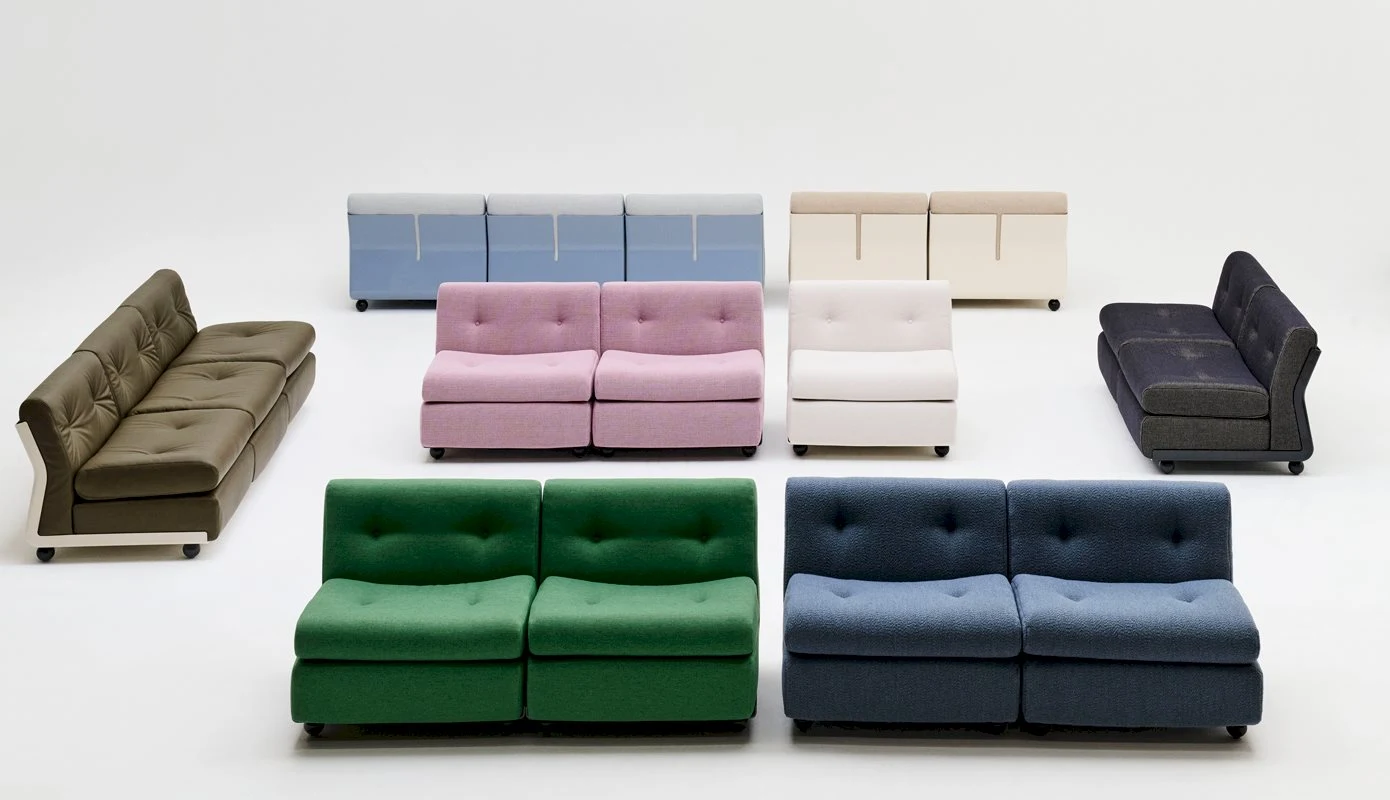
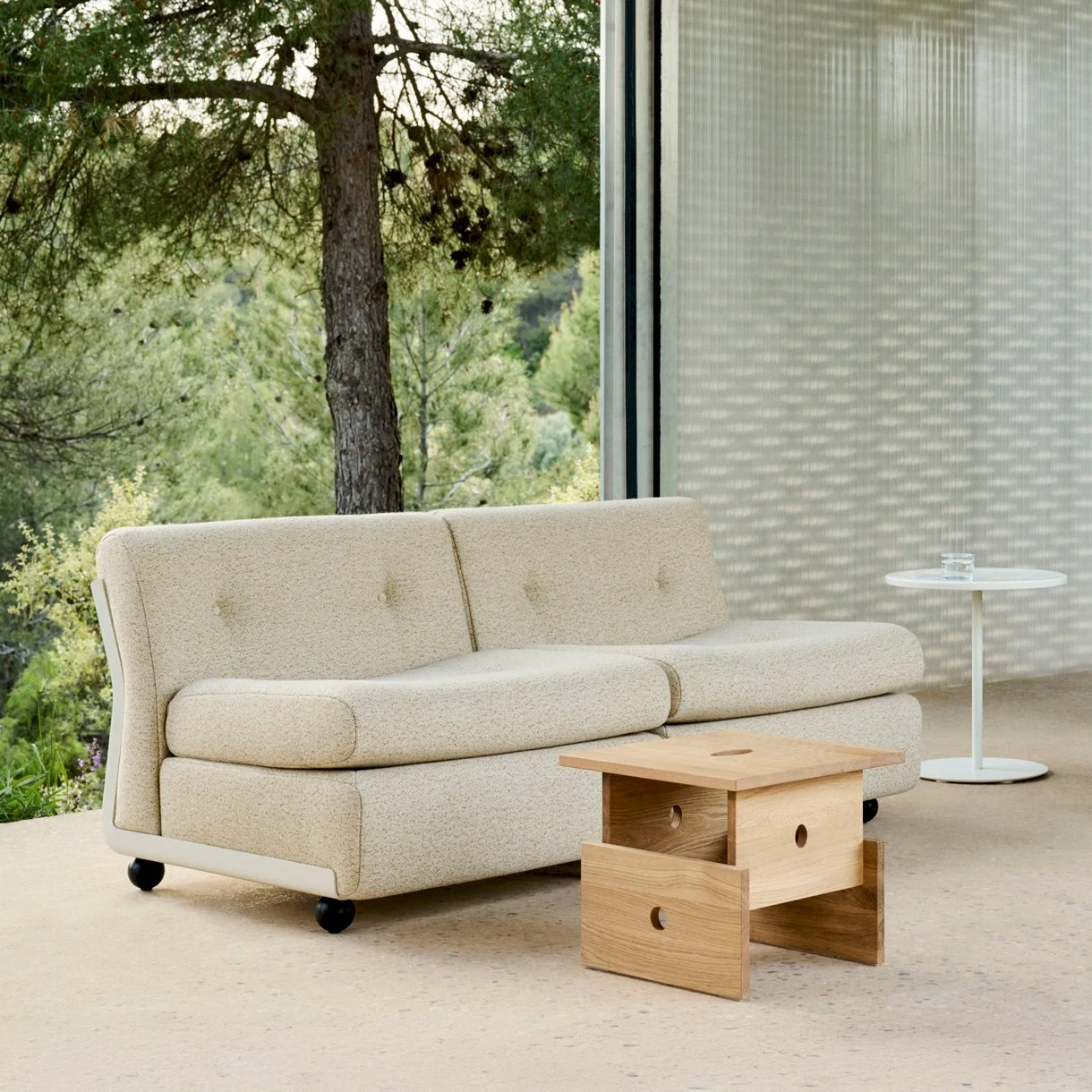


Collection Story
Origin
Mario Bellini conceived the Amanta sofa in 1966, and HAY's news item describes it as an offer of a radical new way of living at home, one that embraced flexibility, comfort and a sculptural approach to form. In the late 1960s, according to HAY's studio-visit article, Italy was swept by social liberation and creative experimentation, and Amanta came out of that mood as an adaptable seating system with floating cushions and a seamless shell.
Design Language
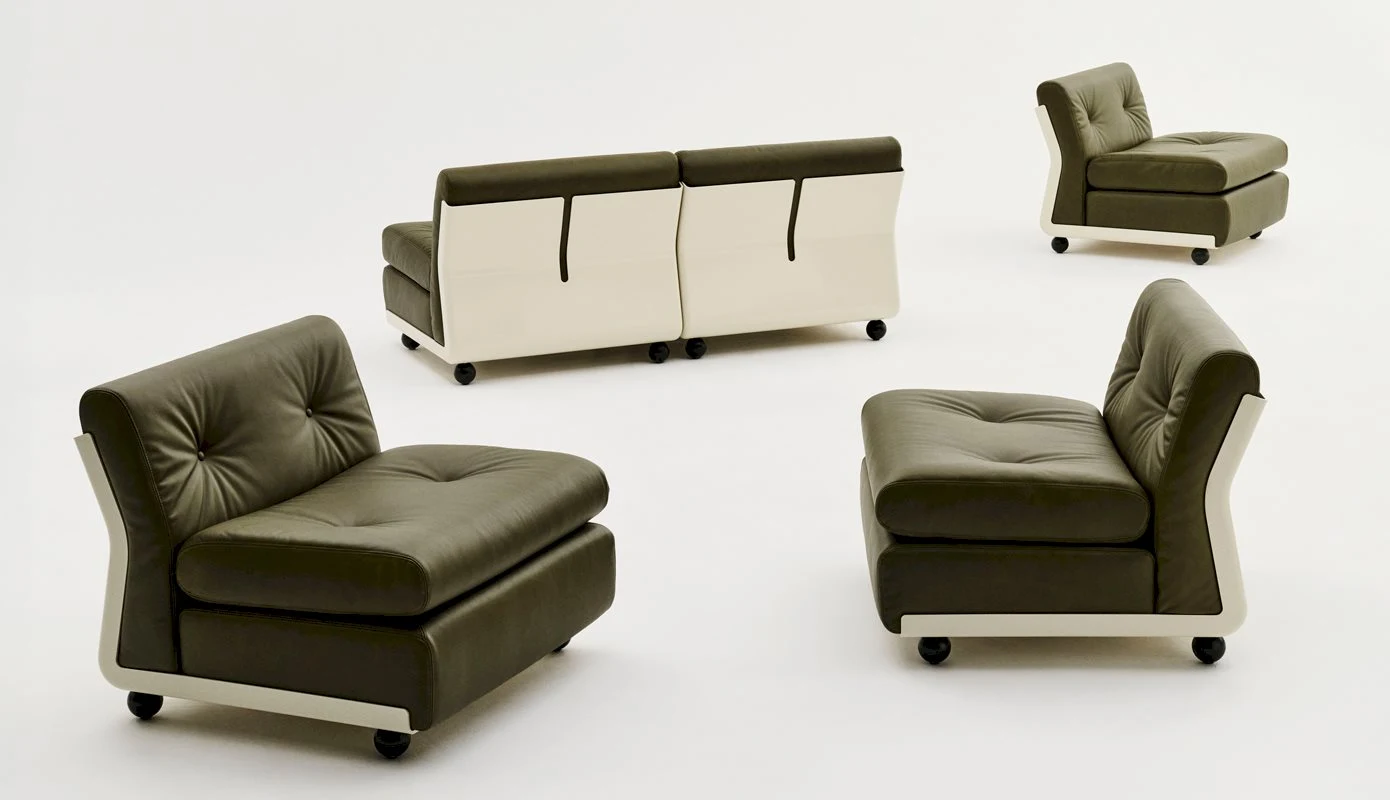
The article reports the view of Marco Sammicheli of Triennale Milano that Bellini removed visible metal frameworks in favour of integrated, softer constructions, a lesson he took from Le Corbusier, and that the modular logic of Amanta draws on Mies van der Rohe's Barcelona Chair. The shell was made of fibreglass in 1966, a material the article ties to the technological optimism of the time.
The HAY Reissue
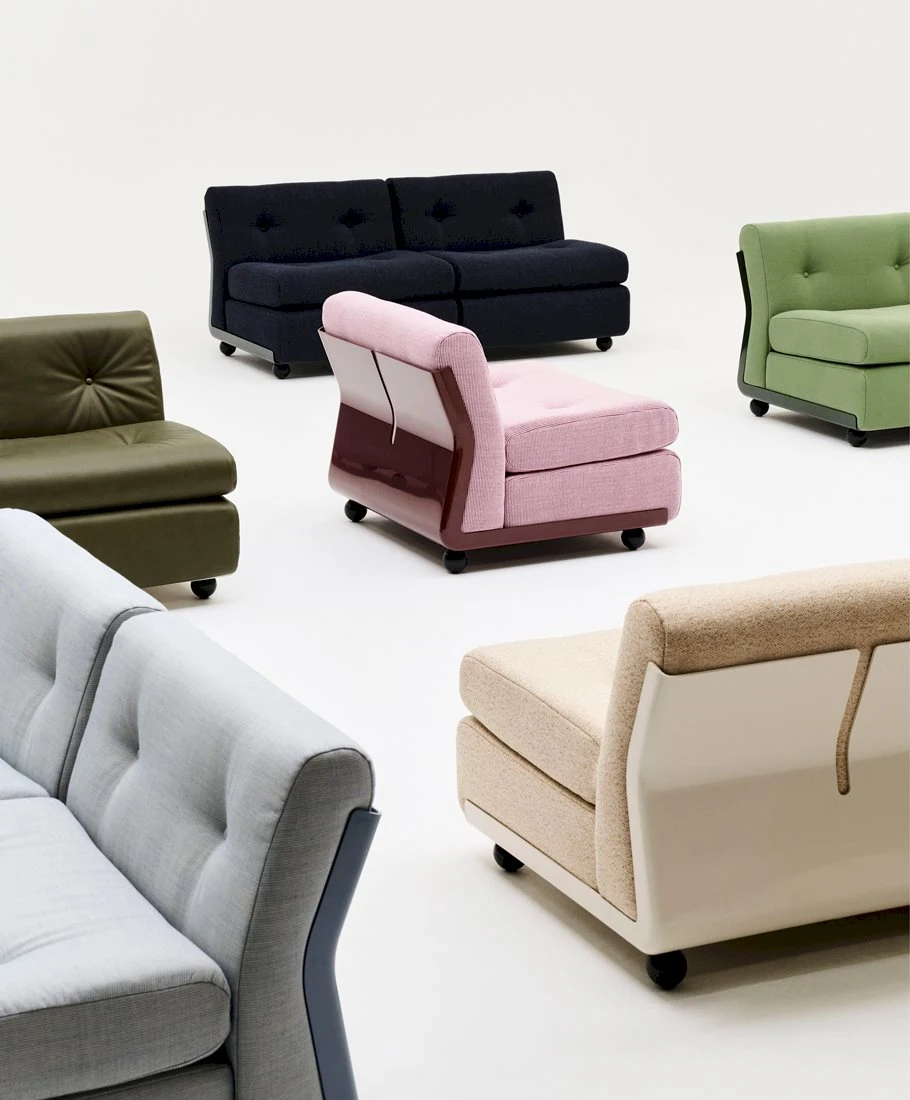
HAY reissued the sofa with a shell of at least 99% post-consumer recycled ABS and cushions of 94% biomass-balanced foam, in shell colours chosen by HAY and with fabric and leather upholstery. HAY says the whole sofa is designed for disassembly. It is sold as a single module or as pre-configured 2, 3 and 4 module versions.
Key Pieces
- Amanta 1 Seater, the single module
- Amanta 3 Seater, the three-module sofa
- Amanta 2 Seater and 4 Seater, the other pre-configured sizes